How Specialist Referrals Work Through the Caja in Costa Rica
Navigating the public healthcare system in Costa Rica can feel like wandering through a maze without a map, especially when you are dealing with a nagging health issue that requires more than a general practitioner's touch. Many expats find themselves stuck at the first gate, unsure how to move from their local clinic to a specialized hospital department. This guide solves that specific administrative puzzle, walking you through the exact steps to secure and manage specialist referrals within the Caja system.
The Foundation: Understanding the EBAIS Entry Point
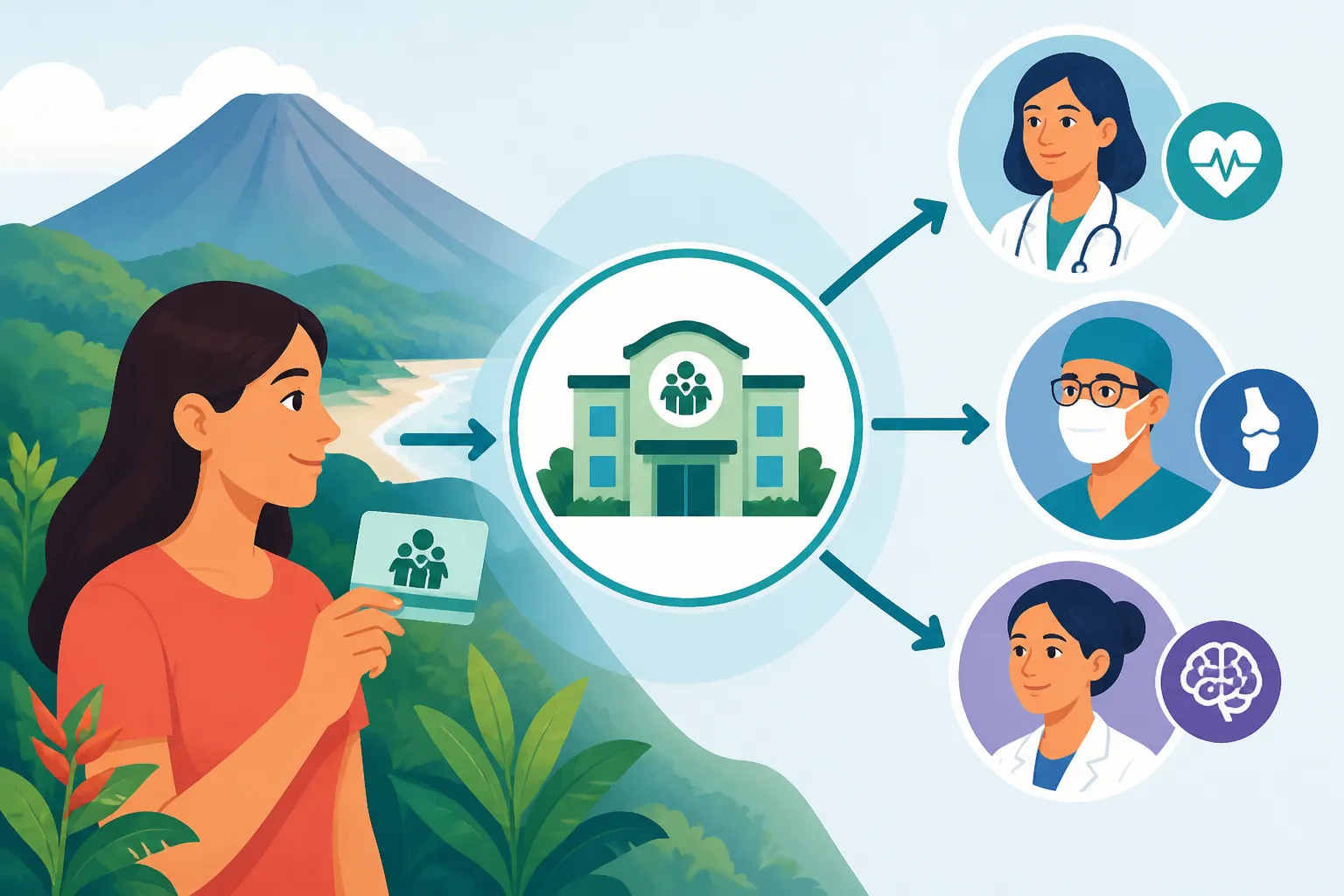
The Costa Rican public health system, managed by the Caja Costarricense de Seguro Social (CCSS), operates on a strictly tiered hierarchy. You cannot simply call up a cardiologist at a major hospital and book an appointment because you have chest pains. The system is designed to filter patients through local gateways known as EBAIS (Equipos Básicos de Atención Integral en Salud). These are your neighborhood clinics, and they serve as the mandatory starting point for any medical journey within the public sector. If you haven't already, your first priority should be learning How to Find and Register with an EBAIS Clinic in Costa Rica to ensure you are in the system before an urgent need arises.
Finding Your Local Health Hub
Every district in Costa Rica is assigned a specific EBAIS. Your eligibility to visit a particular clinic is based strictly on where you live. When you move to a new town, such as the hills of Escazú or the beaches of Nosara, you must present your residency DIMEX and a utility bill to "attach" yourself to that local clinic. This registration is the bedrock of your medical record. The EBAIS is where your primary care physician resides, and this doctor is the only individual authorized to trigger the specialist referral process.
In more rural areas, your EBAIS might only be open on specific days or have limited hours. In urban centers like San José or Heredia, they are more like mini-hospitals. Regardless of the size, the process remains the same. You must be seen by a general practitioner (GP) who evaluates your symptoms and decides if your condition warrants the intervention of a specialist. Without this initial gatekeeper's approval, the rest of the system remains closed to you.
The Initial Consult: Your Ticket In
Getting an appointment at your EBAIS can be a hurdle in itself. Many locals and expats alike still follow the old-school tradition of "madrugando"—arriving at the clinic at 5:00 AM to secure a "ficha" or appointment slot for the day. However, the system is digitizing rapidly. You can often book through the EDUS (Expediente Digital Único en Salud) mobile app, though slots fill up in seconds. During this initial consult, you need to be very clear about your symptoms.
If the GP determines that you need specialized care—perhaps for a complex dermatological issue, a surgical consult, or chronic endocrine management—they will enter a referral into the digital system. This isn't just a suggestion; it is a formal medical order. At this stage, it is helpful to understand How to Use Your DIMEX to Access Healthcare in Costa Rica because your residency card is the key that unlocks your digital file and ensures the referral is linked correctly to your identity across the entire national network.
Navigating the Referral Paperwork
Once the GP decides you need a specialist, the administrative machinery begins to grind. In the past, this involved carrying physical yellow or white slips of paper (boletas) from office to office. While some rural clinics still utilize paper backups, the vast majority of the process is now handled through the EDUS system. However, don't let the "digital" label fool you into thinking it is instantaneous. There is still a significant amount of "trámite" or red tape involved in moving that digital file from a local clinic to a major hospital like Hospital México or San Juan de Dios.
The Boleta de Referencia Explained
The "Boleta de Referencia" is the document (physical or digital) that contains your diagnosis, the reason for the referral, and the level of urgency assigned by the GP. This document is sent to the "Área de Salud" or the regional hospital that services your district. For example, if you live in Santa Ana, your referral likely goes to the Hospital San Juan de Dios in downtown San José. If you are in the Central Valley, it is vital to know Where Can I Find an English-Speaking Doctor in San Jose for your private needs, but for the Caja, you are assigned based on geography, not language preference.
The boleta will be reviewed by a department head at the receiving hospital. They act as a second gatekeeper. They can approve the referral, request more tests from the EBAIS before seeing you, or, in some cases, deny the referral if they believe the GP can manage the condition at the local level. This "validation" process can take anywhere from a few days to several weeks. You won't always get a phone call when this happens; you often have to check the EDUS app or visit the "Archivo" (records) window at your local clinic to see if the referral was accepted.
Digital vs. Paper: The EDUS Factor
The EDUS app has revolutionized how expats track their referrals. Once a referral is made, you can see it under the "Refererencias" tab in the app. It will show the status: "Pendiente" (Pending), "Programada" (Scheduled), or "Atendida" (Completed). This transparency is a huge relief compared to the "black hole" of the old paper system. However, technology can fail, and records can occasionally get lost in the digital ether.
If your referral doesn't appear in EDUS within a week, you should return to your EBAIS and speak with the "Redes" or "Archivo" department. Ask them for the "número de envío" (tracking number) of the referral. Having this number is your only leverage if you need to call the larger hospital to advocate for yourself. For those who are still waiting for their residency to be finalized, you might be wondering, What Happens If I Get Sick Before My Caja Enrollment Is Complete? In those cases, you won't have access to this referral system and must rely on private care or emergency public services.
Managing the Waitlist: Reality vs. Expectation
The most significant frustration foreigners face with the Caja is the "lista de espera" (waitlist). Because the system is free at the point of service and covers the entire population, the demand for specialists is astronomical. It is not uncommon for a non-urgent referral—such as a routine orthopedic consult for a chronic but stable knee issue—to be scheduled eighteen months or even two years into the future. This is where your patience and your secondary planning come into play.
Triage Levels and Wait Times
The Caja uses a triage system to prioritize referrals. "Urgente" (Urgent) referrals are usually seen within days or weeks. These are for life-threatening conditions, suspected cancer, or acute cardiac issues. "Prioritario" (Priority) cases might wait three to six months. "Control" or routine cases are placed at the back of the line. It is a cold reality of socialized medicine: if you aren't dying, you wait.
During these long waiting periods, many expats choose to maintain a policy with SafetyWing to cover unexpected gaps or to allow them to seek private care for diagnostic clarity. SafetyWing can be a literal lifesaver when the Caja waitlist is simply too long for your comfort level. Understanding How Long Does It Take to Get Caja Coverage as a New Resident in Costa Rica? can help you decide when to rely on the public system and when to use your private insurance.
Dealing with Delays and Rescheduling
Once you finally get a date, guard it with your life. If you miss a specialist appointment in the Caja, you are often sent back to the very end of the line. Rescheduling is notoriously difficult and usually requires a "justificación" (justification), such as a death in the family or a hospitalization. If the hospital cancels on you—which happens due to strikes, equipment failure, or doctor shortages—they are supposed to reschedule you automatically, but you must be proactive.
Always keep your contact information updated in the EDUS system. If the hospital tries to call you to move your appointment and your number is disconnected, they may simply cancel the slot. It is also wise to check the app weekly. Sometimes an appointment is moved up because of a cancellation, and if you aren't checking, you'll never know. For a deeper dive into the logistics, see Navigating the Costa Rican Healthcare System: An Expat's Roadmap (2027).
Specialist Care at the Hospital Level
When your appointment date finally arrives, you won't be going back to your local EBAIS. You will be heading to a "Hospital de Segundo Nivel" (Second Level) or a "Hospital Nacional" (National Hospital). These institutions are large, bustling, and can be quite intimidating. Understanding the layout and the culture of these hospitals is essential for a smooth experience.
| Hospital Type | Examples | Primary Function |
|---|---|---|
| EBAIS | Local clinics | General medicine, vaccinations, pharmacy, referral starts. |
| Regional Hospitals | Hospital San Rafael (Alajuela), Hospital Max Peralta (Cartago) | General surgery, internal medicine, pediatrics, OBGYN. |
| National Specialized | Hospital México, San Juan de Dios, Calderón Guardia | Neurosurgery, oncology, complex cardiology, rare diseases. |
| Specialized Centers | National Children’s Hospital (HNN), Women’s Hospital | High-level focus on specific demographics or conditions. |
Major Public Hospitals in the Greater Metropolitan Area (GAM)
If you require a highly specialized procedure, such as a heart valve replacement or advanced chemotherapy, you will almost certainly end up in San José. The "Big Three" hospitals—México, San Juan de Dios, and Calderón Guardia—handle the bulk of the country's complex cases. These facilities are staffed by world-class doctors, many of whom also maintain private practices at places like CIMA or Clínica Bíblica.
Navigating these hospitals requires a bit of "tico" savvy. Arrive at least an hour early. You will need to check in at the "Ventanilla de Citas" (Appointment Window) with your DIMEX. If your Spanish is limited, this is the time to bring a bilingual friend or hire a medical translator. While the doctors often speak English, the administrative staff rarely do. For more on the private side of things, read How to Use Private Hospitals Like CIMA, Clinica Biblica and Hospital Metropolitano.
Regional Specialists in Coastal and Rural Areas
If you live in the Southern Zone or Guanacaste, your specialist referral might take you to a regional hub like Hospital Enrique Baltodano in Liberia or Hospital Escalante Pradilla in Pérez Zeledón. These hospitals have specialists, but for the most "niche" issues, you may still be referred to San José. The Caja provides a travel allowance or even a shuttle in some cases for patients who must travel long distances for specialized care, but you have to apply for this at your local EBAIS social work office.
Being a resident in a rural area means you need to be even more organized. If you forget a document, it’s not a ten-minute drive home; it’s a four-hour bus ride. Always bring your full medical folder, including any private tests or imaging you’ve had done. Even though the system is digital, having physical copies of your X-rays or bloodwork can save a consultation if the hospital's server is down. You can learn more about these regional nuances in The Complete Guide to Healthcare in Costa Rica for Expats (2027).
Bridging the Gap: When the Caja Is Too Slow
One of the most common strategies for expats in Costa Rica is the "hybrid approach." This involves using the Caja for expensive long-term medications and major surgeries while using private doctors for specialists and diagnostics to skip the wait. This is a perfectly legal and very effective way to manage your health in the tropics.
Integrating Private Care with Public Referrals
If you see a private specialist and they determine you need a surgery that you’d rather have covered by the Caja, you cannot simply take the private doctor's note to the hospital. You must take that private diagnosis back to your GP at the EBAIS. The GP will then use that information to justify a "prioritized" referral within the public system.
This doesn't always "jump" you to the front of the line, but it provides the clinical evidence needed to move you from a two-year wait to a three-month wait. Many expats use SafetyWing to cover these private specialist visits, as it provides a safety net while they navigate the slower public bureaucracy. This is especially useful if you are trying to understand Public vs Private Healthcare in Costa Rica: Which Should Expats Choose?.
The Role of Supplemental Insurance
While the Caja is mandatory for residents, it is rarely enough for those used to North American or European speeds of service. Supplemental insurance, whether local (like INS) or international (like SafetyWing), allows you to get an MRI or a specialist's opinion in 48 hours rather than 48 weeks. Once you have the diagnosis in hand from a private specialist, you are much better equipped to navigate the Caja referral system.
Think of private insurance as your "diagnostic engine" and the Caja as your "treatment engine" for catastrophic or high-cost chronic care. This synergy is the secret to successful long-term living in Costa Rica. If you’re self-employed, make sure you know How to Register as Self-Employed with the Caja and Hacienda in Costa Rica to keep your public coverage active while you maintain your private policies.
Troubleshooting Common Referral Issues
Even with the best planning, the referral process can hit a snag. The most common issues involve expired referrals, lost files, or "vínculo" issues where your residency status isn't showing as active in the hospital's specific database even though you've paid your monthly bill.
Expired Referrals and Red Tape
A referral from an EBAIS to a specialist generally has an expiration date—often six months to a year. If the waitlist is longer than the referral's validity, you might arrive at your appointment only to be told your paperwork is "vencida" (expired). This is a nightmare scenario. To avoid this, check your referral status in the EDUS app three months before your appointment. If it says it is nearing expiration, visit your EBAIS GP for a "renovación de referencia."
Another hurdle is the "derecho de circulación" or ensuring your Caja payments are up to date. If you owe even one month of payments, the specialist's office will refuse to see you. Always bring your latest payment receipt (or show the digital confirmation) to every specialist appointment. Understanding How Are My Monthly Caja Payments Calculated in Costa Rica? will ensure you never miss a payment and lose your spot in the queue.
Updating Your Information in the System
If you move or change your phone number, you must update your "ficha" at both the EBAIS and the specialist hospital. The systems are supposed to sync, but they often don't. A lost phone call for a surgery date can set your healthcare back by years.
Furthermore, if you are a "Pensionado" resident, ensure the system reflects your status correctly so you aren't overcharged. For more on how residency impacts your healthcare access, see How the Caja Requirement Connects to Your Residency in Costa Rica. Being proactive and friendly with the "secretarias" at the specialist clinics goes a long way. A little "muchas gracias" and a smile can sometimes be the difference between getting a cancellation slot and waiting another year.
Disclaimer
This guide is intended for informational purposes only and is based on the personal experiences of expats and the current administrative procedures of the CCSS in Costa Rica as of 2026. Healthcare laws and hospital protocols can change without notice. Always consult with a licensed medical professional or a legal expert specializing in Costa Rican administrative law for specific advice regarding your health and residency status. The author is not a doctor or a representative of the CCSS.