How to Use Private Hospitals Like CIMA, Clinica Biblica and Hospital Metropolitano
Finding yourself in a medical crisis in a foreign country is one of the most isolating experiences an expat can face. Whether it is a sudden spike in fever, a persistent tropical ailment, or a more serious emergency, knowing exactly where to go and how the system works is the difference between a stressful ordeal and a smooth recovery. This guide provides an in-depth roadmap for navigating Costa Rica’s premier private hospitals—CIMA, Clínica Bíblica, and Hospital Metropolitano—so you can access world-class care with confidence.
Understanding the "Big Three" Private Hospitals
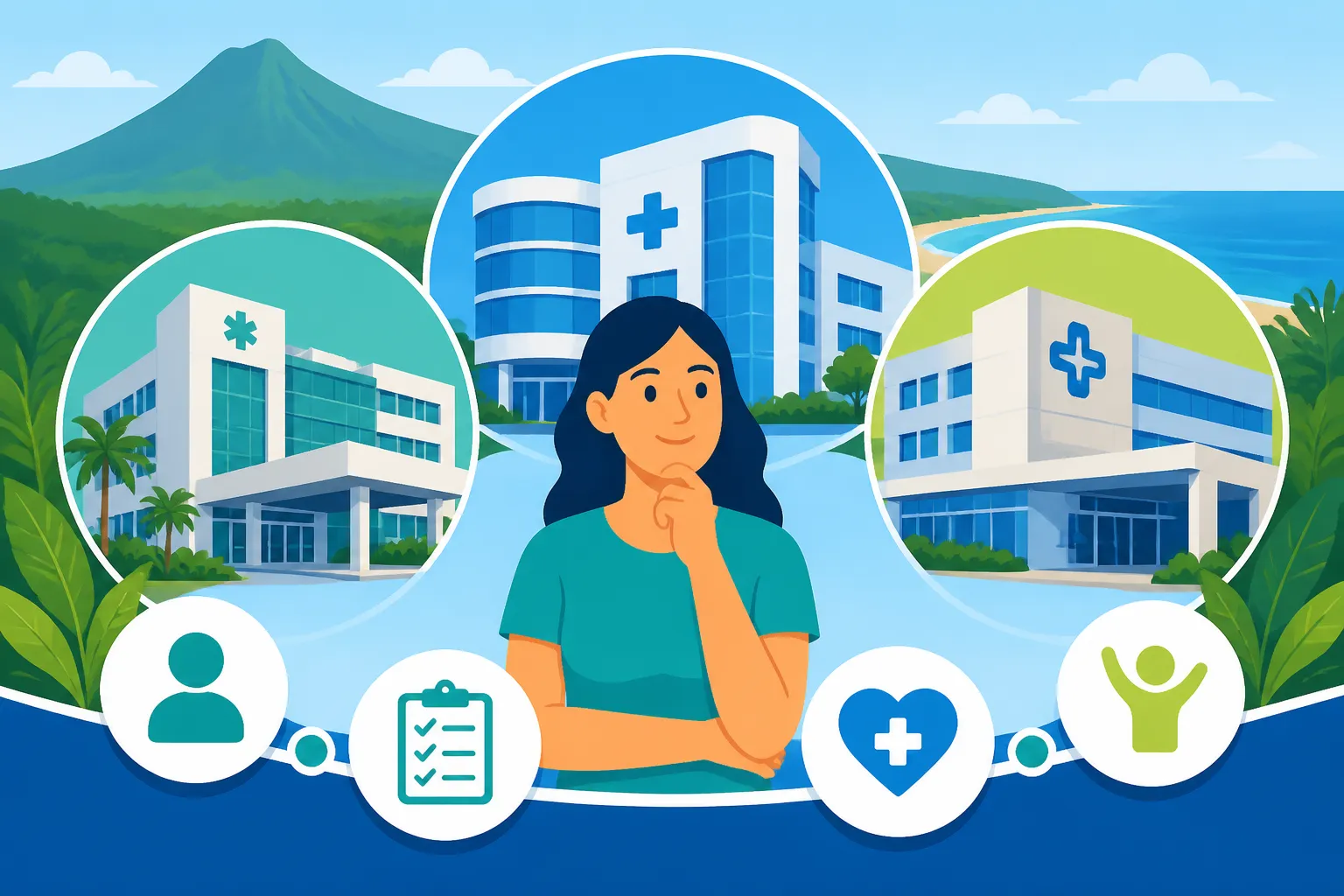
In the world of Costa Rican healthcare, there are three names you will hear constantly: CIMA, Clínica Bíblica, and Hospital Metropolitano. While the public system, known as the Caja, is excellent for long-term chronic issues and major trauma, most expats prefer the speed, comfort, and English-speaking environment of these private institutions. Each has its own personality, specialty, and price point, which is something many newcomers don't realize until they are already in the waiting room.
Hospital CIMA (Escazú)
Located in the upscale suburb of Escazú, Hospital CIMA is often the first choice for North Americans because it feels exactly like a high-end hospital in the United States. It is JCI-accredited, meaning it meets rigorous international standards for safety and quality. When you walk through the doors, you are greeted by sleek interiors, organized reception desks, and a palpable sense of efficiency. It is strategically positioned right off Route 27, making it accessible from both San José and the Central Pacific coast.
CIMA is renowned for its specialty centers, particularly in cardiology and oncology. Because many of the doctors here were trained in the US or Europe, the language barrier is virtually non-existent. However, this level of luxury and accreditation comes with a price tag. CIMA is generally considered the most expensive of the private hospitals. For those using international plans like SafetyWing, CIMA is a very common choice because their administrative staff is well-versed in handling international claims and direct billing arrangements.
The hospital campus also includes several towers of private doctors' offices. This means you can see a specialist in their private practice and then simply walk across the hall for your blood work or imaging. This integration is a huge time-saver. If you are trying to decide Public vs Private Healthcare in Costa Rica: Which Should Expats Choose?, CIMA represents the pinnacle of the private experience.
Clínica Bíblica (San José & Santa Ana)
Clínica Bíblica is the historic titan of private medicine in Costa Rica. Founded in 1929, it has a deep-rooted reputation for excellence and a massive main campus in downtown San José. In recent years, they have expanded to include a modern, stunning facility in Santa Ana, catering to the growing expat population in the western suburbs. Bíblica has a slightly more "Tico" feel than CIMA but maintains an equally high standard of care and JCI accreditation.
One of the unique aspects of Clínica Bíblica is its social mission; a portion of their profits goes toward providing medical care for low-income Costa Ricans. For many expats, this philanthropic angle adds a layer of comfort to their choice. The downtown San José facility is sprawling and can be a bit of a maze at first, but the staff is incredibly helpful. The Santa Ana location is smaller but offers a more boutique, intimate experience with very short wait times.
Bíblica excels in maternity care and complex surgeries. Their diagnostic equipment is often the most advanced in the country. If you are exploring Medical Tourism in Costa Rica: Why People Travel Here for Treatment (2027), you will find that many international patients flock to Bíblica for orthopedic and bariatric procedures. They have a dedicated international department that helps foreigners coordinate every step of their stay, from airport pickup to post-operative follow-ups.
Hospital Metropolitano (Multiple Locations)
Hospital Metropolitano is the "disruptor" in the Costa Rican private healthcare market. They identified a gap between the high costs of CIMA/Bíblica and the long wait times of the public system. Their model focuses on affordability and accessibility without sacrificing quality. They have grown rapidly, with locations in San José, Santa Ana, Lindora, and even coastal areas like Huacas (near Flamingo/Tamarindo) and Quepos.
For many expats living outside the Central Valley, Metropolitano is a literal lifesaver. Their facilities are modern and clean, though perhaps less "opulent" than CIMA. The pricing structure is transparent and significantly lower than the other two major private hospitals. They also offer a membership program called "Medismart," which provides deep discounts on consultations, labs, and procedures for a small monthly fee. This is a popular option for those who may not have full private insurance but want affordable access to private care.
Metropolitano is often the best choice for routine issues, specialist visits, and minor emergencies. While they handle complex surgeries too, their specialty is being the "neighborhood private hospital." If you are curious about The Cost of Healthcare in Costa Rica: A Complete Breakdown for Foreigners (2026), looking at Metropolitano’s price list is the best way to see how affordable high-quality care can actually be when the "luxury" markup is removed.
The Logistics of Accessing Care
Walking into a private hospital for the first time can be intimidating if you don't know the protocol. Unlike the public system, where you are often assigned to an EBAIS based on your neighborhood, the private system is entirely based on your choice and your ability to pay (or your insurance coverage). Understanding the "flow" of these hospitals will save you hours of frustration.
Making Appointments vs. Walk-ins
For non-emergencies, you should always make an appointment. Each of these hospitals has a centralized "Medical Directory" on their website where you can search for specialists. However, a common expat tip is that many doctors maintain their own private secretaries and booking systems within the hospital towers. It is often faster to call the doctor's office directly rather than going through the hospital's main switchboard.
If you have a minor illness—like a bad flu or a suspicious rash—all three hospitals have "Urgencias" (Urgent Care) sections. These are distinct from the "Emergencias" (ER) and are designed for walk-ins. Wait times in private urgent care are typically between 15 and 45 minutes, a stark contrast to the several hours you might wait at a public clinic. When you arrive, you will need to present your ID. Knowing How to Use Your DIMEX to Access Healthcare in Costa Rica is helpful, but private hospitals will also happily accept your foreign passport.
For true emergencies, the ERs at CIMA and Bíblica are open 24/7. They are equipped with the latest life-saving technology. If you arrive by ambulance, the paramedics will ask which hospital you prefer. If you have private insurance like SafetyWing, it is vital to have your digital ID card ready on your phone so the hospital can initiate the "guarantee of payment" process immediately upon admission.
The Admission Process and Paperwork
Admission at a private hospital in Costa Rica involves two main tracks: the medical and the financial. On the medical side, you will fill out a standard history form. Even though most doctors speak English, these forms are sometimes only in Spanish, so having a translation app or a basic understanding of medical terms is useful. You will be asked about your current medications and allergies—standard stuff, but vital.
On the financial side, the hospital will require a "depósito" or a credit card authorization if you are being admitted for surgery or an overnight stay. This deposit can be significant (sometimes several thousand dollars) if you do not have pre-approved insurance. This is where the administrative hurdle often trips people up. They expect to be treated first and bill later, but private hospitals in Costa Rica operate on a "pay-as-you-go" or "pre-verify insurance" model.
If you are a resident, you might wonder Do I Have to Join the Caja to Get Residency in Costa Rica?. The answer is yes, but that doesn't mean you can't use private hospitals. In fact, many residents maintain their Caja affiliation for residency purposes but use private hospitals for 90% of their actual healthcare needs to avoid the bureaucracy of the public system.
Language Barriers and English-speaking Staff
One of the greatest anxieties for expats is the fear of not being understood during a medical crisis. At CIMA, Clínica Bíblica, and the main branches of Hospital Metropolitano, this is rarely an issue. Most specialists have studied abroad and are fluent in English. Many of the nurses and front-desk staff in the "International Departments" are also bilingual.
However, once you move into the general nursing staff or the administrative billing offices, English proficiency can drop off. It is always a good idea to have a basic grasp of Spanish or to bring a friend who can translate if your case is complex. If you are specifically looking for someone who understands your native language, you can check How to Find an English-Speaking Doctor in Costa Rica for a list of vetted professionals.
In the event that you are in a smaller satellite clinic of Hospital Metropolitano, you might find fewer English speakers than at the main Escazú or San José hubs. In these cases, the doctors usually bridge the gap, but the paperwork might require a bit of Google Translate. Don't be afraid to ask, "Habla inglés?"—most staff will go out of their way to find someone who can help you.
Costs, Billing, and Payments
Understanding the financial side of private hospitals is essential to avoid "sticker shock." While healthcare in Costa Rica is significantly cheaper than in the United States, it is not free, and the costs at private facilities can add up quickly if you aren't prepared.
Typical Costs for Consultations and Procedures
A standard consultation with a specialist at CIMA or Clínica Bíblica typically ranges from $80 to $150. This is the out-of-pocket price for a 30-to-40-minute session where the doctor actually sits down and talks to you—a refreshing change for many foreigners. At Hospital Metropolitano, especially with a Medismart membership, this cost can drop to $40 or $60.
Diagnostic tests are also very reasonably priced. A standard blood panel might cost $60, while an X-ray could be $80. More complex imaging like an MRI or CT scan will run between $400 and $800 depending on the facility and whether contrast is used. For a comparative look at these costs, see How Much Does an MRI Scan Cost in Costa Rica in 2026?.
| Service Type | CIMA / Bíblica (Estimated) | Hospital Metropolitano (with Medismart) |
|---|---|---|
| Specialist Consultation | $100 – $150 | $40 – $60 |
| Emergency Room Visit | $150 – $300 (plus tests) | $80 – $150 |
| Standard Blood Work | $70 – $100 | $30 – $50 |
| Overnight Room Rate | $600 – $1,000 | $350 – $500 |
| Ultrasound | $120 – $180 | $60 – $90 |
Direct Billing vs. Reimbursement
This is the most critical part of the billing process. "Direct Billing" means the hospital bills your insurance company directly, and you only pay your deductible or co-pay. "Reimbursement" means you pay the full bill upfront, collect all the invoices (facturas electrónicas), and then fight with your insurance company to get your money back later.
CIMA and Bíblica have dedicated international insurance departments that handle direct billing with major global providers. If you have a policy like SafetyWing, you should contact their 24/7 support as soon as you know you are heading to the hospital. They can often send a "Letter of Guarantee" (LOG) to the hospital, which prevents you from having to pay a massive deposit upon admission.
If you are seeing a doctor for a simple office visit, you will almost always pay upfront and seek reimbursement. The hospital will only bother with direct billing for larger amounts, typically over $500 or $1,000. Always ensure you receive a "factura electrónica" (electronic invoice) sent to your email; without this, your insurance company will not reimburse you. For more details on the paperwork, check Understanding Hospital Admission and Billing in Costa Rica.
Credit Cards and Cash Management
All private hospitals accept major credit cards (Visa, Mastercard, Amex). In fact, they prefer them. It is highly recommended to use a credit card that does not charge foreign transaction fees. While they do accept US Dollars and Costa Rican Colones, paying a $10,000 surgical bill in cash is not only impractical but will also trigger significant "know your customer" (KYC) paperwork due to anti-money laundering laws.
Another tip: check with your credit card provider before you arrive in Costa Rica. Some high-end cards offer their own travel medical insurance that can act as a secondary payer. Also, be aware that many private doctors’ offices within the hospital towers are independent. You might pay the hospital for the operating room but pay the surgeon separately at their office. This "split billing" can be confusing, so always ask for a total estimate before agreeing to a procedure.
If you are managing your finances as a resident, you might want to read How to Choose the Best Bank for Expats in Costa Rica to ensure you have a local account that can handle these types of transactions easily. Having a local debit card can sometimes make the electronic invoicing process smoother at smaller clinics.
Using Private Insurance at These Hospitals
Private insurance is the "magic key" that opens the doors of these hospitals without draining your bank account. However, not all insurance is created equal in the eyes of a Costa Rican hospital administrator.
How International Insurance Works
International health insurance, often referred to as "expat insurance," is designed for people living outside their home country. Brands like SafetyWing are popular because they offer coverage that follows you across borders. In Costa Rica, these plans are highly respected at CIMA and Bíblica.
When you use international insurance, the process usually goes like this:
- You present your insurance card at the International Office.
- The hospital contacts the insurer to verify coverage.
- For emergencies or surgeries, the insurer sends a Guarantee of Payment.
- You pay any "deductible" specified in your plan.
If you are a nomad or a frequent traveler, The Complete Guide to the Costa Rica Digital Nomad Visa (2027) highlights how important it is to have this type of coverage, as it is often a requirement for your legal stay. SafetyWing is a common mention here because of its flexibility for those who aren't yet permanent residents.
Local Insurance Options (INS and Private)
The state insurance provider, INS (Instituto Nacional de Seguros), offers private health policies that are widely accepted. These are different from the "Caja" (CCSS). An INS policy allows you to go to private hospitals and have a large portion of the cost covered. Many expats choose to have an INS policy for local coverage and an international policy for major catastrophes or treatment back in their home country.
Understanding the Difference Between the Caja and Private Insurance in Costa Rica is vital. The Caja is a socialized system you pay into based on income; private insurance (like INS or international plans) is a premium-based product you choose for comfort and speed. Most veterans in the expat community use a "hybrid" approach: they use the Caja for their residency requirement and expensive prescriptions, but they keep a private policy for specialist visits and surgeries at CIMA or Bíblica.
Pre-authorizations for Surgery
If you need a non-emergency surgery—like a knee replacement or a gallbladder removal—you must go through the pre-authorization process. This usually takes 5 to 10 business days. You will need your doctor to fill out a detailed form explaining why the surgery is medically necessary. You then submit this to your insurance provider.
Do not skip this step! If you go into surgery without pre-authorization, the insurance company can (and often will) deny the claim, leaving you with a bill for tens of thousands of dollars. The administrative staff at the private hospitals are very experienced in this and will often coordinate with your doctor's secretary to get the paperwork done. For a deeper look at this process, see Understanding Private Hospital Networks and Direct Billing in Costa Rica.
Specialized Services and Facilities
Beyond just "doctors and beds," the major private hospitals in Costa Rica offer a suite of services that make them one-stop shops for health.
Emergency Rooms and 24/7 Care
The ERs at CIMA and Clínica Bíblica are world-class. They have triage systems that prioritize life-threatening injuries. If you arrive with a minor issue during a busy time, you will wait, but "busy" in a private hospital usually means an hour, not the ten hours you might face in a public ER. They have 24/7 access to imaging (X-rays, CTs) and lab services.
One thing to note: the private hospitals have their own ambulance services or contracts with private ambulance companies. If you call 911, the Red Cross (Cruz Roja) will often take you to the nearest public hospital unless you explicitly demand a private one and prove you can pay. For more on this, check Understanding Emergency Numbers (911) and Ambulance Care in Costa Rica.
On-site Pharmacies and Lab Work
Convenience is a major factor in why people choose private care. CIMA and Bíblica have pharmacies on-site that are open 24/7. While prices at hospital pharmacies are slightly higher than at a neighborhood "botica," the convenience of picking up your meds at 2:00 AM after an ER visit is worth it. You can learn more about how this works in [The Complete Guide to Prescription Medications and Pharmacies in Costa Rica].
The labs at these hospitals are also incredibly efficient. In many cases, you can have blood drawn in the morning and have the results emailed to you (and your doctor) by the afternoon. This level of speed allows for rapid diagnosis and treatment, which is a hallmark of the private system in Costa Rica.
Maternity and Specialized Care
Costa Rica is a popular place to give birth, and the private hospitals offer "luxury" maternity suites that look more like five-star hotels than hospital rooms. They offer "all-inclusive" maternity packages that cover the hospital stay, the nursery, and the basic pediatrician fees. This transparency is very helpful for planning.
If you are considering this, you should read How to Choose Between Caja and Private Maternity Care in Costa Rica. While the Caja is excellent for high-risk pregnancies, many expat families choose private care for the comfort of having a private room where the partner can stay overnight and the ability to choose their specific OB-GYN.
Comparing the Private Experience to the Public System
Finally, it is important to contextualize these hospitals within the broader Costa Rican landscape. You don't always need to go to CIMA for everything.
Wait Times and Comfort
The most obvious difference is the wait time. In the public system, it can take months—or even years—to get an elective surgery or a specialized scan. In the private system, you can often have a specialist appointment the same day and surgery the following week. For an expat used to high-speed service, this is usually the deciding factor.
The comfort level is also vastly different. Private hospitals offer private rooms, gourmet meal menus, and high-speed Wi-Fi. In a public hospital, you will likely be in a shared ward with several other patients and restricted visiting hours. For more on this comparison, see Public vs Private Healthcare in Costa Rica: Which Should Expats Choose?.
Continuity of Care
In the private system, you "own" your relationship with your doctor. You can message them on WhatsApp (a very common practice in Costa Rica) and see the same person for every follow-up. In the public system, you are seen by whoever is on duty. For chronic conditions, this continuity is a major advantage of using places like CIMA or Hospital Metropolitano.
When to Choose Private Over Public
Most veteran expats use a simple rule: use Private for everything "fast, elective, or comfort-based," and use Public for "catastrophic, long-term, or extremely expensive" treatments if your private insurance has a cap. For example, if you break your arm, go to CIMA. If you need a $200,000 heart transplant and don't have international insurance, the Caja is your only viable path.
Knowing How the Costa Rican Healthcare System Works: The Caja (CCSS) vs Private Explained (2026) will help you balance your budget and your health needs effectively.
Disclaimer
This guide is for informational purposes only and does not constitute medical or legal advice. Healthcare regulations and hospital policies in Costa Rica can change. Always consult with a qualified medical professional or an insurance specialist regarding your specific health needs and coverage. The mention of specific brands like SafetyWing is based on their popularity in the expat community and does not imply an exclusive endorsement.