Understanding Emergency Numbers (911) and Ambulance Care in Costa Rica
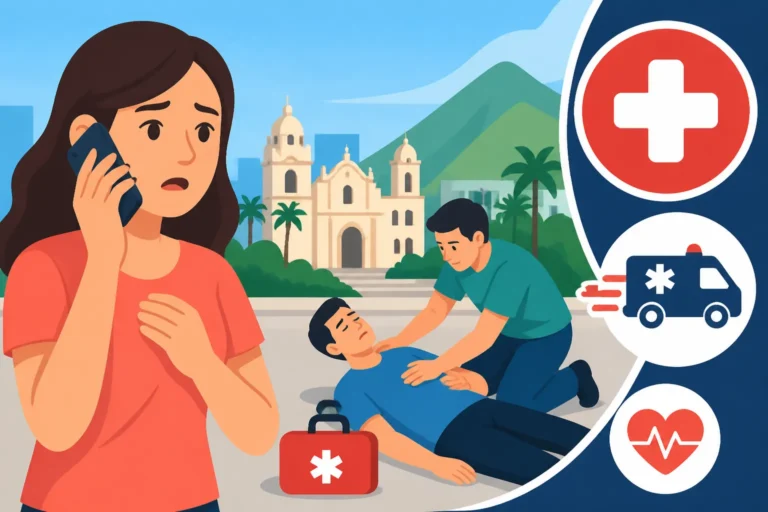
When a medical crisis strikes in Costa Rica, the panic isn't just about the injury—it’s the sudden, terrifying realization that you don't know how to explain your location to a Spanish-speaking dispatcher or if the ambulance will actually find your house. This guide demystifies the 911 system, ambulance tiers, and critical logistics to ensure you get help fast.
Navigating the 911 Dispatch System in Costa Rica
The first time you dial 911 in Costa Rica, you might expect the seamless, high-tech experience portrayed in Hollywood movies. The reality is far more human and, at times, administratively complex. The 911 system here is a centralized dispatch that coordinates the police (Fuerza Pública), fire department (Bomberos), and medical services (typically the Cruz Roja). While the system is robust, it relies heavily on the caller's ability to provide specific, local information that doesn't always fit the "street and number" format used in other countries.
The Language Barrier and Dispatch Protocol
While San José and major tourist hubs like Tamarindo or Jacó may have English-speaking operators on shift, it is never a guarantee. In a high-stress emergency, the dispatcher will likely start the conversation in Spanish, asking "Cual es su emergencia?" (What is your emergency?). If your Spanish is shaky, this is where the panic often sets in. It is vital to remain calm and use simple keywords if you cannot find a translator. Saying "Ambulancia," "Herido" (injured), or "Ataque al corazón" (heart attack) can bridge the gap while they look for an English speaker.
The protocol involves a series of questions that might feel repetitive but are essential for triage. They will ask for your name, phone number, the nature of the emergency, and—most importantly—the "dirección exacta." In the Central Valley, the dispatchers are often faster, but in rural areas, the time it takes to process the call can be longer. Understanding Emergency Medical Care in Costa Rica: What Every Expat Needs to Know can help you prepare for these initial seconds where every breath counts.
Identifying Your Location Without Addresses
Costa Rica is famous for its lack of formal street addresses. Even today, most people navigate using "puntos de referencia" (reference points). A dispatcher will not ask for "123 Maple Street." Instead, they will expect something like, "200 meters south and 50 meters west of the old fig tree in Santa Ana." For a foreigner, this is the ultimate administrative hurdle. If you are in a rental or a newly purchased home, you must learn your "address" in this format before an emergency happens.
When calling 911, look for the nearest well-known landmark—a church, a school, a specific supermarket (like a Mas x Menos or a Pali), or a government building. Use cardinal directions (North, South, East, West). In Costa Rica, the sun rises in the east and sets in the west, which is a helpful tip for orienting yourself if you are disoriented. If you are using a smartphone, you can try to give GPS coordinates, but many Cruz Roja dispatchers still prefer the traditional landmark-based descriptions to guide the driver visually.
What to Expect During the Call and Arrival
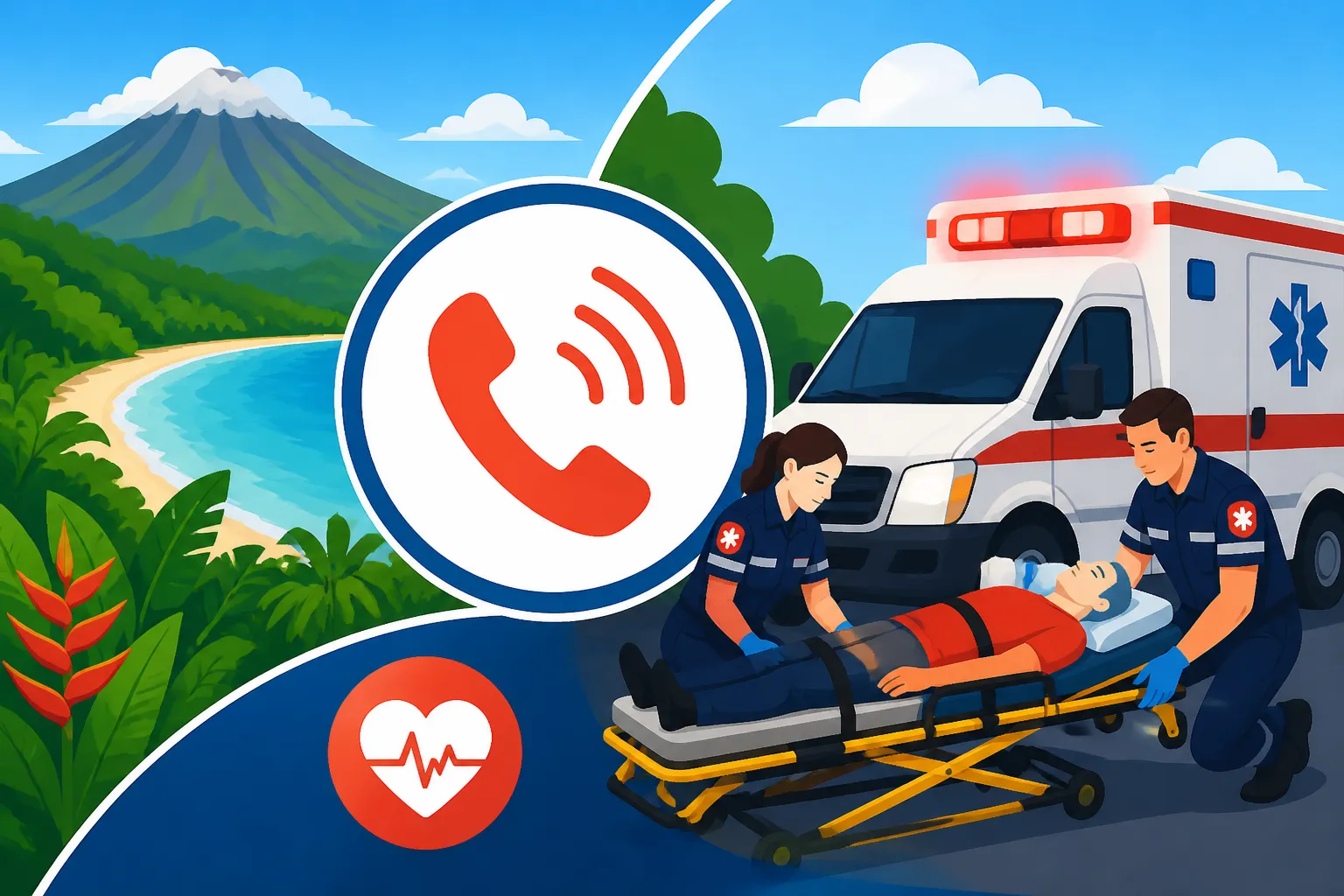
Once the dispatcher has the basic information, they will determine which unit to send. Do not hang up until they tell you to. They may provide basic medical instructions over the phone, such as how to perform CPR or how to stop a bleed. During this time, they are communicating with the local Cruz Roja station. In many parts of the country, the response time can vary significantly based on traffic, weather (the rainy season can turn roads into rivers), and the availability of units.
When the ambulance arrives, do not expect a doctor to step out. In Costa Rica, ambulances are typically staffed by TEMs (Técnicos en Emergencias Médicas), similar to EMTs or Paramedics. They will stabilize the patient and decide on the destination hospital. If you have private insurance, such as SafetyWing, you should mention this immediately, as it may influence whether they take you to a public hospital or a private facility. Have your DIMEX Residency Card in Costa Rica or your passport ready, as the crew will need to log the patient’s identity immediately.
Public vs. Private Ambulance Services
Understanding the difference between the public and private emergency response systems is perhaps the most important piece of knowledge for an expat. The two systems operate in parallel but offer very different levels of service, speed, and comfort. While 911 will generally dispatch the public option, you have the right to call a private service directly if you have a subscription or the means to pay.
The Role of the Cruz Roja (Red Cross)
The Cruz Roja Costarricense is the primary provider of pre-hospital emergency care in the country. It is a non-profit organization that works closely with the government. They have the largest fleet of ambulances and the widest geographic reach. Whether you are on a remote beach in the Osa Peninsula or in the heart of Heredia, the Cruz Roja is the service that will most likely respond to a 911 call.
However, the Cruz Roja often operates with limited resources. Their ambulances are divided into "Basic," "Intermediate," and "Advanced" life support units. In rural areas, you might only have access to a basic unit, which is essentially a transport vehicle with a stretcher and basic first aid. Their primary goal is to get you to the nearest EBAIS or public hospital. If you are looking for more information on the public system, Understanding the Role of the EBAIS (Local Health Clinic) in Costa Rica provides a deeper look at where you might be taken first.
Private Emergency Response Companies
For many expats, subscribing to a private ambulance service is a non-negotiable part of their healthcare strategy. Companies like Lineas Vitales, Soporte Vital, and others offer "Emergency Medical Services" (EMS) that operate more like the high-tier paramedics found in North America. These services are often staffed by highly trained bilingual paramedics and equipped with advanced life support technology.
The benefit of private services is two-fold: speed and destination. Private ambulances have smaller call volumes and can often arrive faster than the Cruz Roja, especially in congested areas of the Central Valley. More importantly, a private ambulance will take you directly to a private hospital like CIMA or Clinica Biblica if that is your preference. This bypasses the often-crowded public emergency rooms. If you are a traveler, having a policy with SafetyWing can provide the financial peace of mind to utilize these private services without worrying about the immediate out-of-pocket hit.
Factors for Choosing a Service
Choosing between calling 911 for a Cruz Roja ambulance or calling a private service directly depends on your location and the severity of the situation. In many beach towns, the Cruz Roja is the only option. In the Central Valley, the choice is more complex. Private services require a monthly subscription or a high one-time fee.
| Feature | Cruz Roja (Public/911) | Private Ambulance Services |
|---|---|---|
| Response Time | Variable (depends on traffic/demand) | Generally faster in urban areas |
| Cost | "Free" at point of service (funded by donations/Gov) | Subscription-based or high per-trip fee |
| Destination | Usually the nearest Public (Caja) hospital | Your choice of Private or Public hospital |
| Staffing | Basic to Intermediate EMTs | Advanced Paramedics (often bilingual) |
| Equipment | Varies by unit; can be basic | Typically Advanced Life Support (ALS) |
| Coverage | Nationwide, including remote areas | Primarily Central Valley and major hubs |
When weighing these options, consider Public vs. Private Healthcare in Costa Rica: Which Should Expats Choose? to see how the ambulance choice dictates your entire hospital experience.
Costs and Insurance Coverage for Emergency Transport
The "cost" of an ambulance in Costa Rica is a source of confusion for many. While the 911 system implies a socialized service, the logistics of billing—especially for foreigners—can be tricky depending on your residency status and the type of ambulance used.
Billing for Cruz Roja Services
Technically, the Cruz Roja does not charge for emergency transport to a public hospital. They are funded through a mix of government subsidies, a portion of the mandatory "Marchamo" (car tax), and private donations. However, they frequently ask for "colaboraciones" (donations) or may present a bill if the transport is non-emergent (like moving a patient from home to a clinic for a check-up).
For tourists or those without residency, the Cruz Roja may sometimes request payment information if the patient is being transported to a private facility. It is common practice for expats to donate to their local Cruz Roja branch annually. This is not just a gesture of goodwill; it supports the very unit that might save your life in a region where no private alternatives exist. Knowing How to Use Your DIMEX to Access Healthcare in Costa Rica is vital here, as your residency status can affect how your subsequent hospital stay is billed after the ambulance drops you off.
Out-of-Pocket Costs for Private Ambulances
If you do not have a subscription and call a private ambulance, be prepared for a significant bill. A single trip within the San José area can cost anywhere from $200 to $600 USD, depending on the level of care required (Basic vs. Advanced Life Support). If you require transport from a coastal area like Quepos back to a private hospital in the city, the cost can easily exceed $1,500 USD.
Air ambulances are an even more extreme case. For life-threatening emergencies in remote areas, a helicopter or fixed-wing medical flight to San José is often the only way to survive a major trauma or cardiac event. These flights can cost between $5,000 and $20,000 USD. This is a primary reason why veteran expats recommend high-quality travel or international health insurance like SafetyWing, which can coordinate and cover these astronomical costs. Without insurance, these companies often require a credit card payment upfront before the wheels leave the tarmac.
How International Insurance Handles Claims
Most private ambulance companies in Costa Rica are familiar with international insurance providers. If you have a policy, the company may offer "direct billing," where they coordinate with your insurer so you don't have to pay out of pocket. However, this usually only applies to major hospitals and their affiliated ambulance wings.
For smaller, independent ambulance services, you will likely have to pay the fee yourself and then file for reimbursement. Ensure you get a "factura electrónica" (electronic invoice) and a detailed medical report from the paramedics. International insurers like SafetyWing are generally very efficient at processing these claims, provided the documentation is clear and the transport was deemed "medically necessary." If you are confused about how this fits into your overall budget, check The Cost of Healthcare in Costa Rica: A Complete Breakdown for Foreigners (2026).
Hospital Destination and Handover Logistics
Where the ambulance takes you is often just as important as how fast it gets there. In Costa Rica, the medical system is split between the CCSS (Caja) and the private sector. The ambulance crew will ask—or assume—where you should go based on your condition and your insurance.
The Choice Between Public (Caja) and Private Facilities
If you are picked up by a Cruz Roja ambulance after calling 911, their default protocol is to take you to the nearest public hospital. If your condition is critical—such as a major car accident or a gunshot wound—they will take you to the nearest "Trauma Center" regardless of your preference. In Costa Rica, the public system, while often crowded, is actually better equipped for extreme trauma and complex surgeries than many private clinics.
However, if your condition is stable but urgent (e.g., a broken leg, severe infection, or non-critical chest pain), you can request to be taken to a private hospital. Hospitals like CIMA (Escazú), Clinica Biblica (San José/Santa Ana), and Hospital Metropolitano have dedicated emergency rooms that cater to expats and tourists. You can learn more about these in How to Use Private Hospitals Like CIMA, Clinica Biblica and Hospital Metropolitano. Be aware that the Cruz Roja may refuse to drive a long distance to a private hospital if it takes their only unit out of the local area for too long.
Emergency Room Procedures and Triage
Once you arrive at the hospital via ambulance, the "handover" occurs. The paramedics will give a report to the receiving nurse or doctor. In a public hospital, you will be triaged based on the severity of your condition. If you are not in immediate danger of dying, you may wait for several hours in a hallway or a crowded waiting room. This is a jarring experience for many expats who are used to private care.
In a private hospital, the process is much smoother but involves administrative checks. They will ask for your passport and your insurance card or a credit card for a "guarantee of payment" (depósito). Even if you arrive in a private ambulance, the hospital will not admit you until they are sure the bill will be covered. This is where having your SafetyWing info ready is a lifesaver. For more on this, Understanding Hospital Admission and Billing in Costa Rica explains the specific documents you'll need to keep on hand.
Transferring Between Facilities
Sometimes, an ambulance will take you to a local clinic to stabilize you, only for the doctors to realize you need a higher level of care. This "inter-hospital transfer" requires a second ambulance ride. If you are in the public system, the Caja handles this, but it can involve long waits for an available vehicle.
If you are in a public hospital and wish to be transferred to a private one, you must arrange for a private ambulance to pick you up. The public hospital will not provide transport for a "voluntary" move to a private clinic. You will be responsible for the cost of that second ambulance. This highlights the importance of making the right choice during the first 911 call if at all possible.
Practical Preparation for Medical Emergencies
Living in Costa Rica as an expat requires a shift in mindset from "reactive" to "proactive" regarding health. You cannot rely on the infrastructure to "just work" the way it does back home. You have to build your own safety net.
Creating a "Point of Reference" Map
Since addresses don't exist, you should write down your "official" landmark-based address in Spanish and post it on your refrigerator or near your front door. If a guest or a panicked family member needs to call 911, they shouldn't have to guess how to describe your location.
Include the following:
- The name of your neighborhood (Barrio).
- The primary landmark (e.g., "500 meters East of the Catholic Church").
- A description of your house (e.g., "The two-story white house with a black gate").
- The exact GPS coordinates (latitude and longitude) which can be found on Google Maps.
Essential Medical Documentation to Keep Ready
When the ambulance arrives, the paramedics will want to know your medical history. If you are unconscious or unable to speak Spanish, a "Go-Bag" or a medical file is essential. This file should include:
- A copy of your passport and DIMEX Residency Card in Costa Rica.
- Your insurance policy details (e.g., SafetyWing ID card).
- A list of all current medications (prescribed and over-the-counter).
- A list of allergies (especially to medications like penicillin or latex).
- Contact information for your primary doctor in Costa Rica and your emergency contact back home.
Having Prescription Medications and Pharmacies in Costa Rica: The Complete Guide can help you keep your list updated with local brand names, which are often different from those in the US or Europe.
Local Contact Lists and Community Support
In many Costa Rican communities, the fastest way to get help isn't 911—it’s your neighbors. Many neighborhoods have a "WhatsApp" group for security and emergencies. If you are in trouble, posting in that group can often get a neighbor to your door faster than an ambulance can navigate the backroads.
Additionally, keep the direct phone number for your local Cruz Roja station and your chosen private ambulance service saved in your phone. Calling the local station directly can sometimes bypass the 911 dispatch queue, though this varies by region. If you are still in the process of moving, The Complete Guide to Moving to Costa Rica: Your First 90 Days (2027) covers how to set up these local connections early on.
Disclaimer
The information provided in this guide is for informational purposes only and does not constitute medical or legal advice. Emergency response times and protocols in Costa Rica can change without notice due to government regulations or local conditions. Always consult with a licensed healthcare professional and your insurance provider to verify coverage and emergency procedures. In the event of a life-threatening emergency, dial 911 immediately.