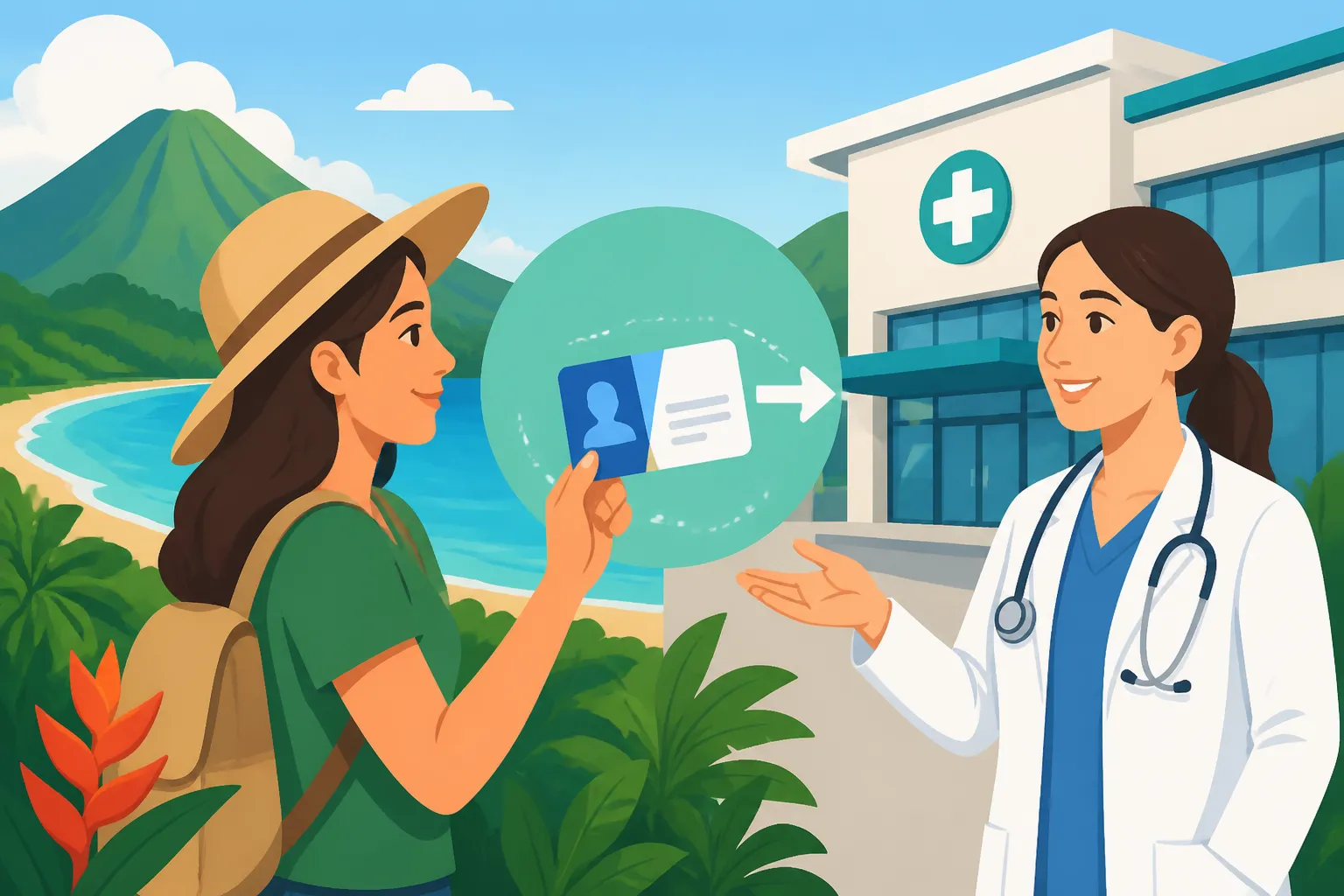
How to Use Your DIMEX to Access Healthcare in Costa Rica
Getting your hands on that hard-earned DIMEX card feels like crossing the finish line of a marathon, but for many expats, the next hurdle is figuring out how to actually use it to see a doctor. The transition from being a tourist to a legal resident involves more than just a plastic ID; it requires integrating into a complex, dual-layered medical system. This guide provides the practical, boots-on-the-ground steps to linking your DIMEX to the national healthcare system, navigating local clinics, and ensuring you never face a medical emergency without the coverage you are legally entitled to.
Understanding the DIMEX and Your Right to Healthcare
The DIMEX (Documento de Identidad Migratoria para Extranjeros) is more than just a proof of residency; it is your golden ticket to the Caja Costarricense de Seguro Social, commonly known as the "Caja." In Costa Rica, healthcare is a constitutional right, but for foreigners, that right is tied directly to your legal status. Once you have your DIMEX, you are no longer a guest in the eyes of the medical system; you are a contributor and a beneficiary.
What is the DIMEX?
The DIMEX is a multi-digit identification number assigned by the Department of Immigration (DGME). For an expat, this number replaces your passport as your primary identifier for all domestic transactions, including banking, utilities, and, most importantly, healthcare. It is essential to understand that while your passport got you through the door as a tourist, the DIMEX is what allows you to be "seen" by the government’s digital systems.
When you walk into a public hospital or a local clinic, the first thing the receptionist will ask for is your "cédula" or DIMEX. Without this, you are treated as a private patient, which means paying out-of-pocket or relying on international travel insurance. Having this card means you have a record in the national database, which tracks your contributions, your medical history, and your eligibility for services.
The Legal Link Between Residency and the Caja
Under Costa Rican law, every resident—whether under the Pensionado, Rentista, or Inversionista category—must contribute to the Caja. This is not optional. During your residency application process, you likely had to prove you were already paying into the system or intended to. The DIMEX serves as the bridge between your immigration file and your healthcare file.
I remember the confusion during my first year; I thought simply having the card meant I could walk into any clinic and get a checkup. In reality, you must ensure your DIMEX is "active" within the CCSS database. This link ensures that your monthly payments are correctly attributed to your account. If there is a mismatch between your residency status and your Caja records, you may find yourself denied service for non-emergency care until the bureaucracy is straightened out. Understanding How the Caja Requirement Connects to Your Residency in Costa Rica helps clarify why these contributions are scaled to your income and why they are vital for maintaining your legal status.
Common Myths About the DIMEX and Medical Access
One of the biggest myths is that the DIMEX provides "free" healthcare. It is not free; it is a single-payer system funded by your mandatory monthly contributions. Another common misconception is that a DIMEX allows you to visit any EBAIS (local clinic) in the country. In reality, the public system is strictly geographic. Your DIMEX identifies who you are, but your proof of residence (like a utility bill) determines which specific clinic you are allowed to use.
Expats also often believe that once they have a DIMEX, they no longer need private insurance. While the Caja is excellent for major surgeries and chronic conditions, the wait times for non-essential procedures can be staggering. Many veterans of the Costa Rican lifestyle keep their DIMEX for the legal requirement and major issues, but use a supplemental plan for day-to-day needs. For those in the middle of a move or who travel frequently, a plan like SafetyWing can provide that necessary bridge of coverage while the local bureaucracy grinds slowly through your DIMEX activation.
Activating Your Healthcare Access with the DIMEX
Simply holding the DIMEX card in your wallet is not enough to get you into a doctor’s office. There is a secondary registration process that many expats overlook until they are actually sick and in need of help. This "activation" happens at the local level and requires a bit of patience and a few specific documents.
The Registration Process at Your Local EBAIS
The EBAIS (Equipo Básico de Atención Integral en Salud) is the cornerstone of the Costa Rican public health system. To use your DIMEX, you must first register at the EBAIS that corresponds to the neighborhood where you live. You cannot simply go to the one near your office or the one in the next town over because it looks nicer.
The registration process usually involves visiting the "filiación" (records) window. You will present your DIMEX, and the clerk will verify that your monthly payments are up to date. This is where many foreigners run into trouble. If you are self-employed or a retiree, you must ensure your "convenio" (agreement) with the Caja is properly linked to your new DIMEX number. If you previously used a passport number to pay your insurance while your residency was pending, you must ask them to merge the records. Knowing How to Enroll in the Caja (CCSS) as a Foreigner in Costa Rica is essential for this step to go smoothly.
What Documents to Bring (Besides the DIMEX)
While the DIMEX is the star of the show, the EBAIS clerks will require supporting evidence to tie you to their specific jurisdiction. You should bring a physical copy of a recent utility bill (water or electricity) that clearly shows your address. In Costa Rica, addresses are often descriptive (e.g., "200 meters south of the old fig tree"), but the bill provides the standardized location code the system needs.
Additionally, bring a copy of your DIMEX (front and back) and, if applicable, your marriage certificate or birth certificates for children if you are registering dependents. It is always a good idea to have a printout of your latest Caja payment receipt. Even though everything is supposedly digital, the "sistema se cayó" (the system went down) is a common phrase in Costa Rican administrative offices. Having paper backups will save you a second trip. Understanding the Role of the EBAIS (Local Health Clinic) in Costa Rica can provide more context on why these local clinics are the gatekeepers of your health.
Managing Your Digital Health Record (EDUS)
Once you are registered at your EBAIS with your DIMEX, your next step is to download the EDUS (Expediente Digital Único en Salud) app on your smartphone. This app is surprisingly modern and efficient. You log in using your DIMEX number, and it serves as your digital portal to the entire CCSS system.
Through EDUS, you can see your upcoming appointments, check your prescription history, and even see which doctor is assigned to you. Most importantly, it shows your "derecho" (right) status. If the app shows a green checkmark, you are fully covered and ready to go. If it’s red, there’s an issue with your payments or registration. Being proactive with the EDUS app allows you to solve administrative headaches before you’re actually running a fever. Many expats find Navigating the Costa Rican Healthcare System: An Expat’s Roadmap (2027) a helpful resource when navigating these first digital steps.
Navigating the Caja System Using Your ID
Once you are registered, using the system is a matter of following the local flow. The DIMEX is your passport through every stage of care, from the initial triage to the pharmacy line.
Booking Appointments via the EDUS App
Gone are the days when you had to stand in line at 4 AM to get a "cupo" (slot) for a doctor, at least in most regions. With your DIMEX registered, you can book appointments directly through the EDUS app or the CCSS website. Usually, new slots are released at 6:00 AM each morning for the following day or week.
When you show up for your appointment, you must present your physical DIMEX card at the front desk. The receptionist will "check you in" in the system. If you forget your card, they might accept a photo on your phone, but it is risky. The system is designed to prevent fraud, and the physical card remains the gold standard for verification. For more details on the nuances of this process, you can read about How to Find and Register with an EBAIS Clinic in Costa Rica.
How Referrals and Specialist Care Work
The EBAIS handles the basics: flu shots, blood pressure checks, and general ailments. If you need a cardiologist, a dermatologist, or an MRI, the EBAIS doctor must "refer" you to a larger regional hospital. This referral is tied electronically to your DIMEX.
This is where the infamous wait times of the Caja come into play. Once the referral is in the system, you may wait weeks or months for a specialist appointment. Your DIMEX allows you to track the status of these referrals through the EDUS app. It is important to stay on top of this; if the hospital calls you with a date and you don't answer, you might be pushed to the back of the line. If you are curious about the differences in care speeds, Public vs Private Healthcare in Costa Rica: Which Should Expats Choose? offers a realistic comparison of what to expect.
Getting Your Medications at the Farmacia
One of the greatest benefits of the Caja system is that medications are included in your monthly contribution. After your doctor’s appointment, the prescriptions are sent electronically to the pharmacy at the EBAIS or the hospital. You don't get a paper script to take home; it’s all linked to your DIMEX.
You walk to the pharmacy window, show your DIMEX, and they will tell you when the medicine will be ready. Sometimes it’s within an hour; other times, you have to come back the next day. For chronic medications, the system often allows for "recetas electrónicas" that automatically renew each month. You just show up with your ID, and they hand over your supplies. This is a massive cost-saver for expats on long-term medications. You can find more information in Prescription Medications and Pharmacies in Costa Rica: The Complete Guide.
Using the DIMEX for Private Healthcare and Insurance
Even though the DIMEX is your key to the public system, it is equally important in the private sector. Costa Rica boasts world-class private hospitals like CIMA and Clinica Biblica, where the DIMEX serves a different but vital role.
Why Your DIMEX Matters at Private Hospitals
When you visit a private hospital, they will ask for identification to create your medical file. While they will accept a passport, using your DIMEX is highly recommended. Why? Because the DIMEX is the unique identifier used by local insurance companies and the national database.
If you ever need to be transferred from a private facility to a public one (which often happens in cases of extremely expensive long-term ICU care that exhausts insurance limits), having your records already tied to your DIMEX makes the transition much smoother. The private hospitals also use your DIMEX to process "direct billing" with local insurers like INS. For a deep dive into these facilities, check out Understanding Private Hospital Networks and Direct Billing in Costa Rica.
Integrating Private Insurance with Your Residency Status
Many expats choose to carry a private insurance policy in addition to their mandatory Caja coverage. Whether you have a local policy with INS or an international plan like SafetyWing, your DIMEX is the document that proves you are a legal resident, which can sometimes affect your premiums or your eligibility for certain local riders.
When you go for a private consultation, you present your DIMEX and your insurance card. The clinic then verifies your coverage. If you are using a plan like SafetyWing, which is popular with digital nomads and those transitioning into residency, you would typically pay upfront and then submit your receipts for reimbursement. In this case, having a DIMEX ensures that your medical reports are issued with your official Costa Rican ID, making the reimbursement process with international providers much clearer. For more on these options, read about Health Insurance in Costa Rica: Caja, INS and International Options Explained.
Expediting Care with Supplemental Coverage
The "dual-track" approach is the most common strategy for savvy expats. You use the Caja for your DIMEX-mandated requirements and major catastrophes, but you use private insurance for everything else. This allows you to skip the long lines at the EBAIS for simple things like an ultrasound or a specialist consultation.
| Service Type | Public (Caja) with DIMEX | Private with Insurance/Out-of-Pocket |
|---|---|---|
| Primary Care | At assigned EBAIS only | Any clinic nationwide |
| Cost | Monthly percentage of income | Per-visit fee or insurance co-pay |
| Wait Time | Days to weeks for GP; months for specialist | Same-day or same-week |
| Emergency | Immediate at any public hospital | Immediate at private ER |
| Pharmacy | Free for formulary drugs | Full price at commercial pharmacies |
Using your DIMEX to maintain your public "derecho" ensures you always have a safety net. However, having a supplemental plan like SafetyWing ensures that if you need to see a doctor while visiting the beaches of Guanacaste or taking a trip back home, you aren't tethered to the geographic restrictions of the local EBAIS. You can learn more about this in Health Insurance in Costa Rica: Caja, INS and International Options Explained.
Practical Scenarios and Troubleshooting
Life in Costa Rica is rarely a straight line. Bureaucratic shifts, expired documents, and family changes can all complicate how you use your DIMEX for healthcare. Being prepared for these "what-ifs" is part of being a successful expat.
What if My DIMEX is Expired?
This is a frequent nightmare for expats. The renewal process for a DIMEX can sometimes take six months or longer, leaving you with an expired card. Technically, an expired DIMEX can lead to a suspension of your "derecho" in the Caja system.
However, if you have the "plantilla" (the receipt showing you have already applied for renewal and paid the fees), most EBAIS and hospitals will continue to treat you. You must carry that renewal receipt with your expired card at all times. If the system flags you as "inactive," you will need to go to the filiación window and show your proof of the ongoing renewal process to have your access manually extended. For more on the paperwork side, How to Renew or Replace Your DIMEX Card in Costa Rica is a must-read.
Adding Dependents to Your Coverage
If you are the primary residency holder, you can often "cover" your spouse or children under your Caja contribution. To do this, your DIMEX must be linked to theirs in the CCSS database. This requires a trip to the central CCSS offices or a main regional branch with marriage and birth certificates (duly apostilled and translated).
Once the link is established, your dependents will use their own DIMEX cards to access care, but the system will recognize that their "derecho" is paid for through your account. This is a common practice for families moving under the Pensionado or Rentista categories. You can find a step-by-step guide in How to Add Dependents to Your Caja Coverage in Costa Rica.
Lost DIMEX: How to Handle Emergencies
If you lose your DIMEX, you need to report it to the OIJ (the investigative police) and get a report. This report, along with your passport, will serve as your temporary ID for medical services until you can get a replacement card from Immigration.
In a true life-or-death emergency, a public hospital will treat anyone, regardless of their ID or insurance status. They will stabilize you first and ask questions later. However, once the emergency is over, they will look for your DIMEX to bill the system. If you cannot provide it, you may be billed as a private patient. This is another reason why keeping a digital scan of your DIMEX and your insurance details from providers like SafetyWing in a secure cloud folder is a lifesaver. For more on urgent situations, check out Emergency Medical Care in Costa Rica: What Every Expat Needs to Know.
Managing Long-Term Care with Your Resident ID
As you settle into life in Costa Rica, your medical needs will evolve. The DIMEX is not just for the occasional cold; it is the foundation of your long-term wellness strategy in the country.
One of the best ways to utilize the system is for preventative care. The Caja offers annual "controles" for chronic conditions like diabetes or hypertension. By using your DIMEX to stay in the system, you get access to regular blood work and checkups that would cost thousands of dollars privately. While the system can be frustratingly slow, the quality of the physicians is generally very high, as many of them teach at the national university and also practice in the top private hospitals.
For those planning to stay for decades, the integration of your DIMEX into the healthcare system also ensures that your medical history is centralized. Whether you are in a small EBAIS in the Osa Peninsula or a major hospital in San Jose, the EDUS system allows doctors to see your history the moment they swipe your ID. This continuity of care is something many expats overlook but eventually come to value deeply. If you are still weighing the costs, The Cost of Healthcare in Costa Rica: A Complete Breakdown for Foreigners (2026) provides a comprehensive look at the financial side of things.
Final Considerations for Expats
Using your DIMEX to access healthcare is a rite of passage. It requires a shift in mindset from the "customer is always right" model of private medicine in the US or Europe to the "patient is a participant" model of a socialized system. Patience, a smile, and the correct documentation will get you further than any amount of complaining.
Always remember that the system is built on rules. If the clerk says you need a specific stamp or a different utility bill, getting angry won't help. Instead, take a deep breath, head to the nearest "copias" shop to print what you need, and try again. Once you are successfully "in," you will find that the peace of mind that comes with universal coverage is one of the best parts of living in Costa Rica. Whether you rely solely on the public system or mix it with a plan like SafetyWing for more flexibility, your DIMEX is the key to it all. For more help navigating these waters, look into How Costa Rica’s Health System Works: The Caja (CCSS) vs Private Explained (2027).
Disclaimer
The information provided in this guide is for educational and informational purposes only and does not constitute legal or medical advice. Healthcare regulations and immigration laws in Costa Rica are subject to change. Always consult with the CCSS (Caja), the DGME (Immigration), or a qualified legal professional regarding your specific residency and healthcare status. For medical emergencies, always dial 911 immediately.