How Do I Enroll in the Caja After Moving to Costa Rica?
You have finally received that golden email from Migración saying your residency is approved, only to realize the bureaucratic marathon isn't over yet. Most expats find themselves stuck in a confusing limbo between residency approval and actually receiving their DIMEX card, primarily because of the mandatory public healthcare registration. This guide solves that confusion by detailing every step of the enrollment process in the Caja Costarricense de Seguro Social (CCSS).
Navigating the Mandatory Nature of the Caja System
If you are moving to Costa Rica with the intention of becoming a legal resident, the "Caja" is not a suggestion—it is a legal requirement. For many of us coming from countries with private insurance models, the idea of being forced into a state-run system can feel intrusive and frustrating. You might be wondering, Do I Have to Join the Caja to Get Residency in Costa Rica? The short answer is a resounding yes. Without proof of your Caja affiliation, the immigration department will not issue your residency card (DIMEX).
The Caja is a universal healthcare system that operates on a principle of solidarity. This means your monthly contribution is based on your reported income, and in theory, this helps fund healthcare for those who cannot afford it. While the system provides everything from basic check-ups to complex surgeries without additional out-of-pocket costs at the point of service, the administrative hurdle of getting into the system is where most foreigners lose their patience.
It is important to remember that during the months (or sometimes years) you spend waiting for residency approval, you are still responsible for your own health costs. Many expats choose to use a flexible plan like SafetyWing during this transition period. Since the Caja only covers you once you are officially enrolled as a resident, having a digital nomad-friendly option like SafetyWing ensures you aren't wiped out financially by a sudden emergency while the bureaucrats at Migración and the CCSS process your paperwork.
Preparation and the Necessary Paperwork
The biggest mistake I see newcomers make is showing up to a CCSS office (Sucursal) without the correct stack of documents. In Costa Rica, "the system is down" or "you are missing a photocopy" are phrases that can ruin your entire week. Before you even think about heading to the office, you need to understand How to Enroll in the Caja (CCSS) as a Foreigner in Costa Rica by gathering a very specific set of credentials.
First, you need your residency approval resolution. This is the official document sent by the Dirección General de Migración y Extranjería. You will also need your valid passport and, most importantly, copies of every single page—even the blank ones. The CCSS clerks are meticulous. If you are applying under a specific category like Pensionado, you must provide proof of your pension income, which often needs to be officially translated into Spanish and sometimes notarized.
I always recommend that people keep their international health coverage active during this preparation phase. For instance, SafetyWing is particularly useful here because it provides that bridge of security. Even after you submit your paperwork, there is often a gap of several weeks before your "carnet" is active. Having SafetyWing in your back pocket means you don't have to worry about the "what ifs" while you wait for a government clerk to click the final "approve" button on your file.
| Document Required | Type of Copy | Purpose |
|---|---|---|
| Residency Resolution | Original + 2 Copies | Proof of legal right to reside |
| Passport | Original + Copies of all pages | Identification and entry proof |
| Proof of Income | Translated/Notarized | Determining monthly payment |
| Utility Bill | Recent (within 3 months) | Proving your location for EBAIS |
| DIMEX Appointment | Printed confirmation | Showing you have a date for your card |
The Physical Enrollment at the Sucursal
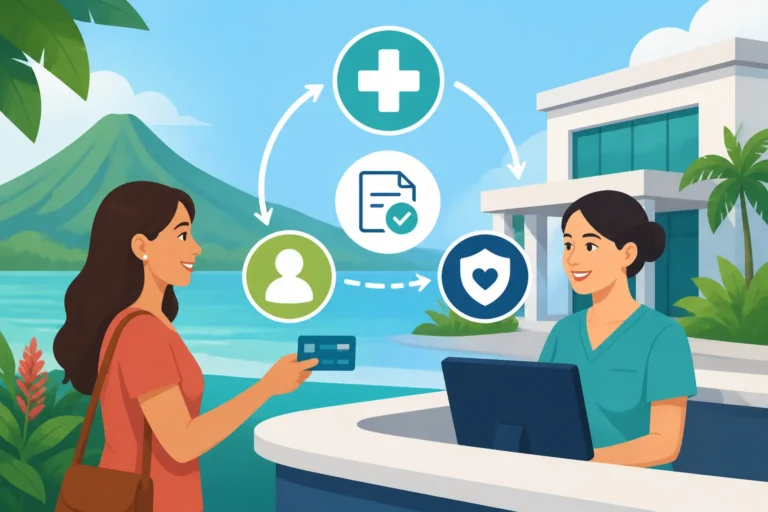
Once your documents are in order, you must visit the CCSS Sucursal that corresponds to your place of residence. You cannot just go to any office; it must be the one assigned to your neighborhood. This is where the "veteran expat" advice really kicks in: arrive early. If the office opens at 8:00 AM, be there at 7:00 AM. Bring a book, a portable battery for your phone, and a healthy dose of patience.
When you finally reach the window, the clerk will review your income. This is a critical moment because it determines How Are My Monthly Caja Payments Calculated in Costa Rica?. The percentage usually ranges between 7% and 12% of your reported income. If you are a Rentista or a Pensionado, they will calculate it based on the amount you proved during your residency application. If you are self-employed, you will be registered as an "Asegurado Voluntario," which involves a slightly different calculation.
During this interview, the clerk might ask you detailed questions about your living situation. Do not be alarmed; they are simply trying to ensure you are placed in the correct category. Once the paperwork is processed, you will be given a "pago de factura" or an invoice. You must pay this immediately, usually at a nearby bank or a "Punto de Pago." Only after this first payment is made is your affiliation considered active for the purposes of Migración.
Registering with Your Local EBAIS
Paying your bill at the Sucursal is only half the battle. To actually see a doctor or get a prescription, you must register at your local EBAIS (Equipos Básicos de Atención Integral en Salud). This is your primary care clinic. You can learn more about Understanding the Role of the EBAIS (Local Health Clinic) in Costa Rica to see how these clinics function as the heartbeat of the public system.
To register at the EBAIS, you will need the receipt of your Caja payment, your passport (or DIMEX if you have it), and a utility bill to prove you live in that specific clinic's catchment area. This step is often overlooked by expats who think the administrative registration at the Sucursal is enough. If you show up to an EBAIS in an emergency without having previously registered there, you may be turned away or forced to pay a private rate for the visit.
The EBAIS is where you will go for everything from a common cold to blood tests and vaccinations. It is a community-based system, so your neighbors will be in the waiting room with you. This is also why many expats choose to supplement their Caja coverage with private options. For international travel or for those times you want a second opinion from a specialist outside the public system, having a plan like SafetyWing offers a level of flexibility that the public system simply cannot match. You can find more details on this balance in The Expat Guide to Joining the Caja (CCSS) in Costa Rica (2027).
Managing the Gap and Future Payments
The time between your first payment and the moment you actually feel "integrated" into the system can be stressful. You might find that How Long Does It Take to Get Caja Coverage as a New Resident in Costa Rica? varies depending on the time of year and the specific office. Generally, your administrative coverage is instant once you have the receipt, but getting into the medical database can take a few days.
One of the most important things to master is the payment system. You can pay your monthly bill through most local bank apps (like BNCR or BCR) or via the "EDUS" app, which is the Caja's digital portal. If you miss a payment, your coverage is suspended immediately, and Migración can see this status. This can cause significant issues when it comes time to renew your DIMEX. Always keep your receipts, even digital ones, as proof of payment.
While the Caja is great for chronic conditions and long-term care, it can have long wait times for non-emergency surgeries or specialist appointments. This is why many foreigners maintain a "hybrid" approach. They use the Caja because they have to, but they keep private insurance for speed and comfort. Whether you are looking for Health Insurance in Costa Rica: Caja, INS and International Options Explained or simply want a reliable travel-medical policy like SafetyWing for when you leave the country, being prepared is the key to a happy life in the tropics.
Common Obstacles for New Expats
The language barrier is the most frequent hurdle. Most CCSS clerks do not speak English, and medical forms are exclusively in Spanish. If your Spanish is not yet at a conversational level, I highly recommend hiring a "tramitador" or bringing a bilingual friend to your appointments. Small misunderstandings about your income or your address can lead to your application being rejected, forcing you to start the queue all over again the next day.
Another common issue is the "dependency" registration. If you are moving with a spouse, you need to know How to Add Dependents to Your Caja Coverage in Costa Rica. Your spouse can often be covered under your contribution if they do not have their own income, but this requires additional marriage certificates that must be apostilled and translated. It is not an automatic process, and failing to register a spouse correctly can leave them without legal coverage during a medical crisis.
Finally, remember that the Caja does not cover you when you travel outside of Costa Rica. This is a common misconception among new residents. If you go back to your home country for a visit or take a trip to Panama, your Caja coverage stops at the border. This is another reason why SafetyWing is so popular among the expat community here; it provides that continuous global medical coverage that the local state system simply isn't designed to offer.
Strategic Tips for a Smooth Enrollment
To ensure you don't spend more time than necessary in government offices, follow these veteran tips:
- Check the Jurisdiction: Verify twice that you are at the correct Sucursal for your district.
- Digital Folder: Keep scans of all your residency and Caja documents on a cloud drive. You will need them more often than you think.
- The EDUS App: Download the EDUS app as soon as you have your ID number. It allows you to see your appointments and your payment history in real-time.
- Income Verification: If your income is from abroad, ensure your bank statements are clear and, if possible, have a letter from your CPA in Costa Rica to verify the amounts.
Navigating How to Find and Register with an EBAIS Clinic in Costa Rica is the final piece of the puzzle. Once you are in the system, have your EBAIS assigned, and are making your monthly payments, you have officially cleared one of the biggest hurdles of Costa Rican residency. It feels like a lot of work—and it is—but the peace of mind that comes with legal residency and access to healthcare is worth the effort.
Disclaimer
This guide is provided for informational purposes only and does not constitute legal or professional medical advice. Immigration and healthcare regulations in Costa Rica are subject to frequent changes. Always verify the latest requirements with the official CCSS (Caja) website or a qualified Costa Rican residency attorney before proceeding with your enrollment.