Do I Have to Join the Caja to Get Residency in Costa Rica?
One of the most common surprises for expats moving to the tropics is realizing that residency and healthcare are legally inseparable. You might arrive with a robust international policy, only to find the immigration office demanding a different slip of paper. This guide explains why you must join the public health system to secure your residency and how to navigate that process.
The Mandatory Link Between Residency and the CCSS
If you are planning to become a legal resident of Costa Rica, the short answer to whether you must join the "Caja" (Caja Costarricense de Seguro Social or CCSS) is a resounding yes. Since 2010, Costa Rican law has strictly mandated that all foreigners granted residency—whether as a retiree, an investor, or through marriage—must contribute to the public healthcare system. This is not an optional "add-on" for those who want it; it is a prerequisite for receiving your DIMEX (Documento de Identidad Migratoria para Extranjeros), which is your official residency card.
The logic from the government's perspective is social solidarity. The system is built on the principle that everyone living in the country should contribute to the collective pot, ensuring that even the most vulnerable have access to medical care. For you, the expat, this means that even if you never intend to step foot in a public hospital, you still have to pay your monthly dues. I have seen many friends arrive in San José with expensive private plans, feeling frustrated that they are "double paying." However, it is important to view the Caja as more of a residency tax that happens to provide healthcare coverage.
The timing of this requirement is often where the confusion begins. You do not typically need to be enrolled in the Caja the very day you submit your residency application to Migración. Instead, once your residency is approved "in principle," the immigration department will issue an approval letter. You then take this letter to the nearest CCSS office (Sucursal) to enroll. You cannot complete the final step of the residency process—the appointment where they actually print your card—without showing proof that your Caja payments are up to date. Many people ask Do I Need Health Coverage for Costa Rican Residency? and the answer is usually about this specific administrative loop.
Understanding the Voluntary Insurance Category for Residents
Most expats enter the system under a category known as "Asegurado Voluntario" (Voluntary Insured). This category is specifically designed for people who do not have a traditional Costa Rican employer but still need to be part of the system. If you are applying under the Pensionado (Retiree) or Rentista (Long-term Renter/Income) categories, this is where you will land. The process involves visiting your local CCSS sucursal—perhaps the one in Escazú or the central office in San José—and presenting your residency approval and your passport.
The amount you pay is not a flat fee. Instead, it is a percentage of the income you reported on your residency application. This is where a bit of "sticker shock" can happen. If you told Migración you earn $2,500 a month to qualify for Rentista status, the Caja will calculate your monthly premium based on that figure. It usually ranges between 7% and 12%, depending on the specific brackets at the time. To get a better idea of the math, it is worth Understanding How Caja Contributions Are Calculated in Costa Rica before you finalize your budget.
Once you are registered, you will be assigned to a local clinic called an EBAIS (Equipo Básico de Atención Integral en Salud). This is your primary point of entry into the public system. Whether you live in the breezy hills of Atenas or the coastal heat of Guanacaste, your EBAIS is where you go for basic prescriptions, vaccinations, and general check-ups. While the administrative side can be slow, the actual care at many EBAIS locations is quite good, provided you have the patience for the paperwork. You can learn How to Enroll in the Caja (CCSS) as a Foreigner in Costa Rica by following the specific regional requirements of your new neighborhood.
Public Coverage vs. Private Insurance: Why Many Expats Use Both
Because the public system is known for long wait times for non-emergency surgeries and specialist consultations, many expats choose to maintain a "hybrid" approach. They pay for the Caja because they have to for residency, but they also use private hospitals like CIMA in Escazú or Clinica Biblica for their day-to-day needs. The Caja covers everything—pre-existing conditions, prescriptions, surgeries, and even dental—at no extra cost beyond your monthly fee, but the "cost" is often time.
This is where a product like SafetyWing can be incredibly useful. While the Caja covers you within the borders of Costa Rica, many residents find that they want extra protection for when they travel back home or to other countries. Additionally, during the long months (sometimes years) while your residency is being processed, you are not yet eligible for the Caja. During this "limbo" period, having a reliable plan from SafetyWing ensures you aren't bankrupted by a sudden accident before your public coverage kicks in.
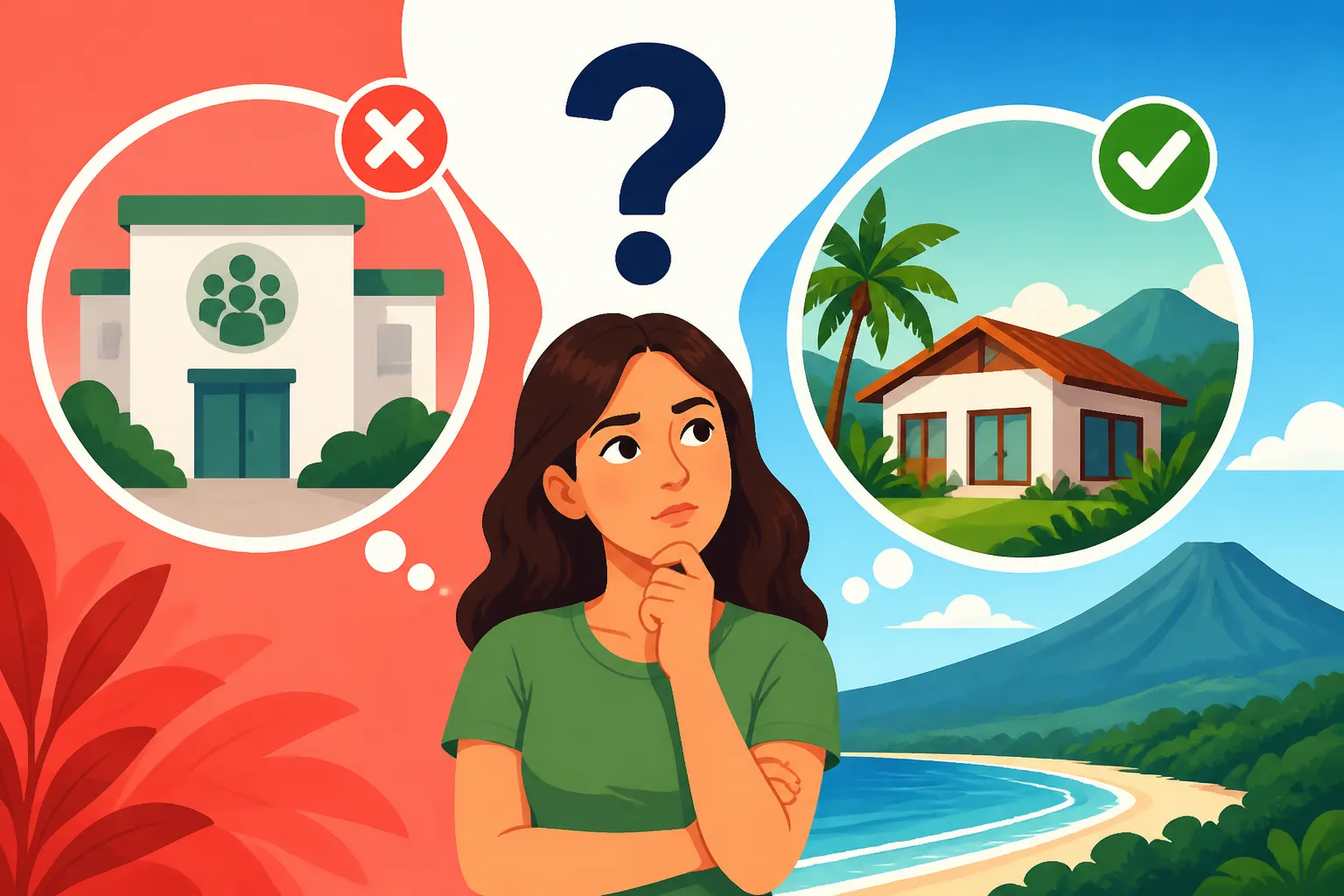
Comparing the two systems side-by-side helps clarify the value of each. The Caja is your "safety net" and your legal requirement, while private insurance is your "convenience and speed" tool. Most veteran expats eventually find a balance, using the Caja for expensive monthly medications and using private doctors for specialist visits. When deciding which path to prioritize, it helps to read about Public vs Private Healthcare in Costa Rica: Which Should Expats Choose? to see which fits your health profile.
| Feature | Caja (CCSS) – Public | Private Insurance (e.g., INS, SafetyWing) |
|---|---|---|
| Residency Requirement | Mandatory for all residents | Not a substitute for residency |
| Pre-existing Conditions | Always covered | Often excluded or requires a rider |
| Wait Times | Can be long for specialists/non-emergencies | Very short; same-day or same-week |
| Prescription Costs | Included in monthly fee | Usually a co-pay or out-of-pocket |
| Hospital Choice | Assigned based on where you live | You choose (CIMA, Metropolitano, etc.) |
| Travel Coverage | Local only | Often includes international/travel options |
Many newcomers are surprised to learn that Health Insurance in Costa Rica: Caja, INS and International Options Explained involves a mix of these various providers. For instance, you might use SafetyWing for your international travel and the initial move, then transition to the Caja for residency, while keeping a small local private policy for quick access to a dermatologist or cardiologist.
Navigating the Enrollment Hurdles and Common Frustrations
The process of joining the Caja is rarely a "one-and-done" office visit. It often requires several trips to different windows. You will likely start at the "Valuación" window where they determine your income, then move to the "Afiliación" window to get your actual carnét (ID card). You must bring your passport, a copy of your residency approval, and proof of address—usually a utility bill from ICE or AyA. If your bill is in your landlord's name, you might need a copy of your lease agreement to prove you actually live there.
A common pain point is finding your specific clinic. The system is highly localized. If you move from Heredia to Alajuela, you have to "transfer" your file to the new sucursal. You can't just show up at any clinic; you must go to the one designated for your sector. This is why knowing How to Find and Register with an EBAIS Clinic in Costa Rica is one of the most important logistical steps after you get your residency approval. The EBAIS is the heartbeat of the community healthcare system, and once you are in their database, getting basic care becomes much smoother.
It is also vital to understand that the Caja is a family-based system. If you are the primary applicant for residency, you can often add your spouse and children as dependents. This doesn't necessarily double your payment, though it may result in a slight adjustment to the calculation. Understanding the specific Understanding the Role of the EBAIS (Local Health Clinic) in Costa Rica will help you manage expectations for your family's care, especially if you have young children who need regular vaccinations according to the Costa Rican schedule.
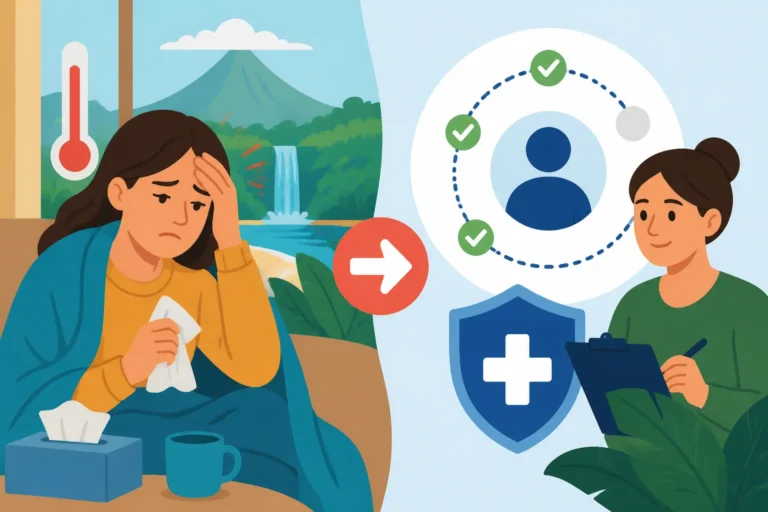
Lastly, be prepared for the "gap." It can take months for Migración to process your residency, and the Caja won't let you join until you have that official approval letter. This means you are effectively uninsured (unless you have private coverage) for the first 6 to 18 months of your life in Costa Rica. I always recommend that people keep an international policy, such as SafetyWing, active during this entire transition. If you fall ill before your residency is finalized, the public hospitals will treat you in an emergency, but they will bill you as a private patient, which can be quite expensive. You can check the current timelines for this by looking into How Long Does It Take to Get Caja Coverage as a New Resident in Costa Rica? to help plan your private insurance buffer.
Practical Steps for Managing Monthly Payments
Once you are successfully enrolled, you will be issued an "IP number" (until your DIMEX arrives) or your DIMEX number will serve as your account ID. You must pay your bill every single month. If you fall behind by even one day, you are technically "moroso" (in default). This is dangerous because Migración checks your status when you go to renew your residency card every two years. If you have a history of late payments, it can complicate your renewal process.
Fortunately, paying is relatively easy in the modern era. You don't have to stand in line at the sucursal anymore. You can pay through the online portals of most major banks like BCR or Banco Nacional, or at "Punto Max" locations in grocery stores. Understanding How Do I Pay My Caja Bill Each Month in Costa Rica? will save you hours of administrative headaches. Many expats set up an automatic payment through their local bank account to ensure they never miss a deadline.
Keep in mind that the system is constantly evolving. The digital integration between the CCSS and Migración is tighter than ever. They can see in real-time if your payments are current. If you are ever in doubt about whether the cost is worth it, consider that the Caja covers major life events—like heart surgery or cancer treatment—that could cost hundreds of thousands of dollars in the private sector. While we all hope to never need that level of care, the Caja provides a peace of mind that complements private options. For a deeper look at the cost-benefit analysis, many find it helpful to ask Is the Caja or Private Healthcare Better for Expats in Costa Rica? based on their specific health history and financial situation.
Healthcare Disclaimer
The information provided in this guide is for educational and informational purposes only and does not constitute legal or professional medical advice. Healthcare regulations, residency requirements, and insurance laws in Costa Rica are subject to change. Always consult with a qualified immigration attorney or a licensed insurance broker to confirm the most current requirements for your specific situation. The author and publisher are not responsible for any administrative delays or medical costs incurred while following this guide.