How Do I Pay My Caja Bill Each Month in Costa Rica?
Alright, my fellow expat, let’s talk about something that can feel like a perpetual headache in Costa Rica: paying your Caja bill. You’ve navigated the bureaucracy to get your residency, perhaps even secured your DIMEX, and just when you think you’re settling in, a new administrative hurdle appears. Don't worry, you're not alone in finding this process a bit opaque. This guide is going to walk you through exactly how to pay your monthly Caja (CCSS) contributions, whether you’re a Pensionado, Rentista, independent worker, or simply navigating this essential part of life in Pura Vida land. We'll cover everything from online banking to in-person payments, helping you avoid those late fees and keep your crucial healthcare coverage active.
Understanding Your Monthly Caja Obligation
The Caja Costarricense de Seguro Social (CCSS), affectionately known as "the Caja," is Costa Rica's public healthcare system. If you’re a legal resident, contributing to the Caja is not just a good idea; it’s a mandatory part of maintaining your residency status. For many, especially those who come from countries with vastly different healthcare models, understanding this system, and more specifically, how to pay into it, can be a steep learning curve. But once you get the hang of it, it becomes a routine, albeit one that still sometimes feels like a mystery wrapped in an enigma.
The Importance of Timely Payments
Let me tell you, when it comes to the Caja, procrastination is not your friend. Missing payments or consistently paying late can lead to a heap of trouble. First off, you’ll start accruing interest and penalties, which can quickly add up and make your bill much larger than anticipated. Nobody wants that, especially when you’re trying to manage your finances in a new country. More importantly, being delinquent on your Caja payments means you risk losing access to the public healthcare system when you need it most. Imagine going to an EBAIS clinic or a public hospital with an emergency, only to find out your coverage is suspended because of an overdue bill. It’s a nightmare scenario that can easily be avoided.
Furthermore, your Caja payments are inextricably linked to your residency status. The Immigration Department (DGME) regularly checks your Caja standing. If you fall significantly behind, or worse, if your coverage is terminated due to non-payment, it can jeopardize your ability to renew your DIMEX, which is your vital residency card. I've seen expats face real challenges with this, having their renewal applications delayed or even rejected because they hadn't kept up with their payments. It's a critical component of living legally here. If you're wondering how this all ties together, you should definitely read about How the Caja Requirement Connects to Your Residency in Costa Rica. It's a fundamental link you need to understand.
Deciphering Your Caja Statement
One of the biggest frustrations for many expats is getting their head around how much they owe and where to find that information. Unlike a neat, itemized bill you might be used to from back home, the Caja system can feel a bit more… organic. For many independent residents (like Pensionados or Rentistas), your monthly contribution is calculated based on a percentage of your declared income, or a fixed minimum if your income is below a certain threshold. It’s not always immediately obvious, and the calculation can sometimes feel a bit arbitrary. If you're struggling to understand the figures, check out Understanding How Caja Contributions Are Calculated in Costa Rica for a more in-depth explanation.
The Caja typically doesn't send out paper bills in the mail to everyone, especially if you're an independent affiliate. For many, the expectation is that you know your payment amount and pay it. You usually receive a comprobante de pago (payment receipt) after you pay, not a bill beforehand. However, you can check your current balance and see if you have any outstanding payments through the Caja’s online portal or by visiting a bank branch. I usually recommend setting a calendar reminder for your payment due date and checking your balance a few days before, just to be sure. It's an active process of managing your health coverage, not a passive one where the bill just arrives and you pay it.
Navigating Online Payment Options
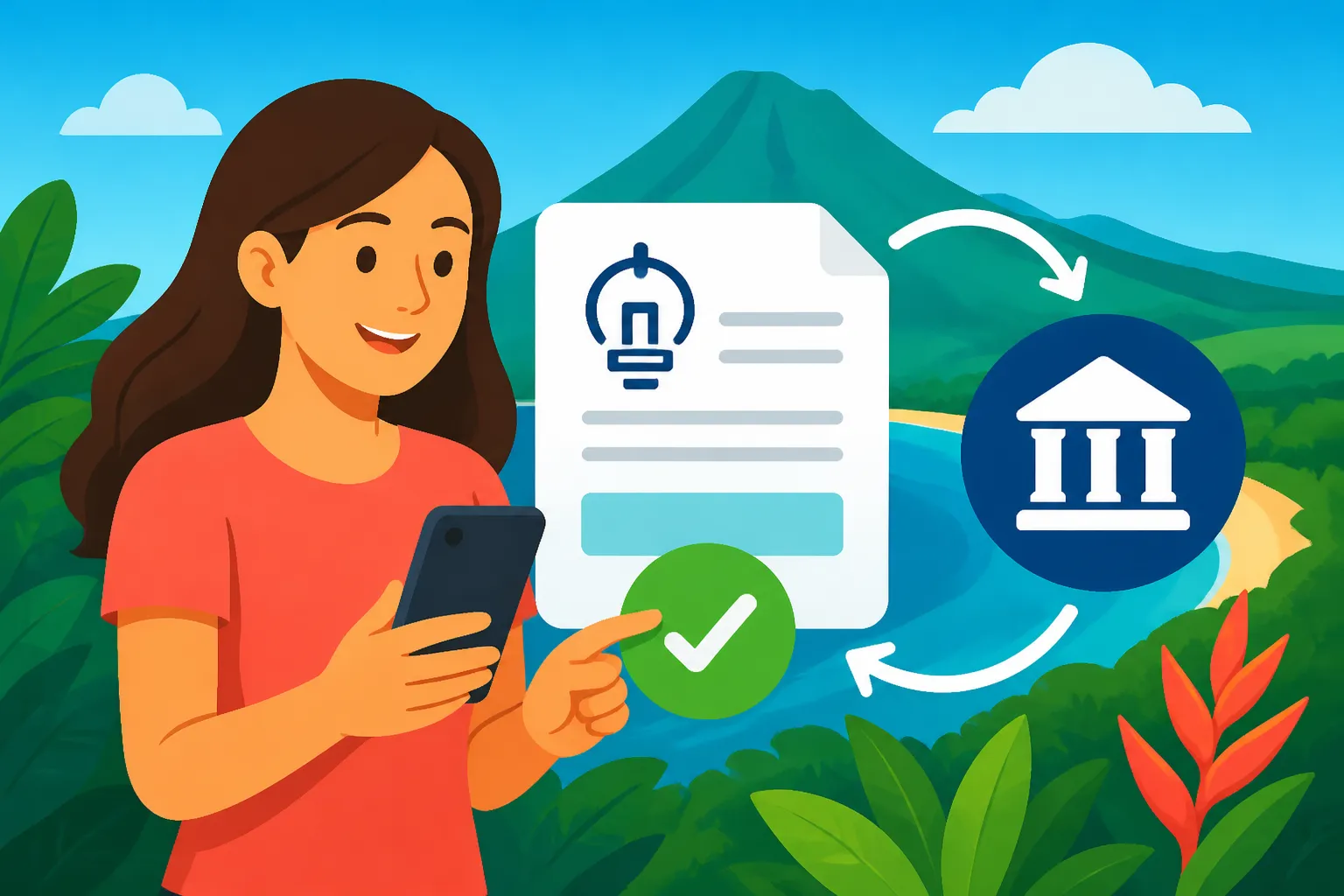
In this digital age, paying your Caja bill online is by far the most convenient method for most expats. It saves you trips to the bank, waiting in lines, and the potential language barriers that can arise from in-person transactions. Once you’re set up, it’s usually just a few clicks or taps on your phone.
Banking Portals for Caja Payments
Most major Costa Rican banks offer the option to pay your Caja bill directly through their online banking platforms or mobile apps. This is the preferred method for countless residents, both Tico and expat. Banks like Banco Nacional, Banco de Costa Rica (BCR), and BAC Credomatic have robust online systems.
Here’s a general rundown of how it typically works:
- Access Your Online Banking: Log into your bank's online portal or mobile app. If you haven't opened a bank account here yet, you'll need to sort that out first. Check out The Expat Guide to Opening a Bank Account in Costa Rica for help getting started.
- Navigate to Payments (Pagos): Look for a section usually labeled "Pagos," "Servicios," or "Pago de Servicios."
- Select CCSS/Caja: Within the payment options, you'll find categories like "Salud," "Gobierno," or sometimes a direct listing for "CCSS" or "Caja Costarricense de Seguro Social."
- Enter Your Identification: You'll typically need to enter your DIMEX number (your residency identification number, also known as your cédula de residencia). This is crucial as it links the payment directly to your account. Make sure you enter it correctly, as a typo could lead to your payment not being applied.
- Confirm Amount: The system should usually display your outstanding balance for the current month. Double-check that this amount matches what you expect. If it doesn't, or if it shows zero when you know you owe something, proceed with caution and maybe verify with the bank or the Caja directly before paying. Sometimes, the systems might not update in real-time, or there could be a slight delay.
- Execute Payment: Once you confirm the amount and select your payment account, authorize the transaction.
- Save Your Receipt: Always, always, always save or screenshot your digital receipt. This is your proof of payment. While the system is generally reliable, having that digital comprobante can save you a lot of hassle if there's ever a dispute or a system error.
This process is relatively straightforward once you’ve done it a few times. It’s certainly a lot smoother than waiting in line at a physical bank branch, especially during peak hours.
Using the EDUS System
The Expediente Digital Único en Salud (EDUS) is the Caja’s comprehensive digital health record system. While primarily used for managing your medical appointments and records, it can sometimes be a way to check your payment status, although direct payments through EDUS are less common for general monthly contributions. EDUS is fantastic for booking appointments with your EBAIS or specialist, and it's where your medical history resides. You can learn more about How to Find and Register with an EBAIS Clinic in Costa Rica to get set up with EDUS.
For checking your Caja payment status, EDUS might not always be the most direct route for payment amounts. It generally shows your affiliation status and if you are activo (active) or inactivo (inactive) with the Caja. However, some users report that accessing their estado de cuenta (account statement) through the virtual Caja portal (which is linked to, but separate from, the main EDUS app) can give you a clearer picture of your outstanding balance. This might involve generating a comprobante de afiliación, which sometimes includes financial details. It's a bit more convoluted than simply using your bank's portal, but it's another avenue if your bank isn't showing a clear balance.
Third-Party Payment Services
While less common for the Caja directly, Costa Rica does have various third-party payment platforms that allow you to pay utility bills and other services. However, for a critical service like the Caja, I generally recommend sticking to your primary bank’s online portal. It’s usually more reliable and secure. Some apps like Coopenae Móvil (for members of Coopenae) might offer Caja payment options, but these are typically linked to specific financial institutions or cooperatives. For most expats, your standard bank account is the easiest way.
Traditional and Alternative Payment Methods
Even with the convenience of online banking, sometimes you need or prefer other options. Perhaps you're still waiting for your online banking access, or you just like the reassurance of a physical transaction. Costa Rica offers several ways to pay your Caja bill.
In-Person Bank Payments
This is the traditional way many Costa Ricans pay their bills, and it’s always an option for you. You can walk into almost any branch of a major bank like Banco Nacional, BCR, or BAC Credomatic.
Here’s what to expect:
- Gather Your Information: You'll need your DIMEX number. While some banks might look it up for you, it’s always best to have it written down or memorized to expedite the process.
- Head to the Bank: Go to the "Cajas" (teller windows) or look for a designated "Servicios Públicos" (public services) line. Be prepared for a wait, especially during lunch hours or at the beginning/end of the month. Pura Vida means a slower pace, and bank lines are no exception!
- State Your Intent: Clearly tell the teller you want to pay "la Caja" or "el seguro." Provide your DIMEX number.
- Confirm Amount and Pay: The teller will usually tell you the outstanding amount. Double-check this figure before handing over your cash or debit card.
- Get Your Receipt: Crucially, get that paper receipt! It's your official proof of payment. File it away safely. I keep a physical folder just for important bills like this.
While less convenient than online payment, paying in person can be a good option if you have questions or if you're trying to resolve a complex payment issue. It also forces you to interact in Spanish, which is always good practice!
Automatic Debit Set-Up
For those who crave simplicity and consistency, setting up an automatic debit (known as débito automático or domiciliación de pagos) is a fantastic option. This ensures your Caja payment is made on time every month without you having to lift a finger.
To set this up, you usually need to visit your bank in person. You'll speak to a customer service representative (not a teller) and request to set up an automatic payment for your CCSS contributions. They will have you fill out a form, provide your DIMEX number, and specify which account the payment should come from. Once it’s set up, the payment will be debited automatically on or around your due date each month.
The benefits here are obvious: no missed payments, no late fees, and one less thing to worry about. Just make sure you always have sufficient funds in the designated account to cover the payment. The downside is that if your Caja contribution amount changes (which can happen, especially if your declared income changes or the government adjusts rates), the automatic payment might not adjust automatically. It's always a good idea to periodically check your bank statements to ensure the correct amount is being debited and that the payment is going through successfully. I'd still recommend checking your Caja status online every few months even with auto-debit, just for peace of mind.
What If You're Behind on Payments?
Life happens, and sometimes you might fall behind on your Caja payments. If this occurs, don't panic, but do act quickly. The process for catching up is usually similar to making a regular payment, but with a few extra considerations.
When you go to pay (either online or in person), the system should usually show your full outstanding balance, including any penalties or interest. You’ll need to pay this total amount to get your account back in good standing. If you have multiple months owing, the system will typically apply your payment to the oldest outstanding balance first.
If the amount is significant and you can't pay it all at once, you might be able to set up a payment plan directly with the Caja. This usually involves visiting a Caja office (often a regional branch rather than a local EBAIS clinic). You'll need to explain your situation, and they might allow you to make an initial payment and then pay the rest in installments. This is where a good grasp of Spanish or a trusted local friend can be incredibly helpful. Be prepared to be patient, as these processes can take time. Ignoring the debt, however, is the worst thing you can do, as it will only grow and further jeopardize your ability to Renew Your Temporary Residency (DIMEX) in Costa Rica.
Common Issues and Expert Tips for Expats
Living in Costa Rica, you learn to adapt to certain quirks, and the administrative processes are no exception. Paying your Caja bill can sometimes throw a curveball, but with a bit of foresight and knowledge, you can navigate it smoothly.
The Dreaded System Glitches
Ah, the infamous system glitches! They’re a rite of passage for anyone dealing with Tico bureaucracy. Sometimes, you’ll log into your bank, ready to pay, and the Caja payment option is down, or it shows an incorrect balance. Or, even after you pay, the system might take a few days to update, leaving you in limbo wondering if your payment actually went through.
My advice? Don’t wait until the last minute. Try to make your payment a few days before the due date. This gives you a buffer in case a system is down or if there’s a holiday. If you encounter a glitch, try again later. If it persists, you might need to try a different payment method (like going to the bank in person) or contact your bank’s customer service. Remember, the banks here often close early on Fridays, and for holidays, so plan accordingly. It’s all part of the charm, right?
Keeping Meticulous Records
I cannot stress this enough: keep every single receipt. Whether it’s a digital screenshot from your online banking, a printed receipt from the bank, or a confirmation email, save it. Create a dedicated folder on your computer or a physical binder for all your important Costa Rican documents, and make sure your Caja payment receipts are in there. These records are your best defense if there’s ever a discrepancy or a challenge to your payment history.
I’ve heard stories of expats who were told they owed money for months they had already paid because the system hadn't updated correctly. Having those receipts, showing the date and transaction number, was their saving grace. It's also a good habit for managing your overall finances here, especially if you're tracking something like How Much Does Caja (CCSS) Cost per Month in Costa Rica in 2026?.
When to Seek Professional Help
Sometimes, despite your best efforts, you might run into an issue that’s beyond a simple online payment. Maybe your account shows a huge, unexpected balance, or you're having trouble reactivating coverage after a period of non-payment. In these situations, don’t hesitate to seek professional help.
- Your Bank: For payment-related issues, your bank's customer service or a personal banker can often help.
- Gestor or Lawyer: If the issue is complex, involves historical payments, or impacts your residency status, a gestor (a local agent who specializes in administrative tasks) or an immigration lawyer can be invaluable. They understand the intricacies of the Caja system and how to navigate disputes. They can also help if you're just starting your residency process and trying to figure out How to Enroll in the Caja (CCSS) as a Foreigner in Costa Rica.
- Directly at the Caja: For very specific account issues, you might need to visit a regional Caja office. Be prepared for a lengthy process, bring all your documentation, and if your Spanish isn't strong, bring a translator or a Tico friend to help.
Remember, the Caja system, like many government institutions, is designed primarily for the local population. While they are generally helpful, patience and persistence are key. And having a seasoned expat or local expert on your side can make all the difference. Knowing What Is Covered Under the Caja in Costa Rica? is one thing, but making sure you can access it by keeping your payments current is even more important!
Conclusion
Paying your Caja bill each month is a fundamental part of life as an expat in Costa Rica. While it might seem daunting at first, especially with the unique administrative style here, it quickly becomes routine. Whether you opt for the convenience of online banking, the personal touch of an in-person payment, or the hands-off approach of automatic debit, staying current on your contributions is paramount for maintaining your health coverage and your residency. Keep meticulous records, plan ahead, and don't be afraid to ask for help when you need it. Pura Vida isn't just a saying; it's a way of life, and keeping your health coverage in order is a big part of living it fully and without unnecessary stress.
Disclaimer
The information provided in this guide is for general informational purposes only and does not constitute legal, financial, or medical advice. While we strive to keep the information up-to-date and accurate, laws, regulations, and procedures in Costa Rica can change frequently. It is always recommended to consult with appropriate legal, financial, or immigration professionals for advice tailored to your specific situation. Reliance on any information in this guide is solely at your own risk.