How the Caja Requirement Connects to Your Residency in Costa Rica
Navigating the transition to life in the tropics often involves a steep learning curve regarding local bureaucracy, particularly the mandatory requirement to join the public healthcare system. Many foreigners are surprised to find that their residency approval is strictly contingent upon being up to date with these payments. This guide explains exactly how the Caja requirement connects to your residency in Costa Rica and how to stay compliant.
The Fundamental Link Between Residency and the CCSS
In Costa Rica, the public healthcare system is managed by the Caja Costarricense de Seguro Social, or simply "the Caja." For years, the government has moved toward a model of universal healthcare funded by its residents. If you are applying for residency, you are entering into a social contract with the country. This means that in exchange for the right to live here long-term, you must contribute to the collective fund that keeps the nation healthy.
Legal Mandates for All Residents
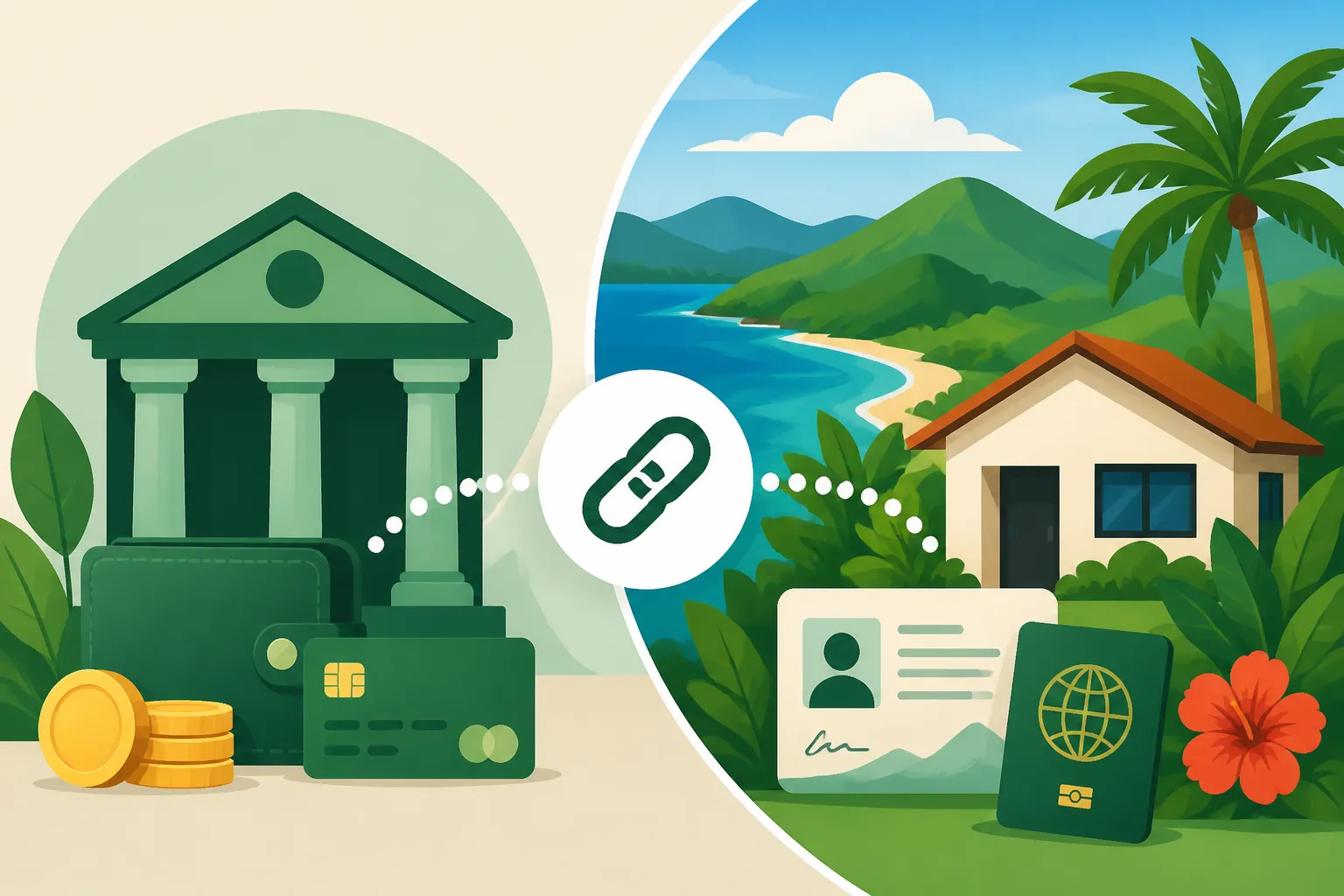
The law is very clear on this point: all temporary and permanent residents must be affiliated with the Caja. This isn't just a recommendation or a perk of residency; it is a legal prerequisite. When you receive your residency approval letter from the Dirección General de Migración y Extranjería, one of the final steps before you can actually hold your DIMEX (identity card) in your hand is proving that you are registered with the CCSS. Without the "comprobante" or receipt showing you are active in the system, the immigration office will not issue your card.
Many people ask, Do I Have to Join the Caja to Get Residency in Costa Rica? and the answer is a resounding yes. It applies to every residency category, whether you are a retiree under the Pensionado program, an investor, or a spouse of a Costa Rican. The philosophy behind this is "social solidarity," where those with more resources contribute to help cover those with less, ensuring that even the most remote villages have access to medical care.
Why Migración Checks Your Insurance Status
The immigration department and the healthcare system in Costa Rica are digitally linked. When you go to your appointment to get your first DIMEX or even when you are How to Renew Your Temporary Residency (DIMEX) in Costa Rica, the official will check your status in the CCSS database. If you are "moroso" (delinquent) or not registered at all, the process stops right there. This check exists to ensure that foreigners do not become a financial burden on the state.
By requiring all residents to pay into the system, the government ensures that if you have an accident or a chronic illness, the costs of your care are already accounted for through your monthly contributions. It’s a way of protecting the public purse while guaranteeing you have a safety net, regardless of your age or pre-existing conditions. For many expats, this is a major shift from the private-insurance-only model they are used to back home.
The Transition from Tourist to Resident Coverage
As a tourist, you are generally expected to carry private travel insurance. Brands like SafetyWing are popular among digital nomads and perpetual tourists because they offer flexible, monthly coverage that handles emergencies and unexpected illnesses. However, the moment you transition from "tourist" to "residency applicant," your insurance obligations change.
While you are waiting for your residency to be approved, which can take several months or even over a year, you aren't yet required to pay into the Caja. During this "in-between" period, maintaining a policy through SafetyWing is a smart move to ensure you aren't left paying out of pocket for private hospital visits. Once the approval letter arrives, however, you must begin the formal enrollment process with the Caja, marking your transition from a visitor to a contributing member of Costa Rican society.
Understanding the CCSS System for Expats
The Caja is a behemoth of an organization, and for a newcomer, it can feel like a labyrinth. It is both a healthcare provider and a pension fund. For most expats, the medical side is what matters most. It operates through a network of local clinics called EBAIS, larger regional clinics, and massive specialized hospitals in San Jose.
What the Caja Actually Covers
One of the most surprising aspects of the Caja for foreigners is the scope of coverage. Once you are a member, there are no co-pays, no deductibles, and no caps on coverage. Whether you need a simple flu shot, a complex heart surgery, or expensive monthly medications for diabetes, everything is covered by your monthly contribution. This is why The Complete Guide to Healthcare in Costa Rica for Expats (2027) often highlights the system as one of the best in Latin America for comprehensive care.
The coverage extends to all diagnostic tests, including blood work, X-rays, and MRIs, though the wait times for non-essential imaging can be long. It also includes emergency services and ambulance transport. For many retirees, the peace of mind knowing that a catastrophic health event won't bankrupt them is the primary reason they are happy to pay their monthly dues, even if they choose to use private doctors for minor issues.
Public System Realities and Wait Times
While the coverage is comprehensive, the reality of using the public system can be frustrating. Because it is a universal system, it is often crowded. For a routine visit to a specialist or a non-emergency surgery, wait times can stretch into months or even years. This is a common complaint among the expat community and something you must realistically prepare for.
To navigate this, many residents adopt a hybrid approach. They pay for the Caja to satisfy their residency requirements and for major emergencies, but they keep a private insurance policy or use self-pay for day-to-day needs. Understanding Public vs Private Healthcare in Costa Rica: Which Should Expats Choose? is essential for managing your expectations. If you need an orthopedic consult for a nagging knee issue, you might wait six months in the Caja, but you could see a world-class private doctor in Escazu the same afternoon for about $100 to $150.
How Contributions are Calculated
The amount you pay into the Caja is not a flat fee. It is based on the income you declared during your residency application. For those in the Pensionado category, it is a percentage of your pension. For those in the Rentista or Inversionista categories, it is calculated based on the income levels required for those visas.
It is vital to have an Understanding How Caja Contributions Are Calculated in Costa Rica before you finalize your residency. Generally, the percentage for "Asegurados Voluntarios" (voluntary insured, which includes most expats) hovers around 10% to 12% of your declared income. If you declared $2,500 a month in income, expect your Caja bill to be around $250 to $300. Some expats try to "under-report" to save money, but this can lead to major headaches with the tax authorities or immigration later on, so honesty is always the best policy.
| Feature | Caja (CCSS) Public System | Private Health Insurance / Self-Pay |
|---|---|---|
| Monthly Cost | Percentage of income (approx. 10-12%) | Variable based on age and coverage |
| Co-pays | $0 | Usually 20% or flat fee |
| Wait Times | Can be long for specialists/surgeries | Minimal; often same-day or same-week |
| Medication | Included (formulary only) | Paid out of pocket or reimbursed |
| Pre-existing Conditions | Always covered | Often excluded or requires a rider |
| Residency Requirement | Mandatory for all residents | Optional but highly recommended |
Navigating the Enrollment Process for Residency Applicants
Once you have your residency approval letter in hand, the clock starts ticking. You cannot get your physical DIMEX card without proving you have initiated your Caja enrollment. This process is often where expats feel the most "cultural friction" due to the paperwork required.
When to Start Your Enrollment
You should start your enrollment immediately after receiving your approval notification from Migración. Do not wait until your scheduled appointment to pick up your DIMEX. The registration process at the local Caja office can sometimes take a few weeks to finalize, especially if they are backlogged or if you are missing a specific document.
If you are currently using a nomadic insurance plan like SafetyWing, you should keep that active until you are fully registered and have your first receipt from the Caja. There is often a gap between when you "sign up" and when you are actually "active" in the local EBAIS system. Having that private backup ensures you aren't flying without a net during the transition.
Required Documentation for Foreigners
The paperwork required for the Caja is fairly standard but must be exact. You will typically need your residency approval letter (the "resolución"), your passport, a copy of your fingerprints receipt from the Ministry of Public Security, and proof of your income. If you are a retiree, this means your notarized and apostilled pension letter.
It is also highly recommended to bring a utility bill (electricity or water) to prove your place of residence. The Caja system is geographically based, meaning you must register at the office that services your specific neighborhood. If you live in Atenas but try to register in San Jose, they will likely send you back to your local office. You should consult The Expat Guide to Joining the Caja (CCSS) in Costa Rica (2027) for a deep dive into the specific office locations and their quirks.
Registering with Your Local EBAIS
After you have completed the "financial" registration at the main regional Caja office and paid your first bill, you need to visit your local EBAIS (Equipo Básico de Atención Integral en Salud). This is the small community clinic that serves as your primary care gateway. This step is crucial because it is where your medical file is actually created.
At the EBAIS, you will be assigned a "sector" and a specific doctor. This is the person you will see for everything from a cold to a referral for a specialist. The staff at the EBAIS rarely speak English, so if your Spanish is still a work in progress, bringing a local friend or a translator is a great idea. They will issue you a small paper booklet or update your digital record in the EDUS app, which is the national healthcare app you should download immediately.
Managing Monthly Payments and Compliance
Enrolling is only the first half of the battle. Staying compliant is a career-long (or residency-long) commitment. If you miss even one payment, the system flags you as "moroso," which can have immediate consequences for your legal status in the country.
Payment Methods and Online Portals
Paying your Caja bill has become significantly easier in recent years. You no longer have to stand in a three-hour line at a state bank. Most expats pay through their online banking portal (like BAC, Banco Nacional, or BCR) under the "Public Services" or "Convenios" section. You simply enter your DIMEX number or the "identification number" assigned by the Caja, and your balance will appear.
Another option is to pay at local "Punto Max" or "Servimas" locations, which are often found in grocery stores. Regardless of how you pay, always keep a digital or physical copy of the receipt. When it comes time for How Much Does Caja (CCSS) cost per month in Costa Rica in 2026? checks, having those receipts organized will save you hours of stress. The system is usually updated within 24 hours of payment, but glitches happen, and the receipt is your only shield.
The Impact of Delinquency on Residency Renewals
The biggest risk of ignoring your Caja payments is the loss of your residency. Costa Rica takes this very seriously. If you are delinquent when your residency comes up for renewal, Migración will not renew your DIMEX. In extreme cases, chronic non-payment can lead to the cancellation of your residency status altogether.
Furthermore, if you need emergency care while you are "moroso," the Caja will still treat you, but they will bill you as a private patient at very high rates. They can also place a lien on your assets or bank accounts in Costa Rica to recover unpaid health contributions. It is much cheaper and easier to simply pay the monthly bill than to deal with the legal fallout of delinquency.
Handling Dependents and Family Coverage
If you are moving with a spouse or children, the good news is that your contribution can often cover them as well. This is known as "cobertura familiar." However, it is not automatic. You must explicitly add them as dependents at the Caja office. You will need to provide marriage certificates and birth certificates, which must be apostilled and translated into Spanish by an official translator.
The cost for adding dependents is usually a small additional percentage of the primary earner's income, rather than a whole separate bill. This makes the Caja an incredibly affordable option for large families compared to private US-based insurance plans. For more details on this process, check out the guide on How to Add Dependents to Your Caja Coverage in Costa Rica. Ensuring your whole family is correctly registered is vital, as schools will often ask for proof of Caja coverage for your children during the enrollment process.
Complementing Public Care with Private Insurance
Veteran expats will tell you that the secret to a happy life in Costa Rica is having "the Caja for the big stuff and private for the small stuff." Relying solely on the public system can be exhausting, but relying solely on private care can be expensive.
Why Most Expats Use Both Systems
The dual-system approach is the gold standard. You use the Caja for your mandatory residency compliance, pharmacy needs (for basic medications), and major emergencies or surgeries where the costs in a private hospital would be astronomical. For everything else—dermatology, gynecology, dental cleanings, or a quick script for an ear infection—you go private.
Private healthcare in Costa Rica is world-class. Many doctors who work in the Caja during the morning have their own private practices in the afternoon. When you see them privately, you are paying for their time and immediate access to their expertise. This balance allows you to bypass the long wait times of the public system while still having the safety net that the residency-mandated Caja provides.
Comparing Private Options like SafetyWing
While you are a resident, you might consider local private insurance like INS (the state insurance provider) or international plans. However, for those who still travel frequently or are in the early stages of residency, SafetyWing remains a highly effective "gap" coverage. It is particularly useful for residents who spend part of the year outside of Costa Rica, as the Caja only covers you within the national borders.
SafetyWing offers a global reach that the Caja simply cannot match. If you are a resident of Costa Rica but decide to take a trip to Europe or visit family back home, your Caja coverage stops at the airport. Having a supplementary policy ensures that your medical needs are met globally. This is a common strategy for "global citizens" who have made Costa Rica their home base but still maintain an international lifestyle.
Direct Billing and Private Hospital Networks
If you do choose to use private insurance alongside your mandatory Caja coverage, it pays to understand the network of private hospitals. CIMA, Clínica Bíblica, and Hospital Metropolitano are the big three. These facilities feel more like luxury hotels than hospitals and offer the latest technology.
Most high-quality private insurance plans, including international ones, offer "direct billing" with these hospitals. This means that if you are admitted, the hospital works directly with the insurance company, and you only pay your deductible. This is a far cry from the Caja experience, where you may be in a shared ward. Using private insurance for hospital stays is a luxury many expats choose to invest in for the comfort and speed it provides, even while they continue to pay their mandatory dues to the social security system.
Important Disclaimer
The information provided in this guide is for educational and informational purposes only and does not constitute legal or medical advice. Residency laws, immigration policies, and CCSS contribution rates in Costa Rica are subject to change by the government at any time. While every effort has been made to ensure the accuracy of this information, you should always consult with a qualified immigration attorney or a professional residency service to discuss your specific situation. The author and publisher are not responsible for any consequences arising from the use of the information contained herein.