How Does Direct Billing Work at Private Clinics in Costa Rica?
Moving to a new country like Costa Rica is exhilarating, but the thought of navigating healthcare, especially when it comes to paying for it, can send shivers down your spine. The fear of getting sick, facing a huge bill, and then wrestling with your insurance company for reimbursement is a common, and very real, expat anxiety. This guide is here to shed some light on one of the most reassuring payment methods available in Costa Rica's private healthcare system: direct billing. We'll walk you through how it actually works, what to expect, and how to make sure you're covered without any nasty surprises.
Understanding Direct Billing Versus Reimbursement
Let's face it, nobody wants to be caught off guard, especially when their health is on the line. The financial aspect of healthcare can be just as stressful as the medical issue itself, if not more so, when you're in a foreign country.
The Pain Point of Upfront Payments
The typical scenario for many expats with international health insurance in Costa Rica has historically been the "pay out of pocket and get reimbursed later" model. Imagine you're feeling absolutely rotten, perhaps with a sudden fever or a suspected sprain, and you head to a private clinic. After the consultation, tests, and maybe some medication, you're handed a bill for several hundred dollars. You pay it, often on a credit card, and then embark on the tedious process of filling out claim forms, gathering receipts, and sending them off to your insurance company. Then comes the wait – weeks, sometimes months – for your reimbursement to arrive. This can be a huge burden on your immediate finances, especially if it's a significant medical event, and it adds an layers of stress when you're already feeling unwell.
The frustration is palpable, isn't it? You've paid for insurance precisely to avoid this kind of financial strain, only to find yourself acting as a temporary bank for your own medical expenses. This often leads to expats avoiding necessary care, simply because they don't want to deal with the administrative nightmare or the temporary financial hit.
What Direct Billing Really Means
Direct billing, on the other hand, is a game-changer. Simply put, it means that your insurance company directly pays the medical provider – be it a clinic, hospital, or specialist – for the services you receive. Instead of you paying the full amount upfront and then seeking reimbursement, the payment transaction occurs directly between your insurer and the healthcare facility. You might only be responsible for a co-payment (a fixed amount you pay for a service) or a deductible (the amount you must pay before your insurer starts to pay), which is a far more manageable expense.
This system significantly reduces your out-of-pocket costs at the time of service, alleviates financial stress, and simplifies the entire process. It’s like magic when it works seamlessly. For expats in Costa Rica, where the public Caja system can have long wait times, private clinics often offer immediate access, and direct billing makes that access financially feasible and much less of a headache. When choosing an international health insurance plan, understanding if they offer direct billing, and with which specific providers, is absolutely critical.
How Direct Billing Works Step-by-Step
While direct billing is a huge relief, it’s not always as simple as walking in and flashing your card. There's a process, and knowing it beforehand can save you a lot of grief.
Before Your Appointment
The groundwork for successful direct billing is laid before you even set foot in the clinic. This is where a little proactive effort can prevent major headaches later.
First and foremost, you need to verify if your specific insurance policy has direct billing agreements with the private clinic or hospital you plan to visit. Not all international insurance providers have direct billing relationships with every single private facility in Costa Rica, and even within the same insurance company, different plans might have different network coverages. You can't just assume. Many reputable hospitals in the Central Valley, like Hospital CIMA, Clínica Bíblica, and Hospital Metropolitano, do have agreements with major international insurers, but it's essential to confirm. A quick phone call to your insurance provider’s customer service line or checking their online portal for their "network providers" list is usually all it takes. This step is non-negotiable.
Once you’ve confirmed the clinic is in your network, make sure you have all your necessary insurance information readily available. This includes your insurance card (physical or digital), policy number, group number, and the contact information for your insurance provider's international claims department. It’s a good idea to keep this information stored securely on your phone or in a dedicated "medical folder" that you carry to appointments. Being organized here shows the clinic you mean business and helps them process your claim efficiently.
At the Clinic or Hospital
When you arrive at the private clinic, the process of direct billing begins in earnest. This is usually handled at the reception or admissions desk.
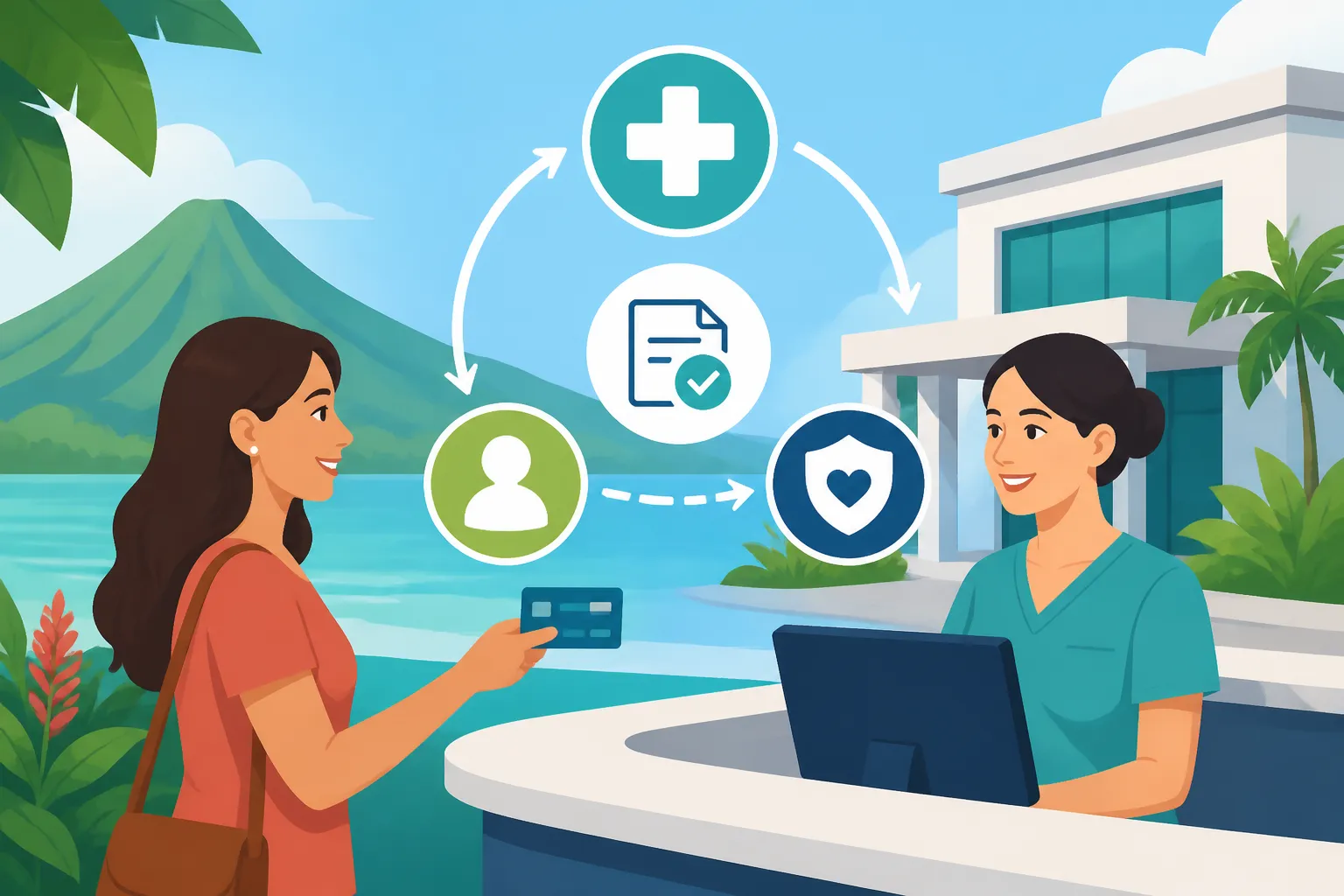
You'll typically present your insurance card and personal identification (like your passport or Costa Rican DIMEX residency card). The administrative staff will then contact your insurance provider to verify your coverage and initiate the direct billing process. This often involves a "pre-authorization" step for more significant procedures or hospital stays. For a simple doctor's visit or a basic consultation, pre-authorization might be quick, or sometimes not even required, depending on your plan and the specific service. However, for anything beyond a routine check-up, like imaging, specialist referrals, or inpatient care, expect the clinic staff to spend some time on the phone or using an online portal to get approval from your insurer. This is a crucial safeguard for both you and the clinic, ensuring that your treatment is covered according to your policy terms. If you're using one of the larger private hospitals, like those mentioned earlier, their administrative staff are usually quite experienced with international insurance and can guide you through the process, but remember to be patient. It’s not uncommon for this verification to take anywhere from 15 minutes to an hour, so don't rush into your appointment without allowing for this administrative step.
During this pre-authorization phase, your insurer will assess the medical necessity of the treatment. They might ask for details about your symptoms, the proposed diagnostic tests, and the recommended treatment plan. Once approved, the clinic receives confirmation directly from your insurer, allowing them to proceed with the services and bill the insurance company later.
After the Consultation or Treatment
Even with direct billing, your financial responsibility doesn't always end at zero. It's vital to understand what you might still be accountable for.
After your consultation or treatment, the clinic will usually inform you of any remaining balance. This often includes your deductible, which is the amount you pay out-of-pocket before your insurance coverage kicks in. For example, if your deductible is $250 and your visit cost $300, you'll pay $250 and your insurer will cover the remaining $50. Another common out-of-pocket expense is a co-payment (or co-pay), a fixed fee you pay for a specific service, like $20 for a doctor’s visit. You might also be responsible for co-insurance, which is a percentage of the cost of care after you’ve met your deductible. It’s not unusual for private clinics to ask for these amounts upfront.
Furthermore, some services might not be covered by your specific policy, or they might exceed your policy's annual limits. For instance, cosmetic procedures or certain experimental treatments are rarely covered by standard health insurance. If the doctor prescribes medication, the pharmacy might not be part of the direct billing network, meaning you'll pay for prescriptions separately and potentially seek reimbursement later. The staff at the private clinic should clearly itemize what was covered by direct billing and what remains your responsibility. Make sure you get a detailed invoice (factura) for anything you pay directly, as you’ll need it for your records or for any subsequent reimbursement claims. Understanding Co-Payments and Private Consultation Fees in Costa Rica can help you budget for these common expenses.
Essential Considerations for Expats
Navigating direct billing as an expat in Costa Rica requires a bit of savvy and preparation. It's not just about finding a clinic, it's about making your insurance work for you.
Knowing Your Policy Inside Out
This cannot be stressed enough: you absolutely must understand the intricacies of your health insurance policy. Don't just skim the summary. Dig into the details of your plan, ideally before you even need to use it.
Firstly, know your deductible. This is the amount you’re responsible for paying out-of-pocket before your insurance benefits kick in. Some plans have a per-incident deductible, others an annual deductible. If you have a high deductible, you might find yourself paying for most routine visits yourself until that threshold is met. Secondly, understand your co-payment structure. Is it a flat fee for doctor visits, or a percentage for certain procedures? These small amounts can add up, but they are predictable. Thirdly, be aware of any policy limits, both per incident and annually. Some plans cap coverage for specific treatments, like physical therapy sessions or mental health consultations. Finally, and perhaps most critically, understand your exclusions. Are pre-existing conditions covered, and if so, what are the waiting periods? Are certain medical conditions or treatments explicitly excluded from your coverage? Some policies might cover emergency dental work but not routine cleanings. Having this information at your fingertips empowers you to make informed decisions and prevents shocking bills.
For instance, many expats choose international health insurance because it offers broader coverage and portability than local options. Providers like SafetyWing often cater specifically to nomads and expats, and they make an effort to establish direct billing relationships in common expat destinations. However, even with such providers, the onus is on you to know the specifics of your individual plan.
The Role of Pre-Authorization
Pre-authorization is a crucial step for many medical procedures and treatments when using direct billing. Think of it as your insurance company's way of giving a green light before a significant expense.
Pre-authorization is typically required for non-emergency hospital admissions, surgeries, certain diagnostic tests (like MRIs or CT scans), specialist referrals, and any high-cost treatments. Its purpose is for your insurer to review the proposed medical service to ensure it's medically necessary and covered under your policy. This is why when you check in at a private hospital like Clínica Bíblica for a planned procedure, the administrative staff will immediately begin the process of contacting your insurer for this approval. It’s not just paperwork; it’s a necessary financial gatekeeper. The waiting period for pre-authorization can vary. For routine matters, it might be quick, but for complex surgeries, it could take a few days. During this time, the clinic might provide your insurer with medical reports, doctor’s notes, and proposed treatment plans. If pre-authorization is denied, it means your insurer won't cover the cost, and you'll be fully responsible for the bill. Always ensure that the clinic initiates and secures pre-authorization for any treatment that requires it, well in advance of the service. This can significantly reduce stress and financial risk, especially for complex or expensive treatments that are part of The Complete Guide to Healthcare in Costa Rica for Expats (2027).
Network Versus Out-of-Network Providers
The concept of "in-network" versus "out-of-network" is vital for understanding direct billing and managing your costs.
An in-network provider is a doctor, clinic, or hospital that has a direct contractual agreement with your insurance company. This agreement typically includes negotiated rates for services, which means lower costs for both you and your insurer. When you use an in-network provider, direct billing is usually an option, and your out-of-pocket expenses (like co-pays and deductibles) are typically lower. The large private hospitals in Costa Rica, such as Hospital CIMA in Escazú, Clínica Bíblica in San José, and Hospital Metropolitano with its various branches, often maintain direct billing relationships with numerous international insurance providers. Knowing How to Use Private Hospitals Like CIMA, Clinica Biblica and Hospital Metropolitano is key.
An out-of-network provider, on the other hand, does not have a direct agreement with your insurer. If you choose an out-of-network provider, direct billing might not be available, meaning you'll likely have to pay for services upfront and then seek reimbursement from your insurance company. Moreover, your insurance might cover a smaller percentage of the cost, or you might face higher deductibles and co-insurance. For example, if you see a specialist who is excellent but doesn’t have a direct billing agreement with your plan, you'll need to pay them directly and then file a claim. Always check if a specific doctor or clinic is in your network before making an appointment to avoid unexpected costs. If you prioritize direct billing, your first step should always be to consult your insurance provider’s list of participating facilities.
Brands That Offer Direct Billing (and why it matters)
When shopping for international health insurance in Costa Rica, asking about direct billing capabilities is paramount. While the public healthcare system, the Caja Costarricense de Seguro Social (CCSS), is available to residents, many expats opt for private insurance for quicker access and broader choices.
Many international health insurance providers understand the expat need for seamless healthcare. Companies like SafetyWing, for instance, are designed with the flexibility and direct billing options that digital nomads and expats often require. They aim to reduce the administrative burden by facilitating direct payments to hospitals and clinics within their network. This means less stress for you during what is already a vulnerable time. Other large international insurers also offer similar services, often with extensive networks across the globe.
Why does this matter so much? Because it streamlines your access to care. If you need urgent, but not life-threatening, care at a private clinic, knowing that your insurance provider will handle the bill directly means you can focus on getting better, rather than scrambling for cash or dealing with mountains of paperwork. Always inquire about the specific private hospitals and clinics in Costa Rica that have direct billing agreements with your chosen insurer. A good question to ask when comparing plans is, "Do you have direct billing agreements with Hospital CIMA or Clínica Bíblica in Costa Rica?" This will give you a clear indication of their local reach and commitment to expat-friendly services. Choosing an insurer with a robust direct billing network can be a deciding factor in your peace of mind while living here.
When Direct Billing Isn't an Option (and What to Do)
Despite its convenience, direct billing isn't a universal solution for every medical encounter in Costa Rica. There will be times when you need to pay upfront, and knowing how to handle those situations is just as important.
Emergencies and Smaller Bills
In some scenarios, direct billing simply isn't feasible or practical. This is particularly true for genuine medical emergencies or for smaller, routine bills.
For an urgent, life-threatening emergency, the priority is always immediate care, not payment verification. If you're rushed to a private hospital's emergency room, say at Hospital Metropolitano after an accident, the medical staff will focus on stabilizing you. While they will ask for your insurance information, the initial focus is on treatment. You might find that for emergency services, especially if you're not admitted or if the costs are relatively low, you're asked to pay upfront. This doesn't mean your insurance won't cover it; it just means the direct billing process can't be set up instantly in a chaotic emergency situation. Always keep your insurance details handy for emergencies, and make sure someone with you knows where to find them. Understanding Emergency Medical Care in Costa Rica: What Every Expat Needs to Know is vital for these situations.
Similarly, for minor consultations, quick doctor's visits (e.g., for a common cold or a rash), or visits to smaller, independent clinics that don't have direct billing agreements with international insurers, you'll almost certainly pay out-of-pocket. The same applies to pharmacy purchases; unless the pharmacy is directly affiliated with a hospital that has direct billing agreements and the prescriptions are part of a larger, pre-authorized treatment plan, you'll pay cash or card. These smaller amounts, typically under $100-$200, are often below the deductible or simply not worth the administrative effort for direct billing. This is a common practice, so don't be surprised when you're handed a bill for a private doctor's visit and expected to pay on the spot. Many expats use this method for quick, non-emergency needs. If you're wondering, How Do I Pay for a Private Doctor Visit in Costa Rica? this is usually how it goes.
The Reimbursement Process
When direct billing isn't an option, you'll need to navigate the reimbursement process. While less convenient, it's a standard procedure for many expats and easily manageable with proper documentation.
The key to successful reimbursement is meticulous record-keeping. As soon as you pay for a medical service, insist on a detailed, itemized invoice (a factura). This invoice should clearly state:
- The name and address of the medical provider.
- The date of service.
- A description of the services rendered (e.g., "consulta médica," "examen de sangre," "radiografía").
- The cost of each service.
- The doctor's or clinic's tax identification number (cédula jurídica).
- Your name as the patient.
Some insurance companies might also require a medical report or a doctor’s note explaining the diagnosis and treatment, especially for more significant claims. If you paid for prescriptions, keep all original pharmacy receipts.
Once you have all your documents, log into your insurance provider's online portal or contact their claims department to find out their specific submission requirements. Most international insurers now have user-friendly online systems where you can upload scanned copies of your invoices and reports. Fill out any necessary claim forms accurately and completely. Be prepared to provide your bank account details for direct deposit of the reimbursement. The processing time for reimbursement claims can vary greatly, from a few days to several weeks, depending on your insurer and the complexity of the claim. Always keep copies of everything you submit, and make a note of the date you submitted the claim. Follow up regularly if you don't hear back within their stated timeframe. Patience and persistence are your best friends here.
Direct Billing vs. Reimbursement: A Quick Comparison
To give you a clearer picture, here's a side-by-side comparison of the two primary ways to handle private medical payments in Costa Rica:
| Feature | Direct Billing | Reimbursement |
|---|---|---|
| Upfront Payment | Minimal (co-pay, deductible) | Full amount paid by patient |
| Cash Flow Impact | Low impact on personal cash flow | High impact, requires liquid funds upfront |
| Administrative Burden | Mostly handled by clinic/hospital staff | Primarily handled by the patient (claim submission) |
| Speed of Payment | Instant or near-instant for patient | Weeks to months for patient to receive funds |
| Stress Level | Generally lower, more peace of mind | Higher, due to financial outlay and waiting |
| Pre-authorization | Often required for significant treatments | May still be required by insurer for coverage |
| Typical Use Cases | Planned procedures, hospital stays, specialist visits at network hospitals | Emergency room visits, minor consultations, out-of-network providers, pharmacy purchases |
| Required Documents | Insurance card, ID | Detailed, itemized invoice, medical reports, receipts |
This table should help you quickly assess the pros and cons of each method and prepare accordingly. When considering your overall health coverage strategy, particularly if you're exploring Health Insurance in Costa Rica: Caja, INS and International Options Explained, these differences are crucial.
Navigating healthcare payments in Costa Rica as an expat doesn't have to be a bewildering experience. With a good understanding of direct billing, the diligence to know your policy, and the foresight to prepare for reimbursement scenarios, you can access the excellent private medical care Costa Rica offers with confidence and peace of mind. Just remember to always ask questions, keep meticulous records, and don't hesitate to reach out to your insurance provider for clarification. Your health is too important to leave to chance!
Disclaimer
The information provided in this article is intended for general informational purposes only and does not constitute medical, financial, or legal advice. Healthcare policies, procedures, and insurance coverages in Costa Rica are subject to change. While efforts have been made to ensure accuracy, readers are strongly advised to consult with their specific health insurance provider, legal counsel, or a qualified medical professional for personalized advice regarding their individual situation. We do not endorse any specific insurance product or healthcare provider.