What Documents Do I Need to See a Doctor in Costa Rica?
Standing in line at a local clinic while nursing a tropical fever or a sprained ankle is frustrating enough without the added stress of a receptionist asking for a document you didn't know you needed. Many foreigners assume a driver’s license or a simple photocopy of a passport will suffice, only to find themselves navigating a complex web of administrative requirements. This guide breaks down every specific document required for both public and private medical visits so you can get treated without the paperwork headache.
Navigating the Public System: The Caja (CCSS) Requirements
If you are a legal resident or in the process of becoming one, the public healthcare system—known as the Caja—is likely your primary point of contact for long-term health needs. However, the Caja is notoriously bureaucratic. You cannot simply walk in and state that you pay your monthly fees; you must prove it through a specific set of documents that the administrative staff will verify against their database.
For those who have already secured their residency, your most vital document is your DIMEX card. This is your residency ID, and it serves as your primary identifier within the CCSS system. When you arrive at an EBAIS (the local primary care clinic), the first thing they will ask for is your DIMEX. It must be valid and physical; while some officials are becoming more lenient with digital versions, having the physical card is still the gold standard to avoid any issues. To understand the full scope of how this works, you might want to look into How to Use Your DIMEX to Access Healthcare in Costa Rica.
Beyond the ID, you need proof of "derechos" (rights). This means proving your Caja payments are up to date. In the past, this required a physical paper called an orden patronal, but today, most of this is handled via the EDUS app. However, if the system is down—which happens more often than we’d like—having a printed receipt of your last monthly payment can save your appointment. If you are just starting this journey, The Expat Guide to Joining the Caja (CCSS) in Costa Rica (2027) offers a deep dive into the initial registration paperwork.
If you are a dependent, such as a spouse or a child, you will need additional documentation to prove your relationship to the primary insured person. This usually involves an apostilled marriage or birth certificate that has been registered with the local authorities. Navigating these requirements can feel like a full-time job, but once your file is established at your local EBAIS, future visits become significantly smoother. You can learn more about How to Find and Register with an EBAIS Clinic in Costa Rica to ensure your paperwork is filed at the correct branch for your neighborhood.
Documentation for Private Hospitals and Clinics
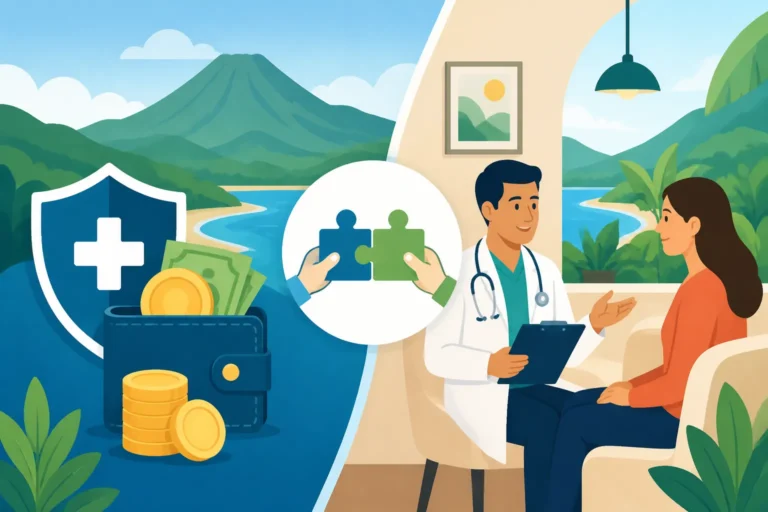
The private sector, including major hospitals like CIMA, Clinica Biblica, or Hospital Metropolitano, is much more flexible than the public system, but they still have a strict protocol for documentation. Because these facilities operate on a fee-for-service or insurance-reimbursement basis, their primary concern is verifying your identity and your method of payment.
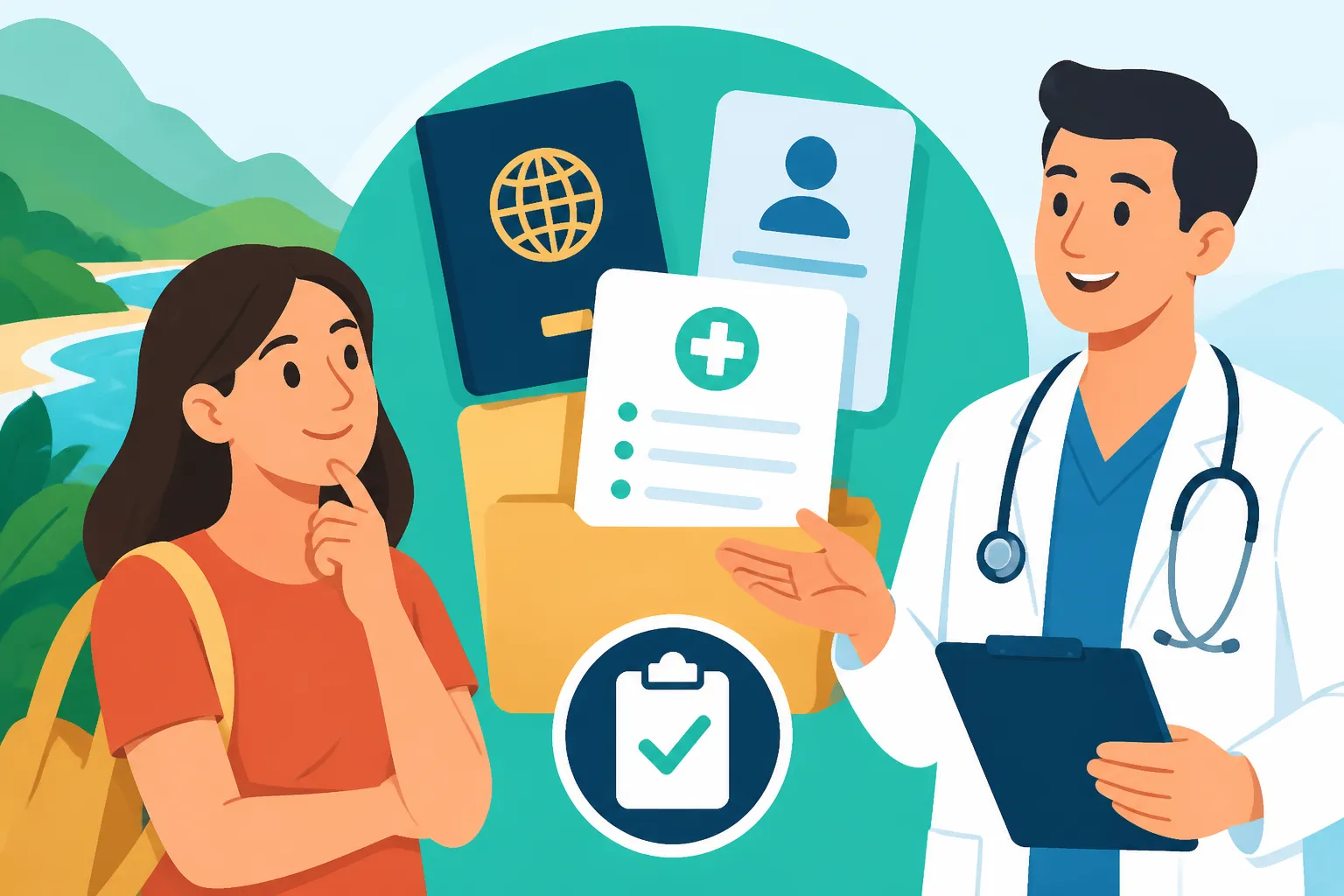
For tourists or those still waiting on residency, your passport is the non-negotiable requirement. Unlike the public system, private clinics will often accept a high-quality color copy of your passport ID page and your entry stamp, but it is always safer to carry the original if you are heading to a major hospital for a procedure. The entry stamp is particularly important because it proves your legal status in the country, which can affect insurance claims. If you are a traveler, you should also check Can Tourists Access Emergency Care in Costa Rica? to see how these requirements shift during a crisis.
If you are using international health insurance, such as SafetyWing, you will need to provide your digital or physical insurance card and, in many cases, a "letter of guarantee" from the provider if the procedure is elective or expensive. SafetyWing is a popular choice for digital nomads because their documentation is easily accessible via a smartphone, which the billing departments at private hospitals are accustomed to seeing. Even with insurance, you should be prepared to show a credit card; most private hospitals will take a scan of your card as a "guarantee" of payment before the doctor even enters the room.
For expats who prefer to mix public and private care, it is essential to keep a personal file of your records. When seeing a private specialist, bringing your recent blood test results or imaging from the Caja can save you hundreds of dollars in redundant testing. This is a common strategy discussed in the analysis of Public vs Private Healthcare in Costa Rica: Which Should Expats Choose? because it allows you to bypass the long wait times of the public system while still utilizing the data they have already collected.
Vital Health Records and Medical History
Aside from identification and payment documents, the "soft" documentation of your medical history is perhaps the most overlooked part of seeing a doctor in Costa Rica. Tico doctors are generally very thorough, but the healthcare system is not always unified. A doctor at a private clinic in Escazu will not have access to your records from an EBAIS in Guanacaste.
You should maintain a digital folder (Google Drive or iCloud) containing the following:
- A list of current medications (using generic names, as brand names differ in Costa Rica).
- Recent lab results or X-rays.
- A summary of past surgeries or chronic conditions.
- A list of allergies, translated into Spanish if you are not yet fluent.
For those seeking specialized care, this history is your most important tool. For example, if you are looking for specific advice, you might search for How Do I Find an English-Speaking Doctor in Costa Rica and find that while they speak your language, they still rely heavily on the clinical data you provide from your home country.
If you are a nomad or a long-term traveler using SafetyWing, keeping your medical reports from visits in other countries is also helpful. SafetyWing often requires these records to process claims, and having a consistent trail of documentation ensures that your "pre-existing condition" exclusions are not unfairly triggered. When you transition from a traveler to a resident, this history becomes the basis for your initial interview with the Caja. Understanding How Caja Contributions Are Calculated in Costa Rica is important, but your clinical "onboarding" is equally vital for receiving the correct level of care.
Specific Documents for Different Patient Categories
The requirements shift depending on your legal status in the country. A digital nomad has different obligations than a retired pensionado or a backpacker on a 90-day visa.
| Patient Type | Primary ID Required | Secondary Documentation | Payment/Insurance Proof |
|---|---|---|---|
| Tourist | Original Passport | Entry Stamp (90/180 days) | Travel Insurance (e.g., SafetyWing) or Credit Card |
| Temporary Resident | DIMEX Card | Proof of Caja Payment (EDUS) | Caja Card or Private Insurance Card |
| Digital Nomad | Passport & Nomad Visa | Proof of International Insurance | Policy document showing CR coverage |
| Permanent Resident | DIMEX Card | EDUS Digital Profile | Updated Caja "Derechos" status |
For residents, the documentation process is tied directly to their residency category. For instance, those under the retiree program must show they are still receiving their pension to maintain their Caja status. This is all part of the broader landscape of Health Insurance in Costa Rica: Caja, INS and International Options Explained. If your DIMEX is expired, you are in a "grey zone." You will usually need to show the comprobante (receipt) from the immigration office proving that your renewal is in process to receive non-emergency care at a public clinic.
For those using SafetyWing or other nomadic insurance, ensure that your policy explicitly mentions Costa Rica or "Worldwide" coverage. While Costa Rica no longer requires mandatory COVID-19 insurance for entry, many private doctors still ask to see your policy's coverage limits to determine if they can offer direct billing or if you will need to pay out of pocket and seek reimbursement later.
Documentation for Prescriptions and Follow-up Care
Once the consultation is over, the documentation trail continues at the pharmacy (farmacia). In Costa Rica, the rules for what requires a prescription are strictly enforced for antibiotics, psychotropic drugs, and strong painkillers. If a doctor gives you a prescription, it must be the "Receta Digital" (Digital Prescription) code or a signed and stamped physical paper with the doctor's codigo de medico (medical license number).
If you are bringing medications from your home country, you should carry a copy of the original prescription. This acts as a legal document if you are stopped at customs or if you need a local doctor to "validate" the script so you can buy it locally. Many expats find that their international insurance, including SafetyWing, will cover these local "re-fills" if they are part of a treatment plan for a new illness contracted while traveling.
Furthermore, if you need a "dictamen médico" (medical certificate) for work or for a driver's license, this is a separate, formal document that requires its own fee and specific identification. You cannot simply use a doctor's note on a notepad for official government business. The complexity of these requirements is one reason why many foreigners choose to read about Navigating the Costa Rican Healthcare System: An Expat's Roadmap (2027) before they ever step foot in a clinic.
What to Do If You Lose Your Documents
Losing your passport or DIMEX is a nightmare scenario in Costa Rica, especially if you have a medical emergency. If this happens, your first step is to file a report with the OIJ (Organismo de Investigación Judicial). The "denuncia" (report) they give you becomes your temporary identification document.
Private hospitals will usually accept the OIJ report along with a secondary ID (like a US or Canadian driver's license) and a credit card. The Caja, however, is much more difficult to navigate without a DIMEX. In a life-threatening emergency, they are legally required to stabilize you regardless of documentation, but for anything else, you will likely be charged as a private patient until your papers are sorted. This is another area where having an active policy with SafetyWing is a lifesaver, as their 24/7 support can help verify your identity and coverage even if your physical documents are missing.
Ultimately, the key to a stress-free medical visit in Costa Rica is over-preparation. Carry your original ID, have your insurance info saved offline on your phone, and keep a paper trail of your Caja payments. By having these documents ready, you ensure that the focus remains on your health rather than on the red tape.
Disclaimer
This guide is for informational purposes only and does not constitute legal or medical advice. Documentation requirements in Costa Rica are subject to change by the CCSS (Caja) and the Ministry of Health without prior notice. Always verify current requirements with your specific healthcare provider or an immigration attorney.