Prescription Medications and Pharmacies in Costa Rica: The Complete Guide
One of the most stressful moments for any newcomer in Costa Rica is standing in a brightly lit pharmacy, staring at a shelf of unfamiliar boxes, and realizing that the life-saving medication you’ve taken for years back home has a completely different name here—or worse, requires a type of digital prescription you’ve never heard of. This guide solves that confusion by providing a deep dive into the local pharmacy system, costs, and legal requirements.
Understanding the Costa Rican Pharmacy Landscape
When you first arrive in Costa Rica, you’ll notice that the farmacia is more than just a store; it is a cornerstone of the community. In many rural towns, the local pharmacist is the first line of defense for medical issues, often acting as a bridge between home remedies and the formal hospital system. This cultural reliance on the pharmacist is something you need to understand to navigate the system effectively.
The Role of the Regente Pharmacist
In Costa Rica, every pharmacy is required by law to have a regente (a licensed pharmacist) on duty during all operating hours. This person isn't just there to count pills; they are highly trained medical professionals who can provide consultations for minor ailments. If you have a localized skin rash, a mild stomach bug, or a nagging cough, you can walk into a pharmacy and ask to speak with the regente. They can legally recommend and sell you a wide range of medications that would require a doctor’s visit in many other countries.
However, do not mistake this accessibility for a lack of regulation. The regente is personally liable for the medications they dispense. While they can help with high-blood pressure meds or basic antibiotics in some contexts, they are increasingly restricted by the Ministry of Health’s digital tracking systems. For an expat, building a relationship with a local regente can be a lifesaver, especially when you are still trying to figure out How Costa Rica's Health System Works: The Caja (CCSS) vs Private Explained (2027) and haven't yet secured a local primary care physician.
Types of Pharmacies: Chains vs. Independent
The landscape is divided into large corporate chains and smaller, family-owned boticas. The major players you will see everywhere are Farmacia Fischel and Farmacia La Bomba. Fischel is often viewed as the "premium" option, with polished stores and a wide selection of imported supplements and high-end skincare. La Bomba, on the other hand, revolutionized the market years ago by offering deep discounts and focusing on generic alternatives, making it the go-to for most budget-conscious residents.
Independent pharmacies still thrive in smaller beach towns and mountain villages. While they might not always have the massive inventory of a Fischel in Escazú, they offer a level of personal service that is hard to beat. If they don't have your specific medication, the owner will often call around to other towns or order it for delivery the next morning. This "Pura Vida" approach to service is a double-edged sword—it’s friendly and helpful, but it lacks the centralized inventory tracking you might be used to.
Pharmacy Hours and Locations
In the Central Valley, you can find 24-hour pharmacies relatively easily, particularly near major private hospitals like CIMA or Clínica Bíblica. However, once you move toward the coasts or the Osa Peninsula, hours become much more restricted. Most pharmacies in rural areas close by 7:00 PM or 8:00 PM and may have limited hours on Sundays.
If you are a digital nomad or a frequent traveler, having a safety net like SafetyWing is crucial because it can cover emergency consultations that lead to these pharmacy visits. When a pharmacy is closed and you have an urgent need, your only option may be a private clinic ER, and having that insurance coverage ensures you aren't paying out of pocket for a late-night emergency script.
Navigating Prescription vs. Over-the-Counter Rules
The rules regarding what requires a prescription in Costa Rica are often surprising to expats. You will find that some things that are strictly "prescription-only" in the US or Canada are sold freely here, while others—particularly those with the potential for abuse—are guarded by a rigorous digital bureaucracy.
What You Can Actually Buy Without a Script
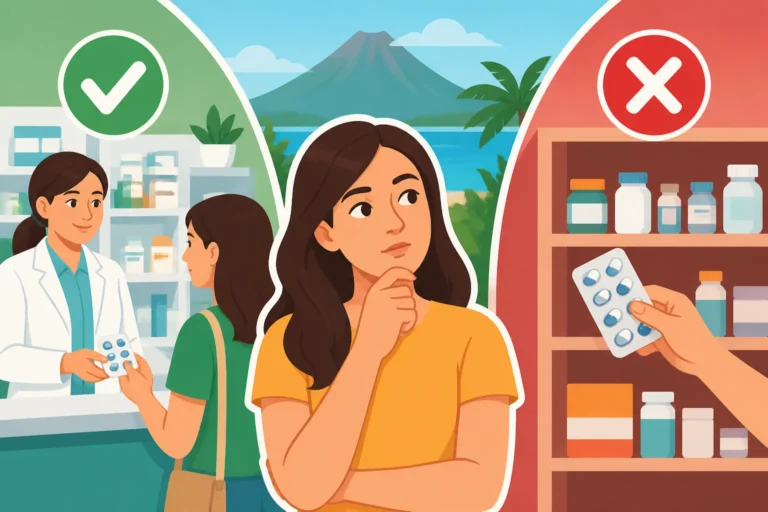
For many expats, the freedom of the Costa Rican pharmacy is a revelation. You can typically buy birth control pills, high-strength anti-inflammatories, asthma inhalers, and even many cholesterol or blood pressure medications without a physical piece of paper from a doctor. You simply walk up to the counter, provide the name of the "principio activo" (active ingredient), and the pharmacist will dispense it.
This accessibility is part of why The Complete Guide to Healthcare in Costa Rica for Expats (2027) often highlights the pharmacy system as a major plus for living here. It saves you the cost and time of a $60 to $100 private doctor’s visit just to get a refill of a maintenance medication you have been taking for a decade. However, always bring your old pill bottle or a copy of your home-country prescription the first time, just to ensure the pharmacist provides the correct dosage.
Controlled Substances and the Receta Digital
The major exception to the "no script needed" rule involves antibiotics, psychotropic drugs, and narcotics. Since the mid-2010s, Costa Rica has implemented a strict Receta Digital (Digital Prescription) system. For medications like Xanax, Valium, Ritalin, or strong painkillers like Tramadol, a doctor must log into a centralized government portal and issue a digital code.
When the doctor issues this, you will receive an email with a code or a PDF. You must present this code at the pharmacy along with your ID (DIMEX or passport). The pharmacist then "extinguishes" the code in the system so it cannot be used again. This system is designed to prevent "doctor shopping" and is very effective, but it can be a headache for expats who are used to paper scripts. If you are struggling with this process, understanding How to Use Your DIMEX to Access Healthcare in Costa Rica is vital, as your residency card is the primary key for all digital government records.
Bringing Medications from Abroad
Many expats choose to bring a three-to-six-month supply of their medications when they first move. This is generally legal, provided the medications are in their original packaging and you have a copy of the prescription. However, if you are bringing a large quantity of controlled substances, you should have a letter from your doctor, ideally apostilled, explaining the necessity of the volume.
Customs (Aduana) can be fickle. If they suspect you are bringing in medication for resale, they can confiscate it. For routine medications, it’s usually better to transition to local sourcing once you arrive. If you are on a specific brand that isn't available in Costa Rica, you may need to look into a "Permiso de Importación" (Import Permit) through the Ministry of Health, which is a bureaucratic marathon that usually requires the help of a local lawyer or a specialized medical concierge.
The Cost of Medications in Costa Rica
Pricing in Costa Rican pharmacies is a tale of two extremes. On one hand, generic medications can be incredibly cheap. On the other hand, specialized imported brand-name drugs can sometimes cost more than they do in the United Kingdom or Europe, though they are almost always cheaper than the "retail" price in the United States.
Brand Name vs. Generics (Genéricos)
In Costa Rica, you will constantly be asked: "¿Desea el original o el genérico?" (Do you want the original or the generic?). The "original" refers to the global brand name (e.g., Lipitor), while the "genérico" is often produced by regional labs like Stein or Caplin Point. The price difference can be staggering, sometimes up to 70%.
Most local doctors are comfortable with generics, but some expats prefer to stick with what they know. It is worth noting that the Ministry of Health has strict bioequivalence standards, but some people find that local generics for things like thyroid medication (Levothyroxine) can vary slightly in potency. If you have a sensitive condition, it might be worth paying the premium for the brand name to maintain consistency.
Comparing Caja vs. Private Pharmacy Costs
If you are a legal resident, you will be paying into the Caja Costarricense de Seguro Social (CCSS). One of the perks of this system is that all medications prescribed by a Caja doctor are free at the point of delivery. You wait in line at the pharmacy of your local clinic, and they hand you your meds. For many, this is a huge relief when considering The Cost of Healthcare in Costa Rica: A Complete Breakdown for Foreigners (2026).
The downside? The Caja has a restricted formulary. They will provide the medication they have in stock, which is almost always a generic, and they may not carry the latest "designer" drugs. If the Caja doesn't carry what you need, you will have to go to a private pharmacy and pay the full market price.
| Medication Category | Est. Private Cost (Generic) | Est. Private Cost (Brand) | Caja Availability |
|---|---|---|---|
| Antibiotics (Amoxicillin) | $10 – $15 | $25 – $40 | High |
| Hypertension (Lisinopril) | $8 – $12 | $30 – $50 | High |
| Cholesterol (Atorvastatin) | $15 – $20 | $60 – $80 | High |
| Antidepressants (Sertraline) | $20 – $30 | $70 – $110 | Moderate |
| Birth Control (Monthly) | $10 – $18 | $25 – $45 | Moderate |
Price Control and Loyalty Discounts
Unlike the United States, Costa Rica has some level of government price capping on essential medicines. Furthermore, the major chains have loyalty programs that you should sign up for immediately. Fischel and La Bomba both have programs where, for example, if you buy three boxes of a chronic medication over three months, the fourth box is free.
Always ask about "promociones" or "descuentos." Many pharmacies have specific days of the week where all medications are 10% to 20% off. If you are managing a chronic condition, timing your refills to these discount days can save you hundreds of dollars over a year. Using Understanding the Difference Between the Caja and Private Insurance in Costa Rica can also help you decide if a private insurance policy's "pharmacy rider" is worth the extra premium for your specific needs.
Finding Your Medication and Equivalents
One of the biggest hurdles is the "lost in translation" aspect of pharmacy shopping. A drug you know as "Tylenol" is "Paracetamol" or "Acetaminofén" here. "Advil" is "Ibuprofeno."
Active Ingredients vs. Brand Names
You must learn the principio activo (active ingredient) of your medications. In Costa Rica, medical professionals focus almost exclusively on the chemical name rather than the marketing name. When you walk into a pharmacy, don't ask for "Excedrin"; ask for "Acetaminofén con cafeína."
If you have a complex prescription, use a tool like the Mayo Clinic’s drug database or a local app like "Vademecum" to find the chemical name. This ensures that even if the specific brand isn't available, the pharmacist can find the exact chemical equivalent. This is a common topic in Navigating the Costa Rican Healthcare System: An Expat's Roadmap (2027), as it is one of the first practical skills you need to master.
What to Do If Your Med Is Unavailable
Occasionally, a specific medication will be out of stock nationwide. This is often due to supply chain issues at the port of Limón or a delay in Ministry of Health re-registration. If this happens, don't panic. The regente can often suggest a "therapeutic equivalent"—a drug in the same class that performs a similar function.
However, never switch classes of medication without consulting a doctor. If you are in a pinch, you can use private telemedicine services to get a quick consultation. Services like SafetyWing are excellent for expats because they provide the medical infrastructure support needed when you are navigating these local gaps in care, ensuring you have a professional to talk to before making a change to your regimen.
Special Orders and Imports
For very rare conditions, you might find that no pharmacy in the country stocks your medication. In these cases, you have two options. First, you can work with a specialized pharmacy like Farmacia El Correo or larger hospital pharmacies that have the licenses to import "uso personal" (personal use) medications. This is expensive and involves a lot of paperwork.
Second, you can look into compounding pharmacies. There are several high-quality farmacias magistrales in San José that can create custom formulations of medications if the standard pill form isn't available or doesn't suit your needs. This is particularly common for hormone replacement therapy (HRT) or pediatric medications.
Utilizing Public vs. Private Systems for Meds
Your strategy for getting meds will depend heavily on your residency status and your budget. Most expats use a hybrid approach: they get what they can for free through the public system and buy the rest privately for convenience.
Getting Meds Through the Caja (CCSS)
If you have successfully navigated How to Enroll in the Caja (CCSS) as a Foreigner in Costa Rica, you are entitled to free medications. After your appointment at the EBAIS (local clinic), the doctor enters your prescriptions into the EDUS app. You then walk to the pharmacy window, show your DIMEX, and wait.
The wait times can be significant—sometimes hours in busy urban clinics. However, the EDUS app now allows you to track your prescriptions and sometimes even request refills digitally. The cost savings for expensive chronic meds, like insulin or cancer treatments, make the wait time well worth it for many retirees on a fixed income.
Using Private Pharmacies for Convenience
If you don't want to wait three hours for a $5 bottle of antibiotics, you just go to the local private pharmacy. The convenience factor is the primary reason people use private pharmacies. Many are located in shopping malls, have zero wait times, and offer home delivery via apps like Uber Eats or Glovo (PedidiosYa).
For those who are not yet residents and are still asking Do I Have to Join the Caja to Get Residency in Costa Rica?, private pharmacies are your only choice. In these cases, your costs will be higher, but the ease of access is a major comfort during the transition period.
Insurance and Reimbursement
Most private health insurance policies in Costa Rica, such as those from INS or Pan-American, have a "farmacia" benefit. Usually, this requires you to pay a deductible or a co-payment (often 20%). You pay the pharmacy in full, get a factura electrónica (electronic invoice), and then submit it for reimbursement.
If you are using a global plan like SafetyWing, the process is similar. You’ll want to keep your doctor’s prescription and the official tax invoice. While travel-focused insurance often focuses on acute illnesses (like a sudden infection), having that documentation is key to getting reimbursed for the medications prescribed during an emergency. For more on this, check out Understanding Private Hospital Networks and Direct Billing in Costa Rica.
Practical Tips for Managing Your Meds
Living in the tropics adds a layer of complexity to medication storage and management that you might not expect. Humidity and heat are the enemies of many pharmaceuticals.
Refill Logistics and Reminders
In Costa Rica, "automatic refills" are not really a thing in the private sector. You are responsible for tracking your own supply. If you are on a Receta Digital, the doctor usually issues a script for 3, 6, or 12 months. However, the pharmacy can only dispense one month at a time for certain controlled substances.
This means you need to have a monthly "pharmacy run" scheduled. If you live in a remote area, factor in the "rainy season factor." A washed-out road or a bridge closure can prevent you from getting to the nearest town for days. Always keep at least a two-week buffer of essential medications. For more on regional living, see Understanding How to Prepare for the Rainy Season in Costa Rica.
Communicating with the Pharmacist
While many pharmacists in high-expat areas like Escazú, Tamarindo, or Nosara speak excellent English, many in the Central Valley or rural areas do not. Learning a few key phrases will make your life much easier:
- "¿Tienen este medicamento?" (Do you have this medicine?)
- "¿Cuál es el principio activo?" (What is the active ingredient?)
- "¿Hay una versión genérica más barata?" (Is there a cheaper generic version?)
- "Necesito una receta digital para esto?" (Do I need a digital prescription for this?)
If communication is a major concern for you, researching How to Find an English-Speaking Doctor in Costa Rica before you need one is a smart move, as they can write your initial notes in a way that local pharmacists will understand.
Home Delivery and Online Services
The rise of delivery apps has changed the game for expats in Costa Rica. Most major chains now have their own apps or are available on multi-service delivery platforms. You can upload a photo of your prescription, pay via credit card, and have your meds delivered to your gate within an hour.
This is particularly useful if you are sick and living alone. However, for controlled substances requiring a Receta Digital, you usually cannot use a third-party delivery driver. You or a designated representative must present the ID and the code in person at the pharmacy.
Emergency Situations and 24-Hour Access
Medical emergencies don't happen on a schedule, and knowing where to go at 3:00 AM is vital for your peace of mind.
Finding 24/7 Farmacias
Most 24-hour pharmacies are attached to private hospitals. In San José, the pharmacies at Hospital CIMA, Clínica Bíblica, and Hospital Metropolitano are open around the clock. In the suburbs, certain Fischel locations stay open 24/7.
Outside the Central Valley, 24-hour pharmacies are rare. In places like Quepos or Liberia, you might find one "farmacia de turno"—a system where pharmacies take turns staying open late. This schedule is usually posted on the door of every pharmacy in town. If you can't find one, your next best bet is the emergency room of the local Caja hospital or a private clinic. For more on this, see What Should I Do in a Medical Emergency in San Jose?.
When to Go to the ER Instead of the Pharmacy
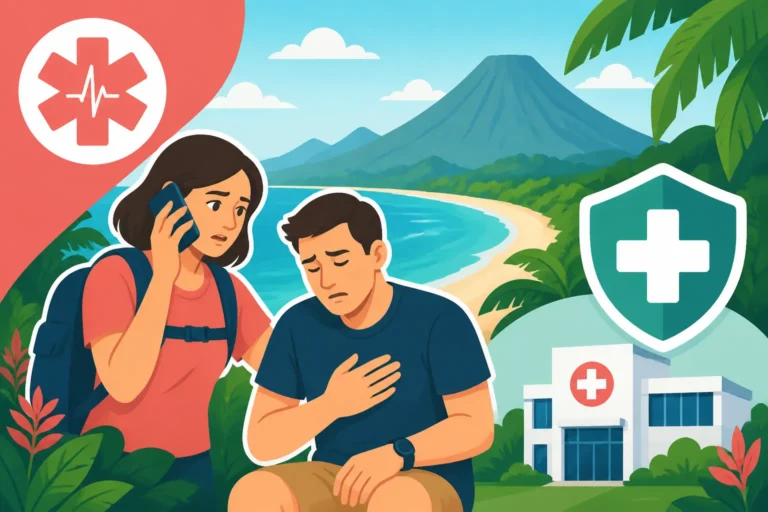
Expats often try to "tough it out" with pharmacy consultations to avoid the cost of the ER. However, if you are experiencing chest pain, difficulty breathing, or severe allergic reactions, skip the pharmacy. Costa Rican pharmacists are great, but they are not equipped for life-saving interventions.
If you find yourself in a situation where you need an ambulance, remember that Understanding Emergency Numbers (911) and Ambulance Care in Costa Rica is your first step. Private hospitals will require a credit card deposit or proof of insurance (like SafetyWing) before admission, so keep those handy.
Traveling with Meds within Costa Rica
If you are heading from the city to a remote jungle lodge, bring more medication than you think you need. The "pharmacy" in a tiny village might only carry Band-Aids and Aspirin. Also, keep your meds in your carry-on or a waterproof bag. The humidity in the coastal rainforests can degrade pills quickly if they aren't kept in a cool, dry place. If you are staying in a place without air conditioning, consider keeping your meds in a small airtight container with a silica gel packet.
Disclaimer
This guide is for informational purposes only and does not constitute medical or legal advice. Always consult with a licensed healthcare professional in Costa Rica before starting, stopping, or changing any medication regimen. Pharmacy laws and availability are subject to change by the Ministry of Health.