Understanding the School System (Public, Private, International) in Costa Rica
Moving to Costa Rica with children means tackling a whole new world of choices, not least of which is their education. It's not just about finding a school; it's about navigating a system that might be vastly different from what you're used to, dealing with language barriers, cultural shifts, and often, the underlying fear of making the wrong decision for your kids. This guide aims to walk you through the various options – public, private, and international schools – in Costa Rica, offering a realistic, expat-focused perspective to help you make informed decisions for your family.
Navigating the Educational Landscape in Costa Rica
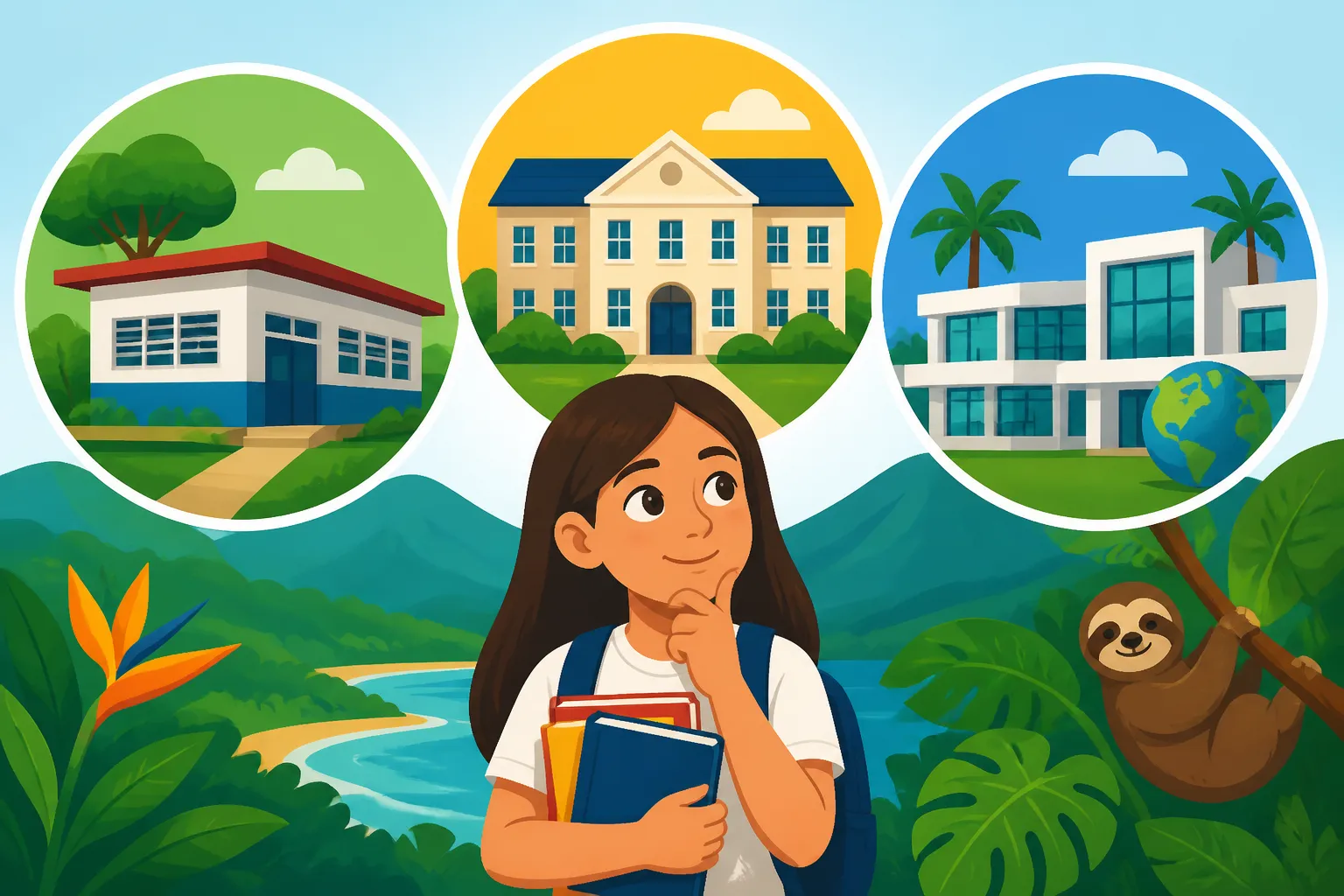
When you first arrive, it can feel like you're staring at a blank map, trying to figure out where to send your little ones. Costa Rica, for all its beauty and charm, has an educational system that can be a bit of a maze for newcomers. You've got three main avenues: the public system, local private schools, and the more globally-focused international schools. Each has its own distinct characteristics, advantages, and, let's be honest, its own set of challenges that can make even the most seasoned expat scratch their head.
The initial hurdle often isn't just about finding a school that fits your child's academic needs, but one that aligns with your family's values, budget, and desired level of cultural integration. Do you want your kids to dive headfirst into the local culture and language, or would you prefer a more familiar educational environment? These are big questions, and there’s no single right answer, only the best fit for your family. It’s a journey, not a sprint, and understanding the nuances of each option is the first step.
Public Schools The 'Sistema Educativo Público'
Ah, the public schools, or the sistema educativo público. For many expats, this is the most intriguing, yet often the most intimidating, option. Managed by the Ministry of Public Education (MEP), these schools are essentially free, requiring only a minimal enrollment fee and covering basic supplies. On the surface, it sounds fantastic, right? A chance for your children to truly immerse themselves in Tico culture, become fluent in Spanish, and make local friends. And it absolutely can be all of that.
However, the reality often comes with a dose of culture shock, especially if your children are coming from a well-resourced school system in North America or Europe. Public schools here can be crowded, resources might be limited, and the teaching methodologies can be quite different. It's a full immersion experience, which is brilliant for language acquisition, but can be tough on kids who are already navigating a new country, a new home, and new friends. I’ve seen kids thrive, becoming fluent in Spanish within months, but I’ve also seen others struggle with the transition, feeling overwhelmed by the language barrier and the different academic pace. It really depends on your child's personality, their age, and your family’s commitment to supporting them through a significant cultural adjustment.
Private Schools Beyond the Basics
If the public system seems a bit too much of a leap, private schools in Costa Rica offer a range of alternatives. This category is vast, encompassing everything from small, local bilingual schools to larger, more established institutions that blend Costa Rican and international curricula. For many expat families, private schools offer a middle ground: better resources and smaller class sizes than public schools, often with bilingual programs, but generally at a more accessible price point than the international schools.
The reasons for choosing private are varied. Some parents want a slightly more structured environment, or they might be looking for a school with a specific religious affiliation. Others simply want their children to receive a more individualized education, something that can be challenging to achieve in the often-overcrowded public system. These schools are typically run by a mix of local and expat educators, and many focus heavily on English proficiency alongside a strong Spanish program, which is a huge draw for families who want their children to be truly bilingual without sacrificing academic rigor. It’s a fantastic way to ensure your kids still integrate culturally, but with a softer landing.
International Schools Familiar Comforts, Higher Cost
For many expat families, especially those with older children or those planning shorter stints in Costa Rica, international schools are often the default choice. These institutions are designed specifically for expatriate communities, offering curricula from their home countries (US, British, International Baccalaureate) and typically teaching primarily in English. Think familiar textbooks, similar teaching styles, and an immediate community of other expat children who are going through similar experiences.
The appeal is obvious: continuity in education, easier transitions for kids, and a strong support network for parents. They often boast excellent facilities, a wide range of extracurricular activities, and a direct pathway to universities back in your home country or other international institutions. However, this familiarity comes at a significant financial premium. The tuition fees for international schools in Costa Rica can be comparable to private schools in developed countries, and they often involve additional costs for uniforms, books, transportation, and special programs. But if you're looking for an educational experience that closely mirrors what your child would receive back home, and your budget allows for it, international schools provide that comfort and consistency.
Delving Deeper into Public Education The MEP System
Let’s really get into the nitty-gritty of the public school system, often referred to simply as "MEP" (Ministerio de Educación Pública). This is where the majority of Costa Rican children receive their education, and it truly is the backbone of the nation's commitment to universal access to schooling. For those considering it, it’s vital to understand what you’re stepping into. The MEP system covers primary school (ages 6-12) and secondary school (ages 13-17/18), and it is fundamentally different from many Western educational models.
The primary goal of public education here is to provide a foundational academic and civic education. Class sizes can vary wildly, but it's not uncommon to find 30, 40, or even more students in a single classroom, especially in more populated areas. The curriculum is set nationally, focusing on core subjects like Spanish, mathematics, social studies (which includes Costa Rican history and civics), science, and some art and physical education. It’s comprehensive in its scope but can sometimes lack the individualized attention that smaller class settings or more resource-rich schools might offer. This is where your child's adaptability and your family's commitment to supporting their learning outside of school become really important.
Curriculum and Language The Spanish Immersion
The most defining characteristic of the public school system, and the biggest challenge for non-Spanish-speaking expat children, is that instruction is almost exclusively in Spanish. This isn't just about language acquisition; it's about learning complex subjects in Spanish. Imagine trying to grasp algebra or the nuances of Costa Rican history when you're still struggling with verb conjugations. It's a steep learning curve, to say the least. While children are incredibly resilient and pick up languages faster than adults, the initial months can be incredibly frustrating and exhausting for them.
The curriculum itself, set by the MEP, places a strong emphasis on Costa Rican history, geography, and civic values. Your child will learn about Juan Santamaría, the importance of la pura vida, and the nation's democratic traditions. This is an unparalleled opportunity for cultural integration, embedding them deeply into the fabric of their new home. But it also means that some subjects or teaching styles might differ significantly from what they're accustomed to. For instance, rote memorization might be more prevalent in some subjects than critical thinking exercises. Investing in additional Spanish lessons outside of school can be a huge help, and resources like Learning Spanish in Costa Rica: A Complete Guide for Expats can offer valuable tips for families embarking on this linguistic journey.
Enrollment and Expectations Practicalities and Realities
Enrolling in a public school generally involves presenting your child's birth certificate, their academic records from their previous school (which may need to be translated and apostilled), proof of residence, and your identification (like your DIMEX residency card). The process can sometimes be bureaucratic, requiring patience and multiple visits to the local school or regional MEP office. Finding a spot usually depends on where you live, as children are typically assigned to the school in their barrio (neighborhood).
You should also temper your expectations regarding facilities and resources. While some public schools in more affluent areas might have decent infrastructure, many operate with older buildings, fewer technological resources, and sometimes a lack of modern teaching aids. Teachers are often dedicated and passionate, but they are working within the constraints of a public system. Don't expect a fully stocked computer lab in every classroom or an elaborate sports complex. Instead, focus on the invaluable cultural and linguistic experience your child will gain. This environment fosters resourcefulness and adaptability, skills that are incredibly valuable. When you are looking for The Best Places to Live in Costa Rica for Expats: A Complete Guide (2027), consider the quality and proximity of public schools as well.
Exploring Private School Options A Closer Look
The private school sector in Costa Rica is a robust and varied landscape, offering a compelling alternative to the public system for many expat families. Unlike the uniform nature of MEP schools, private institutions come in all shapes and sizes, each with its own philosophy, curriculum, and price tag. This diversity means you have more choices, but it also means more research to find the perfect fit. What they generally share, however, is a commitment to smaller class sizes, better facilities, and often, a strong emphasis on English language instruction.
For parents who want their children to maintain strong English skills while still integrating into Costa Rican culture, private schools are often the sweet spot. They provide a bridge between the full immersion of public schools and the more insulated environment of international schools. Many private schools are locally owned and operated, with a blend of Costa Rican and foreign staff, creating a truly unique educational experience that combines the best of both worlds.
National Private Schools Blending Worlds
National private schools, sometimes just called "private schools" rather than "international," are typically Costa Rican institutions that operate independently of the MEP system, allowing them more flexibility in their curriculum and teaching methods. Many of these schools are bilingual, offering instruction in both Spanish and English, though the emphasis on English can vary. They often follow a curriculum that is either an enhanced version of the MEP curriculum or a blend that incorporates elements from other systems.
The great thing about these schools is that they offer a genuine blend of cultural experiences. Your child will be learning alongside mostly Costa Rican children, gaining fluency in Spanish, and understanding local customs firsthand, but within a more comfortable and structured environment that often has better resources than public schools. The class sizes are generally smaller, and the teachers might have more autonomy to tailor their teaching. Costs for these schools are significantly lower than international schools, making them a very attractive option for families on a tighter budget but still seeking quality education. Understanding the Cost of Private and International Schools in Costa Rica will give you a detailed breakdown of what to expect financially.
Bilingual Private Schools The Bridge to Opportunity
A particular subset within the private school category that really shines for expats is the dedicated bilingual private schools. These institutions pride themselves on producing truly bilingual graduates, often with native-level proficiency in both Spanish and English. They typically follow a curriculum that integrates elements from both the Costa Rican MEP framework and international standards, such as those from the US or Canada. The teaching staff is usually a mix of native Spanish speakers and native English speakers, ensuring high-quality language instruction.
These schools are often designed to make the transition smoother for expat children, offering support for English speakers while accelerating their Spanish acquisition. They often have robust extracurricular programs, from sports to arts, fostering a well-rounded education. The tuition for bilingual private schools falls in the mid-range – more than public schools but less than the top-tier international schools. For families aiming for their children to be fully integrated into Costa Rican society while maintaining a global perspective, these schools provide an excellent balance. They're a fantastic way to give your child a competitive edge, preparing them for higher education whether they choose to stay in Costa Rica or pursue opportunities abroad.
The Allure of International Schools A Global Perspective
For many expat families, especially those who foresee their children attending university outside of Costa Rica, or those who move frequently between countries, international schools are often the preferred choice. These institutions offer a consistent, globally recognized curriculum that eases transitions and ensures academic continuity. They are built around the needs of an international student body, providing a sense of familiarity and community that can be invaluable during a relocation.
Costa Rica boasts several reputable international schools, primarily located in and around the Central Valley, particularly in areas like Escazú and Santa Ana. These areas are popular expat hubs, which naturally fosters a strong network of families with similar educational priorities. Names like Country Day School, Lincoln School, and Blue Valley School are well-known within the expat community, each offering distinct programs and facilities designed to meet high international standards. They understand the unique challenges expat children face and often have dedicated support systems in place, from counselors who understand cultural transitions to programs that help new students integrate socially.
Curricula Offered IB, US, British, and More
International schools in Costa Rica offer a variety of educational curricula, catering to diverse national and academic backgrounds. The most common are:
- US Curriculum: Many international schools follow an American-style curriculum, often culminating in the Advanced Placement (AP) program, preparing students for US universities. This will feel very familiar to families coming from the United States.
- International Baccalaureate (IB): The IB program is highly regarded worldwide for its rigorous, inquiry-based learning approach. Schools offering the IB Diploma Programme (DP) for high schoolers, and sometimes the Middle Years Programme (MYP) and Primary Years Programme (PYP) for younger students, prepare graduates for universities globally. This curriculum focuses on holistic development, critical thinking, and global awareness.
- British Curriculum: Some schools follow the British system, leading to IGCSE and A-Level examinations. This is particularly appealing to families from the UK and Commonwealth countries.
- Blended Curricula: A few schools might offer a hybrid approach, combining elements of different systems or integrating the MEP curriculum alongside an international one, although English remains the primary language of instruction.
When choosing, consider where your children might pursue higher education. If the goal is a specific university system, aligning with that curriculum from early on can be a significant advantage. It's not just about what they learn, but how they learn, and these curricula have distinct philosophies.
Admissions, Fees, and Waiting Lists The Competitive Edge
The admissions process for international schools can be quite competitive, especially for popular grades and during peak relocation seasons. It typically involves submitting previous school transcripts, teacher recommendations, and often, entrance exams or interviews for the student. It's wise to start the application process well in advance, sometimes even a year out, particularly for the most sought-after schools.
And then there's the cost. This is where the reality check truly hits for many families. International school fees are substantial. Expect to pay annual tuition ranging from $10,000 to $25,000 USD or more per child, depending on the school and grade level. On top of tuition, there are often one-time enrollment fees (sometimes several thousand dollars), annual registration fees, costs for uniforms, books, technology fees, transportation, and extracurricular activities. It adds up quickly. Take a look at How Much Are Private School Fees in San Jose? for a more granular understanding.
| School Type | Average Annual Tuition (USD) | Key Language(s) | Curriculum Focus | Typical Class Size | Cultural Immersion |
|---|---|---|---|---|---|
| Public (MEP) | Free (minimal fees) | Spanish | Costa Rican National | Large (30-50+) | High |
| National Private | $3,000 – $8,000 | Spanish/English | MEP + enhanced/blended | Medium (20-30) | Medium to High |
| Bilingual Private | $6,000 – $12,000 | English/Spanish | MEP + International elements | Small to Medium (15-25) | Medium |
| International | $10,000 – $25,000+ | English | US, IB, British | Small (10-20) | Low to Medium |
Note: These are average estimates and can vary significantly based on location, school reputation, and grade level.
Despite the high cost, the value proposition for many families is undeniable: a world-class education, a smooth pathway to global universities, and a supportive expat community. If you're using a moving service like Sirelo for your relocation, make sure to factor these educational costs into your overall budget planning, as they can be a significant part of your The Complete Guide to Cost of Living in Costa Rica for Expats (2026).
Key Considerations for Expat Families Making the Right Choice
Choosing a school isn't just about academics; it’s about finding a place where your children will thrive emotionally, socially, and culturally. For expat families, this decision carries extra weight because it's intertwined with the entire relocation experience. You're not just picking a school; you're picking a community, a language environment, and a pathway for your child's integration into their new life in Costa Rica. It’s a huge decision, and one that often involves trade-offs.
It's common to feel overwhelmed by the options and the fear of making the wrong call. Remember, you're not alone in this. Every expat family faces similar dilemmas. The key is to gather as much information as possible, talk to other expat parents, visit schools if you can, and most importantly, consider your child's personality and needs above all else. A school that's perfect for one child might not be right for another, even within the same family.
Language Barrier and Cultural Integration More Than Just Classes
The language aspect is undoubtedly the biggest hurdle for expat children, especially if they are coming from a non-Spanish-speaking background. In public schools, it's sink or swim, and while many children adapt incredibly well, it can be a challenging initial period. Even in bilingual or international schools, where English might be the primary language of instruction, understanding and engaging with the local culture is a continuous process. Learning Spanish isn't just about vocabulary; it's about unlocking a deeper understanding of Costa Rican society, humor, and social norms.
Beyond language, cultural integration is crucial. Is the school fostering an environment where your child can connect with local children, learn about Tico traditions, and appreciate their new surroundings? Or is it an expat bubble that, while comfortable, might limit their full Costa Rican experience? Think about how involved the school is in community events, whether it celebrates local holidays, and what opportunities exist for cross-cultural exchange. For example, a child attending a public school might be invited to a fiesta in their neighbor's house, something that might be less common in an international school setting. This is a critical factor in determining how deeply your family will integrate into Costa Rican life.
Location, Transportation, and Logistics Daily Life
Don't underestimate the practicalities of school logistics. Costa Rica's traffic, especially in and around the Central Valley, can be a nightmare. A school that looks great on paper might be a daily two-hour commute, which quickly erodes family time and adds stress. Before committing to a school, do a test run of the commute during school hours. Consider proximity to your chosen neighborhood when you're looking for How Do I Find Family-Friendly Neighborhoods in San Jose.
Many private and international schools offer school bus services, which can be a lifesaver, but these come at an additional cost and might have limited routes. If you plan to drive your children yourself, be prepared for winding roads, unpredictable drivers, and heavy rain during the invierno. Understanding Driving in Costa Rica: Licenses, Registration and Rules for Expats (2027) will be vital for those daily school runs. Also, think about after-school activities. If your child is involved in sports or clubs, how will they get home? A reliable internet connection, which you can establish using resources like How to Set Up Internet and Cable in Costa Rica, is also crucial for homework, research, and staying connected with the school community. For initial connectivity while you're sorting out your home internet, grabbing an eSIM from a service like Airalo can be incredibly useful to coordinate school visits and parent meetings.
Special Needs and Support Finding the Right Fit
If your child has specific learning needs, physical disabilities, or requires specialized support, this becomes an even more critical factor in your school choice. The availability and quality of special education services vary significantly across all types of schools in Costa Rica. Public schools, while legally mandated to provide inclusive education, often lack the resources, trained staff, or specialized facilities to adequately support complex special needs. The language barrier can further complicate matters, as therapy or support services might only be available in Spanish.
Private and international schools are more likely to have dedicated learning support departments, smaller student-to-teacher ratios, and staff trained in specific learning differences. However, the extent of their services can still vary greatly, and they might not be equipped for all types of special needs. It's imperative to have candid conversations with school administrators and learning support coordinators before enrolling. Ask for specific details on their programs, visit their facilities, and inquire about their experience with children who have similar needs to your own. Sometimes, you might need to supplement school support with external therapists or tutors, so researching local resources and costs for these services is also a good idea. Finding How to Find an English-Speaking Doctor in Costa Rica can also extend to finding specialists who might work with special needs.
Making the Transition and Settling In
Once you've made the big decision and picked a school, the next phase is making sure your child (and you!) transitions smoothly. Moving to a new country and starting a new school is a massive undertaking for children, and while they're incredibly resilient, they'll need all the support and understanding you can offer. It’s not just about getting good grades; it’s about emotional well-being, forming new friendships, and adapting to a whole new rhythm of life.
Remember that there will be good days and challenging days. Pura Vida is a lifestyle, but it doesn't mean life is always easy, especially when you're navigating new systems. Your calm and positive attitude will rub off on your kids, even when you're secretly Googling "how to enroll a child in Costa Rican school" for the tenth time. This whole experience is a journey for the entire family. The Complete Guide to Moving to Costa Rica: Your First 90 Days (2027) has more general tips for your initial adjustment.
Preparing Your Children Emotionally and Academically
Before the first day of school, open up conversations with your children about what to expect. Talk about the new language, the different foods they might eat at lunchtime, the new types of games they might play, and the fact that things will feel strange at first, but it will get better. Emphasize the adventure and excitement of making new friends from different cultures. If possible, arrange a visit to the school before classes start so they can see the campus, meet a few teachers, and get a feel for the environment.
Academically, consider a head start on Spanish if they're entering a primarily Spanish-speaking environment. Even a few basic lessons can build confidence. For older children, ensuring they have access to their previous curriculum or online resources can help bridge any gaps they might encounter in the new system. Most importantly, reassure them that it's okay to struggle, and you're there to help them every step of the way. Their emotional comfort and sense of belonging are paramount to their academic success.
Connecting with the School Community Building Your Network
As parents, your integration into the school community is just as important as your child's. Engage with parent-teacher associations, volunteer for school events, or simply chat with other parents at drop-off and pick-up. This is not only a fantastic way to meet new people and build your own social network, but it also provides invaluable insights into the school's culture, upcoming events, and any challenges or successes other families are experiencing.
Connecting with other expat parents can be especially helpful, as they've often been through the same struggles you're facing. They can share tips on everything from finding tutors to navigating school bureaucracy, or even How to Enroll Your Child in a Costa Rican School if you’re still in the thick of it. These connections can become a vital support system, making the entire expat experience much richer and less isolating. Remember, you're all in this Pura Vida adventure together!
Disclaimer
The information provided in this article is intended for general guidance and informational purposes only, and does not constitute professional advice. While we strive to keep the information up-to-date and correct, Costa Rican laws, regulations, and school policies can change frequently. It is highly recommended to consult with local education authorities, school admissions offices, and legal professionals for the most accurate and current information regarding your specific situation. We do not assume any liability for decisions made based on the information provided herein.