How to Set Up Internet and Cable in Costa Rica
Oh, the joy of moving to a new country and realizing that even the most basic modern amenities like internet and cable can feel like deciphering an ancient scroll! If you're an expat in Costa Rica, you've probably already discovered that setting up utilities here isn't always as straightforward as back home. This guide is going to walk you through everything you need to know about getting connected, from understanding the local providers to navigating installations and troubleshooting, so you can surf the web and catch your favorite shows without pulling your hair out.
Understanding the Costa Rican Internet Landscape
Let's face it, having reliable internet is practically a human right these days, especially when you're trying to stay connected with family back home, manage remote work, or simply stream a little Netflix after a long day of pura vida. The internet scene in Costa Rica has evolved quite a bit over the years, but it still has its quirks, particularly outside of the larger metropolitan areas. You'll find a mix of cutting-edge fiber optic options and more traditional, sometimes slower, connections depending on your exact location.
The country's infrastructure continues to improve, but patience remains a key virtue when dealing with service providers. While cities like San José, Escazú, and Heredia boast robust networks, venture into a charming beach town or a quiet mountain retreat, and your options might become a bit more limited. It’s crucial to understand these nuances before you commit to a long-term contract, as what works for your friend in a central valley suburb might be completely unavailable or wildly different in quality just an hour away.
Major Providers and Their Offerings
When it comes to internet and cable in Costa Rica, a few big players dominate the market, each with its own strengths and weaknesses. Think of them like the big phone companies back home, but with a tico twist.
ICE (Instituto Costarricense de Electricidad) / Kolbi: ICE is the national telecommunications and electricity provider, and Kolbi is their brand for mobile and internet services. Historically, they've been the largest provider, often seen as the backbone of the country's communications. They offer a range of services from mobile data to fiber optic internet. Kolbi’s fiber optic, where available, can be quite good, offering respectable speeds and reliability. However, their customer service experience can sometimes feel like navigating a maze, and installation times might test your patience. If you're looking into setting up your utilities in general, understanding the role of The Expat Guide to Setting Up Utilities (ICE/AyA) in Costa Rica will be helpful, as ICE handles more than just internet.
Tigo: Tigo is a major competitor that has aggressively expanded its fiber optic network, especially in recent years. They've become a very popular choice for expats and locals alike, often praised for offering competitive speeds and generally more responsive customer service than some of their counterparts. Their packages often include both internet and cable TV, and they frequently run promotions. If you're in a well-developed area, Tigo is definitely one to check out. Their coverage for fiber optic is growing rapidly, making them a strong contender for those who prioritize speed and reliability.
Liberty (formerly Cabletica): Liberty is another significant player, having acquired Cabletica, a long-standing cable TV and internet provider. They offer internet primarily through cable modem technology (coaxial cable), but are also expanding their fiber optic footprint. Liberty is known for its extensive cable TV packages, often including a good selection of international channels, making it a favorite for those who want both TV and internet from a single provider. Their internet speeds are generally competitive within their service areas, especially in urban centers.
Smaller Local Providers: Beyond these giants, you might encounter smaller, localized internet service providers (ISPs), especially in more rural or specialized communities. These can sometimes offer surprisingly good service and more personalized attention, but their coverage is, by definition, limited. Before moving into an area, it's always a good idea to ask your future neighbors or landlord who they use and what their experience has been like. Sometimes, these smaller companies, like small co-ops or community-focused providers, can offer a really tailored experience, particularly in areas where the larger companies haven't invested heavily.
Types of Internet Connections Available
Just like anywhere else, not all internet connections are created equal in Costa Rica. Understanding the different types available will help you set realistic expectations and choose the best fit for your needs and location.
Fiber Optic (Fibra Óptica): This is the gold standard for internet connectivity, offering the fastest and most stable speeds. Fiber optic uses light signals transmitted through glass fibers, making it incredibly efficient and less prone to interference. If you're living in a major city like San José, Escazú, or Alajuela, or even some of the more developed beach towns like Tamarindo or Jacó, you'll likely have access to fiber optic from providers like Kolbi (ICE), Tigo, or Liberty. This is what you want for seamless streaming, online gaming, and heavy data usage. The availability is constantly expanding, so even if it wasn't there a year ago, it might be now.
Cable Internet: This is widely available, particularly in urban and suburban areas, and is offered by providers like Tigo and Liberty. Cable internet uses coaxial cables, the same ones that deliver traditional cable TV. It's generally faster than DSL but can experience slight speed fluctuations during peak usage times when many people in your neighborhood are online simultaneously. For most typical household uses – browsing, streaming, video calls – cable internet is more than sufficient and provides a solid, reliable connection.
DSL (Digital Subscriber Line): DSL internet utilizes traditional copper telephone lines. While it's generally slower than fiber or cable, it has the widest availability, reaching even some more remote areas where fiber and cable haven't yet penetrated. ICE/Kolbi is the primary provider of DSL. If you find yourself in a really off-the-beaten-path location, DSL might be your only wired option. It’s perfectly fine for basic browsing and email, but you might struggle with high-definition streaming or multiple devices running simultaneously. It's a reliable workhorse, but not a speed demon.
Satellite Internet: For those truly living in the middle of nowhere, or where even DSL is a pipe dream, satellite internet is an option. Companies like Starlink are making inroads here, offering high-speed, low-latency satellite internet in areas previously underserved. While it offers significantly better performance than traditional satellite internet, it's still generally more expensive than wired options and requires a clear line of sight to the sky. It’s an excellent solution for those who prioritize living in very remote areas but still need a robust connection for work or entertainment.
Mobile Internet (Data Plans and Hotspots): In a pinch, or for those who don't need a fixed internet connection, mobile data plans from Kolbi, Claro, or Movistar can be a lifesaver. You can use your smartphone as a mobile hotspot, or purchase a dedicated portable Wi-Fi device. This is particularly useful for tourists, digital nomads who are frequently on the move, or as a backup when your primary internet goes down. Services like Airalo can be incredibly convenient for getting an eSIM with data quickly when you first arrive or for short-term stays, avoiding the hassle of a local SIM card purchase right away. Just remember that mobile data speeds and reliability can vary widely depending on your location and network congestion.
The Step-by-Step Process for Setting Up Home Internet
Alright, you've assessed your options, you know who the players are, and you've got a rough idea of what kind of connection you need. Now comes the exciting part: actually getting it installed. This is where a bit of preparation and a healthy dose of patience will serve you well. It's not always as quick as flipping a switch, but it's definitely achievable.
One of the first things you'll realize, like with many administrative tasks in Costa Rica, is that your legal status here plays a big role. Having your DIMEX (residency card) makes things significantly smoother. If you're still in the process of getting residency, you might find some initial hurdles. Knowing How to Use Your DIMEX to Access Healthcare in Costa Rica shows just how integral this card is to various aspects of life here, including setting up utilities.
Checking Availability and Choosing a Provider
This is really the foundational step. Don't assume that because your neighbor has fiber, you automatically can too. Infrastructure is constantly expanding, but it's not uniform.
Checking Availability: Your first port of call should be the providers' websites. Kolbi, Tigo, and Liberty all have online tools where you can enter your exact address to check service availability. Be prepared for this to sometimes be less accurate than you hope. The best way to get a definitive answer is to visit a physical store or call their customer service lines. When calling, if your Spanish isn't fluent, try to find someone who speaks English, or have a Tico friend help you. They might even ask for your número de finca (property registry number) to pinpoint your exact location on their network maps.
Once you have a list of available services, it's time to compare. Think about your actual needs. Are you a hardcore gamer? A family with multiple streamers? Or just someone who needs to check emails and browse the news? Don't pay for speeds you don't need, but also don't undershoot and end up frustrated. Look at advertised speeds (upload and download), monthly costs, contract terms (some require a minimum commitment, typically 12-24 months), and any installation fees. Pay attention to any bundling deals, as often combining internet with cable or even a phone line can offer savings. For example, a Tigo representative might offer a better deal if you take both their internet and cable package.
Required Documents and Application Process
This is where the infamous Costa Rican bureaucracy often makes its appearance. Gathering your documents upfront will save you multiple trips and a lot of frustration.
For Residents: If you have your DIMEX, you're in a much stronger position. You'll typically need:
- Your valid DIMEX card.
- Your passport (often asked for, even with a DIMEX).
- Proof of address (a recent utility bill in your name, or your rental contract). Sometimes a letter from your landlord suffices. Make sure you understand How to Sign a Rental Contract (Contrato de Alquiler) in Costa Rica as this document will be key.
- A local phone number.
- Your número de finca (property registry number) for the address.
For Non-Residents (or those awaiting DIMEX): This can be trickier, but not impossible. Some providers might allow you to sign up using your passport and a local guarantor (fiador) who is a Costa Rican citizen or permanent resident with good credit. This guarantor essentially co-signs your contract, taking responsibility if you default. Alternatively, some providers might offer prepaid internet services, or require a larger deposit. This is where patience is truly a virtue, and exploring options like mobile hotspots (remember Airalo for data!) might be your best bet during your initial setup phase.
The application itself can be done in person at a provider's office, or sometimes online. In-person visits are generally recommended, especially if you have questions or need to clarify anything, as direct interaction can sometimes bypass digital hurdles. Be prepared for some waiting time, especially in popular branches. Once all documents are submitted and approved, you'll sign a contract outlining the terms, speeds, and monthly fees. Don't rush this part; read the fine print, especially regarding contract duration and cancellation clauses.
Installation and Activation
You’ve signed on the dotted line, now comes the waiting game for installation. The good news is, once the appointment is set, the process is usually pretty efficient.
Scheduling the Appointment: When you sign up, the provider will give you an estimated installation date and time window. These windows can be quite broad (e.g., "between 8 AM and 5 PM"), so prepare to dedicate a significant portion of your day to being at home. Confirm the appointment a day or two beforehand. If you need to reschedule, do so as early as possible to avoid no-show fees.
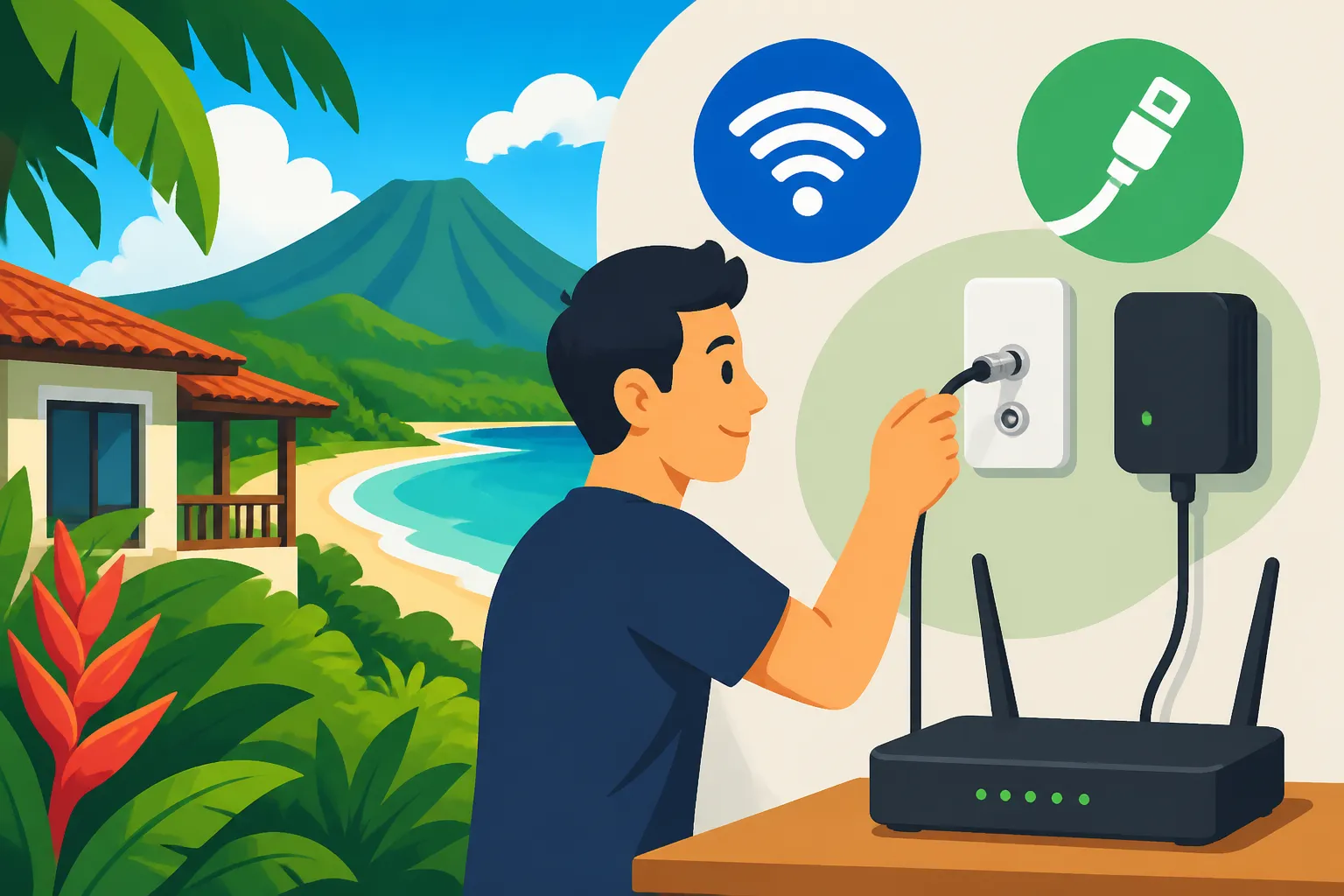
The Installation Day: A technician will arrive, usually in a branded vehicle. They'll need access to your home to run cables (if necessary), install the modem/router, and set up the connection. If you're getting fiber optic, they might need to run a new fiber line from the street to your house. For cable internet, they'll typically use existing coaxial lines. The technician will set up your Wi-Fi network, provide you with the network name (SSID) and password, and ensure everything is working before they leave.
Testing and Verification: Before the technician departs, test the internet connection on your devices. Run a speed test (fast.com or speedtest.net are good options) to ensure you're getting speeds close to what you signed up for. Check both upload and download speeds. If you also signed up for cable TV, make sure all the channels are working correctly. Ask any questions you have about the equipment, troubleshooting basic issues, or how to contact support. Get a name and contact number if possible, just in case. They'll probably want you to sign off on the installation, so make sure you're satisfied before they go.
Navigating Cable TV Options in Costa Rica
While streaming services have definitely taken off, traditional cable TV still holds its own in Costa Rica, offering local channels, news, sports, and a good selection of international programming. Many expats opt for a bundle that includes both internet and cable, making it a convenient and often cost-effective solution.
The good news is that cable TV installation usually goes hand-in-hand with internet setup, especially if you're bundling services. The same technicians will likely handle both, simplifying the process. However, just like with internet, your options for cable TV will depend largely on your geographical location and the service providers operating in that area. In rural parts of Costa Rica, you might find yourself relying more on satellite dishes for TV, or simply embracing streaming entirely.
Bundling Internet and Cable
Bundling your internet and cable TV services with a single provider is a very common practice in Costa Rica, and for good reason. It often provides both financial savings and administrative convenience.
Advantages of Bundling: The most obvious perk is the cost savings. Providers like Tigo and Liberty frequently offer attractive discounts when you combine services, sometimes even throwing in a fixed-line phone connection if that's something you need. This can significantly reduce your overall monthly utility expenses compared to paying for separate services. Beyond the price, managing a single bill and dealing with one customer service department for all your connectivity needs can simplify your life. If there's an issue, you only have one company to call, which streamlines troubleshooting and problem resolution.
Package Options and Content: When choosing a bundled package, you'll typically have several tiers of cable TV packages to consider, ranging from basic local channels to premium offerings with international news, sports, and movie channels. Many expats appreciate having access to channels in English or other languages, which are often included in higher-tier packages. Discuss your preferred channels with the sales representative to ensure the package you select meets your viewing habits. Some bundles might even include digital video recorders (DVRs) or access to on-demand content, allowing you more flexibility in how and when you watch your favorite shows. Just be clear about what you're getting, as some features might be add-ons.
Standalone Cable vs. Streaming Alternatives
The landscape of entertainment consumption is constantly changing, and Costa Rica is no exception. Expats often weigh the pros and cons of traditional cable TV against the flexibility and ever-growing library of streaming services.
Traditional Cable TV: For many, the appeal of traditional cable lies in its simplicity and reliability. You turn on the TV, and there are your channels, often without needing to worry about internet bandwidth or specific apps. Local Costa Rican channels offer a great way to immerse yourself in the culture, practice your Spanish, and stay up-to-date with local news and events. For sports enthusiasts, cable often provides direct access to major international and local sporting events that might not be easily available through streaming. Companies like Liberty (formerly Cabletica) are strong in this area.
The Rise of Streaming: However, streaming services have truly revolutionized how we consume content, and they are widely used in Costa Rica. Netflix, Disney+, Amazon Prime Video, HBO Max, and countless others are readily available, offering vast libraries of on-demand movies and TV shows. The beauty of streaming is its flexibility: watch what you want, when you want, on almost any device, often without commercial interruptions. For expats who miss specific shows from their home country, streaming is often the easiest way to access that content (sometimes with a VPN, depending on regional restrictions). The main requirement for smooth streaming, of course, is a robust and reliable internet connection, which is why considering How to Set Up Internet and Cable in Costa Rica becomes so important.
Making the Choice: The decision between standalone cable and streaming, or a combination of both, often comes down to personal preference and budget. If you're a creature of habit who enjoys channel surfing and wants easy access to local programming and live sports, a bundled cable package might be ideal. If you prefer curated content, hate commercials, and want maximum flexibility, a good internet connection paired with a few streaming subscriptions will likely suffice. Many expats find a hybrid approach works best, using cable for local news and sports, and streaming for everything else. Remember to factor in the cost of multiple streaming subscriptions when comparing prices against a bundled cable package.
| Provider (Primary Offerings) | Connection Types | Typical Speeds (Download) | Estimated Monthly Cost Range (Internet Only) | Notes for Expats |
|---|---|---|---|---|
| Kolbi (ICE) | Fiber, DSL | 50 Mbps – 500 Mbps+ | $30 – $80+ USD | National provider, widest reach (especially DSL). Fiber expanding in cities. Customer service can be slower, but infrastructure is generally robust. |
| Tigo | Fiber, Cable | 100 Mbps – 1000 Mbps+ | $40 – $100+ USD | Aggressive fiber expansion. Often competitive pricing and good customer service. Strong option for bundles. Good for demanding users in covered areas. |
| Liberty | Fiber, Cable | 50 Mbps – 700 Mbps+ | $35 – $90+ USD | Strong cable TV offerings with international channels. Expanding fiber optic. Reliable in urban areas. Good for those wanting a comprehensive entertainment package. |
| Starlink | Satellite | 50 Mbps – 200 Mbps+ | $70 – $100+ USD (plus hardware) | Ideal for very remote areas where wired options are non-existent. Requires upfront hardware cost. Performance generally good, but susceptible to weather. |
| Local Providers | Varies | Varies | Varies | Check locally. Can offer personalized service but limited geographical reach. Worth asking neighbors in specific, often rural, communities. |
Note: Speeds and prices are estimates and can vary significantly based on package, promotions, and specific location. Always check directly with providers for the most current information.
Troubleshooting and Ongoing Management
Living in Costa Rica, you'll quickly learn that things don't always go according to plan, and your internet and cable services are no exception. From power outages to billing quirks, being prepared for potential issues and knowing how to manage your accounts will save you a lot of headaches. It's all part of the Pura Vida experience, which often means embracing a relaxed approach to problem-solving.
Managing your monthly bills is also an important part of living here. While you're getting your internet set up, it’s worth considering How to Open a Bank Account at a Costa Rican Bank as a Foreigner so you can easily handle recurring payments without having to visit physical offices every month.
Common Issues and How to Address Them
Let's be realistic: sometimes your internet will go out, or your speeds will mysteriously drop. It happens. The trick is to know what to do when it does.
Power Outages: Costa Rica's electrical grid, while generally reliable, is susceptible to outages, especially during the rainy season or due to maintenance work. When the power goes out, your internet and cable will, of course, stop working. Once the power returns, give your modem and router a few minutes to boot up and reconnect. If they don't, try unplugging them for 30 seconds and then plugging them back in (a "power cycle"). This resolves many minor glitches. You might find it helpful to look into How to Set Up Electricity (ICE/CNFL) in Your Costa Rican Home to understand the local electricity provider better.
Speed Fluctuations and Outages: If your internet is slow or completely down without a power outage, start by checking all your connections. Ensure all cables are securely plugged into your modem, router, and wall outlets. If you have a Wi-Fi connection, try connecting directly with an Ethernet cable to rule out Wi-Fi issues. If the problem persists, it's time to contact your provider's technical support. This is where a little Spanish goes a long way, or having a Tico friend on standby to help translate can be invaluable. Be patient, clearly explain the issue, and follow their troubleshooting steps. Sometimes, the problem might be a broader outage in your area, which they can confirm.
Language Barrier: This is a common frustration for many expats. While some major providers have English-speaking support staff, it's not always guaranteed. Having a few key phrases in Spanish ready, or using translation apps, can help. Explain that you are an extranjero (foreigner) and your Spanish is limited. Most Ticos are incredibly understanding and helpful, so don't be afraid to try.
Paying Your Bills and Contract Management
Once your services are up and running, managing your monthly payments and understanding your contract terms is crucial to avoid service interruptions or unexpected fees.
Bill Payment Methods: Costa Rican utility bills, including internet and cable, can typically be paid through several convenient methods:
- Online Banking: Most local banks (like Banco Nacional, BAC San José, Banco de Costa Rica) offer online bill payment services where you can link your utility accounts and pay electronically. This is by far the easiest and most recommended method once you have a local bank account.
- Provider Websites/Apps: Many providers have their own online portals or mobile apps for bill payment.
- Physical Locations: You can always pay in person at the provider's offices, authorized payment centers (like Servimás or BN Servicios), or even some supermarkets.
- Automatic Payments: Consider setting up automatic debits from your bank account or credit card to ensure you never miss a payment. This is often the most hassle-free option.
Understanding Your Contract: When you signed up for service, you entered into a contract. Make sure you understand its terms, especially regarding:
- Contract Duration: Most contracts have a minimum term (e.g., 12 or 24 months).
- Early Termination Fees: If you cancel before the contract ends, you might incur penalties.
- Price Changes: Be aware of any clauses that allow the provider to adjust prices.
- Renewal Process: How does the contract renew? Automatically or do you need to take action?
If you plan to move or leave the country, understanding the cancellation process is vital. Don't just stop paying; formally cancel your service to avoid accumulating debt or affecting your credit history in Costa Rica. If you're considering How the Caja Requirement Connects to Your Residency in Costa Rica, maintaining good standing with utilities is just one of many small but important factors in your overall integration.
Alternatives and Special Considerations
Sometimes, traditional internet and cable might not be the right fit for your situation in Costa Rica. Perhaps you live in a very remote area, you're constantly on the move, or you simply prefer more flexible options. Luckily, the market is adapting, and there are alternatives to consider.
Living in a new place often means adapting to different ways of doing things, and internet connectivity is a prime example. Whether you're staying in one of The Best Places to Live in Costa Rica for Expats: A Complete Guide (2027) or a tucked-away village, flexibility and resourcefulness are your best friends.
Mobile Hotspots and Satellite Internet
For those who prioritize mobility or live off the beaten path, a traditional fixed-line internet connection might not be the most practical or even available option. This is where mobile hotspots and satellite internet come into play.
Mobile Hotspots (MiFi Devices & Phone Tethering): Costa Rica's mobile networks (Kolbi, Claro, Movistar) offer decent coverage in most populated areas, and even increasingly in some rural zones. You can purchase a local SIM card (either prepaid or on a post-paid plan) and use your smartphone's personal hotspot feature to share its data connection with other devices. This is incredibly convenient for light users, those who travel frequently, or as a temporary solution. Alternatively, you can buy a dedicated MiFi device (mobile Wi-Fi router), which functions solely as a hotspot and can offer more robust connectivity than a phone. The main downside is data limits and potential speed throttling after you reach certain usage thresholds. Remember, for short-term stays or when you first arrive, an eSIM from a provider like Airalo can get you online immediately without the hassle of buying a physical SIM card. It's a fantastic option for staying connected as you navigate your first few days or weeks in the country, when getting a fixed internet connection might still be a few steps away.
Satellite Internet (e.g., Starlink): For those truly living in remote, mountainous, or jungle areas where even DSL can't reach, satellite internet, particularly Starlink, has been a game-changer. It provides high-speed, low-latency internet access almost anywhere with a clear view of the sky. While the upfront cost for the hardware (dish, router) is significant, and the monthly subscription is higher than most wired options, it offers unparalleled connectivity in areas that were previously digital black holes. For many, it's the only viable solution for working remotely or having reliable entertainment outside of major towns. Just be aware that heavy rain can sometimes impact signal quality, though modern satellite systems are designed to minimize this.
Moving Services and Transferring Accounts
Life in Costa Rica, especially for expats, often involves a bit of moving around. Whether you're upgrading your rental, buying property, or simply exploring different regions, you'll eventually face the task of either transferring your internet and cable services or canceling them.
Transferring Services to a New Address: If you're moving within the same service area of your provider, you can often transfer your existing account to your new address. This usually involves contacting customer service, providing your new address, and scheduling a new installation appointment. Be prepared for potential transfer fees and the possibility that the exact package you had might not be available at the new location (due to different infrastructure). It's crucial to initiate this process well in advance of your move-in date, as installation slots can fill up, and you don't want to be without internet in your new home. Sometimes, it might even be easier to cancel your old service and sign up fresh, especially if there's a good promotional deal for new customers.
Canceling Services: If you're moving to an area not covered by your current provider, or if you're leaving Costa Rica, you'll need to formally cancel your services. Review your contract for any early termination clauses or required notice periods. You'll typically need to return any rented equipment (modem, router, cable boxes) to the provider's office. Make sure you get a receipt or confirmation of cancellation and equipment return. This step is important to avoid future billing surprises or potential issues if you ever return to Costa Rica. For a smoother relocation process overall, including managing your possessions and setting up in a new home, resources like Sirelo can be incredibly useful. They provide guidance on international moves, which often includes considerations for setting up new utilities and services wherever you land.
Moving can be one of the most stressful parts of living abroad, and dealing with utilities adds another layer. By understanding the process for transferring or canceling your internet and cable accounts, you can make one part of that transition just a little bit smoother. When you're dealing with The Complete Guide to Moving to Costa Rica: Your First 90 Days (2027), remember that utilities are a big piece of the puzzle.
Disclaimer
The information provided in this guide is for general informational purposes only and does not constitute professional advice. While we strive to keep the information accurate and up-to-date, telecommunications policies, pricing, and availability in Costa Rica can change rapidly. Always consult directly with service providers and, if necessary, seek legal or professional counsel for specific situations. The author and publisher are not responsible for any actions taken based on the information presented herein.