How to Enroll Your Child in a Costa Rican School
Trying to figure out how to get your kids into a school in a new country like Costa Rica can feel like navigating a maze blindfolded. You’re juggling language barriers, different educational systems, and a whole new set of bureaucratic hurdles, all while trying to settle your family. This guide is here to untangle that process, offering clear, empathetic advice on enrolling your child in a Costa Rican school, whether you're looking at public, private, or international options.
Diving Into Costa Rica's Education Landscape: Public, Private, and International
When you first arrive in Costa Rica and start thinking about schools, it can feel overwhelming. The system here has its quirks, just like anywhere else, but understanding the basic distinctions between public, private, and international schools is your first crucial step. Each path has its own set of expectations, challenges, and benefits, tailored to different family needs and budgets.
The Public School System (MEP)
Costa Rica's public education system is managed by the Ministry of Public Education (MEP). This is the backbone of education for most Ticos, offering free tuition from preschool (preescolar) through high school (colegio). It's a fantastic option if you're looking to fully immerse your child in the local culture and Spanish language, and it's certainly the most budget-friendly. However, it's not without its specific considerations for expat families.
The curriculum is entirely in Spanish, and while English is taught as a second language, the level can vary widely depending on the school and its resources. Classes often have more students than you might be used to, and facilities can be simpler compared to some private options. Enrollment is typically tied to your residential address, meaning your child will attend the school closest to your home. This can be a wonderful way for your kids to make local friends right in your neighborhood and truly become part of the barrio fabric. The biggest "gotcha" for many expat parents is the potential for slower administrative processes and sometimes, a lack of immediate resources for non-Spanish-speaking students. Be prepared to advocate for your child and be patient with the system, which generally moves at a more tranquilo pace.
Private and Religious Schools
For many expat families, private schools offer a middle ground, often featuring bilingual programs (Spanish and English) and a more diverse curriculum. These schools vary significantly in cost, academic rigor, and religious affiliation. You'll find everything from small, community-focused private schools to larger, more established institutions, many of which have strong academic reputations.
Many private schools, especially in and around the Central Valley (like in Escazú, Santa Ana, or Heredia), are explicitly bilingual. This can be a huge relief for children who are still learning Spanish, as it provides a gentler transition. They often have smaller class sizes, better facilities, and a wider array of extracurricular activities compared to public schools. However, tuition fees are a factor, ranging from moderate to quite high, and entrance requirements can include interviews, placement tests, and previous academic records. These schools are typically attended by Costa Rican families who prioritize bilingual education or specific religious instruction, as well as some expat children. The environment here is often a blend of local and international influences, offering a unique cultural experience that is less intensely "Tico" than public schools but more so than purely international schools.
International Schools
International schools are often the go-to for expat families who plan to stay in Costa Rica for a limited time or those who want a curriculum recognized globally, like the International Baccalaureate (IB), American, or British systems. These schools typically operate almost entirely in English (or another specific language, like French or German) with Spanish taught as a second language. They are designed to provide continuity with educational systems from your home country, making transitions smoother if you anticipate future moves.
Schools like the Country Day School, Lincoln School, or Blue Valley School in the San José area are well-known examples, offering high academic standards and often excellent facilities, including sports complexes and arts programs. They tend to have a very diverse student body, with children from all over the world, which can be wonderful for global exposure. However, this level of education and international recognition comes at a premium. Tuition fees are substantially higher than private or public schools, often comparable to private schools in North America or Europe. Admission can be competitive, usually involving entrance exams, interviews, and a review of previous academic records. The social circle at these schools often consists predominantly of other expat families and wealthier Costa Ricans, which means while your child will get a great education, the level of immersion into local Costa Rican culture might be somewhat diluted. For a deeper understanding of the various options, you might find our guide on Understanding the School System (Public, Private, International) in Costa Rica very helpful.
Choosing the Right Educational Path for Your Child
The decision of where to send your child to school in Costa Rica is deeply personal and depends on a multitude of factors unique to your family. There's no one-size-fits-all answer, and what works for one expat family might not work for another. It’s about weighing your priorities, your budget, and most importantly, your child's needs and personality.
Factors to Consider: Budget, Language, and Curriculum
Let’s be honest, budget is often the elephant in the room. Public schools are essentially free, requiring only minor fees for uniforms, supplies, and some activities. Private schools can range from a few hundred dollars to over a thousand dollars per month, while international schools often start at well over $1,000 per month and can climb much higher, especially for high school, not to mention registration fees, books, and extracurriculars. It's vital to get a clear picture of the total How Much Are Private School Fees in San Jose? (or your chosen area) to avoid sticker shock. Don't forget to factor in transportation, lunch, and any special academic support your child might need.
Then there’s the language. If your child is fluent in Spanish or a quick language learner, a public or bilingual private school could be a fantastic way for them to fully integrate. However, if they have little to no Spanish, throwing them straight into a fully Spanish-speaking environment might be incredibly challenging and even detrimental to their academic progress and self-esteem. International schools, with their English-centric environments, offer a softer landing, allowing them to adjust to a new country without the added pressure of a new language in the classroom. Consider their age too; younger children tend to pick up new languages much faster than teenagers.
Finally, think about the curriculum. Are you looking for a traditional Costa Rican education, a specific religious upbringing, an American diploma, or an International Baccalaureate? Your long-term plans play a big role here. If you envision your child attending university back in your home country, an international curriculum might provide a more direct pathway. If you plan to stay in Costa Rica indefinitely, the local system might be a more fitting choice. It's a balance between academic continuity and cultural immersion.
Locality and School Culture
Location, location, location! Just like when you’re looking for a home, where you choose to live will heavily influence your school options. Public schools are assigned by district, so if you have your heart set on a particular public school, you’ll need to live within its catchment area. For private and international schools, while they may not have strict catchment areas, commute times in Costa Rica can be brutal, especially in the Greater Metropolitan Area (GAM). A "short" drive can easily turn into an hour-long ordeal during rush hour. Many schools, particularly international ones, offer bus services, but these come with additional costs and specific routes. It's smart to start researching neighborhoods and schools simultaneously; our guide on The Best Family Towns in Costa Rica could be a great starting point for this.
Beyond the practicalities, consider the school's culture. Visit the schools, if possible. Talk to other expat parents. Does the school feel welcoming? Does it have a strong sense of community? How does it handle cultural diversity and students who might be struggling with adjustment? Some schools are incredibly supportive of new expat children, offering language support or mentorship programs, while others might expect children to adapt more independently. Your child's personality is key here: some thrive with a challenge, while others need a very nurturing environment during a big transition. Don't underestimate the power of feeling comfortable and supported in a new place.
Navigating the Public School Enrollment Journey
Enrolling your child in a public school in Costa Rica is generally straightforward but requires patience and an understanding of the local administrative flow. It’s a process rooted in community and local access, designed to ensure every child has a right to education. However, for expats, there are a few extra layers to peel back.
Locating Your Local EBAIS and School
The Costa Rican public health system, known as the Caja Costarricense de Seguro Social (CCSS), plays an unexpected role in public school enrollment. Every resident is assigned to a local EBAIS clinic, which is your primary healthcare provider. Believe it or not, schools often use your EBAIS registration as proof of residence within their district. So, one of your first steps will actually be to How to Find and Register with an EBAIS Clinic in Costa Rica once you’ve secured your housing. Without a formal EBAIS registration, proving your local address can be more challenging.
Once you know your EBAIS, you can usually identify your corresponding public school. You can visit the local education district office (Dirección Regional de Educación) or simply ask at your EBAIS or even at the nearest pulpería (corner store) for directions to the local escuela (primary school) or colegio (secondary school). Schools are community hubs, and locals are usually very happy to point you in the right direction. It’s worth a visit to the school itself to introduce yourself, explain your situation, and get a list of required documents directly from them. This personal touch goes a long way in Costa Rica.
The Enrollment Process and Timeline
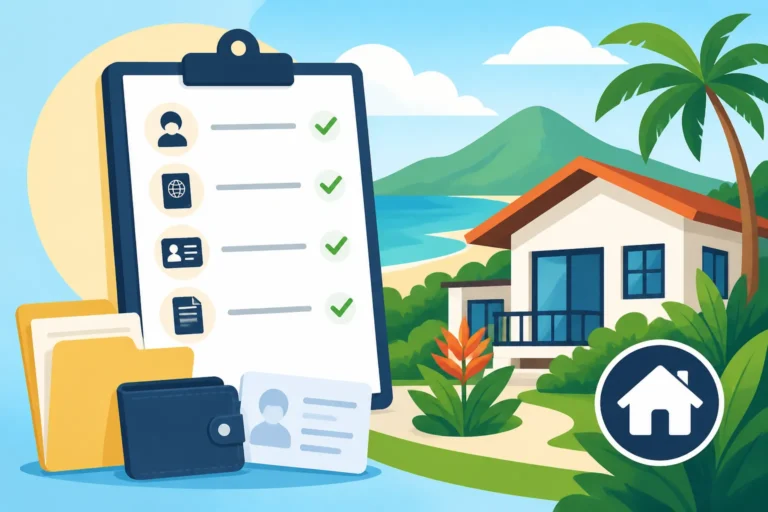
Public school enrollment typically happens in late November or early December for the following school year, which usually runs from February to December. However, if you're arriving mid-year, schools are generally accommodating, though it might take a bit longer to get your child placed. You'll need to gather a series of documents, which often include:
- Child’s Birth Certificate: This will need to be apostilled in your home country and then officially translated into Spanish by a public translator in Costa Rica.
- Child’s Passport and Residency Card (DIMEX): If you have residency, your child's DIMEX is crucial. If not, the school might provisionally enroll them, but you’ll need to show you’re in the process of obtaining residency. Our guide Do I Have to Join the Caja to Get Residency in Costa Rica? highlights the interconnectedness of these systems.
- Parent’s ID: Your passport and residency card.
- Proof of Address: A utility bill (electricity from ICE or water from AyA) in your name, or a rental contract. This confirms you live in the school's district.
- Medical Certificate (Certificado Médico): Your child will need a basic health check-up from a Costa Rican doctor, usually at your EBAIS, to confirm they are fit for school and up-to-date on vaccinations. Check out What Vaccinations Are Required for Children in Costa Rican Schools? for specifics.
- Previous Academic Records: If your child has attended school before, bring their last report card or transcript. Again, these may need official translation.
The school will provide specific forms to fill out. Expect some waiting time during the process. Public schools are a great way to immerse your children and for them to learn Spanish rapidly, but they might need extra support from home, especially in the beginning, to bridge any language or curriculum gaps.
The Private and International School Application Maze
Private and international schools in Costa Rica offer a more familiar application process for many expats, often mirroring what you’d find in your home country. However, they each have their unique timelines, requirements, and competitive aspects. The key here is early planning and thorough preparation.
Application Timelines and Entry Requirements
Unlike public schools with their district-based enrollment, private and international schools operate on their own admissions calendars. Many open their applications a year or more in advance, especially for popular grades or schools with limited spots. It’s common for families to start researching and applying in September or October for enrollment the following February (which is the start of the academic year for most schools here, though some international schools follow a September-to-June calendar). Don’t wait until the last minute, or you might find yourself on a long waitlist!
Entry requirements can be quite rigorous. You'll typically need:
- Online Application Form: Most schools have a detailed online application.
- Application Fee: Non-refundable, usually a few hundred dollars.
- Previous Academic Records: Official transcripts and report cards from the last 2-3 years, often requiring apostille and official translation.
- Teacher Recommendations: Letters from current teachers, especially for older students.
- Student Interview: For older students, this helps assess their personality, English proficiency (if applicable), and fit for the school culture.
- Entrance Exams: These can cover English proficiency, math, and sometimes Spanish, depending on the school and grade level. They’re designed to ensure your child is academically prepared and to help the school place them appropriately.
- Medical Records and Immunization: A health certificate and detailed immunization records, often needing a local doctor’s review.
It's a good idea to contact the admissions office of your target schools as soon as you consider moving. They can provide precise dates and requirements. Being organized and having all your documents ready will make this process much smoother. When you’re dealing with applications and coordinating visits, having reliable communication is key. Consider getting an Airalo eSIM for immediate connectivity upon arrival, so you’re not caught without internet while trying to schedule interviews or send documents.
What to Expect: Interviews, Testing, and Fees
The application process for private and international schools is often a multi-step journey. After submitting the initial application and fees, your child might be invited for an interview, either in person or via video call if you’re still abroad. This is the school’s chance to get to know your child beyond their grades and assess their English or Spanish language capabilities. For younger children, it might be more of an observation session to see how they interact with others and follow instructions.
Testing is a common component, especially for mid-to-upper elementary grades and beyond. These assessments help schools understand your child's current academic level and ensure they can succeed within their curriculum. Don't stress too much about "studying" for these; they're usually diagnostic rather than pass/fail. The school wants to ensure a good fit for both the student and the institution.
Finally, let's talk about fees. Beyond the application fee, you'll encounter substantial registration fees (often a full month's tuition or more), annual tuition, and sometimes separate fees for technology, sports, and other activities. Many international schools will also require an initial capital fee or debenture, which can be several thousand dollars, to help fund school development. While these costs can seem daunting, many expat families find the value in the quality of education, smaller class sizes, and smooth transitions provided by these schools. Remember that these fees often don’t include uniforms, books, or field trips, so always ask for a complete breakdown of all costs. A comprehensive understanding of The Cost of Healthcare in Costa Rica: A Complete Breakdown for Foreigners (2026) can help you balance your overall expat budget when considering significant school expenses.
Essential Documents and Practicalities for Enrollment
Regardless of whether you choose a public, private, or international school, preparing the necessary documents well in advance is paramount. The Costa Rican bureaucracy, while not malicious, can be slow and requires everything to be just so. A missing stamp or an untranslated document can bring your enrollment plans to a grinding halt.
Gathering and Preparing Official Documents
The most critical documents for school enrollment often originate from your home country. These typically include your child’s birth certificate and their academic transcripts or report cards from previous schools. For these to be accepted in Costa Rica, they almost always need to be apostilled in your home country. An apostille is an international certification that legalizes the document for use in foreign countries that are part of the Hague Apostille Convention. If your home country is not part of this convention, you might need a lengthier legalization process through the Costa Rican consulate in your country. Do not skip this step; documents without an apostille or proper legalization will be rejected.
Once apostilled, these documents will then need to be officially translated into Spanish by a public translator (traductor oficial) recognized by the Ministry of Foreign Affairs in Costa Rica. You cannot simply use any translator; it must be one from the official list. This can be a surprisingly time-consuming and somewhat costly step, so budget for it both in terms of money and time. Start this process long before you even arrive if possible, or immediately upon arrival. Having a clear idea of The Complete Guide to Moving to Costa Rica: Your First 90 Days (2027) will naturally align with the need to get these documents processed efficiently upon arrival.
Residency Status and Medical Requirements
Your child's residency status is a major piece of the puzzle. If your child already has a valid DIMEX (residency card), this streamlines the process significantly, as it provides clear legal status. If you are applying for residency, or your child is joining you as a dependent, many schools will provisionally enroll them, but they will likely require proof that your residency application is in process. Without some form of legal status or an active application, some schools (especially public ones) may hesitate to enroll. Our guide on How the Caja Requirement Connects to Your Residency in Costa Rica illuminates how many aspects of life here are tied together.
Medical requirements are also universal. Every child enrolling in a Costa Rican school will need a current medical certificate (Certificado Médico). This is usually a simple check-up by a local doctor – often at your EBAIS for public school enrollment, or a private doctor for private/international schools – confirming your child is in good health and has received all necessary vaccinations. Bring your child's immunization records from your home country, and the Costa Rican doctor can then issue the local certificate. They'll check for proof of vaccinations common here, such as measles, mumps, rubella, polio, diphtheria, tetanus, and pertussis. If any are missing or not documented, they might advise you to get them updated locally.
When you’re preparing for a big move that involves these kinds of detailed document requirements, it’s invaluable to have logistical support. Services like Sirelo can assist with shipping your family’s belongings, including important documents, ensuring they arrive safely and in order.
Beyond Enrollment: Helping Your Child Thrive in a New System
Getting your child enrolled is a huge accomplishment, but the journey doesn't end there. The real work begins as your child adapts to a new school, a new culture, and potentially a new language. This transition period requires immense patience, understanding, and active support from you as a parent.
Navigating Language and Cultural Adjustments
If your child is attending a Spanish-speaking public or bilingual school, language acquisition will be their biggest challenge and opportunity. Be prepared for a period of "silent immersion" where they absorb everything before feeling comfortable speaking. This can be frustrating for them, and for you, as they might come home exhausted and unable to express their day's events. Encourage them, celebrate small victories, and consider supplementary Spanish lessons outside of school. Many communities offer private tutors or language academies. Reading in Spanish together, watching Tico TV shows, and simply practicing daily phrases can make a big difference.
Beyond language, there’s the cultural shift. School in Costa Rica might operate differently than what your child is used to. There might be different expectations for classroom participation, different social norms, and even different types of games at recess. Teachers might have a more direct or a more indirect communication style. Encourage your child to observe, ask questions, and embrace these differences. Talk openly about any frustrations they experience and validate their feelings. Remind them that adapting takes time, and it's okay to feel out of place sometimes. This is a learning experience for the whole family, and your active listening and empathy will be their greatest assets.
Building a Support System: School and Community
Actively engage with the school community. Attend parent-teacher conferences, volunteer if possible, and get to know other parents. For public schools, this can involve participating in school events or joining the parent association (junta de educación). For private and international schools, there are often various clubs, parent groups, and community events. Building these connections can provide invaluable insights, peer support, and a sense of belonging for both you and your child. Other expat parents who have gone through the same process can offer advice, share resources, and provide a network for your kids to make friends outside of school.
Beyond the school gates, foster a broader support system. Encourage your child to join local sports teams, scout groups, or other extracurricular activities. This provides additional avenues for making friends, practicing Spanish (or English, if they're in an international setting), and exploring new interests. It helps them build confidence outside the academic pressure cooker. Remember that adjusting to a new country and school is a marathon, not a sprint. There will be good days and tough days. Your consistent presence, encouragement, and willingness to adapt alongside them will be the most crucial factors in their successful integration into Costa Rican school life.
| School Type | Language of Instruction | Typical Cost (Monthly) | Curriculum Focus | Cultural Immersion Level | Admission Process | Key Benefits for Expats | Potential Challenges for Expats |
|---|---|---|---|---|---|---|---|
| Public School (MEP) | Spanish | Free (minimal fees) | Costa Rican National | High | District-based, EBAIS proof, local documents, MEP forms | Full immersion, language acquisition, local friendships, low cost | Language barrier, administrative delays, varied resources, large classes |
| Private School | Bilingual (Spanish/English) | $400 – $1,200+ | Bilingual/Local | Medium | Application, fees, interviews, academic records | Bilingual environment, smaller classes, more activities | Higher cost, varied quality, still requires Spanish |
| International School | English (primary) | $1,000 – $2,500+ | IB, American, British | Low | Competitive application, entrance exams, interviews, high fees | International recognition, smooth transitions, diverse student body | Very high cost, less local immersion, competitive enrollment |
Disclaimer
The information provided in this guide is intended for general informational purposes only and does not constitute legal, financial, or educational advice. While we strive to provide accurate and up-to-date information, school policies, fees, and government regulations in Costa Rica can change frequently. We strongly recommend consulting directly with the schools you are interested in, immigration lawyers, and local education authorities for the most current and specific guidance related to your individual circumstances.