How Do I Set Up Electricity After Moving to Costa Rica?
Alright, my friends, let's talk about getting powered up in paradise! One of the first things that hits you when you finally get the keys to your new place in Costa Rica, whether it's a rental or your very own slice of Pura Vida, is the realization that you have to navigate the local utility labyrinth. It’s not just flipping a switch; it’s a whole process, often peppered with unique Costa Rican charm (and a healthy dose of bureaucracy!). This guide is here to walk you through exactly how to set up electricity, helping you avoid those initial dark days and frustrating detours.
Understanding Costa Rica's Electricity System: ICE and CNFL
When you think about electricity in Costa Rica, you're essentially talking about one big player and its main subsidiary, along with a few regional cooperatives. It's not like back home where you might have multiple private companies vying for your business. Here, the grid is largely state-controlled, and that has both its benefits and its quirks. The good news? Costa Rica is a global leader in renewable energy, so your power is often green! The not-so-good news? Dealing with a government-run entity can sometimes feel like a slow dance with bureaucracy.
Who is ICE and CNFL?
At the heart of it all is the Instituto Costarricense de Electricidad (ICE). Think of ICE as the grand patriarch of Costa Rican utilities. Established way back in 1949, it's a colossal state-owned enterprise responsible not just for generating and transmitting the vast majority of the country's electricity but also for a significant portion of its telecommunications infrastructure. They're the ones building the dams and geothermal plants, ensuring the lights stay on nationwide.
However, if you're settling in the Greater Metropolitan Area (GAM), which includes San José, Heredia, Alajuela, and Cartago, you'll primarily be dealing with Compañía Nacional de Fuerza y Luz (CNFL). CNFL is a subsidiary of ICE that handles the distribution and commercialization of electricity within these densely populated urban centers. So, while ICE generates it, CNFL often delivers it right to your doorstep and sends you the bill. Beyond the GAM, you'll find other regional cooperatives like Coopeguanacaste, Coopesantos, Coopesantos, and others, each serving their specific corner of the country. They operate under ICE's umbrella but have their own customer service offices and billing systems. It's a bit like having a national power grid with local distribution hubs, each with its own flavor of customer service.
Navigating this system means understanding who your specific provider is based on your location. It's not uncommon for expats to mistakenly try to set up an account with ICE when they should be at CNFL, leading to wasted trips and frustration. Take a moment to ask your landlord or a local what the main electricity provider is in your specific town or barrio – it will save you a headache later!
The Meter and Your Electrical Account Number
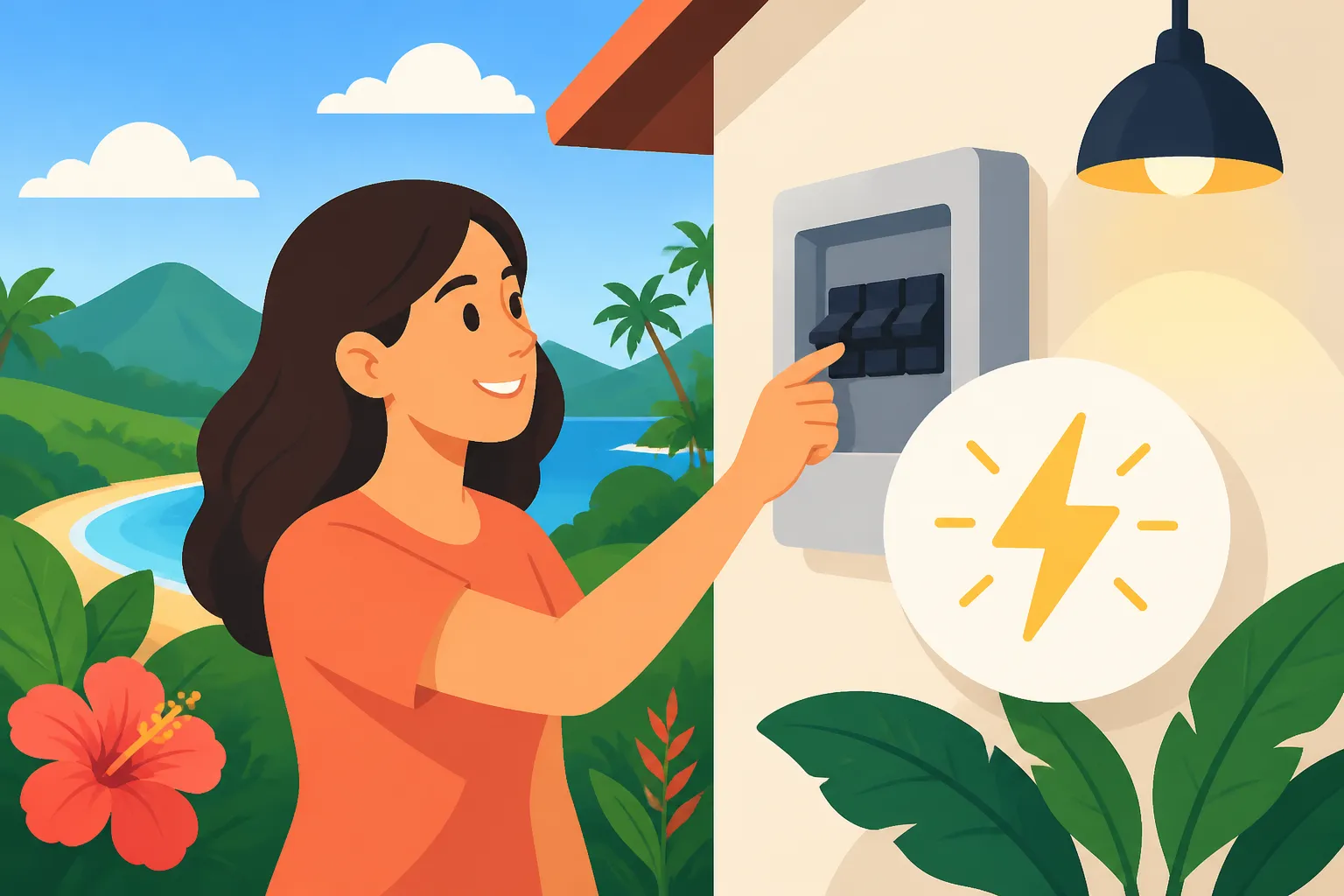
Before you even step foot into an office or try to tackle an online portal, you absolutely need to locate your electricity meter. Every property in Costa Rica has one, typically mounted on an exterior wall or a pole near the street. This meter isn't just for reading consumption; it holds the key to your electrical service: the Número de Cliente or Número de Servicio. This is essentially your unique account number for that specific property, much like a permanent address for your electricity.
If you're lucky, your landlord or the previous owner will hand you a copy of a recent electricity bill. On almost every bill, this "Número de Cliente" will be prominently displayed. This is gold. With this number, you can usually track the account status, see if there are any outstanding balances (a crucial step, we’ll get to that!), and potentially even transfer the service into your name or simply start paying it. If you don't have a bill, you can often find a sticker or engraved number directly on the meter itself. Snap a photo of it! It might be faded or dirty, but it's often there. This number is paramount because the electricity service is tied to the property, not the individual. So, when you move in, you're either taking over an existing account or initiating a new one for that specific meter.
Step-by-Step: Setting Up Electricity in Your New Home
Okay, so you've found your account number, or you know you need a brand-new connection. Now comes the nitty-gritty: actually getting the service in your name and ensuring you can pay those bills. This process can vary slightly depending on whether you're renting or buying, and whether the previous occupants left a clean slate (which is not always a given!).
Gathering Your Essential Documents
Before you embark on your utility quest, gather all your paperwork. This is Costa Rica, and while things are slowly modernizing, having physical copies of everything is still the safest bet. You'll need:
- Your Passport: Always have a copy of your passport's main page. If you're a resident, your DIMEX card (the official residency ID) is even better. I always recommend carrying a laminated copy of your DIMEX or at least having a clear photo on your phone; it's your key to so many administrative processes here, from healthcare to banking, as explored in our guide on How to Use Your DIMEX to Access Healthcare in Costa Rica.
- Rental Contract (Contrato de Alquiler): If you're renting, a copy of your signed rental agreement is usually required. This proves you have legal occupancy of the property. Make sure the contract includes the exact address and your name. For more on navigating this, check out How to Sign a Rental Contract Contrato de Alquiler in Costa Rica.
- Property Deed (Escritura): If you've bought your home, a copy of your property deed (or escritura pública) will be necessary to prove ownership.
- Previous Electricity Bill: As mentioned, if you can get a copy of a recent bill from the landlord or previous owner, it's incredibly helpful. It contains the account number and meter details.
- Property Address Details: Make sure you have the exact official address, including the province, canton, district, and any specific landmarks (though these are less common for utility accounts, they're useful for directions to the property).
- Power of Attorney (Poder): If you're using a lawyer or a trusted local friend to help you (which can be a wise move, especially if your Spanish isn't fluent), they'll need a power of attorney document, either general or specific to utility setup, to act on your behalf.
Having both physical photocopies and digital copies on your phone (or a cloud service that you can access from your phone) is a smart strategy.
The Application Process: In Person or Online
Once your documents are in order, you have a couple of routes to setting up service:
-
Visiting an ICE/CNFL Office (The Traditional Way):
This is often the most reliable method, though it requires patience.- Locate the nearest office: Use Google Maps or ask locals for the nearest ICE or CNFL office (depending on your area).
- Go early: Seriously, "early bird gets the worm" applies here. Offices can get crowded, and wait times can be significant.
- Take a number: Upon arrival, you'll usually need to take a numbered ticket (ficha) for the service you require (e.g., apertura de cuenta – opening an account, or cambio de nombre – name change).
- Present your documents: When your number is called, go to the counter with all your documents. Explain clearly whether you need to open a new account, transfer an existing one, or just confirm details.
- Check for outstanding balances: This is critical! Always ask the agent to check if there are any outstanding bills on the property's meter. You do not want to inherit someone else's debt. If there is a balance, the previous owner or landlord should be responsible for clearing it before you take over or open a new account.
- Sign the paperwork: You'll fill out and sign forms. Read them carefully, or have your Spanish-speaking helper do so.
- Get a confirmation: Make sure you leave with a receipt or a confirmation document that proves you've initiated the service. It might take a few days for the account to be officially transferred or for a new connection to be made.
-
Online Portals (The Modern Approach):
While some services like paying your electricity bill are readily available online through portals or banking apps (you can learn more about that in How Do I Pay My ICE Electricity Bill Online?), initiating a brand-new service or changing the account holder can still be a bit tricky to do entirely online. CNFL, for example, has an online portal, but its functionality for initial setup by foreigners without an existing account and DIMEX might be limited.- Check the provider's website: Look for a "Servicios en Línea" or "Trámites" section.
- Requirements: You'll often need to register an account first, which might require a Costa Rican ID (DIMEX or cédula).
- Document Uploads: If they allow online applications, you'll need to scan and upload all your required documents. Ensure they are clear and in the correct format (usually PDF).
- Follow-up: Even with online applications, be prepared for a follow-up call or email, or even a request for an in-person visit to finalize things.
My advice? For initial setup, especially if you're a new resident, the in-person visit is often the most straightforward, even if it tests your patience. Bringing a local friend or a lawyer the first time can make a world of difference.
Common Hurdles and How to Overcome Them
Living in Costa Rica, you learn that things don't always operate on the same schedule or with the same procedures as you might be used to. Setting up utilities is a prime example. You'll likely encounter a few bumps in the road, but a little preparation and a lot of paciencia (patience) will get you through it.
Navigating Language Barriers and Bureaucracy
This is probably the biggest challenge for many new expats. While many Ticos in tourist areas or multinational companies speak English, at a government utility office, you can't always count on it.
- Bring a Translator: Your best bet is to bring a Spanish-speaking friend, neighbor, or hire a local assistant for a few hours. This not only helps with communication but also shows a level of respect for the local culture.
- Use Translation Apps: Google Translate or other similar apps can be lifesavers for basic phrases, but they won't help much with complex legal or administrative jargon. Still, for confirming things like "Is the account active?" or "What's the balance?", they can bridge the gap.
- Learn Key Phrases: Even a few basic Spanish phrases related to utility setup can go a long way. Our guide on Learning Spanish in Costa Rica: A Complete Guide for Expats can give you a great head start!
- Paciencia is Key: This isn't just a cliché; it's a way of life here. Rushing or getting visibly frustrated will likely slow things down, not speed them up. Take a deep breath, smile, and understand that things move at their own pace.
- Be Persistent: Sometimes, you might get different answers from different agents. If something doesn't feel right, don't be afraid to politely ask to speak to a supervisor (el jefe) or come back on a different day.
The bureaucracy itself can feel like a maze. Forms might seem redundant, and the need for multiple copies of documents you think they should already have is common. Just go with the flow, fulfill every request, and always keep copies of everything you submit and any receipts you receive.
Dealing with Disconnections and Reconnections
Imagine this: you move into your new home, excited to unpack, only to find there's no power! This is a surprisingly common scenario for expats, especially in rentals.
-
Why is the power off?
- Unpaid Bills: The most frequent reason. The previous tenant or owner might have left without settling their final bill. Remember how I stressed checking for outstanding balances? This is why! The utility company will often cut service until the debt on that meter number is cleared.
- New Connection: If it's a brand-new construction or a property that has been vacant for a very long time, the service might simply need to be connected for the first time.
- Service Transfer: If the previous owner disconnected their service and you haven't yet transferred it to your name, it might be off.
-
How to get reconnected:
- Clear the Debt: If there's an outstanding balance, it must be paid. Legally, it's the previous account holder's responsibility, but if you're desperate for power and they're unreachable, you might find yourself in a bind. Always clarify this with your landlord or seller before moving in.
- Apply for Service: Follow the steps above for applying for service, making it clear you need a reconexión (reconnection) or instalación de servicio nuevo (new service installation).
- Pay the Reconnection Fee: There will almost always be a reconnection fee (cargo por reconexión) if the power was cut due to non-payment. This is typically added to your first bill.
- Wait: Reconnections aren't usually immediate. It can take anywhere from a few hours to a few days for a technician to come out and restore service. This is where having a functional phone with data (perhaps from an eSIM provider like Airalo for instant connectivity) can be crucial for communication during those first few days.
Understanding Your Electricity Bill and Payment Options
Once the power is on and in your name, you'll start receiving bills. These can be a bit opaque at first glance.
-
Decoding Your Bill:
- Número de Cliente/Servicio: Your account number, usually at the top.
- Consumo (kWh): Your usage in kilowatt-hours.
- Tarifa: The rate structure, which is often tiered (meaning you pay more per kWh as your consumption increases).
- Cargos por Energía: Charges for the actual electricity consumed.
- Otros Cargos/Impuestos: Various other charges, taxes (like IVA), and sometimes a "fondo de educación y cultura" stamp.
- Fecha de Vencimiento: The due date. Don't miss this, or you risk disconnection!
- Total a Pagar: The total amount due.
For a more detailed look at what impacts your bill, you might want to read Why Is My Electricity Bill So High in Costa Rica?.
-
Payment Options: Costa Rica offers several convenient ways to pay your bills:
- Online Banking: Most major Costa Rican banks (like Banco Nacional, Banco de Costa Rica, BAC Credomatic) allow you to pay utility bills directly through their online portals or mobile apps. You'll need to set up the service, usually by adding your "Número de Cliente."
- ATMs: Many bank ATMs also offer utility bill payment services.
- ICE/CNFL Offices: You can always pay in person at their customer service centers.
- Authorized Collection Points (Puntos de Pago): Many supermarkets, pharmacies, and small convenience stores (pulperías) offer bill payment services. Look for signs that say "Aquí se pagan recibos" or logos of the utility companies.
- Automatic Debit: Once your bank account is established, you can often set up automatic payments. This is highly recommended to avoid missing due dates.
It's wise to keep track of your payments. A good habit is to save screenshots of online payments or keep the physical receipts from puntos de pago.
Maximizing Efficiency and Avoiding High Bills
Costa Rica boasts an impressive percentage of renewable energy, but that doesn't necessarily translate to rock-bottom electricity bills. Especially in warmer areas or homes with heavy air conditioning use, your monthly charges can creep up. Being mindful of your consumption and understanding the local climate and common practices can save you a pretty penny.
Energy-Saving Tips for Your Costa Rican Home
As an expat, you might be used to certain energy-intensive habits. Adapting to the local context can significantly reduce your electricity usage.
- Air Conditioning (A/C) Usage: This is often the biggest culprit for high bills. If you live in a coastal area like Guanacaste or Puntarenas, A/C is almost a necessity. However, try to use it strategically:
- Set it to a reasonable temperature (24-26°C or 75-79°F is often comfortable).
- Use timers to cool your bedroom just before you sleep.
- Ensure doors and windows are closed when the A/C is on.
- Consider mini-split inverter units, which are far more efficient than older central units.
- Water Heaters (Calentador de Agua): Many Costa Rican homes use electric tankless water heaters (duchas eléctricas or calentadores de paso) directly on the showerhead, especially outside the Central Valley. While they only heat water on demand, they draw a lot of power for a short burst. For full-home hot water, consider a gas heater or a solar hot water system if possible. If you have a traditional electric tank heater, ensure it's well-insulated and consider setting its thermostat lower.
- Embrace Natural Ventilation: Costa Rica's climate often allows for excellent natural ventilation. Open windows, use ceiling fans (abanicos de techo), and enjoy the tropical breezes. Homes are often designed with cross-ventilation in mind.
- Unplug Electronics: Even when turned off, many electronics in "standby" mode still draw power. This "vampire draw" can add up. Unplug chargers, TVs, and other appliances when not in use.
- Efficient Lighting: Switch to LED bulbs wherever possible. They consume significantly less energy than incandescent or even CFL bulbs. Maximize natural light during the day.
Being conscious of these factors can make a noticeable difference in your monthly budget, contributing to your overall The Complete Guide to Cost of Living in Costa Rica for Expats (2026).
Understanding Your Consumption and Rates
Costa Rica uses a progressive tariff system for residential electricity. This means the more electricity you consume, the higher the rate you pay per kilowatt-hour (kWh). This tiered system is designed to encourage conservation.
- Tiered Billing: Your bill will usually show different rates for different consumption blocks. For example, the first X kWh might be billed at one rate, the next Y kWh at a higher rate, and so on. This is why a sudden jump in consumption can lead to a disproportionately higher bill.
- Monitor Your Usage: Some modern meters allow for digital readings. If you have a smart meter, you might be able to monitor your daily or weekly consumption more closely. Otherwise, checking your meter manually every few days can give you an idea of your usage patterns.
- Seasonal Fluctuations: Your bill might fluctuate with the seasons. During the dry season (verano), you might use more A/C, while during the rainy season (invierno), you might use more lights and spend more time indoors, which can lead to increased fan or dehumidifier use.
- Consider a Home Energy Audit: If your bills consistently feel too high, consider asking your landlord (if renting) or hiring an electrician to do a simple energy audit. They can check for faulty wiring, inefficient appliances, or other hidden energy drains.
Taking these steps will help you understand your consumption and avoid surprises when the bill arrives, ensuring your average utility bill is manageable.
Essential Electricity Setup Checklist
Here’s a quick checklist to help you stay organized during the electricity setup process:
| Step | Description | Status |
|---|---|---|
| 1. Identify Provider | Determine if your area is served by CNFL, ICE, or a local co-op. | ☐ |
| 2. Locate Meter & Account Number | Find the physical meter at your property and note down the "Número de Cliente" or "Número de Servicio." Snap a photo! | ☐ |
| 3. Gather Documents | Collect your passport/DIMEX, rental contract/deed, previous bill (if any), and official address. Have physical and digital copies. | ☐ |
| 4. Check for Outstanding Balances | Absolutely crucial: confirm with the utility company that there are no pending debts on the meter number before you take over. | ☐ |
| 5. Apply for Service | Visit the local utility office in person. Bring a Spanish speaker if needed. Fill out forms and submit documents. | ☐ |
| 6. Get Confirmation | Leave the office with a receipt or document confirming your application or service transfer. | ☐ |
| 7. Confirm Connection | Wait for service to be connected/transferred. If not active within a few days, follow up politely. | ☐ |
| 8. Set Up Payment | Register your new account number with your Costa Rican bank for online payments or identify local payment points. Consider auto-debit. | ☐ |
| 9. Optimize Usage | Implement energy-saving tips to manage your consumption and keep bills reasonable. | ☐ |
Moving to Costa Rica involves managing a lot of logistics, and getting your home set up is a big one. For broader moving needs, including shipping and logistics, you might find resources from companies like Sirelo helpful in planning your move down here. Remember, a little preparation goes a long way, and soon enough, you’ll be enjoying the Pura Vida lifestyle, with all your lights on!
Disclaimer
The information provided in this guide is intended for general informational purposes only and does not constitute legal, financial, or professional advice. While we strive to provide accurate and up-to-date information, local regulations, processes, and costs can change. It is always recommended to consult with local professionals, such as attorneys, real estate agents, or directly with the utility companies (ICE/CNFL) for the most current and specific advice pertaining to your individual situation in Costa Rica.