How to Convert or Use a Foreign Driver’s License in Costa Rica
Oh, the joy (and occasional headache) of driving in a new country! I remember all too well the nervous glances at my passport and foreign license, wondering if I was really legal on those winding Costa Rican roads. It's one of those initial hurdles that can feel unnecessarily complicated, especially when you're just trying to get settled or simply explore. This guide is here to untangle the web of rules around using your foreign driver's license in Costa Rica, helping you understand your rights and the steps needed to get a local one.
The Initial Tourist Grace Period: Driving with Your Foreign License
When you first arrive in Costa Rica, whether it's for a vacation or to lay the groundwork for a longer stay, the good news is you don't need to scramble for a local license immediately. Costa Rica extends a courtesy period allowing tourists to drive with their valid foreign driver's license. However, like many things in this beautiful country, there are nuances that can trip you up if you’re not careful.
Understanding the 90-Day Rule for Tourists and New Residents
The golden rule for tourists and new arrivals is that your foreign driver's license is valid for the same period as your immigration entry stamp in your passport. For most visitors from countries like the US, Canada, and much of Europe, this means a maximum of 90 days. This 90-day window starts from the day you enter the country. It's a fantastic perk that allows you to hit the ground running, exploring the Pacific coast beaches, venturing up to the cloud forests of Monteverde, or just navigating the bustling streets of San José without the immediate pressure of bureaucratic processes.
To make sure you're always in the clear, you absolutely must carry three essential documents with you at all times when driving: your valid passport, the physical passport page showing your most recent entry stamp (make sure it's clear and legible!), and your original, valid foreign driver's license. Photocopies usually won't cut it if you get stopped by a traffic official. Think of these three documents as your driving trinity. If any one of them is missing or expired, your privilege to drive as a tourist also expires, and you could face hefty fines or even have your vehicle impounded. For instance, imagine you've just landed at Juan Santamaría International Airport (SJO) and received a 90-day stamp. You can rent a car right then and there, and cruise down to Manuel Antonio for three months, totally legal.
Common Pitfalls and How to Avoid Them
The biggest trap many foreigners fall into revolves around the expiration of their immigration stamp. Let's say you entered Costa Rica and got a 90-day stamp. You’ve been here for three months, and your stamp is about to expire. You might have heard about a "visa run" – a quick trip out of the country, usually to Nicaragua or Panama, just to re-enter and get a fresh 90-day stamp. While this practice does reset your tourist visa period, it's vital to understand that it resets your driving privilege only if your primary intention is still to be a tourist. If you’ve applied for residency and are awaiting approval, or if you're living here full-time, relying solely on visa runs can lead to complications with immigration and, by extension, your driving status.
A critical mistake is to simply overstay your initial tourist visa without doing a visa run or having a pending residency application. If your entry stamp has expired, your foreign driver's license immediately becomes invalid, no matter how current it is in your home country. This is a big deal. Getting pulled over with an expired stamp and driving on a foreign license will almost certainly result in a significant fine and potential impoundment of your vehicle. Another common issue is not carrying all the required documents. I've heard stories of people being stopped and having their foreign license deemed invalid because they only had a photo of their passport stamp on their phone, rather than the physical passport itself. Always, always carry the originals. For those interested in the full rules and regulations, it's always good to understand How Long Can I Stay in Costa Rica on a Tourist Visa?.
Transitioning to Residency: What Changes for Your License?
Once you decide to make Costa Rica your home and embark on the residency process, the rules for driving evolve. This transition period, from being a full-time tourist to becoming a temporary resident, is where things can get a bit hazy and require careful attention to detail.
The Waiting Game: Driving While Residency is Pending
This is often the most confusing phase. You've submitted your residency application to the Dirección General de Migración y Extranjería (DGME), you have your comprobante (receipt) in hand, but you haven't received your official DIMEX (residency card) yet. What do you do about driving? Officially, the law can be interpreted strictly, suggesting your foreign license is still only valid per your last immigration stamp. However, in practice, if you are stopped by traffic police and can present your valid foreign driver's license, your passport with the most recent entry stamp (even if it's expired), and your official receipt proving your residency application is in process, you are usually allowed to continue.
It's a grey area, and much depends on the individual traffic officer. To be safe, always carry your actual passport, your foreign license, and that precious residency application receipt. Some expats even carry a letter from their immigration lawyer confirming their application status. While this isn't a guaranteed legal right to drive indefinitely, it demonstrates your legitimate intent to reside in Costa Rica and move through the legal immigration process. It shows you're not just an overstaying tourist. This period can be frustrating, especially since the residency process itself can take a while. You can learn more about this whole process by understanding How Long Does Costa Rican Residency Take to Process?.
The DIMEX and Its Impact on Your Driving Status
The moment you receive your official DIMEX – that distinctive blue residency card – a significant weight lifts off your shoulders concerning driving. Once you have your DIMEX, your foreign driver's license is now legally valid for the entire duration of your temporary residency, or until your foreign license expires, whichever comes first. This is a game-changer. No more worrying about visa runs to keep your driving status legal. Your DIMEX becomes your proof of legal stay, and as long as it's current, your foreign license is good to go.
For example, if you obtain a temporary residency that is valid for two years, and your home country's driver's license is valid for five more years, you can legally drive in Costa Rica for those two years without interruption. When it’s time to renew your DIMEX, your driving privilege with your foreign license will also be extended for the new validity period of your renewed DIMEX. This makes daily life much simpler, allowing you to commute to work, take the kids to school, or just run errands without constant anxiety about traffic stops. Make sure to keep your DIMEX, passport, and foreign license together in your car's glove compartment or a secure place on your person. If you're wondering about this critical document, you'll want to check out How Do I Get My DIMEX Residency Card in Costa Rica?.
The Nitty-Gritty of Converting Your Foreign License to a Costa Rican One
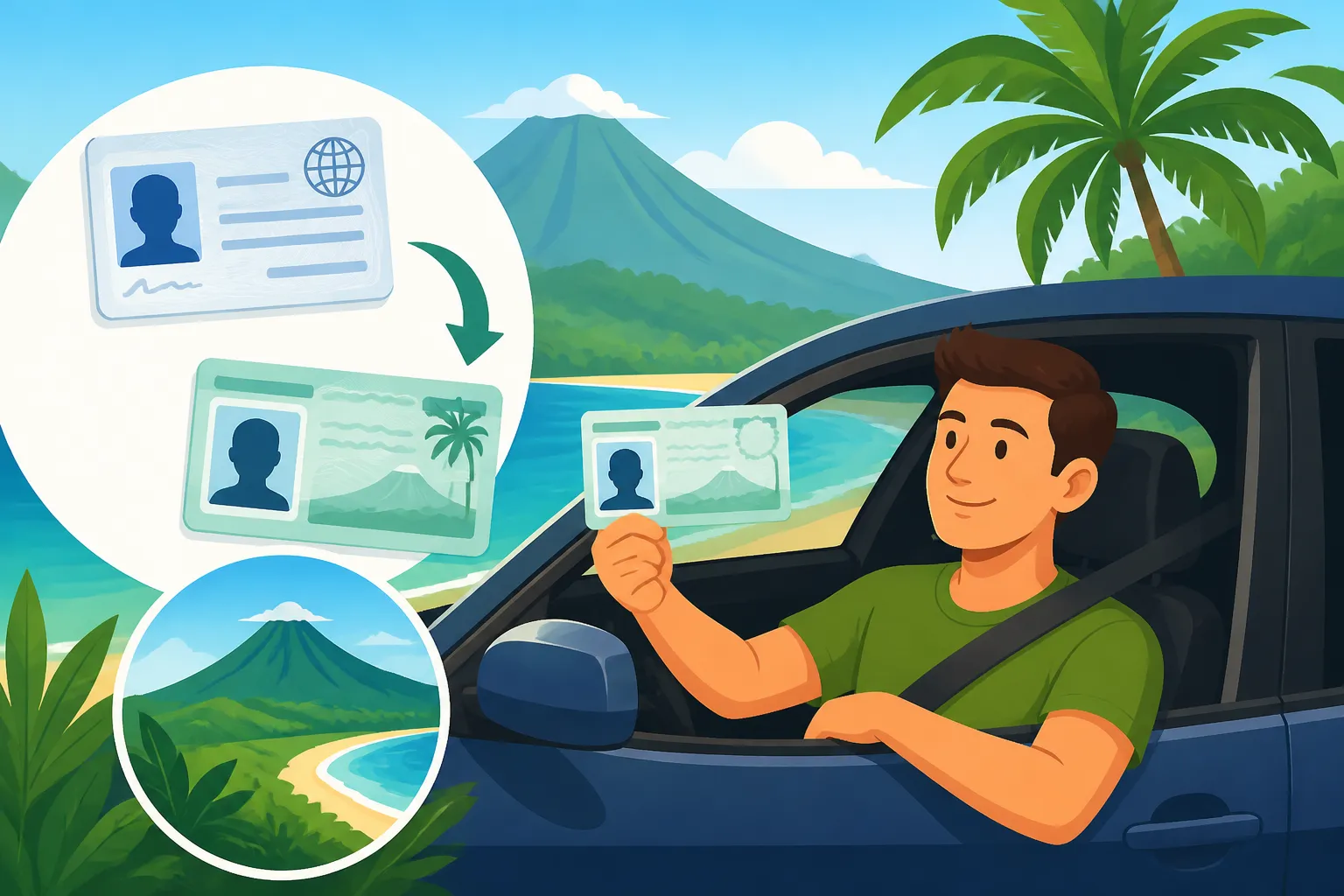
While your foreign license is valid for the duration of your residency, many expats eventually choose to get a Costa Rican driver's license. It simplifies things, especially if you plan to stay long-term, and it removes any lingering ambiguity with officials who might not be familiar with every type of foreign license. This process is called homologación (homologation or conversion).
Eligibility and Requirements for Homologación Conversion
To convert your foreign license to a Costa Rican one, you generally need to be a permanent resident or have obtained a long-term temporary residency (usually more than a year). The requirements can seem a bit tedious, but with patience, it's absolutely doable. Here’s what you’ll typically need:
- Original DIMEX Card and Copy: Must be valid and up-to-date.
- Original Passport and Copy: The page with your personal information and the page with your last entry stamp before you obtained your DIMEX. This stamp establishes your legal entry into the country.
- Original Foreign Driver's License and Copy: It must be valid and in good standing. Costa Rica generally recognizes licenses from most countries, but if yours is not in Spanish or English, an official translation might be required (though often not for conversion, only for using it as a tourist).
- Blood Type Certificate: This is a simple test you can get at almost any private clinic or laboratory in Costa Rica. It costs around ₡5,000-₡10,000 (roughly $10-$20 USD) and takes minutes.
- Proof of Payment: You'll need to pay a fee for the conversion, usually at a Banco de Costa Rica (BCR) branch. As of early 2024, this fee is typically around ₡5,000.
- Proof of Affiliation with CCSS (Caja): If you are a resident, you must be affiliated with the Costa Rican social security system. This is a fundamental requirement for most official processes here.
It’s crucial that your foreign license is not expired and that it was issued by a country with which Costa Rica has a mutual recognition agreement (which covers most Western countries). Also, some departments within COSEVI (Consejo de Seguridad Vial), the road safety council, might ask for proof that you’ve been residing in Costa Rica for a certain period after getting your residency, typically three months. This isn't universally applied but be prepared.
The Step-by-Step Process at COSEVI
Now for the bureaucratic dance at COSEVI. It requires patience and attention to detail:
- Gather All Your Documents: Double-check everything on the list above. It's always a good idea to bring extra copies of everything, just in case.
- Get Your Blood Type Test: Head to a local clinic for this quick test. You’ll receive a small, official certificate.
- Pay the Conversion Fee: Go to any Banco de Costa Rica branch and state you want to pay the derechos (fees) for driver's license conversion (homologación de licencia). They’ll give you a receipt.
- Schedule an Appointment (Cita): This is often the most challenging part. Appointments are made through the COSEVI website or sometimes via their call center. Spots can fill up quickly, especially in the larger offices in San José, so be prepared to check frequently. You'll select a date and time for your cita.
- Attend Your COSEVI Appointment: Arrive early! Bring all your original documents and copies. You'll go through a series of windows: one for document verification, another for photo and fingerprinting, and possibly one for an eye exam (sometimes they accept the blood type certificate if it includes eye exam data, sometimes you need a separate one from a specific optician). The staff will review your paperwork meticulously. Any missing document or discrepancy can send you back to square one.
- Receive Your New License: If all goes well, you’ll typically receive your new Costa Rican driver’s license on the same day, or it might be ready for pick-up within a few business days at the same office.
My personal advice? Go to one of the smaller COSEVI offices outside of the immediate San José metro area if you can. Places like Alajuela or Heredia might have slightly less chaotic appointment systems, though it’s still Costa Rican bureaucracy, so keep your pura vida attitude intact. For more on getting your license, you can look into How Do I Get a Driving License with My DIMEX in Costa Rica?.
Costs, Timelines, and What to Expect
Let's talk numbers and time. The costs associated with converting your license are relatively low:
- Blood Type Test: ₡5,000 – ₡10,000
- COSEVI Conversion Fee: Approximately ₡5,000
- Transportation: Varies depending on where you go.
So, in total, you're looking at about $20-$30 USD in direct fees. The real cost is often your time and patience.
Timelines:
- Blood Test & Payment: Can be done in a single morning.
- Scheduling an Appointment: This is the wildcard. It could be next week, or it could be two months out, depending on demand and location. Start checking for appointments as soon as you have your DIMEX.
- COSEVI Appointment Day: The actual process at the office usually takes 1-3 hours, assuming you have all your documents in order and there are no unexpected delays.
Once issued, your Costa Rican driver's license is typically valid for five years, aligning with the standard validity period for local licenses. A fantastic benefit is that Costa Rica generally allows you to keep your original foreign driver's license. Unlike some countries that require you to surrender it, here, you'll often end up with both a Costa Rican and your home country's license, which can be useful for international travel.
Practical Considerations and What to Watch Out For
Navigating the roads in Costa Rica goes beyond just having the right license. Understanding local driving culture, insurance, and interactions with authorities is key to a smooth experience.
Insurance, Traffic Stops, and Dealing with Authorities
Every vehicle in Costa Rica, whether privately owned or rented, is required to have mandatory liability insurance provided by the Instituto Nacional de Seguros (INS). This is typically paid annually as part of your Marchamo (annual vehicle registration fee). If you own a car, ensuring your Marchamo is up-to-date is paramount. If you rent, the rental company will handle this, but it's wise to double-check. Getting pulled over without valid Marchamo is a guaranteed fine. You can find more details on this important annual payment here: Understanding the Marchamo (Annual Vehicle Tax) and Riteve in Costa Rica.
Traffic stops in Costa Rica can be intimidating, especially if your Spanish isn’t fluent. Here are some tips:
- Stay Calm and Polite: A friendly attitude goes a long way. Pura vida applies even here.
- Present Documents Clearly: Have your documents ready (license, DIMEX/passport, vehicle registration, Marchamo). Hand them over calmly.
- Don't Surrender Originals (Unless Absolutely Necessary): For your personal ID (passport, DIMEX), it's advisable to carry a high-quality copy and offer that first, stating you only have the copy for safety. While traffic officers can ask for originals, they often accept copies if you're prepared. Your foreign driver's license may be taken for a brief check, but they should return it.
- Know Your Rights: Traffic officers cannot legally confiscate your valid driver's license (foreign or Costa Rican) unless there's a serious infraction (like drunk driving) that mandates suspension. They also cannot demand cash payments on the spot for fines. Fines are paid at banks or through official channels.
- Be Aware of Common Violations: Speeding, not wearing a seatbelt, using a cell phone while driving (even hands-free is a grey area some officers enforce), and illegal turns are common reasons for stops. Headlights must be on in tunnels, even during the day.
Understanding the local nuances of driving is just as important as the paperwork. Remember that the INS also provides various How Much Is Car Insurance in Costa Rica? options beyond the mandatory liability, which many expats choose for better peace of mind.
Rental Cars and International Driving Permits (IDPs)
If you're just visiting or haven't quite settled into residency, rental cars are a lifeline. For rental vehicles, your valid foreign driver's license is almost always sufficient. Rental agencies are well-versed in handling foreign licenses, and as long as your passport entry stamp is current, you’ll have no problem. Companies like Hertz and Alamo are prevalent throughout the country and regularly cater to international drivers.
Now, about International Driving Permits (IDPs): an IDP is essentially a multi-language translation of your driver's license. It is not legally required to drive in Costa Rica if your home country's license is in English or Spanish and you have your passport and entry stamp. However, many expats and tourists choose to get one anyway. Why? Because it can make interactions with rental car agents or, more importantly, traffic police much smoother. If your license is from a country where the script isn't Roman alphabet (e.g., Japanese, Arabic, Cyrillic), an IDP is highly recommended, if not essentially required, to prevent misunderstandings. It simply helps clarify to a non-English/Spanish speaking officer that your license is indeed legitimate.
Renewing Your Costa Rican Driver's License
Once you've gone through the process of getting your Costa Rican driver's license, the good news is that renewals are significantly simpler than the initial conversion. Typically, a Costa Rican driver's license is valid for five years.
When it's time to renew, you'll generally need:
- Your current Costa Rican driver's license.
- Your valid DIMEX card.
- An updated examen de la vista (eye exam) from an approved optician. Many opticians here are authorized to issue these certificates directly to the COSEVI system.
- Proof of payment for the renewal fee (again, usually at Banco de Costa Rica).
- Proof of your CCSS affiliation.
You'll still need to schedule an appointment at COSEVI, but the process is usually quicker as your information is already in their system. They mainly verify your identity, check your eye exam, and ensure your fees are paid. Staying on top of your vehicle registration is crucial here, as it ties into many driving-related processes, including renewals. If you’re getting serious about owning and maintaining a car here, make sure to read up on How to Register and Title a Vehicle with the Registro in Costa Rica.
Driver's License Comparison for Expats in Costa Rica
To help you visualize the different stages and requirements, here's a quick comparison:
| Feature | Using Foreign License as Tourist (or New Arrival) | Driving with Residency (DIMEX Holder) | Converted Costa Rican License (Homologada) |
|---|---|---|---|
| Validity | Up to 90 days (matches immigration stamp) | Matches DIMEX validity, or foreign license expiry (whichever is sooner) | Typically 5 years |
| Required Documents | Valid Foreign License, Valid Passport, Current Entry Stamp | Valid Foreign License, Valid Passport, Valid DIMEX Card | Valid DIMEX Card, Original Foreign License, Blood Type Cert., COSEVI Receipt |
| Visa Runs Needed? | Yes, to reset driving period if staying over 90 days | No, as long as DIMEX is valid | No |
| Bureaucracy Involved | Minimal (ensure documents are current) | Minimal (ensure DIMEX is current) | Significant (appointments, multiple documents, official offices) |
| Acceptance by Authorities | Generally smooth if all documents are perfectly in order | Generally smooth, some officers may still prefer CR license | Highest acceptance, recognized universally within Costa Rica |
| Renewal | Resets with new entry stamp | Renews with DIMEX renewal | Separate renewal process at COSEVI, requires eye exam |
| Best For | Short-term visits, initial exploratory trips | Long-term residents who prefer not to convert | Long-term residents seeking maximum convenience and legal clarity |
Moving your life to a new country like Costa Rica is a huge undertaking, far beyond just getting your license sorted. Platforms like Sirelo can help you find reliable international moving companies to handle the logistics, so you can focus on the important stuff, like getting behind the wheel legally. And when you're out and about, maybe even looking for the nearest COSEVI office or trying to navigate a new route, having reliable data is a lifesaver. Services like Airalo can be invaluable for keeping you connected without breaking the bank with roaming charges.
Disclaimer
The information provided in this guide is intended for general informational purposes only and is subject to change. Driving laws and immigration regulations in Costa Rica can be updated by government authorities without prior notice. While every effort has been made to ensure accuracy, this content does not constitute legal advice. It is always recommended to consult with official government sources (such as COSEVI and Dirección General de Migración y Extranjería) or a qualified legal professional in Costa Rica for the most current and specific information pertaining to your individual situation.