How Much Does a Blood Test Cost in Costa Rica?
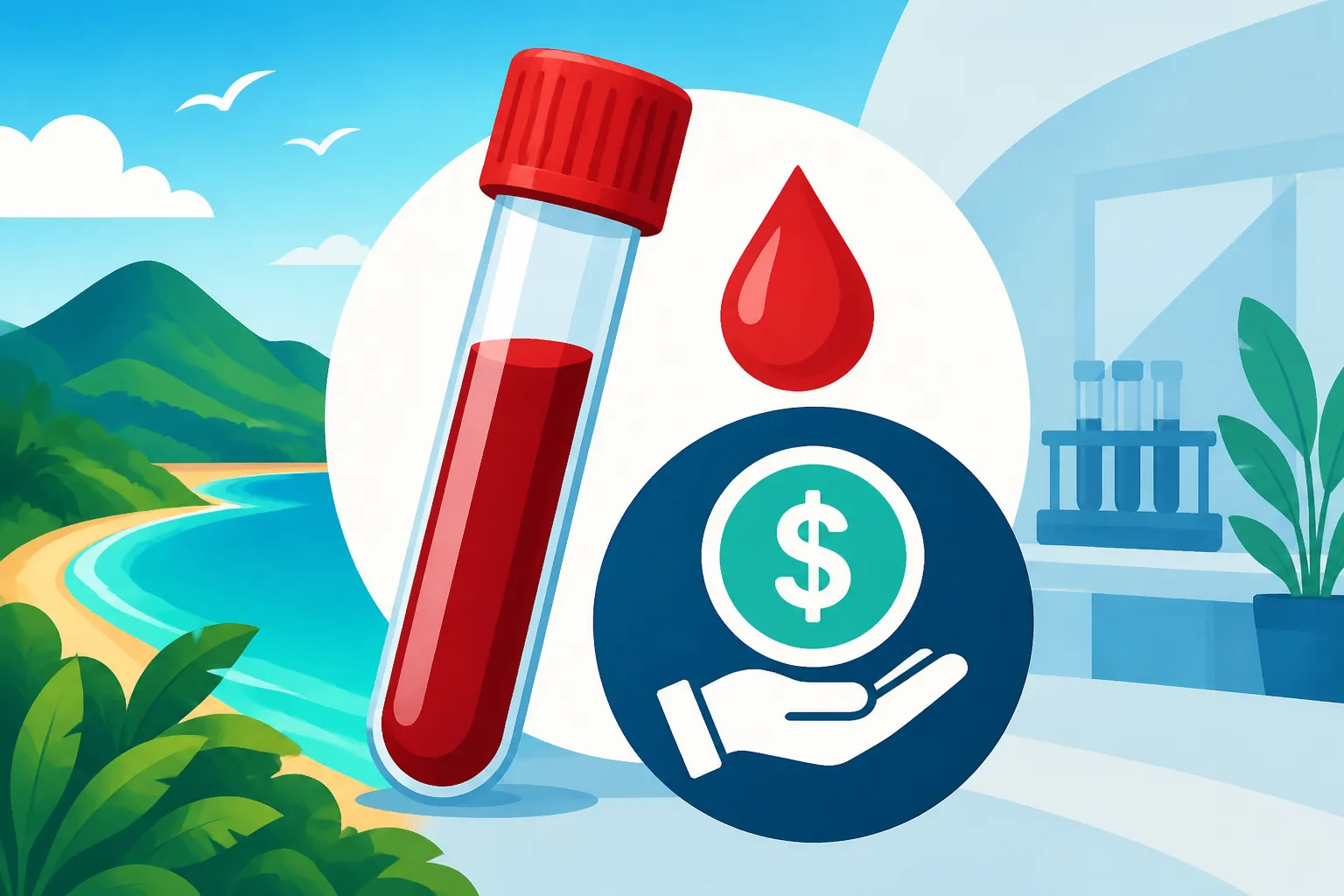
One of the many bewildering aspects of moving to or even just visiting a new country like Costa Rica is trying to get a handle on healthcare costs. It’s not just the big, scary stuff like hospital stays; often, it’s the smaller, routine things, like getting a simple blood test, that leave you wondering how much colones to prepare. You want to make sure you're covered, or at least prepared for the out-of-pocket expense, especially when you're still navigating the system. This guide is going to break down exactly what you can expect when it comes to blood test costs in Costa Rica, helping you feel a little more in control of your health and your wallet.
Understanding the Landscape of Blood Testing in Costa Rica
Navigating the healthcare system here, whether public or private, can feel like a labyrinth at first, and blood tests are no exception. It’s not a simple one-size-fits-all situation, and understanding the differences will save you a lot of headache and potentially some money.
Public vs Private Healthcare for Lab Work
When you first arrive, you’ll quickly learn about Costa Rica’s dual healthcare system: the public system, known as the Caja Costarricense de Seguro Social (CCSS) or simply the "Caja," and the private system. Each has its own distinct way of handling laboratory services, and consequently, its own cost structure.
If you’re a resident and enrolled in the Caja, most of your routine blood tests will be covered. This sounds great, and it often is! However, the trade-off is often time. Getting a referral for a blood test through the public system usually means seeing a doctor at your local EBAIS clinic, who will then order the tests. Depending on the type of test and the clinic’s capacity, you might face significant wait times. Sometimes, it’s a few days; other times, for more specialized tests, it could stretch into weeks or even months. The process for joining the Caja can also be a journey in itself, so if you're not already enrolled, this isn't a quick fix for an immediate blood test. To really understand the nuts and bolts, you might want to delve into our comprehensive guide on How Costa Rica's Health System Works: The Caja (CCSS) vs Private Explained (2027).
The private sector, on the other hand, offers speed and convenience, but at a cost. Private laboratories are abundant, especially in urban areas like San José, Escazú, and Heredia. You can often walk into a private lab with a doctor's order (or even without one for many common tests, though a doctor's order is always recommended for accuracy and interpretation) and get your blood drawn the same day. Results are typically available much faster, sometimes within hours for urgent tests, or within a day or two for most routine panels. This convenience comes with a price tag, of course, which is what we’re primarily here to explore. Many expats, even those with Caja coverage, opt for private labs for specific tests due to these time advantages. If you're weighing your options, our article Public vs Private Healthcare in Costa Rica: Which Should Expats Choose? could be incredibly useful.
Factors Influencing Blood Test Costs
So, what exactly determines how much you'll fork over for that little vial of red gold? Several factors come into play, making a single, definitive answer tricky.
First and foremost is the type of test itself. A basic Complete Blood Count (CBC) is far less expensive than a complex hormone panel or a specialized genetic test. The reagents, equipment, and expertise required vary significantly, and these differences are reflected in the price. The more obscure or specific the test, the higher the cost is likely to be.
Then there's the laboratory or clinic you choose. Just like in your home country, some labs are more upscale, offering sleek facilities and perhaps more personalized service, while others are more no-frills. Reputable labs like Laboratorio Clínico Echandi, Laboratorios San José, and LABIN are popular choices for their widespread locations, modern equipment, and reliable results. Each will have its own pricing structure.
Location within Costa Rica also plays a role. Generally, blood tests in larger metropolitan areas like San José or Escazú might be slightly more competitive due to more options, but also potentially higher operating costs. In more rural areas, options might be fewer, and prices could be either higher or lower depending on demand and local competition.
Insurance coverage is a huge factor, which we'll dive into more later. If you have a local private insurance plan like those from INS (Instituto Nacional de Seguros) or an international plan, it can significantly reduce your out-of-pocket expenses. Even if you're just visiting, good travel insurance like SafetyWing can sometimes cover unexpected medical diagnostics, including blood tests, if they are medically necessary.
Finally, urgency can influence the cost. While not as common for blood tests as for emergency procedures, some labs might offer "rush" services for an additional fee if you need results immediately, though this is less frequent for routine blood work.
Typical Costs for Common Blood Tests
Let's get down to the numbers, because that’s what most of you are really wondering about! Remember, these are general estimates based on current market rates in Costa Rica, and actual prices can vary.
General Wellness Panels
These are the bread and butter of routine check-ups. When your doctor orders "basic blood work," they're usually referring to a combination of these tests.
- Complete Blood Count (CBC) / Hemograma Completo: This test measures various components of your blood, like red and white blood cells, and platelets. It's crucial for detecting anemia, infections, and other blood disorders. Expect to pay somewhere in the range of ₡6,000 to ₡15,000 (roughly $12-$30 USD) at a private lab.
- Basic Metabolic Panel (BMP) / Perfil Metabólico Básico: This checks your kidney function, blood sugar, and electrolyte balance. It's a fundamental overview of your metabolic health. Prices typically fall between ₡10,000 and ₡25,000 (approximately $20-$50 USD).
- Lipid Panel / Perfil Lipídico: Essential for heart health, this measures your cholesterol (HDL, LDL) and triglycerides. A lipid panel usually costs around ₡10,000 to ₡25,000 (approximately $20-$50 USD).
- Liver Function Tests (LFTs) / Pruebas de Función Hepática: These tests assess the health and function of your liver. You might pay ₡15,000 to ₡30,000 (around $30-$60 USD) for a basic set of liver enzymes.
Often, labs will offer "wellness packages" that bundle several of these common tests together for a slightly discounted rate. It’s always worth asking if such packages are available, especially if you’re getting a full annual check-up.
Specialized and Diagnostic Tests
When your doctor needs to dig a little deeper, or if you have specific symptoms, they might order more specialized tests. These naturally come with a higher price tag.
- Thyroid Panel (TSH, T3, T4) / Perfil Tiroideo: Used to check thyroid function, vital for metabolism and energy. A basic TSH test might be around ₡15,000 to ₡25,000 ($30-$50 USD), while a full panel including T3 and T4 could range from ₡30,000 to ₡60,000 ($60-$120 USD) or more.
- HbA1c (Glycated Hemoglobin) / Hemoglobina Glicosilada: This is a key test for diagnosing and monitoring diabetes, showing average blood sugar levels over 2-3 months. Expect to pay ₡15,000 to ₡30,000 ($30-$60 USD).
- Vitamin D Test / Vitamina D: Many people are deficient in Vitamin D, and this test helps determine your levels. It’s a bit more specialized, typically costing ₡25,000 to ₡50,000 ($50-$100 USD).
- Sexually Transmitted Disease (STD) Panels / Perfiles de ETS: The cost for these varies widely depending on how many different STDs are being tested for. A comprehensive panel can range from ₡40,000 to ₡100,000+ ($80-$200+ USD).
- Hormone Levels (e.g., Testosterone, Estrogen, Progesterone): These tests are highly specific and can range from ₡20,000 to ₡60,000 ($40-$120 USD) per hormone tested.
- Urine Analysis (UA) / Urianálisis: While not a blood test, it’s often ordered alongside them for a full picture. A basic UA is usually quite affordable, around ₡5,000 to ₡10,000 ($10-$20 USD).
Here's a quick summary table for estimated private lab costs:
| Test Type | Estimated Cost (CRC) | Estimated Cost (USD) | Common Use |
|---|---|---|---|
| Complete Blood Count (CBC) | ₡6,000 – ₡15,000 | $12 – $30 | Anemia, infection, overall blood health |
| Basic Metabolic Panel | ₡10,000 – ₡25,000 | $20 – $50 | Kidney function, blood sugar, electrolytes |
| Lipid Panel | ₡10,000 – ₡25,000 | $20 – $50 | Cholesterol levels, heart disease risk |
| Liver Function Tests | ₡15,000 – ₡30,000 | $30 – $60 | Liver health, damage, or disease |
| Thyroid Stimulating Hormone (TSH) | ₡15,000 – ₡25,000 | $30 – $50 | Thyroid function screening |
| HbA1c | ₡15,000 – ₡30,000 | $30 – $60 | Diabetes diagnosis and management |
| Vitamin D | ₡25,000 – ₡50,000 | $50 – $100 | Vitamin D deficiency detection |
| Basic Urine Analysis | ₡5,000 – ₡10,000 | $10 – $20 | Kidney function, urinary tract infections |
Please note: These are estimates for private labs and can vary.
The Role of Insurance (Private & Public)
Now, let's talk about how insurance plays into these costs, because it can be a real game-changer.
If you are a resident and successfully enrolled in the Caja, most blood tests prescribed by a Caja doctor will be 100% covered at no additional cost to you, beyond your monthly contributions. The challenge, as mentioned, is often the wait time to get the referral and the test itself. If you're pondering residency, understanding How the Caja Requirement Connects to Your Residency in Costa Rica is essential.
For those with private health insurance, either local options like INS or international plans, your coverage for blood tests will depend entirely on your specific policy. Many private plans, especially comprehensive ones, will cover a significant portion, if not all, of medically necessary diagnostic tests, including blood work, usually after you meet your deductible. Some plans might even offer direct billing with certain private labs, simplifying the process immensely. You’ll want to check your policy details, including co-pays and deductibles. Our guide on Health Insurance in Costa Rica: Caja, INS and International Options Explained offers a deeper dive into these choices.
What about tourists or those without long-term residency and local insurance? This is where international travel insurance, like SafetyWing, becomes invaluable. While it won't cover routine check-ups, if you develop an unexpected illness or injury that requires diagnostic blood work, SafetyWing's travel medical insurance can often cover the costs, minus any deductible. This is a huge relief when you're far from home and facing unexpected medical expenses. Imagine getting sick and needing urgent blood tests before your Caja coverage kicks in—a SafetyWing policy could be a real lifesaver in that scenario. Don't assume your home country's insurance will cover you here; always double-check.
Navigating the Process: How to Get a Blood Test in Costa Rica
Getting a blood test here is generally straightforward once you understand the system. It's often much simpler than you might expect, especially in the private sector.
Doctor's Orders and Referrals
In the private system, while it’s technically possible to walk into many private labs and request certain common tests (like a lipid panel or glucose test) without a doctor's order, it’s always highly recommended to have one. A doctor can accurately interpret your results in the context of your overall health and symptoms, and advise on any necessary follow-up. Plus, having a doctor's order is usually required if you intend to claim reimbursement from your private insurance, including international plans like SafetyWing.
To get a doctor's order, you can visit a private doctor, often an English-speaking one if that's more comfortable for you. Many private clinics, especially in expat-heavy areas like Escazú or Santa Ana, have doctors who are accustomed to working with foreigners. A private doctor's visit usually costs between ₡30,000 – ₡70,000 ($60-$140 USD). If you’re unsure where to start, our resource on How Do I Find an English-Speaking Doctor in Costa Rica? can point you in the right direction. Once you have the order, you simply take it to the lab.
If you're using the Caja system, you must have a referral from a Caja doctor. This means a visit to your assigned EBAIS clinic, and then waiting for their internal system to process the order and schedule the test. This is where the wait times can come in.
Choosing a Lab and What to Expect
Choosing a lab is relatively easy in major areas. As mentioned, Laboratorio Clínico Echandi, Laboratorios San José, and LABIN are widely recognized and have multiple branches across the country. They are known for their professionalism and reliability. You can often find their locations and even check some prices on their websites or by calling them directly.
The process itself is very similar to what you'd experience in North America or Europe:
- Arrive at the lab: If you have an appointment, arrive a few minutes early. Many labs also accept walk-ins, especially for routine tests, but an appointment can reduce wait time.
- Registration: Present your doctor's order (if you have one) and your identification (passport, DIMEX). You’ll fill out a quick form, and this is where you’ll pay if it’s an out-of-pocket expense or if you have a co-pay. If you're paying directly, knowing How Do I Pay for a Private Doctor Visit in Costa Rica? might give you some insight into payment methods.
- Blood Draw: A phlebotomist will take your blood sample. They are generally skilled and efficient.
- Results: Most labs offer online portals where you can access your results within 24-48 hours for common tests. They can also email them to you or provide a physical copy. Some will even send the results directly to your doctor.
For those still establishing residency, it's worth noting that your DIMEX card is often required for any official medical service, even if you are paying privately. Our guide What Documents Do I Need to See a Doctor in Costa Rica? provides helpful details.
Tips for Expats and Tourists on Blood Test Costs
Living in a new country means learning how to be savvy with local services. Here are some pointers to help you manage blood test costs in Costa Rica.
Saving Money and Understanding Billing
It pays to be proactive when it comes to medical expenses here. Don't be shy about asking questions!
- Shop around: If your doctor gives you a list of tests, call a couple of different private labs to compare prices. While prices are often similar among the big names, sometimes one might have a promotion or a slightly lower rate for a specific test. This is particularly true for comprehensive panels, where package deals can vary.
- Ask for package deals: As mentioned, if you need several common tests, inquire about a bundled "wellness package" or "perfil completo." These are often cheaper than getting each test individually.
- Understand the bill: When you get your quote or bill, make sure you understand exactly what each line item is for. Don't hesitate to ask for clarification if something seems unclear or unexpectedly high.
- Consider a local discount plan: Some private clinics or networks offer discount plans or memberships that can reduce the cost of private lab work, among other services. These are typically not insurance, but rather a way to access reduced rates.
Emergency vs. Routine Testing
The approach to blood tests differs significantly based on whether it’s a planned, routine check-up or an urgent, unexpected need.
For routine tests, you have the luxury of time. You can get your doctor’s orders, compare prices at private labs, and schedule an appointment that fits your schedule. If you have Caja coverage and are not in a rush, using the public system for routine tests is the most cost-effective option, though it requires patience.
In an emergency situation, however, speed and accuracy are paramount. If you end up in a private hospital emergency room (like CIMA, Clínica Bíblica, or Hospital Metropolitano) for something serious, blood tests will be conducted immediately as part of your diagnostic workup. In these scenarios, the cost of the blood tests will be integrated into the overall emergency room bill. This is where robust health insurance, whether local private or international, is absolutely crucial. These bills can be substantial, and the last thing you want to worry about is the cost of an urgent CBC when you're seriously ill. Our article on Emergency Medical Care in Costa Rica: What Every Expat Needs to Know covers this in more detail.
Travel Insurance and Unexpected Costs
If you're a tourist or a new arrival still processing your residency, you are especially vulnerable to unexpected medical costs. This is where good travel medical insurance, such as SafetyWing, truly shines.
Imagine you're enjoying the pura vida lifestyle, but suddenly develop a concerning fever or unexplained pain. You rush to a private clinic or hospital. The doctor orders blood tests to figure out what's going on. Without insurance, you'd be paying out-of-pocket for that private consultation, plus the blood tests, and potentially any follow-up treatments. A decent travel medical insurance plan would cover these unforeseen, medically necessary expenses, protecting you from potentially ruinous bills. SafetyWing, for instance, is designed for digital nomads and travelers, and their policies typically cover emergency medical expenses, including diagnostic tests. While it won't pay for your routine annual physical or planned blood work, it acts as a critical safety net for those "what if" moments that can happen to anyone. Don't leave home without ensuring you have adequate coverage, especially if you're not yet part of the Caja system. Even for short visits, consider that Can Tourists Access Emergency Care in Costa Rica? will be at private rates if not covered by a travel policy.
In conclusion, blood tests in Costa Rica are generally affordable compared to many Western countries, particularly in the private sector. However, understanding the system, knowing your options, and having appropriate insurance coverage can make a world of difference in your experience and your expenses. Plan ahead for routine tests, and always ensure you're covered for emergencies.
Disclaimer
The information provided in this article is for general informational purposes only and does not constitute medical, legal, or financial advice. Costs are estimates and subject to change without notice. Always consult with a qualified professional for advice tailored to your specific situation. While we strive to provide accurate and up-to-date information, circumstances in Costa Rica can change rapidly.