How Do I Access Mental Health Support in English in Costa Rica?
Many expats move to Costa Rica chasing the Pura Vida dream, only to find that deep-seated emotional struggles or the overwhelming stress of relocation don't disappear at the border. Navigating a mental health crisis or simply seeking a therapist in a second language adds a layer of exhausting complexity to an already difficult situation. This guide provides a clear, empathetic roadmap for finding professional, English-speaking mental health support within the Costa Rican healthcare landscape.
The Reality of Mental Health Needs for Expats in Costa Rica
Moving to a new country is often marketed as a fresh start, but the reality is that the "honeymoon phase" eventually fades, replaced by the logistical grind of residency and the isolation of being away from your primary support network. I have spoken with countless newcomers who feel guilty for being unhappy in "paradise." This phenomenon, often called the tropical blues, is a legitimate psychological response to the loss of familiar surroundings and the constant cognitive load of functioning in a different culture. It is not a failure on your part; it is a transition that often requires professional intervention to manage effectively.
Why Language and Cultural Nuance Matter in Therapy
Therapy is perhaps the most language-dependent form of medical care. While you might be able to stumble through a basic physical exam with limited Spanish, discussing trauma, anxiety, or complex family dynamics requires a level of nuance that "Spanglish" simply cannot provide. If you are not fluent in the local vernacular, you risk being misunderstood or, worse, having your emotions pathologized incorrectly because of a language barrier. This is why finding a provider who is not just "proficient" in English, but truly fluent and culturally competent regarding Western expat life, is vital.
Furthermore, the cultural context of mental health in Costa Rica can differ from what you are used to in North America or Europe. While the country has made great strides in reducing the stigma surrounding therapy, there are still traditional undercurrents that might influence a local therapist's approach. By seeking an English-speaking provider, you are more likely to find someone who understands the specific cultural baggage you carry as an expat. You may find it helpful to read about How to Access Mental Health Services in Costa Rica as an Expat to understand the broader context of these services.
The Emotional Strain of Relocation and Loneliness
Relocation is one of the top life stressors, right alongside divorce or the death of a loved one. When you move to the Central Valley or a remote beach town, you lose the "passive" support of friends you’ve known for decades. Building a new community takes time—often years—and in that gap, many expats experience a profound sense of loneliness. This isolation can exacerbate existing conditions like depression or ADHD, making the administrative hurdles of living in Costa Rica feel insurmountable.
If you are a digital nomad or a frequent traveler, this instability is even more pronounced. This is where having comprehensive international coverage can be a lifesaver. For example, some expats utilize specialized travel and nomad insurance like SafetyWing to bridge the gap between their home country and their new life. While SafetyWing is primarily focused on medical emergencies and travel-related issues, having that safety net allows you to allocate more of your personal budget toward private, out-of-pocket therapy sessions without worrying about other unexpected medical costs.
Navigating the Private Sector for English-Speaking Care
For the vast majority of expats, the private sector is the only viable route for consistent, high-quality mental health support in English. The private system in Costa Rica is excellent, often mirroring the standards found in the US or Canada, but with significantly more personalized attention. Because mental health services are generally not covered by the public system for non-emergency talk therapy in English, you should prepare to navigate this as a private consumer.
Finding English-Speaking Psychologists and Psychiatrists
The highest concentration of English-speaking therapists is located in the San Jose metropolitan area, specifically in Escazu, Santa Ana, and Rohrmoser. These areas are hubs for international business and diplomatic missions, meaning many practitioners have been educated abroad. When looking for a provider, your first stop should be the major private medical centers. Institutions like CIMA and Clinica Biblica maintain directories of specialists, many of whom are dual-qualified. You can learn more about these facilities by reading How to Use Private Hospitals Like CIMA, Clinica Biblica and Hospital Metropolitano.
Beyond hospital directories, word-of-mouth in expat forums can be helpful, but always verify credentials through the Colegio de Profesionales en Psicología de Costa Rica. This ensures the therapist is licensed to practice within the country. If you are looking for more general medical guidance first, you might start with How to Find an English-Speaking Doctor in Costa Rica to get a referral to a psychologist they trust. Many expats find that their general practitioner (GP) in Costa Rica acts as a "gatekeeper" who can recommend therapists who have successfully treated other foreigners.
Telehealth and the Rise of Remote Therapy
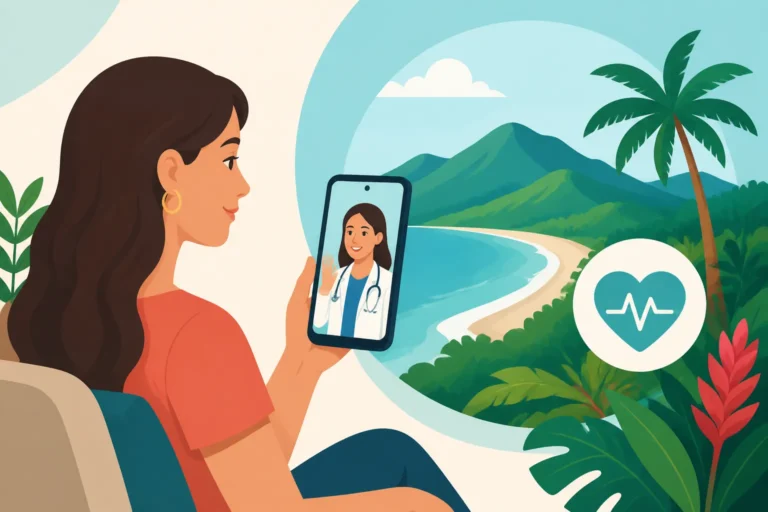
If you live in a more remote area like the Southern Zone or the Nicoya Peninsula, finding a local English-speaking therapist can be nearly impossible. Fortunately, the pandemic accelerated the adoption of telehealth across Costa Rica. Many top-tier therapists in San Jose now offer sessions via Zoom or specialized medical portals. This removes the need for a four-hour drive through the mountains just for a one-hour appointment.
For those who are not yet residents or who move frequently, digital-first solutions are becoming the norm. If you are traveling or working remotely, checking your insurance policy is key. Some nomad-specific plans, such as SafetyWing, provide an essential layer of protection for travelers who may need to seek emergency psychiatric stabilization or find local resources quickly. While Can I Get Counseling or Therapy in English in Costa Rica? is a common question, the answer is a resounding yes, provided you are willing to embrace the digital format.
Understanding Costs and Payment Models
Private therapy in Costa Rica is generally more affordable than in the US, but it is not "cheap" by local standards. A session with a high-quality, English-speaking psychologist typically ranges from $70 to $120 USD. Psychiatrists, who are medical doctors capable of prescribing medication, will charge more, often between $120 and $200 for an initial consultation. Most private therapists expect payment in cash or via SINPE Movil (the local instant payment system) at the time of the appointment.
| Provider Type | Average Cost (USD) | Best For | Language Access |
|---|---|---|---|
| Private Psychologist | $70 – $120 | Weekly talk therapy, CBT, anxiety | High (in San Jose) |
| Private Psychiatrist | $120 – $200 | Medication management, diagnosis | High (Major hospitals) |
| Online/International | $80 – $150 | Consistency during travel | Guaranteed English |
| Caja (Public) Clinic | $0 (if insured) | Emergency stabilization, basics | Low/Spanish Only |
For many, the question is Is Mental Healthcare Affordable in Costa Rica? and the answer depends on your budget. If you are paying for everything out of pocket, these costs can add up. However, if you are using an international plan like SafetyWing for your broader medical needs, you may find that the "savings" on your monthly premiums allow you to afford consistent private mental health care that isn't tied to a specific insurance network.
Understanding the Public System and Mental Health
Every legal resident in Costa Rica is required to pay into the Caja Costarricense de Seguro Social (CCSS), commonly known as the "Caja." While this system is a marvel of public health, providing everything from cancer treatments to heart surgeries for a monthly fee based on income, it has significant limitations when it comes to mental health services for English speakers.
Accessing Care Through the EBAIS
Your entry point into the public system is your local EBAIS (Equipos Básicos de Atención Integral en Salud). This is your neighborhood clinic where you go for everything from a cold to a prescription refill. If you are experiencing mental health struggles, you would technically start here by seeing a general practitioner. You can find more details on this process in our guide on Understanding the Role of the EBAIS (Local Health Clinic) in Costa Rica.
The GP at the EBAIS can refer you to a psychologist or a psychiatrist within the Caja system. However, this is where How Specialist Referrals Work Through the Caja in Costa Rica becomes a point of frustration for many foreigners. The wait times for non-emergency psychological referrals can be months, or even a year. More importantly, the likelihood of finding an EBAIS doctor or a Caja psychologist who is fluent in English and has the time for a nuanced 50-minute session is extremely low. The public system is designed for high-volume, Spanish-speaking care.
Limitations for English Speakers in the Public System
If you are in a crisis, the Caja will stabilize you. They have psychiatric hospitals and emergency wards that are world-class in their medical efficacy. However, for "maintenance" therapy—the kind of weekly talk therapy that helps prevent a crisis—the public system is often ill-equipped for the needs of an English-speaking expat. There is also the issue of medication. The Caja has a specific formulary of medications they provide. If you are used to a specific brand-name antidepressant or ADHD medication from your home country, the Caja may only offer a generic version or a different class of drug entirely.
For these reasons, most expats view the Caja as their "catastrophic insurance" and the private sector as their "wellness" provider. If you are currently applying for residency and are worried about coverage, having a plan like SafetyWing can offer an additional layer of security while you navigate the long wait times of the public system’s bureaucracy. It provides a bridge so you aren't left entirely vulnerable while waiting for your DIMEX card.
Support Groups and Community Resources
Sometimes, the best support doesn't come from a doctor, but from people who are walking the same path. Costa Rica has a vibrant expat community, and within that community, several informal and semi-formal support structures have emerged to fill the gaps left by the traditional medical system.
Expat Support Networks and Groups
In areas like San Jose, Nosara, and the Southern Zone, you can find various support groups. Alcoholics Anonymous (AA) and Narcotics Anonymous (NA) have a very strong presence in Costa Rica, with many meetings conducted entirely in English. These groups are often the "first responders" for expats struggling with substance abuse, which is a common (and often hidden) issue in the "vacation-all-the-time" atmosphere of beach towns.
Beyond addiction recovery, there are "Expat Women" and "Expat Men" groups on platforms like Facebook that, while sometimes prone to gossip, can be a source of recommendations for therapists. However, be cautious: mental health advice on social media is unregulated. Always cross-reference a recommendation with professional directories. If you are feeling overwhelmed by the transition, seeking community is a great first step, but it should complement, not replace, professional care.
Crisis Resources and Emergency Care
If you or someone you know is in an immediate mental health crisis, you should not wait for a private appointment or a Caja referral. The primary emergency number in Costa Rica is 911. They have operators who can speak English, though you should be prepared to speak slowly and clearly. For more on how to handle these situations, see What Is the Emergency Phone Number in Costa Rica?.
In a psychiatric emergency, you can go to the emergency room of any major hospital. Private hospitals like CIMA or Clinica Biblica are the fastest options, though they will require a credit card or proof of insurance upfront. If you are using an international insurance plan like SafetyWing, keep your digital ID card and their emergency contact number easily accessible on your phone. They can often help coordinate with the hospital to verify coverage for emergency stabilization, which can be a massive relief during a high-stress moment.
Important Disclaimer
The information provided in this guide is for educational and informational purposes only and does not constitute professional medical or mental health advice, diagnosis, or treatment. Always seek the advice of your physician, psychologist, or other qualified health provider with any questions you may have regarding a medical or mental health condition. Never disregard professional medical advice or delay in seeking it because of something you have read in this article. If you are in a life-threatening situation or experiencing a mental health emergency, please contact 911 immediately or go to the nearest emergency room.