How Do I Get My DIMEX Card After Residency Approval in Costa Rica?
Oh, the sheer relief when you finally get that email or call: "Residency Approved!" After months, maybe even years, of gathering documents, endless trips to Migración, and the constant stress of waiting, it feels like winning the lottery. But hold on, mi amigo, the journey isn't quite over. That approval isn't a physical card in your hand, and until you have that precious DIMEX, you're still in a kind of administrative limbo. This guide is here to walk you through that crucial final step, cutting through the confusion to get your official Costa Rican identification.
The Sweet Relief of Residency Approval and What Comes Next
Let's be honest, the Costa Rican residency process can test the patience of a saint. You've probably felt like you're caught in a bureaucratic dance, taking two steps forward and one step back. So, when you get that official notification that your residency has been approved, it's a monumental moment. It feels like the finish line is finally in sight.
However, as many of us expats quickly learn, "approved" in Costa Rica often means "approved, pending the next administrative step." You don't just magically get your ID card mailed to you. There's a specific, albeit often somewhat opaque, process to follow to get the physical DIMEX card into your eager hands. This final hurdle is essential, as the DIMEX isn't just a piece of plastic; it's your key to truly integrating and functioning in your new Pura Vida life.
Understanding What "Approved" Truly Means
So, you've received the good news. Maybe your immigration lawyer called you, or you got an email directly from the Dirección General de Migración y Extranjería (DGME), or perhaps you even checked the online portal yourself. The status has changed to "aprobado." This means that Migración has reviewed your application, verified all your submitted documents, and given their official blessing to your residency status. Congratulations, you've passed the primary gate!
But it's critical to understand that this approval is not your DIMEX card. It's a legal recognition of your right to reside here. Think of it like getting approved for a new passport back home – you still need to go pick it up, and it's not valid until it's physically in your hand. This period between approval and card in hand can feel like an eternity, especially when you're itching to open a bank account, finalize a lease, or simply prove you're a legal resident.
Why the DIMEX Card Is Your Golden Ticket
The DIMEX (Documento de Identidad Migratorio para Extranjeros) card is more than just an ID. It’s your official, undeniable proof that you are a legal resident of Costa Rica. Without it, you’ll find yourself hitting frustrating roadblocks in almost every administrative interaction. Imagine trying to cash a check or open a utility account without proper identification; it’s a similar scenario here.
This card is essential for everything from proving your identity at a traffic stop to registering your children in school. It's especially vital for How to Use Your DIMEX to Access Healthcare in Costa Rica, allowing you to fully utilize the public healthcare system (Caja Costarricense de Seguro Social, or CCSS) that you're now contributing to. Whether you’re trying to sign up for a new phone plan, get a local driver's license, or even just buy a bag of groceries with a credit card, the DIMEX is the universally accepted form of identification for foreigners. Without it, you might be carrying your passport around everywhere, which is a big no-no for security reasons, and even that might not be sufficient for all official tasks once your residency is approved.
Step-by-Step: Obtaining Your DIMEX Appointment
Once your residency is approved, your next mission, should you choose to accept it, is to schedule an appointment to get your fingerprints and photo taken for the physical DIMEX card. This is where you transition from an approved applicant to a card-carrying resident. It sounds straightforward, but like many things in Costa Rica, it requires a dose of patience and strategic planning.
The primary institution handling DIMEX card issuance is Correos de Costa Rica, our national postal service. Yes, you read that right – the post office. They’ve been designated by Migración to facilitate this final step for new residents, and generally, they do a pretty decent job, all things considered.
Scheduling Your Appointment with Correos de Costa Rica
To schedule your appointment, you’ll typically need to visit the Correos de Costa Rica website, specifically their DIMEX section, or call their designated hotline. The website often allows you to select a specific branch (there are many across the country, but the main ones in San José, like Zapote or La Uruca, process a high volume) and a time slot. Be prepared to enter your residency application number or expediente number, which should be on your approval notice.
Patience is key here. Depending on the time of year and the current backlog, appointment slots can fill up quickly. Don't be surprised if the first available slot is several weeks or even a month or two out. This is normal. Just keep checking back, as sometimes cancellations open up earlier slots. Make sure you confirm all your details before finalizing, because rescheduling can be another bureaucratic dance you don’t want to do. And while you might be tempted to just walk in, an appointment is usually mandatory for DIMEX processing.
Alternative Locations: Banks and Other Designated Offices
While Correos de Costa Rica is the main player, some banks, particularly larger state banks, occasionally offer DIMEX processing services as well. For example, Banco de Costa Rica (BCR) and Banco Popular have, at various times, had branches equipped to handle DIMEX appointments. This can be a convenient option if there's a branch closer to you or if Correos appointments are completely booked out.
However, the availability of these banking services for DIMEX can fluctuate. It's always best to check their official websites or call the specific bank branch directly to confirm if they are currently offering DIMEX appointments and what their process is. Don't just assume; always verify. Even if they do offer it, the process will be quite similar to Correos – you'll need an appointment, all your documents in order, and proof of your Caja affiliation. For most new residents, Correos remains the most consistent and reliable avenue for this final step.
Gathering Your Documents for the DIMEX Appointment
You know the drill by now, right? Documents, documents, and more documents! Just when you thought you were done with the paperwork for residency, there’s one last batch for your DIMEX appointment. This isn’t a time to be casual. Having everything perfectly organized will save you immense stress and potentially another trip (or two) to the office. Trust me, I’ve seen more than one frustrated expat turned away for missing a single copy or forgetting a stamp.
This step is as crucial as the initial residency application itself. The officials at Correos or the bank are simply verifying that you are indeed the person Migración has approved and that you’ve fulfilled the final requirements, most notably the Caja affiliation.
The Essential Checklist for a Smooth Visit
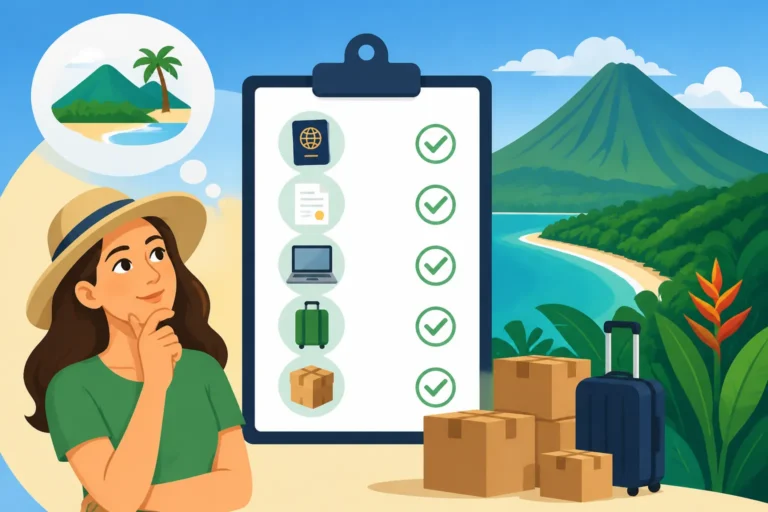
To ensure your DIMEX appointment goes off without a hitch, here's a detailed checklist of what you absolutely must bring. Don't just skim this, print it out and check things off one by one!
- Your Valid Passport: This is non-negotiable. Bring the original and at least two, preferably three, clear photocopies of the main bio-data page (the one with your photo and information), as well as the page with your most recent Costa Rican entry stamp. Even though your residency is approved, your passport is still your international ID.
- Official Residency Approval Letter/Email: This is the document Migración sent you confirming your approval. Make sure to have the original and several copies. This letter will contain your expediente (file) number, which is vital.
- Proof of Caja (CCSS) Affiliation and Payment: This is probably the most critical document besides your approval letter. Migración requires all residents to be affiliated with and paying into the public health system. You'll need to show proof that you've started making your monthly payments. This could be a printout from the Caja's online portal showing your active status and recent payments, or official receipts. If you haven't done this yet, you cannot get your DIMEX. We'll dive into this more in the next section, but just know it's a huge deal. For a deeper dive, check out The Expat Guide to Joining the Caja (CCSS) in Costa Rica (2027).
- Payment for the DIMEX Card Fee: You will need to show proof that you have paid the fee for the physical DIMEX card itself. This fee is typically paid directly to Correos de Costa Rica or the bank when you schedule the appointment online, or it might be a separate bank deposit you need to make beforehand. The current fee usually hovers around $50-$60 USD (or the equivalent in Colones). Confirm the exact amount and method of payment when you schedule your appointment.
- Two Passport-Sized Photos (Current): While they will take your photo digitally at the office, it's always a good idea to have physical, professional-quality passport photos with you, just in case their system is down or they request them. White background, no glasses unless medically necessary, neutral expression.
- Proof of Address: A utility bill (ICE, AyA, internet) in your name or a rental contract can be useful, though often not strictly required for DIMEX issuance itself if your address is already registered with Migración. Still, better safe than sorry.
- Any Other Documents Requested: Always double-check the instructions provided by Correos or Migración when you schedule your appointment, as requirements can occasionally change. Sometimes a specific timbre fiscal (tax stamp) is required, which you can often buy right there at the post office or a local pulpería.
My advice? Create a physical folder, put originals on one side, and at least three sets of copies on the other. Being over-prepared is always better than being turned away!
Navigating the Caja Requirement
I cannot stress this enough: you will not get your DIMEX card without proving you are actively enrolled in and paying into the Caja Costarricense de Seguro Social (CCSS). This is a fundamental requirement for all residents in Costa Rica, and Migración is very strict about it. It’s part of the comprehensive strategy to ensure everyone residing in the country contributes to and benefits from the national health system. This connection between your residency and public healthcare is deeply ingrained in the system, and understanding How the Caja Requirement Connects to Your Residency in Costa Rica is crucial.
If you haven't already enrolled in the Caja, this needs to be your absolute top priority before your DIMEX appointment. The process to enroll involves visiting your local EBAIS (Equipo Básico de Atención Integral en Salud), which is your assigned neighborhood clinic. They will guide you through the enrollment process, which includes completing forms and proving your income for contribution calculation. For more detailed steps on this, you might find How Do I Enroll in the Caja After Moving to Costa Rica? incredibly helpful.
Once enrolled, you'll start making monthly payments. It’s these payments that you need to prove. The ideal proof is a printout from the CCSS virtual office showing your active status and at least one recent payment. If you're a new enrollee and haven't made a full month's payment yet, bring your enrollment confirmation and any receipts you have. The officials want to see that the process has begun and you are fulfilling your obligation. This step often causes delays for expats, so get ahead of it!
What to Expect at Your DIMEX Appointment
You've got your approval, you've got your appointment scheduled, and your folder is bursting with meticulously organized documents. Now, for the final in-person step: the DIMEX appointment itself. This is generally a much smoother process than any of your Migración visits, but knowing what to expect can ease any lingering anxiety.
The whole procedure is designed to be relatively quick and efficient, assuming you arrive prepared. It's essentially the government taking your biometric data – your fingerprints and a fresh photo – to create your official ID card.
The Appointment Day Experience
When you arrive at the Correos de Costa Rica branch (or designated bank), you'll typically be directed to a specific counter or area for DIMEX processing. Don't be surprised if there's a short wait, even with an appointment; "Pura Vida time" often applies to administrative tasks.
Here's generally what happens:
- Check-in: You'll present your appointment confirmation and your expediente number.
- Document Verification: A staff member will carefully review all your documents. This is where your diligent preparation pays off. They'll check your passport, your approval letter, and most importantly, your proof of Caja affiliation and payment. If anything is missing or incorrect, they will likely turn you away and ask you to reschedule.
- Biometrics Collection: Once your documents are verified, you'll proceed to the biometric station. They will digitally capture your fingerprints (usually all ten fingers) and take your photograph. Make sure you look presentable, even if it's early morning, because this photo will be on your official ID for years to come!
- Information Confirmation: They will ask you to verbally confirm your personal details, such as your full name, date of birth, and current address. Pay close attention here to ensure accuracy. This is also where you might be asked if you want the DIMEX card mailed to your address or if you prefer to pick it up at that same branch (or another Correos branch).
The entire in-person process, if everything is in order, usually takes no more than 15-30 minutes. It's a sigh of relief when you walk out, knowing the final step is set in motion.
To help you visualize the necessary items, here's a handy table:
| Document Category | Specific Item Required | Notes |
|---|---|---|
| Identification | Valid Original Passport | Must be current and unexpired. |
| Photocopies of Passport | 2-3 copies of bio-data page and last entry stamp. | |
| Residency Proof | Official Residency Approval Letter/Email | Original and 2-3 copies, containing your expediente number. |
| Healthcare | Proof of Caja (CCSS) Affiliation & Payment | Printout from virtual office, receipts showing active status and recent contributions. |
| Fees | Proof of DIMEX Card Fee Payment | Receipt from Correos or bank showing payment for the card issuance. |
| Photos (Optional, but Recommended) | Two Current Passport-Sized Photos | Professional quality, white background (for backup). |
| Address (Optional) | Proof of Address | Utility bill or rental agreement (sometimes requested, good to have). |
| Other (As Requested) | Any specific timbres (stamps) or additional documents | Always check specific instructions from Correos or Migración. |
The Waiting Game for Your Physical Card
Once your appointment is done, you might feel a rush of "finally!" But alas, the DIMEX card is not printed on the spot. It's sent to a central processing facility, printed, and then routed for delivery or pickup. This means another waiting period, usually ranging from a few weeks to sometimes a couple of months. While it's certainly not as agonizing as the initial residency wait, it's still a period where you're technically a resident but don't have the official card to prove it easily.
You can often track the status of your DIMEX card on the Correos de Costa Rica website using your expediente number. This can help alleviate some of the "is it coming?" anxiety. When it's ready, depending on what you chose during your appointment, it will either be delivered to your registered home address (usually by Correos) or made available for pickup at the Correos branch you selected. If it’s delivered, someone needs to be home to receive it and sign. If you chose pickup, you’ll need to return to the branch with your passport and the official receipt from your DIMEX appointment.
During this waiting period, if you absolutely need to prove your residency, your official approval letter from Migración, combined with your passport, usually serves as temporary proof. However, be aware that some institutions might still prefer the physical DIMEX, so manage your expectations. It's often during these interim periods that expats realize the value of having a robust international health insurance plan like Cigna Global to bridge any gaps while their Caja affiliation fully processes and before their DIMEX is in hand for all local services.
Important Considerations and Troubleshooting
Even with the best preparation, the path to getting your DIMEX card can have a few bumps. Understanding common issues and knowing how to troubleshoot them can save you a lot of headache and frustration. After all, this is Costa Rica, and sometimes things just don't go according to the meticulously planned schedule!
From minor paperwork hiccups to unexpected delays, anticipating potential problems is half the battle. Remember, the goal is to get that card, so staying calm and persistent is key.
Common Pitfalls and How to Avoid Them
One of the most frequent reasons for delays or needing to reschedule an appointment is incomplete or incorrect documentation. This often comes down to:
- Missing Copies: Even if you have the original, not having enough copies of your passport or approval letter can be a deal-breaker. Always bring more than you think you need.
- Outdated Information: Ensure your address or contact details with Migración are current. If the system has an old address, your card could be sent to the wrong place for delivery.
- Caja Payment Issues: This is a big one. If your Caja payments aren't up to date, or if you can't provide clear proof of active enrollment and recent payments, your DIMEX application will halt. Make sure you’ve fully understood Understanding How Caja Contributions Are Calculated in Costa Rica and that your payments are reflected in their system.
- Expired Passport/Visa While Waiting: It sounds obvious, but if your passport expires during the long residency process or even during the DIMEX waiting period, it can cause problems. Always ensure your passport has at least six months of validity remaining when dealing with government processes.
- Missed Appointments: If you miss your scheduled DIMEX appointment without prior notification, you’ll have to go through the scheduling process all over again, which means more waiting. Mark your calendar and set multiple reminders!
Another subtle but common pitfall is the language barrier. While many staff at Correos may speak some English, it's not guaranteed. Having a basic grasp of Spanish or bringing a trusted, Spanish-speaking friend can make a huge difference in understanding instructions and confirming details.
What If There's a Problem?
So, you hit a snag. What do you do?
- If turned away for documents: The Correos or bank staff should tell you exactly what’s missing. Don't leave until you understand it. Rectify the issue (get more copies, update Caja payments) and reschedule your appointment as soon as possible.
- If your DIMEX is delayed: First, try tracking its status online through the Correos website. If it's been an unusually long time (e.g., more than two months) and the tracking shows no update, you can try contacting Correos de Costa Rica customer service. If that yields no results, or if the issue seems to stem from Migración's side (e.g., an error in your registered data), you might need to contact the DGME directly. Be prepared for potentially long wait times and multiple inquiries.
- Seeking Legal Help: For persistent or complex issues, such as errors in your residency type, problems with your expediente, or if you feel your application is unjustly stalled, it might be time to consult with the immigration lawyer who handled your initial residency application. They have the expertise to navigate the system and advocate on your behalf.
- Lost or Damaged DIMEX Card: Accidents happen. If you lose your DIMEX card or it gets damaged, you'll need to go through a similar process to apply for a replacement. This typically involves filing a police report for a lost card, paying a replacement fee, and scheduling another appointment. You'll want to refer to How to Renew or Replace Your DIMEX Card in Costa Rica for specific guidance on this.
Remember, the Costa Rican bureaucracy can sometimes feel like a labyrinth, but with patience, preparation, and knowing your resources, you will eventually emerge with that coveted DIMEX card in hand. And if you're navigating the complexities of moving your entire life here, remember that companies like Sirelo can assist with the logistics of international moves, ensuring your belongings arrive safely while you focus on these essential administrative tasks. Having reliable partners for different aspects of your move can make a world of difference.
Disclaimer
The information provided in this guide is for general informational purposes only and does not constitute legal, financial, or immigration advice. While we strive to keep the information up-to-date and accurate, laws, regulations, and processes in Costa Rica can change frequently. It is highly recommended that you consult with a qualified Costa Rican immigration attorney or other relevant professionals for advice tailored to your specific situation. We are not responsible for any actions taken based on the information in this guide.