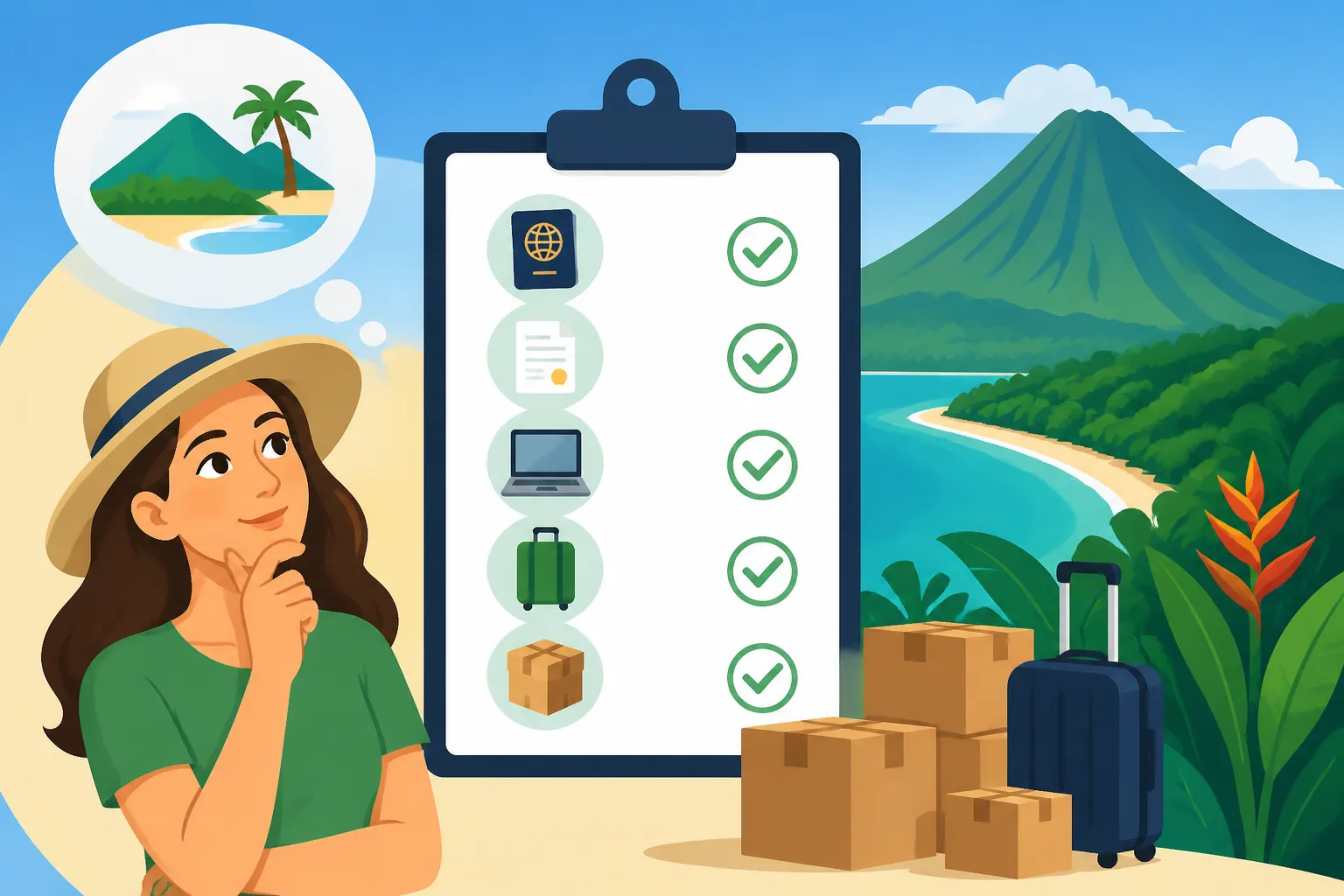
How Do I Check What I Need to Move to Costa Rica?
So, you’ve caught the Pura Vida bug and are dreaming of making Costa Rica your new home. Believe me, I get it. The idea of trading in traffic for toucans and deadlines for leisurely sunsets is incredibly appealing. But then reality sets in: moving to a new country, especially one with a different language, culture, and administrative system, can feel like trying to solve a Rubik's Cube blindfolded. It’s overwhelming to figure out what you really need to bring, prepare, and understand before you even step foot on that plane, let alone when you arrive. This guide is here to untangle that knot, breaking down the essential considerations and practical steps you’ll need to take to ensure a smoother transition to your life in Costa Rica.
Understanding the Foundation: Your Legal Status
One of the biggest hurdles, and often the first point of anxiety for anyone considering a move to Costa Rica, is sorting out your legal right to be here long-term. This isn't just about showing up with a passport; it's about defining your entire future in the country.
Tourist vs. Resident: The First Big Question
Many expats make the mistake of thinking they can just "test the waters" indefinitely on a tourist visa. While it's true you generally get 90 days upon arrival (and sometimes less, depending on your nationality and the immigration officer's mood), this is absolutely not a pathway to living here. Relying on perpetual "visa runs" every three months to re-enter and reset your 90 days is a common practice, but it's increasingly scrutinized by immigration authorities and can be exhausting, expensive, and stressful. You're constantly looking over your shoulder, hoping you won't be denied re-entry, and you're not legally able to work or conduct many essential transactions like opening a proper bank account or getting utilities in your name.
Living as a perpetual tourist means you're always on borrowed time. You can’t legally earn an income within the country, you can’t get a local driver's license, and you’ll often pay tourist prices for things that residents get discounts on. More importantly, it creates a sense of instability. Imagine getting sick or needing to deal with an emergency, and your legal status is always tenuous. It's a temporary solution at best, and it certainly won't serve you if you're planning a long-term move. If your goal is truly to live in Costa Rica, you absolutely need to commit to a residency path. If you're still weighing your options, you might find it helpful to understand How Long Can I Stay in Costa Rica on a Tourist Visa? to make an informed decision about your initial entry.
Navigating Residency Options
Once you realize the tourist visa isn't a sustainable long-term solution, the next step is to choose a residency category that fits your circumstances. This is where most people get tangled, as the options can seem a bit like a maze, each with its own specific requirements and waiting periods. But don't despair – there are clear paths, and understanding them early is crucial.
The most common categories for foreigners include:
- Pensionado (Retiree): This is for those receiving a guaranteed pension of at least $1,000 USD per month. It's a popular choice for retirees looking for a peaceful life.
- Rentista (Annuitant): If you don't have a pension but can demonstrate a stable income, usually by depositing $60,000 USD into a Costa Rican bank account, or proving $2,500 USD per month from a passive income stream for at least two years, this is your route.
- Inversionista (Investor): For those willing to invest a significant amount (currently around $150,000 USD) in a business, property, or other approved projects in Costa Rica.
- Digital Nomad Visa: A newer option, specifically for remote workers or independent contractors earning at least $3,000 USD per month outside of Costa Rica. This offers a temporary, renewable stay with work authorization.
- Vinculo (Family Ties): If you have a close family member (spouse, parent, child) who is a Costa Rican citizen or a permanent resident, you can apply based on family reunification.
Each of these categories has a distinct set of required documents, which often include birth certificates, marriage certificates, criminal background checks, and financial statements, all needing to be apostilled or legalized in your home country before you even arrive. This isn't a process you want to rush, and getting these documents sorted before you leave your home country will save you immense headaches and potentially multiple international trips. The whole process can take anywhere from a few months to over a year, so patience is definitely a virtue here. For a much deeper dive into the various routes, you'll want to read The Complete Guide to Costa Rica Residency for Expats (2027). If the Rentista path seems like it could be for you, then The Expat Guide to the Rentista Residency in Costa Rica (2027) breaks down the specifics. And, of course, the exciting new The Complete Guide to the Costa Rica Digital Nomad Visa (2027) is a must-read for remote workers.
Financial Preparedness: More Than Just "Enough"
Moving abroad isn't just a physical relocation; it's a significant financial undertaking. While Costa Rica can be more affordable than many Western countries, it's certainly not "cheap." You need a realistic grasp of the costs involved and a solid financial plan.
Assessing Your Cost of Living
One of the most common questions expats have is, "How much money do I need?" The answer, frustratingly, is "it depends." Your lifestyle choices will dramatically impact your monthly expenses. Are you aiming for a beachfront villa in Guanacaste, or a modest apartment in a Central Valley town? Do you plan to eat out every night, or cook at home with local ingredients?
Here’s a snapshot of typical monthly expenses you’ll need to budget for:
- Rent: This is often your biggest expense. A nice, modern apartment in San Jose’s expat-friendly areas like Escazu or Santa Ana could run you $800-$1,500+ USD per month. Outside the Central Valley, in popular beach towns, you might pay similar or even higher prices for comfortable homes. More local options in smaller towns could be $400-$700.
- Groceries: If you stick to local produce (fruits, vegetables, rice, beans), your bill will be reasonable. Import specialty items like certain cheeses, cuts of meat, or processed foods, and your grocery budget will quickly inflate. Think $400-$800+ USD per month for a couple.
- Utilities: Electricity (especially with A/C), water, internet, and gas can add up. Expect $100-$300+ USD, depending on usage and location.
- Transportation: A used car purchase, maintenance, and gas can be pricey. Public buses are very affordable. Rideshares like Uber are available in the Central Valley but not everywhere.
- Healthcare: As a resident, you’ll be required to pay into the Caja (the public health system). This is usually a percentage of your declared income, which can range from $50 to a few hundred dollars a month. Many expats also opt for private health insurance for faster access to specialists and private hospitals, which is an additional cost.
It’s easy to get caught up in rosy projections, but having a clear-eyed view of your potential expenses is paramount. I highly recommend spending some serious time on The Complete Guide to Cost of Living in Costa Rica for Expats (2026) to get a detailed breakdown before you make any big commitments.
Banking and Financial Logistics
This is a big one, and it often catches new arrivals off guard. Opening a bank account in Costa Rica as a foreigner, especially before you have your temporary residency (DIMEX) card, can be a bureaucratic nightmare. Some banks will allow non-residents to open a basic savings account with significant restrictions, often requiring a large initial deposit, proof of funds origin, and limiting transaction types. Without residency, you might struggle with online banking, international transfers, and even getting a debit card that works seamlessly.
For your initial move, you'll likely rely on your home country's bank accounts and credit cards. Make sure your banks know you'll be traveling to avoid fraud alerts. You'll need a reliable way to transfer larger sums of money from your home country to Costa Rica, whether it's for property purchase, establishing your Rentista fixed deposit, or just living expenses. Using international money transfer services, or working with a trusted lawyer for escrow services, becomes critical. Once you have residency, opening a local bank account becomes much easier, offering access to services like SINPE Móvil, which is Costa Rica’s ubiquitous mobile payment system. Get ahead of this by learning more about Banking in Costa Rica: A Complete Guide for Foreigners (2027).
Understanding Taxes
Costa Rica operates on a territorial tax system. This means that generally, only income earned within Costa Rica is subject to Costa Rican income tax. Income earned from foreign sources (like pensions, investments, or remote work for a foreign company) is typically not taxed by Hacienda (Costa Rica's tax authority). Sounds great, right? It often is, but there are nuances.
For example, if you're a US citizen, you still have to file US taxes no matter where you live, although you may be able to exclude a certain amount of foreign-earned income or claim foreign tax credits. It's absolutely crucial to consult with a tax professional who specializes in international taxation and Costa Rican law. They can advise you on your specific situation, help you understand your obligations, and ensure you're compliant in both your home country and Costa Rica. Don't assume anything when it comes to taxes. Diving into The Complete Guide to Taxes in Costa Rica for Expats (2027) should be high on your reading list.
Practicalities of Daily Life: Beyond the Paperwork
Once you've got your legal and financial ducks in a row, it's time to think about the day-to-day realities of living in Costa Rica. These are the things that will impact your comfort and quality of life.
Housing: Finding Your Pura Vida Pad
Finding a place to live in Costa Rica can be an adventure in itself. The rental market varies wildly depending on location. In popular expat areas, demand can be high, and prices can reflect that. Rentals often come unfurnished, though furnished options exist, particularly for short-term stays. You’ll need to understand local rental agreements, typically signed for one year, which include a security deposit (usually one month's rent) and a process for returning it. Real estate agents can be helpful, but vet them carefully, just like anywhere else. You’ll find options on local classifieds, Facebook groups, and specialized real estate websites.
If you dream of owning property, foreigners have the same rights as Costa Rican citizens to buy land in most areas, with a few exceptions (like maritime zones right on the beachfront). The process involves a lawyer, due diligence on the property title, and navigating the Registro Nacional. It’s not as straightforward as buying property in many Western countries, so a trustworthy real estate lawyer is non-negotiable. Whether you're renting or buying, these comprehensive guides will be invaluable: The Complete Guide to Renting a Home in Costa Rica (2027) and How to Buy Property in Costa Rica as a Foreigner: The Full Guide (2027).
Healthcare: Your Well-being in Paradise
Healthcare is a critical consideration for any move abroad. Costa Rica boasts a highly-regarded public healthcare system, the Caja Costarricense de Seguro Social (CCSS), or "La Caja" for short. Once you are a legal resident, you are required to enroll and pay into the Caja, regardless of whether you have private insurance. Your monthly contribution is typically calculated as a percentage of your declared income, and in return, you get access to doctors, clinics (EBAIS), hospitals, and prescription medications.
While the quality of care in the Caja is good, wait times for specialist appointments or non-urgent procedures can be long. This is why many expats opt for a combination of public and private care. Private healthcare in Costa Rica is excellent, with modern hospitals like Hospital CIMA, Clínica Bíblica, and Hospital Metropolitano offering state-of-the-art facilities and often English-speaking staff. To access these without paying out-of-pocket for every visit, you'll need private health insurance. International plans like those offered by Cigna Global are a popular choice among expats, as they can provide comprehensive coverage and flexibility, often extending beyond Costa Rica itself. It’s wise to explore your options here to find a plan that works best for you and your family’s specific health needs. For a detailed overview, check out The Complete Guide to Healthcare in Costa Rica for Expats (2027) and consider the various options covered in Health Insurance in Costa Rica: Caja, INS and International Options Explained.
Getting Around: Transportation Realities
Driving in Costa Rica is an experience, to say the least. Roads can range from excellent highways to challenging, unpaved mountain paths. "Pothole bingo" is a real game you'll play. While your foreign driver's license is generally valid for the duration of your tourist visa or for the initial period of your residency application, you will eventually need a local license once your DIMEX is issued.
Buying a car in Costa Rica involves several steps, including registration and annual taxes (Marchamo) and a technical inspection (Riteve), all of which can be bureaucratic. Used cars tend to hold their value well, sometimes surprisingly so compared to other countries. Public transportation, primarily buses, is extensive and very affordable, especially in and between cities. However, it's not always convenient for getting to more remote areas or for spontaneous trips. Owning a reliable 4×4 vehicle is a common choice for expats who venture beyond paved roads. To navigate these roads confidently, you’ll need Driving in Costa Rica: Licenses, Registration and Rules for Expats (2027).
Packing & Moving Your Life
Deciding what to bring and what to leave behind is a monumental task. The golden rule is: less is more. While many household goods are available in Costa Rica, importing everything you own can be incredibly expensive due to import duties and shipping costs. Focus on sentimental items, specialized tools, unique clothing sizes (especially if you're very tall or plus-sized), and electronics (though make sure they are compatible with 110-120V and 60Hz electricity, which is standard here).
Think about what you truly cannot replace or would cost a fortune to replace. Basic furniture, kitchenware, and even many electronics are readily available, albeit sometimes at higher prices than you might be used to. Using a reputable international moving company, like those you can find comparison quotes for on platforms like Sirelo, is essential if you're shipping furniture or a substantial volume of belongings. They can guide you through the customs process and help you navigate the paperwork for your shipment, reducing the chances of items getting stuck in customs purgatory.
Cultural Integration & Personal Preparation
Beyond the paperwork and logistics, moving to Costa Rica also requires a significant degree of cultural and personal adjustment. This isn't just a vacation; it's real life.
Language and Cultural Nuances
While you can certainly get by in many tourist and expat-heavy areas with English, learning Spanish will profoundly enhance your experience and quality of life. It allows you to connect with locals, navigate daily life without constant reliance on others, and truly understand the nuances of the culture. Locals appreciate the effort, even if your Spanish is imperfect.
Costa Rica is known for "Pura Vida," a philosophy of relaxed living, appreciation for nature, and a generally optimistic outlook. This can translate into a slower pace of life, which some expats find frustrating initially. Appointments might start late, processes can take longer than expected, and direct confrontation is often avoided. Patience, flexibility, and a sense of humor are your best allies. Embrace the slow pace, allow for unexpected delays, and try not to impose your home country's expectations on every situation. If you’re serious about immersing yourself, Learning Spanish in Costa Rica: A Complete Guide for Expats is a fantastic resource.
Emotional and Mental Readiness
Moving to a new country is a huge life change, and it's normal to experience a rollercoaster of emotions. The initial excitement can give way to frustration, loneliness, or homesickness – this is often called "culture shock," and it's a completely normal part of the expat journey.
Before you move, it's wise to:
- Manage Expectations: Understand that Costa Rica is not a perfect paradise. It has its challenges, just like any other country. Electricity outages happen, bureaucracy can be slow, and things won't always work the way you expect.
- Build a Support Network: Connect with other expats (Facebook groups are great for this) and make an effort to meet locals. Having people to share experiences with, ask questions, or just grab a coffee with can make a huge difference.
- Stay Flexible: The ability to adapt and go with the flow is arguably the most important trait for a successful expat in Costa Rica.
- Visit First: If possible, spend an extended period (a few weeks to a few months) in the area you’re considering moving to before making the permanent leap. This "test drive" can reveal a lot about what daily life truly feels like.
| Category | Key Considerations | Essential Action |
|---|---|---|
| Legal Status | Can you sustain yourself on a tourist visa, or is residency your goal? Understand the requirements for each residency category (Pensionado, Rentista, Digital Nomad, etc.). | Choose a residency path. Gather all required documents (birth certificates, background checks, marriage certificates), ensuring they are apostilled/legalized before you leave your home country. Consult with an immigration lawyer in Costa Rica. |
| Financial Health | How much income do you need to live your desired lifestyle? Are your funds accessible? Do you understand the tax implications of living in Costa Rica? | Create a detailed budget for Costa Rica. Establish a plan for international money transfers. Consult an international tax advisor. Ensure you have initial funds to cover at least 3-6 months of expenses, plus residency application fees. |
| Healthcare | Are you comfortable with public healthcare (Caja), or do you prefer private? What are your specific medical needs? | Budget for mandatory Caja contributions once resident. Research private insurance options like Cigna Global to supplement coverage. If you have pre-existing conditions, check policy exclusions carefully. |
| Housing | Do you want to rent or buy? What kind of neighborhood/community are you looking for (beach, city, mountain)? Furnished or unfurnished? | Research rental prices/property values in your preferred areas. Connect with reputable real estate agents. Understand rental contracts and property purchase processes. Plan for temporary accommodation upon arrival. |
| Transportation | Do you plan to drive, or rely on public transport/rideshares? Do you need a 4×4? Are you importing a vehicle? | Understand the rules for using your foreign driver's license. Budget for vehicle purchase, registration, insurance, and maintenance if buying. Familiarize yourself with local driving conditions and public transport routes. |
| Language & Culture | Are you willing to learn Spanish? Are you prepared for a slower pace of life and different cultural norms? | Start learning basic Spanish phrases immediately. Read up on Costa Rican culture and etiquette. Practice patience and adaptability. Seek out expat communities and local groups to build a social network. |
| Logistics | What personal items are essential to bring, and what can be purchased locally? How will you ship your belongings? | Create a detailed packing list. Research international moving companies (like those on Sirelo) for quotes and customs guidance. Remember that less is usually more due to import costs. Have copies of all important documents (digital and physical). |
The journey to moving to Costa Rica is multifaceted, requiring careful planning and a good deal of patience. By thoroughly investigating your legal, financial, and practical needs, you’ll be much better equipped to handle the transition and truly embrace the "Pura Vida" lifestyle.
Disclaimer
Please remember that immigration laws, tax regulations, and other administrative procedures in Costa Rica are subject to change without notice. While this guide aims to provide accurate and up-to-date information, it is not a substitute for professional legal, financial, or immigration advice. Always consult with qualified experts in Costa Rica for personalized guidance regarding your specific situation.