Understanding the Difference Between Temporary and Permanent Residency
Moving to Costa Rica, whether for retirement, remote work, or a new adventure, brings with it a unique set of challenges, and few are as confusing as understanding the labyrinthine immigration system. One of the most frequently asked questions I hear from fellow expats is about the fundamental difference between temporary and permanent residency. It’s not just a semantic distinction; these two statuses carry vastly different implications for your life, your rights, and your long-term plans in this beautiful country. This guide aims to clear up that confusion, offering a realistic look at what each type of residency truly entails.
The Initial Hurdle: Understanding Temporary Residency
Ah, temporary residency! For most of us, this is our first official step into legally calling Costa Rica home. It’s the gatekeeper, the probationary period, the "let's see if you really fit in here" phase, if you will. The Migración y Extranjería (DGME) offers several categories under which foreigners can apply for temporary residency, each with its own specific requirements and nuances.
Who Qualifies for Temporary Residency?
The path you choose for temporary residency often dictates your initial experience and the income source you need to prove. It’s crucial to pick the right category for your situation, as switching later can be a headache.
-
Pensionado (Retiree Residency): This is a popular route for retirees. To qualify for the Pensionado (Retiree) Residency in Costa Rica (2026), you need to demonstrate a guaranteed, stable income of at least $1,000 USD per month from a pension or retirement fund. This income must be for life, and it has to be proven consistently. Many folks get tripped up here by thinking a 401k withdrawal counts, but Migración wants to see a true, ongoing pension. It’s designed for those who have paid their dues and are ready to enjoy their golden years.
-
Rentista (Investor Residency based on independent income): The Rentista residency is often confused with Inversionista (investor), but it's different. If you don't have a lifelong pension but have significant passive income, The Expat Guide to the Rentista Residency in Costa Rica (2026) might be your path. This requires proof of $2,500 USD per month in stable, passive income for at least two years. This usually comes from investments, dividends, or rental properties. A common way to satisfy this requirement is by depositing $60,000 USD into a Costa Rican bank, which then issues you a letter guaranteeing monthly withdrawals to meet the income threshold. It's a bit of a financial commitment but offers flexibility if you're not a traditional retiree.
-
Inversionista (Investor Residency): For those with more substantial capital, The Inversionista (Investor) Residency in Costa Rica: A Complete Guide (2026) is an option. This requires an investment of at least $150,000 USD into a business, property, or other government-approved projects. This isn't just buying a house to live in, mind you; it's about making a tangible investment that contributes to the Costa Rican economy. You'll need solid legal advice to navigate this, as proving the investment and its ongoing nature can be complex.
-
Digital Nomad Visa: A newer kid on the block, The Complete Guide to the Costa Rica Digital Nomad Visa (2026) caters to remote workers. This visa allows you to live and work remotely from Costa Rica for up to two years, with an option to extend for one more. The main requirement is proving a stable monthly income of at least $3,000 USD for an individual, or $4,000 USD for a couple or family, from foreign sources. It’s designed to be a smoother, faster process than traditional residency, but remember, it’s a visa, not a direct path to traditional permanent residency, though it can provide a bridge.
-
Vínculo (Family Ties Residency): If you're married to a Costa Rican citizen or a permanent resident, or have Costa Rican children, Family Residency in Costa Rica: How to Bring Your Spouse and Children (2026) provides a route. This category often feels more straightforward because the "vínculo" or tie is clearly established, though it still requires significant paperwork and patience.
The Application Process and Initial Validity
Regardless of the category, the application for temporary residency is a marathon, not a sprint. You'll gather a mountain of documents: birth certificates, marriage certificates, criminal background checks from your home country (apostilled, of course!), and proof of income. Understanding the Documents and Apostille Needed for Residency in Costa Rica is critical. Everything needs to be translated into Spanish by an official Costa Rican translator.
Once submitted to the DGME, it's a waiting game. The initial approval for temporary residency is usually for two years. This means you’ll have a DIMEX (foreigner's identification card) valid for that period. You must renew your DIMEX card before it expires, and this process involves re-submitting updated documents, proving your continued compliance with the income requirements, and paying renewal fees. The thought of all that paperwork can be daunting, but it becomes a familiar dance over time. Many expats find great comfort in having reliable assistance for these renewals.
Living with Temporary Status: Rights and Limitations
As a temporary resident, you gain significant rights that tourists don't have. You can legally reside in the country without doing constant visa runs, open bank accounts more easily, obtain a Costa Rican driver's license, and, crucially, you become eligible for the national healthcare system. Understanding the Caja Affiliation Requirement for Residency in Costa Rica is key, as enrolling in the Caja Costarricense de Seguro Social (CCSS) is mandatory once your residency is approved.
However, there are limitations. For most temporary residency categories (like Pensionado and Rentista), you are generally not allowed to work for a Costa Rican employer. Your income is expected to come from outside the country or from your approved investment. If you want to work, you generally need to apply for a separate work permit or pursue a residency category specifically designed for workers. The Digital Nomad Visa allows you to work remotely for foreign companies but not locally. Furthermore, your temporary status needs constant attention; you must renew it regularly, typically every two years. Missing a renewal deadline can lead to complications, fines, or even losing your status. Many expats, especially during this initial phase, opt for private health insurance, like Cigna Global, to cover them while their Caja coverage is pending or to ensure quicker access to private medical facilities. It offers peace of mind when you're still getting settled.
The Long Game: Embracing Permanent Residency
Permanent residency is the holy grail for many expats. It signifies a deeper level of commitment to Costa Rica and offers a greater sense of stability and fewer administrative hurdles. It’s the reward for navigating the temporary waters successfully.
Who Qualifies for Permanent Residency?
There are essentially two main pathways to achieving permanent residency in Costa Rica:
-
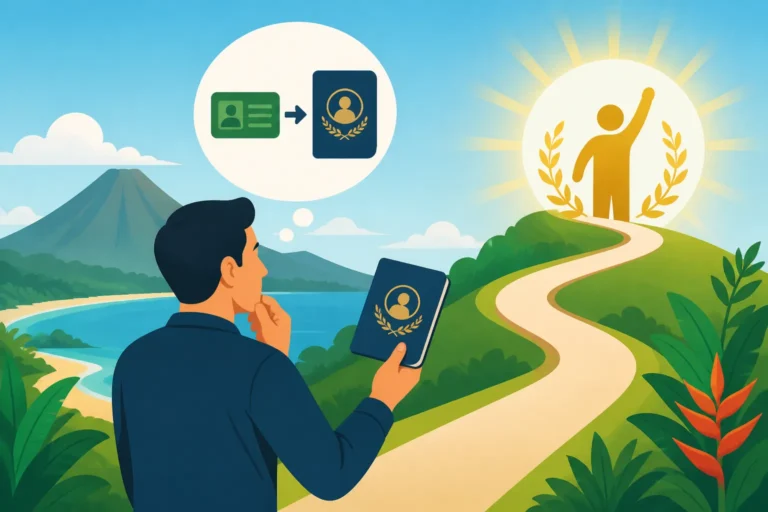
After Three Years of Temporary Residency: The most common route is to transition from temporary residency. After holding any form of temporary residency for three consecutive years, you become eligible to apply for permanent residency. This means if you came in as a Pensionado, Rentista, Inversionista, or even through Vínculo, and you’ve maintained that status and renewed it successfully for three years, you can then apply to upgrade to permanent. This path is clearly outlined in guides like How to Get Permanent Residency in Costa Rica (2026). It's a testament to your long-term presence and adherence to immigration laws.
-
Family Ties (Vínculo): This is a faster track. If you are married to a Costa Rican citizen or have a Costa Rican child, you can apply directly for permanent residency without the three-year temporary phase. This is why Family Residency in Costa Rica: How to Bring Your Spouse and Children (2026) is such a direct route for some. The "vínculo" provides an immediate and strong basis for permanent status.
The Transition from Temporary to Permanent
The process of moving from temporary to permanent residency isn't automatic; it's another application process. You still need to submit paperwork, though often less extensive than the initial temporary application. You'll need to demonstrate that you have maintained your temporary status diligently, have no criminal record in Costa Rica, and have met all your obligations, especially your mandatory Caja contributions.
It's a step that many expats look forward to, as it dramatically reduces the frequency of paperwork and the stress of renewals. How to Move from Temporary to Permanent Residency in Costa Rica explains this in detail. While the application itself is relatively streamlined compared to the initial temporary process, patience is still a virtue here. The DGME still has its own timeline, and thoroughness in your submission is key to avoiding delays.
The Freedoms and Responsibilities of Permanent Status
With permanent residency, your DIMEX card becomes valid for much longer, typically ten years, meaning far less frequent renewals – a huge relief! You also gain the right to work in Costa Rica in almost any capacity, just like a citizen, without needing a separate work permit. This is a game-changer for many who initially arrived on a non-work permit residency but later wished to become more involved in the local economy or start a business.
Furthermore, permanent residency usually comes with fewer restrictions on your physical presence in the country. While temporary residents often have guidelines on how long they can be out of the country without jeopardizing their status, permanent residents generally have more leeway. However, it's not a free pass to disappear for years; you still need to maintain your connection to Costa Rica, often by not being absent for more than a year without prior authorization from Migración. Of course, the mandatory Caja affiliation continues, ensuring you're part of the national healthcare system, which is a significant benefit.
Key Differences That Impact Your Daily Life
The distinctions between temporary and permanent residency aren't just bureaucratic; they truly shape your day-to-day experience and long-term planning in Costa Rica. Understanding these differences can save you a lot of grief and help you make informed decisions.
Work Permits and Economic Activities
This is perhaps the biggest and most impactful difference for many.
-
Temporary Residents: For most temporary categories like Pensionado and Rentista, you are not granted the right to work for a Costa Rican employer. Your approved income is expected to sustain you. This means if you have skills or desire to work locally, you'd typically need a separate work permit, which is incredibly difficult to obtain and usually requires a local employer to sponsor you, proving no Costa Rican could do the job. The Digital Nomad visa allows remote work for foreign entities but explicitly prohibits local employment. This can be frustrating for those who want to integrate economically beyond their passive income. Many find themselves looking for ways to generate income remotely or through business ventures that operate purely internationally to stay compliant.
-
Permanent Residents: This is where permanent residency truly shines. As a permanent resident, you have virtually the same work rights as a Costa Rican citizen. You can be employed by local companies, start your own business, or offer services to the local market without needing additional permits. This opens up a world of possibilities for deeper integration into the Costa Rican economy and community. It removes a significant barrier that often makes temporary residents feel somewhat "on the outside" of the local workforce. If you've ever dreamt of opening that little café or joining a local team, permanent residency makes it possible.
Duration, Renewals, and Maintaining Status
The administrative burden is another major differentiator.
-
Temporary Residents: Your DIMEX card is typically valid for two years. This means every two years, you embark on the renewal process, gathering updated documents, proving your continued income, and paying fees. It's an ongoing cycle that requires meticulous organization and consistent attention. Missing deadlines can lead to fines or even the loss of your residency status, which is a terrifying prospect. How to Renew Your Temporary Residency (DIMEX) in Costa Rica details this. Many expats use immigration attorneys to help manage these regular renewals, as the requirements can shift, and having an expert guide you is invaluable. Planning your move, especially the logistics of getting all your paperwork here, can be made smoother with a relocation partner like Sirelo, ensuring everything arrives safely for those critical first applications.
-
Permanent Residents: Once you achieve permanent residency, your DIMEX card is typically valid for ten years. This drastically reduces the frequency of renewals, offering a significant sense of relief and stability. While you still need to renew, the ten-year cycle means less time spent on paperwork and more time enjoying Pura Vida. The requirements for renewal are also usually simpler, focusing on confirming your continued presence and good standing rather than extensive income verification, unless your original path to residency was based on an investment or family connection that needs re-verification.
Healthcare and Social Security Obligations
Both temporary and permanent residents are mandated to join the Caja Costarricense de Seguro Social (CCSS), Costa Rica's public healthcare system. This is non-negotiable and fundamental to maintaining your legal status here.
-
Temporary Residents: As soon as your temporary residency is approved, you must enroll in the Caja and pay monthly contributions. These contributions are usually calculated as a percentage of your declared income, whether it's your pension, rentista income, or investment income. While waiting for your Caja to become fully active, which can take a few months, many expats wisely opt for private health insurance. International options like Cigna Global provide comprehensive coverage during this transitional period and can also supplement your Caja coverage for private hospital access and quicker specialist appointments even after Caja is active.
-
Permanent Residents: The obligation to contribute to the Caja continues as a permanent resident. Your contributions will still be based on your declared income. The main difference is the stability; once you're permanent, your Caja status is typically very stable, mirroring that of a citizen. You fully benefit from the public health system, including access to local EBAIS clinics, hospitals, and pharmacies, just like any other Costa Rican.
| Feature | Temporary Residency | Permanent Residency |
|---|---|---|
| Eligibility | Various categories (Pensionado, Rentista, Inversionista, Digital Nomad, Vínculo) | After 3 years of temporary residency, or immediate Vínculo |
| Initial Validity | Typically 1-2 years (e.g., 2 years for Pensionado/Rentista, 2 years for Digital Nomad) | Typically 10 years (or indefinite for some Vínculo) |
| Renewal Frequency | Every 1-2 years | Every 10 years (or as specified by law) |
| Work Rights | Generally restricted to specific roles or foreign income; Digital Nomad is remote only. | Full work rights, similar to a citizen |
| Caja Obligation | Mandatory enrollment and monthly contributions | Mandatory enrollment and monthly contributions |
| Path to Citizenship | Requires 7+ years (3 temp + 4 perm) to become eligible | Requires 4+ years as permanent resident to become eligible |
| Flexibility | Income proof required at each renewal | Generally more flexible once approved |
The Pathway to Citizenship: Beyond Permanent Residency
For some, permanent residency is the ultimate goal. For others, it's just a stepping stone on the journey to full Costa Rican citizenship. Becoming a citizen is a profound commitment, offering ultimate integration and rights.
Eligibility and Naturalization Requirements
Once you've achieved permanent residency, the clock starts ticking for citizenship eligibility. The general rule is that after a certain number of years as a legal resident, you can apply for naturalization.
-
For most nationalities (e.g., North Americans, Europeans): You must typically have held legal residency (a combination of temporary and permanent) for a total of at least seven years. This usually means three years of temporary residency followed by four years of permanent residency. This seven-year mark is the baseline for many.
-
For citizens of other Central American countries, Spain, or Latin American nations: The requirements are often shorter due to historical ties or regional agreements. For example, citizens of Spain or other Latin American countries might only need five years of residency.
Beyond the time requirement, you'll also need to prove good moral character, pass Spanish language and Costa Rican history/civics exams, and demonstrate a genuine intention to integrate into Costa Rican society. Costa Rica Citizenship: Routes Through Residency and Marriage (2026) delves into these intricacies.
The Lengthy Process and What to Expect
Just like residency, the path to citizenship is not a quick sprint. It's often a multi-year process, even after you become eligible. You'll file your application with the Civil Registry (Registro Civil), which will then conduct thorough investigations into your background, your adherence to laws, and your integration. This includes interviews, potentially home visits, and a detailed review of all your personal information.
The process can be slow and unpredictable, testing the patience of even the most dedicated applicants. It's not uncommon for it to take several years from application submission to the final oath-taking ceremony. During this time, you continue to maintain your permanent residency status. You’ll be asked to provide birth certificates, marriage certificates, criminal records (again!), and proof of your consistent legal residency.
Advantages and Considerations of Costa Rican Citizenship
The ultimate benefit of citizenship is full civic participation. You gain the right to vote, hold public office, and carry a Costa Rican passport, which can offer visa-free travel to many countries. You are truly "one of them," with all the rights and responsibilities that entails.
However, there are considerations. Costa Rica generally allows dual citizenship, meaning you don't necessarily have to renounce your original nationality. But it's always wise to check with your home country's laws regarding dual nationality. For example, some countries have restrictions or different rules. For many, the decision to pursue citizenship is deeply personal, stemming from a desire for full integration and a permanent bond with their adopted home. It’s the final step in truly becoming a Tico or Tica.
Choosing Your Path: Temporary vs. Permanent
Deciding on your residency path is a significant decision, and it’s one that should align with your long-term goals and how you envision your life unfolding in Costa Rica. It’s not just about what’s easier; it’s about what’s right for you.
Factors to Consider for Your Long-Term Plan
When you first arrive, or even when you're just dreaming of moving here, it’s natural to focus on getting your foot in the door with temporary residency. But even then, it's worth thinking about the future.
-
Commitment Level: How long do you truly plan to stay in Costa Rica? Is this a few-year adventure, or are you laying down roots for good? If you see yourself here for the long haul, working towards permanent residency from day one should be part of your strategy. If it's a shorter-term plan, the Digital Nomad Visa or a temporary residency might suffice without the added stress of thinking about permanent status.
-
Work Desires: Do you foresee a need or desire to work locally in Costa Rica? If so, permanent residency becomes almost essential. If your income is entirely passive or remote from foreign sources, then temporary residency, especially a Pensionado or Rentista, will serve you well. Many people underestimate how much they might want to work or get involved in local ventures once they're settled, so give this serious thought.
-
Administrative Burden Tolerance: Are you good with paperwork, or does the thought of biennial renewals make you break out in a cold sweat? The reduced renewal frequency of permanent residency is a huge draw for those who prefer to deal with immigration matters as infrequently as possible. If managing documents every couple of years isn't a big deal for you, then temporary status might not feel as burdensome.
-
Family Plans: If you have a Costa Rican spouse or children, your path to permanent residency is much more direct and faster. This can be a major factor in how quickly you transition. Likewise, if you plan to bring aging parents, understanding the vínculo rules for Family Residency in Costa Rica: How to Bring Your Spouse and Children (2027) is crucial.
Common Misconceptions and Practical Advice
There are a lot of myths and misunderstandings floating around about Costa Rican residency. Let me clear up a few.
-
"Temporary means unstable": Not at all. Temporary residency, once granted, is stable as long as you adhere to the requirements and renew on time. It provides all the legal protections you need to live here. The difference isn't instability; it's the duration and specific rights.
-
"Permanent means immediate citizenship": As we've discussed, it's a stepping stone, not the final leap. There's still a significant time requirement and another application process after permanent residency.
-
"You must use an attorney": While you can do the application process yourself, it's highly complex, lengthy, and filled with potential pitfalls. I strongly, strongly recommend using an experienced immigration attorney here in Costa Rica. They know the current requirements, the subtle nuances, and how to navigate the inevitable bureaucratic twists and turns. Think of it as an investment in your peace of mind. Getting your initial residency sorted correctly saves countless headaches down the line.
-
"Caja is optional with private insurance": Absolutely not. If you are a legal resident, enrollment in the Caja is mandatory. Private insurance, like from Cigna Global, is a great supplement but never a replacement for your Caja obligation. You'll need to contribute to the Caja to maintain your legal residency status, period.
Ultimately, both temporary and permanent residency offer legitimate ways to live legally in Costa Rica. The "best" one depends entirely on your individual circumstances, financial situation, and long-term aspirations. Start with the path that fits your current reality, and always keep an eye on the possibility of upgrading when the time is right. The journey is long, but living in paradise is often worth the paperwork!
Disclaimer
The information provided in this guide is for general informational purposes only and does not constitute legal or financial advice. Immigration laws and regulations in Costa Rica are subject to change. It is essential to consult with a qualified Costa Rican immigration attorney or legal professional for advice tailored to your specific situation before making any decisions related to residency or citizenship.