How Do I Add a Dependent to My Caja Coverage in Costa Rica?
Navigating the healthcare system as an expat in Costa Rica can feel like wrestling a perezoso (sloth) – slow, frustrating, and requiring immense patience. You've gone through the hoops for your own Caja coverage, perhaps you even have your coveted DIMEX card in hand, only to realize that adding your family isn't as straightforward as ticking a box. This guide is here to walk you through the often-confusing process of extending your Caja Costarricense de Seguro Social (CCSS) benefits to your dependents, offering realistic advice and insider tips to minimize your headaches.
Understanding Your Caja Coverage and Dependents
First things first, let's get a handle on what "Caja coverage" really means for you and your loved ones here in Costa Rica. It's not just a health insurance policy; it's a fundamental part of the social safety net, providing comprehensive medical care, from doctor visits and prescriptions to surgeries and hospital stays. But like many bureaucratic systems, knowing who qualifies and why it's so important is half the battle won.
Who Qualifies as a Dependent for Caja?
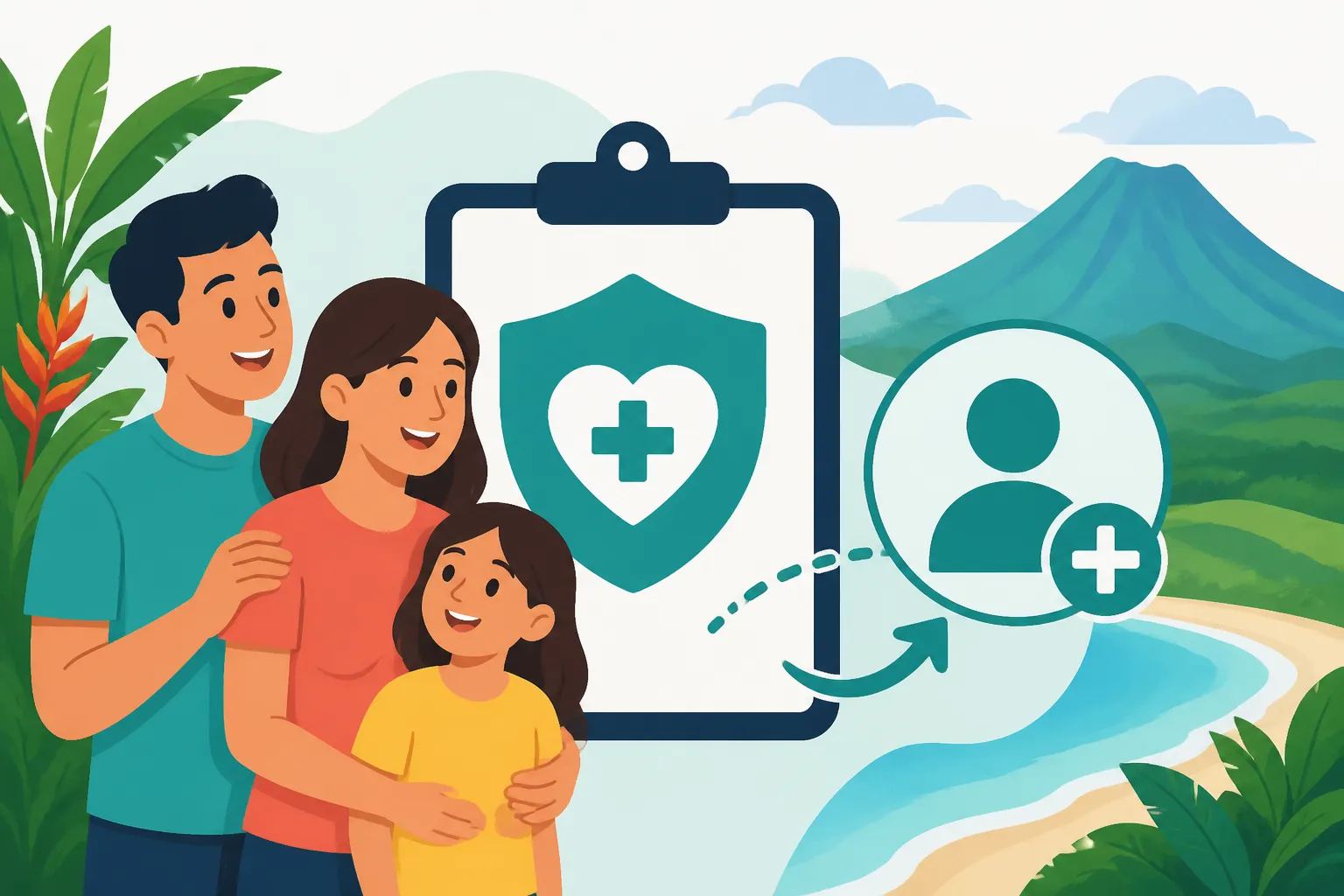
When you initially enrolled in the Caja, whether through employment or as a resident on a specific visa category like pensionado or rentista, you became the primary insured. Now, the question is, who can ride on your coattails? Generally, the Caja recognizes a few categories of dependents:
- Spouse: Your legally married husband or wife is typically the most straightforward dependent to add. They are almost universally covered under your Caja contributions. It’s expected that if you are married, both spouses will be covered, even if only one is directly contributing. Common-law partners (unión de hecho) can also qualify, but this usually requires additional legal steps to prove the relationship, such as an affidavit from a lawyer or a formal registration with the Civil Registry. This can be a bit of a hurdle, as you need to demonstrate a stable, public, and monogamous relationship for a certain period, usually at least three years, as if you were married.
- Minor Children: Any children under the age of 18 are usually eligible. This includes biological children and legally adopted children. The key here is "legal," meaning their birth certificate or adoption papers must be properly registered in Costa Rica or recognized through the proper legal channels if they were born abroad. The Caja wants to ensure there's a clear, legal parental link. This coverage extends to children who are still studying in university up to a certain age, typically 25, provided they can prove continuous enrollment.
- Dependent Parents: In some cases, and this is where it gets a bit trickier, your parents might qualify as dependents if they are financially dependent on you and reside in Costa Rica. This isn't a given and often requires a more rigorous assessment by the Caja to prove economic dependence and lack of other support. It's not uncommon for the Caja to request bank statements, notarized declarations of financial support, and proof that your parents have no independent income or pension. This particular avenue is less common for expats but worth exploring if it applies to your family situation.
It's important to understand that each dependent category has specific documentary requirements, and the Caja is notoriously strict about details. A missing stamp or an incorrectly translated document can send you back to square one, which is why preparing thoroughly is paramount.
Why Adding Dependents is Crucial
You might be thinking, "Do I really need to go through all this paperwork?" The answer, my friend, is a resounding yes. Beyond the obvious benefit of ensuring your loved ones have access to quality medical care, there are several crucial reasons why adding dependents to your Caja coverage is non-negotiable for most residents:
- Legal Obligation for Residents: If you are a legal resident in Costa Rica, you are required to be enrolled in the Caja. This often extends to your immediate family living with you. Failing to enroll your qualified dependents can lead to issues with your residency status and renewals. The immigration department (Dirección General de Migración y Extranjería) often checks for Caja enrollment for all listed family members when you apply for or renew your DIMEX. This is a critical link; if your dependents aren't covered, it could jeopardize your entire family's residency. For more on this, you might want to read about How the Caja Requirement Connects to Your Residency in Costa Rica.
- Peace of Mind: Let's be honest, living abroad comes with its own anxieties. Knowing that your spouse or children are covered for everything from a sudden fever to a serious accident offers invaluable peace of mind. Without Caja coverage, even a routine doctor's visit can quickly become an unexpected financial burden, especially if you're relying solely on paying out-of-pocket for private care. While private options like those offered by SafetyWing can be excellent for initial coverage or complementary care, the Caja provides a robust, comprehensive system designed for long-term living.
- Access to Comprehensive Healthcare: The Caja system provides a full spectrum of medical services. This isn't just about emergency care; it includes preventative medicine, vaccinations, specialist referrals, maternity care, and even long-term chronic disease management. For families, this means regular check-ups for children, readily available vaccinations, and support during pregnancies through services like those detailed in Understanding Maternity and Prenatal Care in Costa Rica. Trying to cover all these services independently through private clinics can be exorbitantly expensive without insurance.
- Avoiding Penalties: If the Caja discovers you have eligible dependents living in Costa Rica who are not covered under your plan, you could face back payments or penalties. They are quite diligent in ensuring everyone who should be contributing, or is covered, is accounted for. It's always better to be proactive than reactive when dealing with government institutions here.
The administrative burden might seem heavy, but the benefits of securing your family's health and legal standing in Costa Rica far outweigh the temporary hassle.
The Step-by-Step Process to Add Dependents to Your Caja Coverage
Alright, let’s roll up our sleeves and get into the nitty-gritty. The process of adding dependents involves paperwork, patience, and often, a bit of legwork. It’s not just a quick online form, but a journey through the local healthcare system.
Gathering the Necessary Documents
This is arguably the most critical stage. The Caja will not budge an inch without the right documentation. And by "right," I mean impeccably presented, translated, and often apostilled or legalized. Don't assume anything; verify everything.
Here’s a general checklist, but always confirm with your specific EBAIS or Caja branch, as requirements can sometimes vary slightly by region or policy updates:
- Your DIMEX (Residency Card): This is your primary identification and proof of your legal status and Caja enrollment. Without it, you can't even start the process. For more information, you might find How to Use Your DIMEX to Access Healthcare in Costa Rica helpful.
- Dependent's Identification:
- For Spouse: If they are also a resident, their DIMEX. If they are still on a tourist visa or in the process of getting residency, their passport with their most recent entry stamp.
- For Children: Their birth certificate (original and copy). If born outside Costa Rica, this document must be apostilled in the country of origin and translated into Spanish by an official translator here in Costa Rica. If they have a DIMEX, bring it.
- Proof of Relationship:
- For Spouse: Marriage certificate (original and copy). Again, if married abroad, it needs to be apostilled and officially translated. If you're proving a common-law union, you'll need the legal declaration from a Costa Rican notary, often called a "Declaración Jurada de Unión de Hecho." This is a sworn statement, notarized, confirming your relationship status.
- For Children: Their birth certificate (as mentioned above) clearly showing both parents' names.
- Proof of Your Caja Affiliation: Usually, they can look this up in their system using your DIMEX, but it’s always good to bring a copy of your last Caja payment receipt (orden patronal if employed, or your comprobante de pago if you're a voluntary affiliate).
- Proof of Address: A utility bill (electricity, water, or phone) in your name, showing your current Costa Rican address. This helps them confirm you're registered with the correct EBAIS.
- Photographs: Sometimes they ask for passport-sized photos of the dependents, so it’s best to have a few on hand just in case.
- Copies, Copies, Copies!: Make at least two copies of everything. Seriously. They love copies, and it saves you a trip to the local fotocopiadora (copy shop) down the street, which might not always be open when you need it.
Pro-Tip on Translations and Apostilles: This is where many expats stumble. Foreign documents (birth certificates, marriage certificates) must be apostilled in the country where they were issued. Then, they need an official translation into Spanish by a translator authorized by the Costa Rican Ministry of Foreign Affairs (Ministerio de Relaciones Exteriores y Culto). Do not try to translate them yourself or use a non-official translator; the Caja will reject it. Plan for this; it adds both time and cost to the process.
Navigating the EBAIS or Caja Office
Once your documents are in pristine order, it’s time for the actual visit. You generally have two main points of contact:
- Your Local EBAIS (Equipo Básico de Atención Integral en Salud): This is your primary care clinic and often the first, and best, place to start. Every resident is assigned an EBAIS based on their address. If you haven't already, you'll need to How to Find and Register with an EBAIS Clinic in Costa Rica. The staff at your EBAIS typically handles dependent registrations because they are responsible for your family's local healthcare.
- The Central Caja Office (Sucursal de la Caja): For more complex cases, or if your EBAIS can't process it for some reason, you might be directed to a larger regional Caja office. These are usually found in larger towns or cities.
Here's how a typical visit might unfold:
- Arrive Early: This is Costa Rica. "Early" means before they even open. Seriously. You want to be one of the first in line, especially at an EBAIS, to avoid hours of waiting.
- Take a Number (or Ask for Direction): Upon entering, look for a fichas (number) machine or a reception desk. Explain in your best Spanish (or with a translation app handy) that you want to afiliar dependientes (affiliate dependents).
- The Interview: You'll eventually be called to a window or office. The official will review your documents with painstaking detail. Be prepared for questions about your relationship, your dependent’s current health status (though this usually isn’t a factor for basic affiliation), and their residency status. If there's any discrepancy or missing item, they will tell you. Do not argue; simply ask exactly what is needed to rectify the situation.
- Fingerprints and Signatures: For each adult dependent, and sometimes even for older children, they may require fingerprints (huellas dactilares) and signatures. This is standard procedure for identification purposes within the Caja system.
- Patience, Patience, Patience: This is not a quick process. You might spend several hours on your first visit, and it might require multiple visits if documents are missing or if there's a backlog. Bring a book, your phone charger, and a good attitude. Remember, the person helping you is just doing their job within a complex system.
Once approved, your dependent will be officially registered in the Caja system. They won't get their own physical DIMEX card immediately just for Caja, but their information will be linked to your file. They can then use their passport (if no DIMEX yet) and your asegurado (insured) number to access EBAIS services.
Follow-Up and Confirmation
Don't just assume everything is set once you've submitted the paperwork. Bureaucracy moves at its own pace.
- Ask for a Copy or Reference Number: Always ask for a copy of the application form or a reference number for your submission. This is your proof that you initiated the process.
- Confirm Registration with Your EBAIS: After a week or two, you can call or visit your EBAIS to confirm that your dependents are indeed active in the system. Just provide your asegurado number and their names. You might need to make an appointment to confirm, but a quick call often suffices.
- Get a Medical Appointment: The best way to confirm is to try and schedule a simple appointment for your dependent. If the system allows it, you're good to go!
- Monitor Your Caja Contributions: If your contributions are calculated based on family size (as for some rentistas or independent workers), ensure your next payment statement reflects the updated number of insured individuals. For more details on this, you can refer to Understanding How Caja Contributions Are Calculated in Costa Rica.
Common Challenges and What to Do (Troubleshooting)
Let's be realistic: things don't always go smoothly. As an expat, you're bound to hit a few bumps. Knowing what to expect and how to navigate these challenges can save you a lot of grief.
Missing Documents or Bureaucratic Hurdles
This is probably the number one reason for delays. You think you have everything, and then they tell you something is missing or incorrect.
- Scenario 1: Incorrect Translation/Apostille: You submitted a document, but the translation isn't accepted, or it lacks the proper apostille.
- Solution: Don't panic. Get a precise explanation of what's wrong. If it's the apostille, you'll have to deal with the issuing country. If it's the translation, find an authorized Costa Rican translator and get it re-done. You can often find lists of authorized translators on the Ministry of Foreign Affairs website or by asking at a reputable law office.
- Scenario 2: Proving Common-Law Marriage: If you're not legally married, proving your unión de hecho can be tricky.
- Solution: You absolutely need a Costa Rican lawyer to draft a formal declaration. This often involves affidavits from witnesses (who are not family) who can attest to your relationship, proof of shared residency, and other supporting evidence. This process adds time and expense, but it's the only legal way.
- Scenario 3: Old or Expired Documents: Sometimes, even if a document was once valid, if too much time has passed since its issuance (e.g., a birth certificate from 20 years ago), they might request a more recent copy.
- Solution: Unfortunately, this means going back to the source (country of origin) to obtain new, certified copies. Always check the validity period for documents requested by the Caja. Generally, documents should be no older than six months from their issuance date when presented to the Caja.
The best defense against these hurdles is preparation. Double-check every document, and if you have any doubts, consult with an immigration lawyer or a gestor (a local facilitator) who specializes in Caja processes for expats. They might charge a fee, but it can save you weeks or months of frustration.
Dealing with Language Barriers and Long Wait Times
Even with perfect paperwork, the human element can be a challenge. Not everyone at the Caja speaks English, and lines can be long.
- Language Barriers: Unless you're fluent in Spanish, communicating complex details can be tough.
- Solution: Bring a Spanish-speaking friend, a gestor, or even a reliable translation app. While apps can help with simple phrases, for nuanced discussions about documentation, a human interpreter is invaluable. Learning basic Spanish phrases related to bureaucracy will also go a long way. Phrases like "Necesito afiliar a mi esposo/a/hijo/a" (I need to affiliate my spouse/child) or "¿Qué documentos necesito?" (What documents do I need?) can be lifesavers.
- Long Wait Times: It's a fact of life in Costa Rican government offices.
- Solution: Embrace it. Plan your visit for an entire morning or afternoon. Bring snacks, water, entertainment, and most importantly, patience. Getting frustrated or angry will only make the situation worse and won't speed anything up. Think of it as an exercise in pura vida Zen. Take a deep breath, and remember why you're doing this for your family.
What If Your Dependent Doesn't Qualify for Caja?
There are situations where a dependent simply won't qualify for Caja coverage under your plan. Perhaps they are adult children who are no longer students, or extended family members who don't fit the strict dependency criteria. Or perhaps, you're a digital nomad or remote worker who isn't yet formally enrolled in the Caja, and your family needs immediate coverage.
- Private Health Insurance: In these cases, private health insurance becomes essential. Costa Rica has robust private healthcare options, including local providers like INS (Instituto Nacional de Seguros) and international plans.
- INS: INS offers various plans for residents and citizens. While it's local, it can be a good bridge for dependents who might not qualify for Caja immediately or who want to supplement Caja coverage. You can learn more about Understanding INS Health Insurance Plans in Costa Rica.
- International Insurance: For expats, international health insurance providers are a popular choice. Brands like SafetyWing offer flexible, comprehensive coverage that can be started quickly, often without the same bureaucratic hurdles as the Caja or even local private plans. They are particularly popular with digital nomads or those in a residency application waiting period, providing a safety net until Caja coverage is solidified. They cover medical emergencies, doctors, hospitals, and often include travel benefits, which can be a huge plus for expat families. This kind of plan can cover your dependents regardless of their Caja eligibility, giving them immediate access to private clinics and hospitals.
- Paying Out-of-Pocket: For minor issues, paying for private doctor visits out-of-pocket is always an option. A typical private consultation might cost between $50-$100, which is manageable for occasional visits. However, for serious illnesses, surgeries, or chronic conditions, this quickly becomes unsustainable, making private insurance a far more responsible choice. To get a sense of costs, you could check out How Much Does a Private Doctor Visit Cost in Escazu?.
Here’s a quick overview of document requirements for different dependents:
| Dependent Type | Required Documents (General) | Special Considerations |
|---|---|---|
| Spouse | – Your DIMEX (original & copy) – Spouse's DIMEX or Passport (original & copy) – Marriage Certificate (original, apostilled if foreign, and official Spanish translation) – Proof of Address (utility bill) – Your last Caja payment receipt |
If common-law partner: Legal declaration of Unión de Hecho from a Costa Rican notary, often requiring proof of cohabitation and relationship longevity. Ensure all documents are current (usually within 6 months of issuance). |
| Minor Child (<18) | – Your DIMEX (original & copy) – Child's Birth Certificate (original, apostilled if foreign, and official Spanish translation) – Child's Passport or DIMEX (if applicable, original & copy) – Proof of Address (utility bill) – Your last Caja payment receipt |
If child is over 18 but under 25 and studying: Proof of active enrollment in an accredited educational institution (university letter, enrollment certificate). Must demonstrate continued financial dependence. |
| Dependent Parent | – Your DIMEX (original & copy) – Parent's DIMEX or Passport (original & copy) – Parent's Birth Certificate (original, apostilled if foreign, and official Spanish translation) – Your Birth Certificate (to prove relationship) – Proof of Address (utility bill) – Your last Caja payment receipt |
Strict proof of financial dependence required. This is often the hardest category to qualify for. May need notarized declarations of financial support, bank statements, proof of no independent income or pension for the parent. This process usually involves extensive review by the Caja's social worker department. |
Always verify the most current requirements with your local EBAIS or Caja branch, as rules can change.
Maintaining Your Dependent's Caja Coverage
Getting your dependents registered is a huge win, but it's not a one-and-done deal. Just like your own coverage, you need to be mindful of renewals, updates, and how changing life circumstances can affect their eligibility.
Annual Renewals and Updates
The Caja system is dynamic, and your dependents' information needs to be kept current. This isn't always a formal annual "renewal" notice that lands in your mailbox, but rather a continuous responsibility.
- Residency Renewals: Every time you renew your DIMEX, your Caja status, and by extension, your dependents' status, will be reviewed. Ensure all family members linked to your residency are still properly affiliated with the Caja. If there are any discrepancies, Migración (Immigration) might flag your residency renewal until the Caja issue is resolved.
- Updating Information: Did you move? Get a new phone number? These small changes, while seemingly insignificant, need to be updated with your EBAIS. This ensures that you receive any important communications regarding your family's health care and that your registered address is correct.
- Checking System Status: It’s a good practice to periodically check with your EBAIS or the central Caja office (if you have contact there) to ensure your dependents are still showing as active. Technology glitches or administrative errors can happen, and catching them early is better than finding out when a family member needs urgent medical attention. Think of it as a proactive wellness check for your administrative paperwork.
- School Enrollment for Older Children: If you have children over 18 but under 25 who are covered because they are students, you'll need to submit updated proof of their enrollment each academic year. This usually means a letter from their university or educational institution, stamped and signed, confirming their active student status.
Staying on top of these administrative tasks ensures seamless access to care when your family needs it most. It's a small price to pay for the security the Caja provides.
What Happens When Dependents Age Out or Circumstances Change?
Life happens, and circumstances change. The Caja system has provisions for these, but you need to be aware of how to navigate them.
- Children Aging Out: Once your child turns 18 (or 25 if they're a student), their dependent status automatically changes. They will no longer be covered under your plan.
- Solution: At this point, they'll need to establish their own Caja affiliation. If they are working in Costa Rica, their employer will register them. If they are independent (freelancers, self-employed), they will need to apply for Understanding the Voluntary Caja Affiliation for Residents in Costa Rica as an independent worker. This involves proving income and making their own monthly contributions. This is a crucial transition point, so start preparing them for it in advance.
- Divorce or Separation: If you and your spouse separate or divorce, the dependent status for your former spouse will cease.
- Solution: You must inform the Caja of this change to avoid any issues or continued charges. Your former spouse will then need to establish their own Caja coverage based on their employment or residency status.
- Parents No Longer Dependent: If your parents, previously covered as dependents, gain independent income or move out of the country, their dependent status will also change.
- Solution: Similar to divorce, you need to notify the Caja.
- Leaving Costa Rica: If a dependent (or even the primary insured) leaves Costa Rica permanently, their Caja affiliation should be cancelled. This is important to avoid any ongoing obligations or potential issues upon future re-entry.
Being proactive and communicating these changes to the Caja is vital. It maintains the integrity of the system and ensures you don't face unexpected administrative headaches down the road. While the process can feel like a maze, understanding these steps will empower you to provide continuous healthcare coverage for your family in Pura Vida land.
Disclaimer
The information provided in this guide is for general informational purposes only and does not constitute legal, financial, or medical advice. While we strive to provide accurate and up-to-date information based on our experience as expats in Costa Rica, laws and procedures can change. It is highly recommended to consult with a qualified Costa Rican immigration attorney or a specialized gestor (facilitator) for personalized advice regarding your specific situation and before making any decisions related to your Caja coverage or residency status.