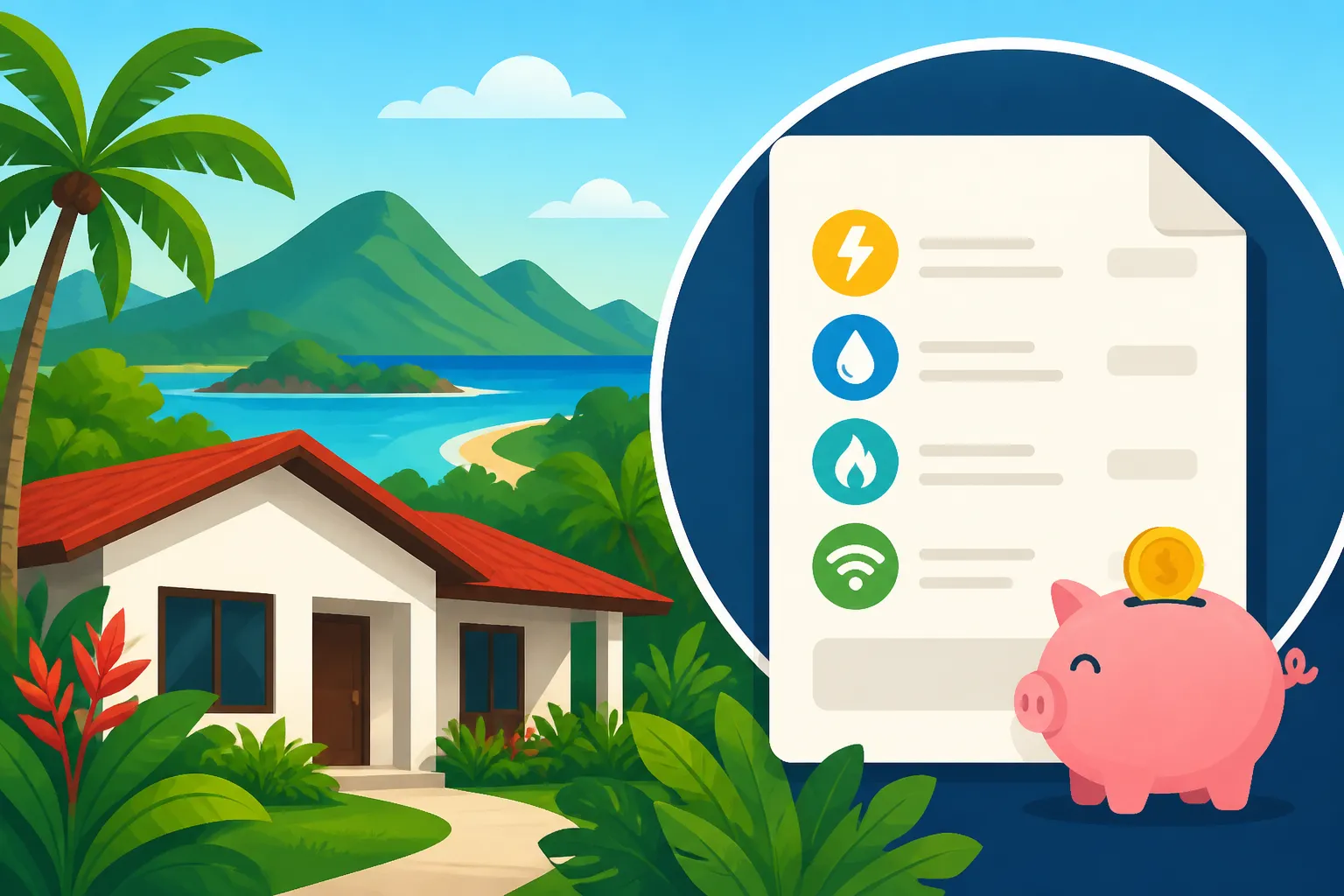
What Is the Average Utility Bill for a Home in Costa Rica?
One of the trickiest parts about settling into life in Costa Rica, after you've managed The Complete Guide to Costa Rica Residency for Expats (2027) and found your perfect rental, is getting a handle on the monthly bills. Utilities can be a real head-scratcher, varying wildly depending on where you live and how you live. This guide aims to pull back the curtain on the average utility bill for a home in Costa Rica, helping you understand what to expect and how to manage these essential expenses.
The Core Components of Your Costa Rican Utility Bill
When you receive your monthly statement, whether it's for a cozy apartment in the Central Valley or a sprawling house on the Pacific coast, several key services contribute to the total. Understanding each component is crucial, as their costs can fluctuate significantly. These typically include electricity, water, and various communication services like internet and mobile phone.
Electricity ICE CNFL The Biggest Variable
Electricity is almost always the biggest wildcard in your monthly budget here, and it’s a common topic of conversation (and sometimes consternation!) among expats. The vast majority of Costa Rica’s electricity is generated by the state-owned utility, Instituto Costarricense de Electricidad (ICE), often distributed locally by subsidiaries like Compañía Nacional de Fuerza y Luz (CNFL) in the Central Valley. What many new arrivals quickly learn is that Costa Rica, despite its green energy profile, doesn't always have the cheapest electricity rates, especially if you're a high consumer.
The pricing structure is usually tiered, meaning the more kilowatt-hours (kWh) you consume, the higher the rate you pay per kWh in the upper tiers. This system is designed to incentivize conservation, but it can be a rude awakening for those accustomed to flat rates or lower charges in their home countries. Your consumption habits, the size of your home, and, critically, your reliance on certain appliances all play a massive role. Air conditioning, without a doubt, is the biggest culprit for high bills. If you’re living in a coastal area like Guanacaste or Puntarenas, where temperatures consistently hover in the high 80s or 90s Fahrenheit, running AC for several hours a day, or even all night, can easily push your electricity bill into the hundreds of dollars. On the flip side, in the cooler Central Valley where ceiling fans or even just open windows suffice for most of the year, electricity costs can be remarkably low. Keeping an eye on your usage and understanding How Do I Set Up Electricity After Moving to Costa Rica? can make a huge difference.
Water Service AyA Essential and Generally Affordable
Compared to electricity, water bills from the national water and sewage company, Acueductos y Alcantarillados (AyA), are typically quite modest. This is one utility that usually brings a sigh of relief to expats, as it’s generally reliable and much more budget-friendly. Most homes are connected to AyA, providing potable water directly to your tap. In some smaller, more rural communities, you might encounter ASADAS, which are local water administration associations that manage the water supply for their specific area, often with slightly different billing structures.
Your water bill will depend on your household's consumption. Like electricity, there's often a tiered pricing system, but the jumps are usually less dramatic. Most families find their water bills to be in the $10 to $30 range per month, even with regular usage for showering, cooking, and laundry. If you have a larger garden that requires frequent watering, a pool, or a larger household, your bill will naturally be higher. However, even with those factors, it rarely reaches the prohibitive levels that an electricity bill might. It’s a good idea to monitor your usage and check for leaks, as even a small drip can add up over time. Knowing How Do I Set Up Water Service AyA in Costa Rica? is one of the first things you'll do when moving in.
Internet and Communication Staying Connected
In today's interconnected world, internet and mobile phone services are no longer luxuries but absolute necessities, especially for expats who rely on them to stay in touch with family abroad, manage remote work, or simply navigate daily life. Fortunately, Costa Rica has made significant strides in this area, offering a range of options that are generally reliable and competitively priced.
Internet Services Speed, Providers, and Pricing
The internet landscape in Costa Rica has really evolved over the past decade. Gone are the days when slow DSL was your only option! Today, most urban and many semi-rural areas boast excellent fiber optic internet (fibra óptica), offering speeds that rival those found in North America or Europe. Major providers include Liberty, Kolbi (from ICE), and Tigo, each with different packages and coverage areas. The price you pay will largely depend on the speed you choose and the type of connection available in your specific location.
For a decent fiber optic connection, say 100 Mbps download and 50 Mbps upload, you can expect to pay anywhere from $40 to $60 per month. If you’re a digital nomad or have significant online needs, you might opt for higher speeds, which will naturally increase the cost. In more remote areas, or if fiber isn't available, you might still find cable internet (which is generally good but can be slower during peak hours) or even satellite internet, though the latter tends to be more expensive and less reliable. Installation fees can vary, sometimes waived with promotions, but generally, getting internet set up is a straightforward process. Check out How Do I Set Up Internet in My Costa Rican Home? for a step-by-step guide.
Mobile Phone Services Pay-As-You-Go vs Plans
Mobile phone service is another area where you have quite a bit of flexibility. The main providers are again Kolbi, Claro, and Movistar. For new arrivals, grabbing a prepaid SIM card (chip) is often the easiest first step. These are inexpensive, and you can top them up with credit (recarga) at almost any corner store, supermarket, or gas station. Data packages are readily available and affordable; for instance, you can get a few gigabytes of data, unlimited WhatsApp, and local calls for just a few dollars a week.
If you plan on being here long-term, or prefer the convenience of a consistent bill, monthly plans (planes postpago) are a great option. These typically offer larger data allowances, unlimited calls, and sometimes international benefits, ranging from $20 to $40 per month. You'll need a Costa Rican ID (like your DIMEX residency card) to sign up for a post-paid plan, so starting with prepaid is a common strategy. For those just arriving, an eSIM from a service like Airalo can be a lifesaver, allowing you to get immediate connectivity without hunting for a physical SIM card. Once you're here and have your bearings, you can then switch to a local provider. Getting your mobile phone set up is a vital step in The Complete Guide to Moving to Costa Rica: Your First 90 Days (2027). For details on setting up your local connection, refer to How Do I Set Up a Mobile Phone Plan in Costa Rica?.
Other Monthly Home Expenses to Consider
Beyond the fundamental utilities, there are a few other common monthly expenses that contribute to the overall cost of running your home in Costa Rica. These might not be billed through ICE or AyA, but they're important to factor into your budget.
Gas and Propane Cooking and Heating
Unlike many colder climates where natural gas might be piped directly into homes for heating, in Costa Rica, propane (gas propano) is the standard for cooking and often for heating water. Very few homes have piped natural gas. You'll typically find large propane tanks, either 25-pound or 100-pound cylinders, connected to your stove and sometimes a tankless water heater.
The cost of propane is fairly stable and regulated. A 25-pound tank might cost around $15-$20 to refill and can last a single person or small family for several months, depending on cooking frequency and hot water usage. A 100-pound tank, suitable for larger families or heavier use, will cost proportionally more but also last longer. Refills are easily done by local distributors who deliver, or you can take your tank to a designated refill station. It’s a very cost-effective fuel source for household use, and one of the simpler utilities to manage once you understand the system. Learning How Do I Set Up Propane Gas for My Costa Rican Home? is pretty straightforward, usually involving a quick phone call to a local provider.
Homeowner's Association HOA Fees and Security
If you choose to live in a gated community (condominio) or a managed residential development, you will almost certainly have Homeowner's Association (HOA) fees, known as cuotas condominales in Costa Rica. These fees are separate from your other utility bills but are a mandatory monthly expense. They cover the maintenance of common areas, landscaping, shared amenities like pools or clubhouses, and, crucially, security. Many expats value the added layer of security and the amenities that HOAs provide, seeing it as a worthwhile investment.
HOA fees can range dramatically depending on the size and luxury of the community. For a modest condo or home in a smaller development, you might pay $100-$200 per month. For larger, more upscale communities with extensive facilities, 24/7 security, and elaborate landscaping, these fees can easily climb to $300, $500, or even more per month. It's vital to inquire about these fees before signing any rental or purchase agreement, as they can significantly impact your overall cost of living. When moving internationally, coordinating these details with reliable services like Sirelo can help ensure a smoother transition to your new home. For a more detailed breakdown, you might want to look into What Are the HOA Condominio Fees for a Condo in Costa Rica?.
Factors Influencing Your Utility Bill And How to Manage Them
It's clear that there's no single "average" utility bill for every home in Costa Rica. So many variables come into play, making your personal choices and your location paramount in determining your monthly outlay. Understanding these factors and employing some smart strategies can help you keep those bills manageable.
Lifestyle Choices and Consumption Habits
Your daily habits are, without a doubt, the most significant factor in your utility costs, particularly for electricity. Are you someone who loves a chilly indoor environment, running air conditioning constantly? Do you take long, hot showers every day? Do you do multiple loads of laundry, using a dryer instead of a clothesline? Each of these choices directly impacts your consumption. Air conditioning can consume more electricity in an hour than your refrigerator does in a day! Many expats find that adapting to the tropical climate, using fans, opening windows to catch breezes, and embracing cold showers on particularly hot days can dramatically reduce their electricity usage.
Furthermore, the number of people living in the home plays a role. More people generally mean more showers, more laundry, more lights on, and more devices plugged in. If you're accustomed to leaving lights on in empty rooms or having multiple TVs running, those habits will quickly translate into higher bills here. Investing in energy-efficient appliances, especially refrigerators and washing machines, can also offer long-term savings.
Location, Climate, and Infrastructure
Where you choose to live within Costa Rica will profoundly affect your utility expenses. As mentioned, coastal regions are significantly hotter and more humid, leading to a much higher reliance on air conditioning. Towns like Tamarindo, Jacó, or Dominical will almost guarantee higher electricity bills for expats who crave constant coolness. In contrast, the temperate climate of the Central Valley (areas like Escazú, Santa Ana, or Grecia) often means AC is rarely, if ever, needed. This alone can save hundreds of dollars a month.
Beyond climate, the available infrastructure also matters for internet and sometimes even water. While fiber optic internet is expanding, it's not universally available. In some very rural areas, you might be limited to slower, more expensive options like satellite internet, or rely heavily on mobile data. Even within the AyA system, water pressure and availability can occasionally differ based on your precise location, though this rarely impacts cost as much as reliability. Understanding these geographical nuances is critical when calculating The Cost of Living in Costa Rica for Expats.
Strategies for Reducing Your Bills
There are plenty of practical steps you can take to keep your utility bills in check. For electricity, the golden rule is judicious use of air conditioning. Set it higher (24-25°C or 75-77°F) if you must use it, and only in the rooms you're occupying. Turn it off when you leave the house or even just a room. Use ceiling fans or standing fans as much as possible, as they consume far less energy. Solar water heaters are becoming more common and can drastically cut down on the electricity used to heat water. Unplug electronics when not in use to combat phantom drain.
For water, be mindful of leaks – a dripping faucet or running toilet can quietly inflate your bill. Consider installing low-flow showerheads. When it comes to internet and mobile, shop around! Providers often have competitive promotions, and it pays to compare plans every year or so. Don't pay for speeds you don't need. Utilize Wi-Fi whenever possible to reduce mobile data consumption. And remember, you can often pay your bills conveniently online through platforms like your bank's online portal or directly via the utility's website, which simplifies things immensely. This is detailed further in How Do I Pay My ICE and AyA Bills Online in Costa Rica?.
Average Monthly Utility Costs in Costa Rica
To give you a clearer picture, here's a general breakdown of average monthly utility costs for a typical expat home. Remember, these are broad estimates and your actual costs will vary based on all the factors discussed above.
| Utility Component | Low-End Estimate (USD) | Mid-Range Estimate (USD) | High-End Estimate (USD) | Key Factors |
|---|---|---|---|---|
| Electricity (ICE/CNFL) | $40 (no AC, minimal usage) | $100 (some AC, average usage) | $350+ (heavy AC, large home) | AC usage, home size, number of occupants, climate zone |
| Water (AyA/ASADA) | $10 (single person, conservative) | $25 (small family, average usage) | $60+ (large family, garden/pool) | Household size, garden/pool, leaks |
| Internet (Fiber Optic) | $35 (basic speed, promotional rate) | $50 (100-200 Mbps, standard) | $80+ (high speed, specialized needs) | Speed, provider, availability of fiber |
| Mobile Phone | $15 (prepaid, data packages) | $30 (monthly plan, good data) | $60+ (multiple lines, heavy international) | Provider, data allowance, international calls |
| Propane Gas | $5 (infrequent cooking/heating) | $10 (regular cooking, some hot water) | $20 (heavy cooking, constant hot water) | Cooking frequency, water heater type, tank size |
| HOA Fees (if applicable) | $100 (basic community, small unit) | $250 (mid-range community, amenities) | $500+ (luxury community, extensive services) | Community amenities, security, home size |
| Total Estimated Range | $205 – $250 | $440 – $475 | $930 – $1070+ | Highly dependent on individual factors |
As you can see, the range is significant. A single expat living frugally in the Central Valley without AC might keep their total utility bill well under $250 a month, while a family in a large coastal home running multiple AC units could easily see bills topping $1,000. It’s all about finding that balance between comfort and conscious consumption in your new Costa Rican home.
Disclaimer
The information provided in this article is for general guidance only and does not constitute professional advice. Utility rates, service availability, and regulations in Costa Rica can change. While we strive to provide accurate and up-to-date information, readers should verify specific costs and requirements with relevant service providers or local authorities. Personal circumstances and consumption habits will significantly impact actual utility expenses.