How Do I Set Up a Mobile Phone Plan in Costa Rica?
You’ve just touched down in this beautiful country, the Pura Vida vibe is already starting to sink in, and then it hits you: you need to connect with the outside world. Maybe it’s to tell your loved ones you arrived safely, perhaps to hail a ride, or simply to check that critical map app. Navigating how to get a mobile phone plan in Costa Rica can feel like your first real "welcome to the administrative jungle" moment, but trust me, it’s entirely doable. This comprehensive guide will walk you through everything you need to know, from immediate connectivity solutions for tourists to long-term plans for residents, helping you stay connected without the usual expat headaches.
The Initial Hurdle: Getting Connected Right Away
One of the first things you realize when you land in a new country is how utterly reliant you are on your smartphone. From navigating customs forms to finding your Airbnb, being connected is no longer a luxury, it's a necessity. But for many, the thought of expensive international roaming or hunting down a local SIM card as soon as you step off the plane can be daunting. Let's tackle that immediate need first.
SIM Cards vs. eSIMs: What's the Deal?
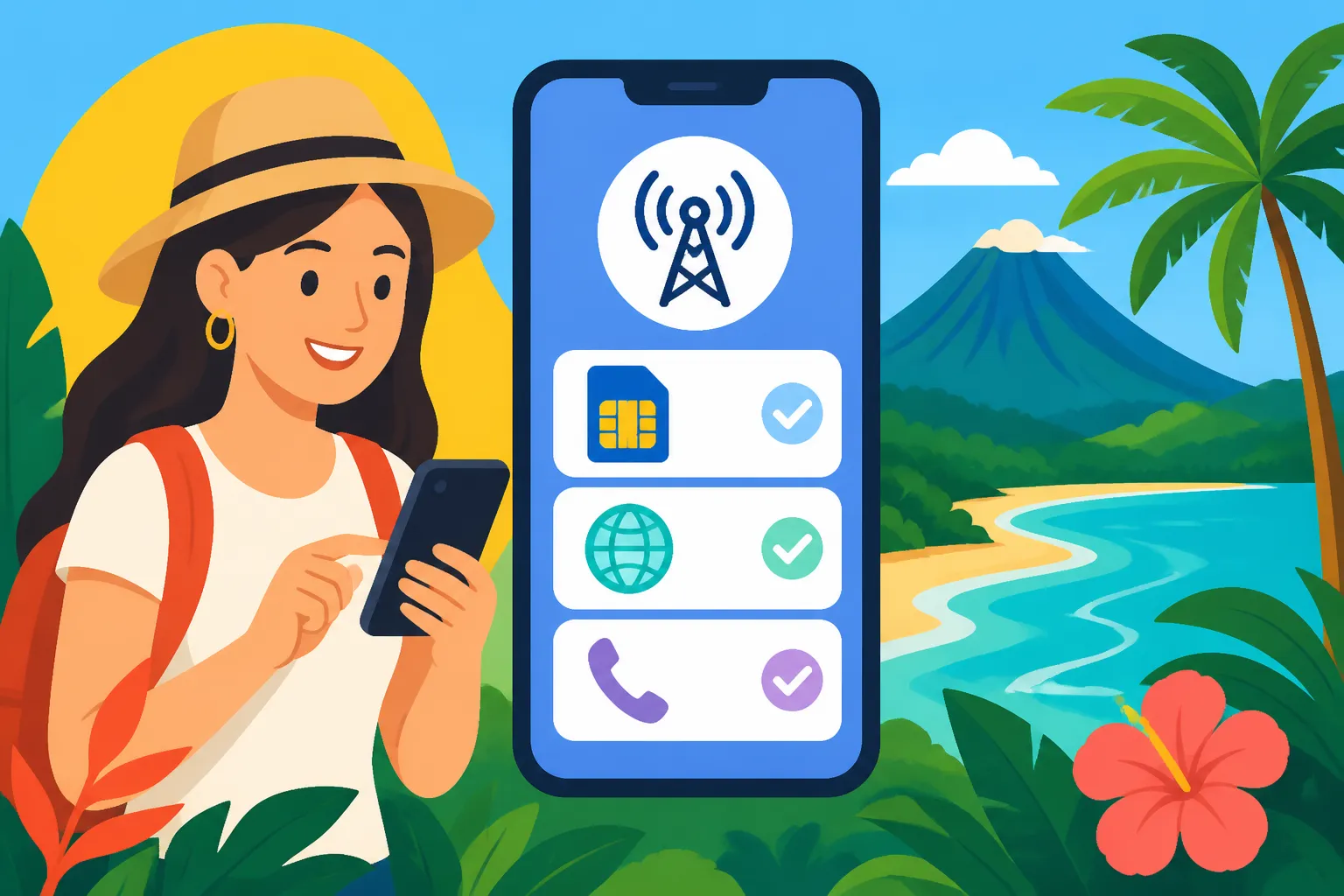
Before you even worry about which local provider to choose, you need to decide how you’re going to get your phone connected. The two main options are a traditional physical SIM card or the newer eSIM technology.
Physical SIM cards are what most of us are familiar with: a tiny chip that you pop into your phone. In Costa Rica, these are readily available, but they require you to find a store and often navigate a bit of Spanish (or charades, if you’re like me and your Spanish is still, shall we say, a work in progress). The upside is that they're generally reliable once activated, and you can easily switch them between unlocked phones if needed.
eSIMs, on the other hand, are embedded digital SIMs that don't require a physical card. If your phone supports eSIM technology (most newer models do), this can be an absolute lifesaver for immediate connectivity. You can purchase and activate an eSIM plan before you even leave home, or while you're still on the plane! This means you land, turn off airplane mode, and boom, you're connected. No frantic searching for a store, no language barriers, just instant data. For short trips or that crucial first week, I always recommend looking into an eSIM provider. Companies like Airalo offer data plans specifically for Costa Rica, letting you skip the initial hassle and get right to enjoying your arrival. It's truly a game-changer for easing into a new place, much like planning your move with a reliable service provider like Sirelo helps organize the big picture.
Where to Buy Your First SIM Card
If an eSIM isn't an option for you, or you prefer the traditional route, getting a physical SIM card is your next step.
Your first thought might be the airport, right? Yes, you can usually buy SIM cards at Juan Santamaría International Airport (SJO) or Daniel Oduber Quirós International Airport (LIR). However, be prepared for potentially higher prices and limited plan options compared to official stores in town. It's often a markup for convenience. If you’re just looking for basic data to get you through the first day, it's an option.
For better value and more choice, head to an official store of one of the major providers once you’ve settled in a bit. You’ll find these stores in shopping malls and town centers throughout Costa Rica. Look for "Kölbi," "Movistar," or "Claro" signs. When you go, you absolutely must bring your passport. This is non-negotiable for registering a SIM card in Costa Rica, whether you’re a tourist or a resident. They’ll take a copy, register your details, and then you’re good to go. Sometimes you can even buy SIM cards at large supermarkets like Más y Menos or Walmart, or small pulperías (corner stores), but these are usually just the SIM card itself; you'll still need to register it and top it up. For simplicity, an official store is usually your best bet for the first time.
Understanding Costa Rican Mobile Providers
Once you've handled the immediate "I need to call home!" panic, it's time to consider your longer-term mobile strategy. Costa Rica has a competitive mobile market, but three main players dominate the scene, each with its own strengths and weaknesses. Understanding them is key to making an informed choice that suits your expat life.
ICE Kölbi: The Old Reliable
Kölbi, operated by ICE (Instituto Costarricense de Electricidad), is the state-owned telecommunications provider and, for a long time, was the only game in town. Because of its history, Kölbi generally boasts the most extensive coverage, especially in more rural or remote areas where the other providers might falter. If you’re planning on exploring the hidden gems, surfing in secluded beaches, or living in a quieter mountain town, Kölbi might be your safest bet for staying connected.
However, "old reliable" sometimes comes with "old school" customer service. Wait times at Kölbi stores can be legendary, and navigating their system, especially if your Spanish isn't fluent, can test your patience. Their app and online services have improved significantly over the years, but you might still find yourself needing to visit a physical location for certain issues. Price-wise, they are competitive, often offering good value in their prepaid plans for data and calls. For many long-term expats, especially those living outside the major metropolitan areas, Kölbi remains the default choice simply due to its robust network infrastructure.
Movistar and Claro: The Private Competition
Joining the market in recent years, Movistar (a Spanish multinational) and Claro (a Mexican multinational) brought much-needed competition to Costa Rica. These providers tend to focus more on urban and heavily populated areas, offering competitive data packages and often more modern customer service approaches, including better apps and online support.
Movistar is generally praised for its speed and data packages in cities like San José, Escazú, and Heredia. Their prepaid deals are often aggressive, making them a popular choice for younger users and those who primarily use data for social media and streaming. Claro is also very competitive, particularly with unlimited data promotions or attractive bundles. Many people choose Movistar or Claro if they spend most of their time in the Central Valley or other well-developed coastal towns, where their coverage is strong and speeds are excellent.
The downside? Their coverage can drop off significantly as you venture into more remote regions. While they are constantly expanding their networks, there are still pockets of the country where you'll find yourself without a signal with Movistar or Claro, while your friend with Kölbi is happily streaming away.
Choosing the Right Provider for Your Lifestyle
Deciding which provider is best really boils down to your personal needs and where you plan to spend most of your time in Costa Rica.
- For the Urban Dweller/Central Valley Resident: If you primarily live and work in San José, Heredia, Alajuela, or other major cities, Movistar or Claro will likely offer you excellent service, fast data speeds, and often very competitive pricing, especially for data-heavy users. You might also find their customer service a bit more streamlined.
- For the Rural Explorer/Beach Lover: If your Pura Vida dream involves living in a remote beach town, a mountain retreat, or frequently traveling off the beaten path, Kölbi is probably your safest bet. While speeds might not always be lightning-fast everywhere, you'll generally have more consistent coverage.
- For the Budget-Conscious: All three offer competitive prepaid plans. It’s worth checking their current promotions (which change frequently) to see who has the best deal on the data and call minutes you need. Sometimes, one provider will have an unbeatable offer for a limited time.
- For the Data Hog: Look closely at the data bundles. Movistar and Claro often have strong data-centric promotions.
- For Customer Service Preference: While Kölbi's physical locations can be a wait, some find their staff very helpful once you get to them. Movistar and Claro might offer more in the way of online chat or app support, which can be a relief if you're not keen on in-person interactions.
It's not uncommon for expats to even carry two phones or two SIMs (if their phone allows it) – one with Kölbi for rural reliability and another with Movistar or Claro for urban speed. It sounds extreme, but connectivity is king, right?
Navigating Plans: Prepaid vs. Postpaid and Activation
So you've chosen a provider (or you're leaning towards one). Now, how do you actually get your phone talking? This involves understanding the difference between prepaid and postpaid plans, and the bureaucratic steps for activation, which can sometimes be the trickiest part for newcomers. Just like understanding how to open a bank account in Costa Rica as a foreigner, getting a phone plan can feel like a mini-quest.
Prepaid (Prepago): The Expat Starter Pack
For most tourists and new arrivals, a prepaid plan, known as prepago, is the easiest and most sensible option. It requires minimal paperwork and no long-term commitment.
How it works: You buy a SIM card (which often comes with a small initial credit), and then you purchase recargas (recharges or top-ups) to add credit, data, or minutes to your account. You can buy these recargas in various denominations at virtually any supermarket, pulpería, pharmacy, or even directly from the provider's app or website. Just tell the cashier your phone number and the amount you want to top up. For example, "Una recarga de mil colones para [your phone number]" will get you 1,000 colones worth of credit.
Benefits of Prepaid:
- No Contract: No long-term commitment, no monthly bills.
- Flexibility: You only pay for what you use. Perfect for irregular usage or if you're still figuring out your consumption habits.
- Easy to Get: As mentioned, you only need your passport to register the SIM.
- Control: It's very easy to manage your spending and avoid unexpected charges.
Things to Note:
- Expiration: Your credit might expire after a certain period (e.g., 30 days) if not used, though data packages usually have their own expiration.
- Running Out: You need to keep track of your balance to ensure you don't run out of credit when you need it most. The provider apps are pretty good for this now.
For anyone who’s just moved or is still waiting on their residency, prepago is your best friend. It’s how most people get by during those first few months of navigating Costa Rican bureaucracy.
Postpaid (Pospago): When You're Settled In
Once you’ve got your residency sorted and a local bank account established, you might consider a postpaid plan, known as pospago. These are typically monthly contracts with a fixed amount of data, minutes, and texts.
Requirements: This is where it gets a bit more involved. To get a postpaid plan, you will almost certainly need:
- Residency (DIMEX): Your official Costa Rican residency card. They need to verify your legal status in the country. This means waiting until you’ve completed the initial steps of getting your residency in Costa Rica.
- Local Bank Account: For automatic monthly payments.
- Proof of Address: A utility bill or rental contract might be requested.
- Credit Check: While not as stringent as in some other countries, providers may perform a basic credit check.
Benefits of Postpaid:
- Convenience: No need to constantly top up. One bill, automatically paid.
- Better Deals: Often, postpaid plans offer more data or better per-minute rates compared to prepaid, especially if you're a heavy user.
- Device Subsidies: Sometimes, providers offer discounted phones if you sign a contract (though this is less common than it once was).
The switch from prepaid to postpaid often signals a transition from visitor to settled resident. It’s definitely a sign you’re getting comfortable with the local systems!
Activation and Registration: The Paperwork Trail
The actual process of activating your SIM and registering your plan, whether prepaid or postpaid, can be a mixed bag of efficiency and paciencia.
For Prepaid SIMs:
- Purchase: Buy the SIM card at an official store, supermarket, or pulpería.
- Registration: At an official store, they’ll handle the activation and registration directly. You present your passport, they scan it, fill out a form (often digital now), and your SIM should be active within minutes. If you buy a SIM elsewhere, you might need to call a customer service number or visit a website to complete registration, providing your passport details. Don't skip this step; unregistered SIMs won't work long-term.
- Top-up: Immediately recargar your phone. The SIM usually comes with a negligible amount of credit.
For Postpaid Plans:
- Visit an Official Store: This is almost always required for postpaid contracts.
- Documents: Bring your original DIMEX card, a local bank account statement or proof of funds, and possibly a utility bill with your name and address. Prepare for them to photocopy everything.
- Application: You’ll fill out forms, choose your plan, and they’ll process your application. This can take anywhere from 30 minutes to an hour, depending on the store's busyness and the system's speed.
- Activation: Once approved, your new SIM will be activated, and you’ll set up your first payment.
Let’s be honest, dealing with administrative tasks in a new country can feel like navigating a maze blindfolded. But having your DIMEX residency card in Costa Rica in hand makes a huge difference. Without it, you’ll be stuck with prepaid. It's also worth noting that just like when you're trying to figure out how to set up electricity in your Costa Rican home, patience is a virtue, and a smile goes a long way.
Essential Tips and Troubleshooting for Expats
Living in Costa Rica, you learn pretty quickly that things don't always work exactly like they do "back home." Mobile phone services are no exception. Here are some extra tips and things to keep in mind to ensure a smooth, connected experience.
Keeping Your Number and Portability
What happens if you start with a Kölbi prepaid, love the service, but later decide Movistar has a better postpaid deal once you're a resident? Can you keep your number? Absolutely! Costa Rica has number portability (portabilidad numérica), meaning you can switch providers and keep your existing phone number. This saves you the hassle of updating everyone with a new number, which is a blessing.
To port your number, you’ll usually need to go to the new provider's store and request the transfer. You'll need to be the registered owner of the number, have your DIMEX (for postpaid transfers), and ensure your current account with the old provider is in good standing (no outstanding debts if it was postpaid). The process typically takes a few business days, during which you might experience a brief service interruption. It's usually very straightforward, though.
Dealing with Customer Service and Language Barriers
Ah, customer service! This is where the Pura Vida can sometimes meet Pura Frustración. While staff in major tourist areas or larger stores might speak some English, don't count on it as a given, especially in smaller towns or over the phone.
Tips for navigating customer service:
- Be Patient: Seriously, mucho paciencia. Costa Rican customer service can be slower than what you might be used to. Embrace the laid-back pace.
- Bring a Spanish Speaker: If you have a Tico friend or know someone with good Spanish, it can be incredibly helpful to bring them along or have them call on your behalf for complex issues.
- Use Translator Apps: Google Translate or similar apps can be invaluable for understanding forms or explaining your issue.
- Provider Apps and Websites: Many providers have invested in their digital presence. Their apps often allow you to check your balance, top up, buy packages, and sometimes even chat with support in a less stressful environment.
- Social Media: Sometimes, a polite message on a provider’s Facebook page can get a quicker response than a phone call.
Remember, a friendly attitude goes a long way. Even if you're frustrated, maintaining a respectful demeanor will likely get you better help.
Managing Your Data and Avoiding Bill Shock
Data consumption can quickly add up, especially if you're streaming, video calling family, or using GPS extensively. If you're on a prepaid plan, running out of data mid-navigation can be annoying. If you're on postpaid, unexpected overage charges can be a nasty surprise.
How to manage your data:
- Monitor Usage: Regularly check your data usage through your phone's settings or the provider's app. Most apps will give you real-time updates on your remaining data and credit.
- Connect to Wi-Fi: Wherever possible, use Wi-Fi! Most cafes, restaurants, hotels, and many private homes offer Wi-Fi. It’s a great way to conserve your mobile data. This also complements how to set up internet in your Costa Rican home for a seamless home experience.
- Download Offline Maps: Before you head out, download maps for offline use. Google Maps and Maps.me both offer this feature and it's a lifesaver when you lose signal or data.
- Understand Packages: Make sure you understand the terms of any data package you purchase. Some offer "unlimited" social media but limit other types of data, or have daily caps before throttling.
- Set Data Limits: Your phone’s operating system (iOS or Android) allows you to set monthly data limits and warnings. Use them!
By being proactive, you can avoid those little mobile phone mishaps that can sometimes detract from the beauty of living in Costa Rica. It's all part of the journey of understanding how to move to Costa Rica legally from abroad (2026) and integrating into daily life.
To give you a clearer picture, here's a quick comparison of the three major providers:
| Feature/Provider | Kölbi (ICE) | Movistar | Claro |
|---|---|---|---|
| Ownership | State-owned | Telefónica (Spain) | América Móvil (Mexico) |
| Coverage | Most extensive, best for rural/remote areas | Excellent in urban centers, expanding | Excellent in urban centers, expanding |
| Data Speed | Good, but can vary by location | Often fastest in cities | Very good in cities, competitive with Movistar |
| Pricing | Competitive, good value bundles | Very competitive, especially for data promotions | Very competitive, often aggressive promotions |
| Customer Svc | Can be slow, physical visits common | More digital options, improving | Good digital and in-store service |
| Target User | Expats in rural areas, reliability-focused | Urban dwellers, data-heavy users | Urban dwellers, data-heavy users |
| SIM/eSIM | Physical SIMs widely available | Physical SIMs, some eSIM options growing | Physical SIMs, some eSIM options growing |
Remember, prices and specific plan features are constantly changing, so always check the latest offers directly with the providers or their websites. This helps you get the most out of your budget, especially when you're looking at the overall cost of living in Costa Rica for expats.
Staying connected in Costa Rica doesn't have to be a source of stress. With a little planning, understanding of the local options, and a dash of patience, you'll be able to navigate the mobile landscape like a seasoned Tico in no time. Whether you opt for the immediate convenience of an Airalo eSIM or dive into a local prepaid plan, you'll soon be sharing your Pura Vida moments with the world. For those considering the long haul, remember to check out resources like The Complete Guide to Costa Rica Residency for Expats (2027) as your mobile needs will evolve with your residency status.
Disclaimer
The information provided in this guide is intended for general informational purposes only and may not constitute the most up-to-date legal, financial, or administrative advice. Telecommunication policies, prices, and regulations in Costa Rica can change frequently. It is always recommended to verify specific details directly with service providers, government agencies, or a qualified local expert before making any decisions.