How Long Until I Can Apply for Permanent Residency in Costa Rica?
The journey to calling Costa Rica your forever home is often imagined as a straight line, but for many expats, the path to permanent residency can feel more like a winding mountain road. You arrive, you fall in love with the pura vida, and then you start asking the big questions about making it official. The frustrating reality is that permanent residency isn't usually a jump-start option; it's a marathon, not a sprint. This guide will meticulously break down how long it really takes to apply for permanent residency in Costa Rica, explaining the standard paths and important exceptions, so you can navigate the immigration system with a clear understanding of what to expect and how to plan your long-term future here.
Understanding the Stepping Stone: Temporary Residency
Before we dive into the nitty-gritty of permanent residency, it's crucial to understand that for most foreigners, temporary residency is the necessary stepping stone. Think of it as your apprenticeship in Costa Rica. You don't just walk in and declare yourself a permanent resident; you first have to prove your commitment and connection to the country through one of the temporary categories.
Many expats arrive thinking they can bypass this, or that "temporary" means a short stint. But in the context of Costa Rican immigration, temporary residency is often a multi-year commitment. It’s the period where you establish your roots, demonstrate your financial stability, and show that you’re serious about contributing to the country. This phase is characterized by regular renewals of your DIMEX card, which can be a process in itself, often requiring updated documents and fees. For more details on the various options, check out our comprehensive guide on The Complete Guide to Costa Rica Residency for Expats (2027).
What is Temporary Residency?
Temporary residency in Costa Rica encompasses several categories designed for different types of individuals looking to reside in the country for an extended period. These categories require you to meet specific criteria, often related to income, investment, or family ties. The most common paths for expats include:
- Pensionado (Retiree Residency): This is for retirees who can demonstrate a guaranteed minimum monthly income from a pension. Currently, this is set at $1,000 USD per month for life. This income needs to come from a legitimate pension source, like social security or a private pension fund. If you're considering this, our guide on How to Get the Pensionado (Retiree) Residency in Costa Rica (2027) walks you through it.
- Rentista (Fixed Income Residency): For those not yet retired but with a stable, passive income. This usually involves proving an income of at least $2,500 USD per month, often by depositing a sum of $60,000 USD (to cover two years of income) into a Costa Rican bank account, or by showing proof of ongoing income from investments or other sources for a minimum of two years.
- Inversionista (Investor Residency): This path requires a significant investment in Costa Rica. The threshold is typically $150,000 USD (in 2024, subject to change) into specific approved investments such as real estate, a business, or certain projects. If this sounds like your route, we have a detailed breakdown in The Inversionista (Investor) Residency in Costa Rica: A Complete Guide (2027).
- Digital Nomad Visa: This is a newer option, gaining popularity for obvious reasons. While it allows you to live and work remotely in Costa Rica for a year, renewable for a second, it's crucial to understand that it does not lead to permanent residency. It's a fantastic short-to-medium term solution for remote workers, but it's not a direct path to the permanent status we're discussing today. Learn more about it in The Complete Guide to the Costa Rica Digital Nomad Visa (2027).
Each of these temporary categories has its own set of detailed requirements, from criminal background checks to birth certificates and apostille stamps. The bureaucracy can be daunting, and it's where many expats find themselves needing a seasoned immigration attorney to navigate the labyrinth.
The Role of the DIMEX Card
Your DIMEX (Documento de Identificación Migratoria para Extranjeros) card is your official identification as a temporary resident. It’s your golden ticket for everything from opening a bank account to accessing the public healthcare system (Caja). When you initially get your temporary residency approved, you’ll be issued your first DIMEX. This card has an expiration date, usually one or two years from issuance, after which you need to apply for a renewal. This renewal process, which you’ll do several times during your temporary phase, is essentially proving you still meet the initial requirements and are maintaining your residency status. For tips on this, refer to How to Renew Your Temporary Residency (DIMEX) in Costa Rica.
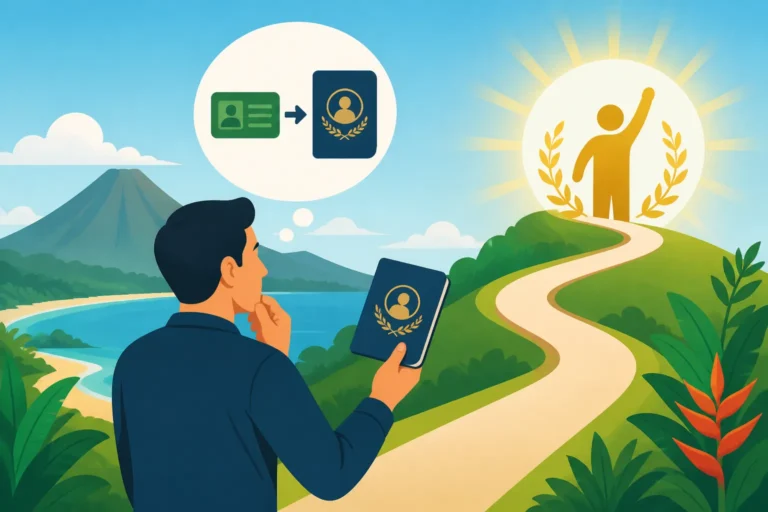
It's during these years of holding and renewing your temporary DIMEX that you are building up the time required to eventually apply for permanent residency. It's the clock that starts ticking towards your next big immigration milestone.
The Standard Pathway: Three Years of Temporary Residency
For most expats, the standard, most common route to permanent residency in Costa Rica involves a waiting period. It's not an overnight thing, and frankly, expecting it to be would only lead to disappointment. The Costa Rican immigration system is built on a foundation of integration and demonstrated commitment.
The general rule is this: you must hold a temporary residency status for at least three consecutive years before you become eligible to apply for permanent residency. This applies to most of the common temporary residency categories, such as Pensionado, Rentista, and Inversionista.
Let's unpack what "three consecutive years" really means. It means you must have maintained an active, valid temporary residency status for that entire duration. Any gaps, expired DIMEX cards (if not renewed in time), or changes in status without proper migration procedures could potentially reset your clock or complicate your application.
How the Three-Year Period is Calculated
The three-year countdown for permanent residency typically begins from the date your initial temporary residency (DIMEX) card was first issued. It's not from the date you first arrived in the country as a tourist, nor is it from the date you submitted your initial temporary residency application. It's the day Migración officially recognized you as a temporary resident.
During these three years, you will likely go through at least one, if not two, renewals of your temporary DIMEX card. Each renewal reconfirms your eligibility and extends your temporary status. These renewals are critical; letting your DIMEX expire without renewal could jeopardize your continuous residency status and, consequently, your eligibility for permanent residency down the line.
For example, if you received your first Pensionado DIMEX on January 15, 2024, you would become eligible to apply for permanent residency on or after January 15, 2027. It's important to remember that applying and receiving approval are two different things, and the processing time for permanent residency can also take several months.
Categories That Do Not Lead to Permanent Residency (Directly)
It's vital to clarify that not all temporary residency types lead to permanent residency after three years. The most prominent example, as mentioned, is the Digital Nomad Visa. While it allows for a wonderful, extended stay in Costa Rica, it's explicitly designed as a non-immigrant visa and does not establish a path to permanent residency or citizenship. If your long-term goal is permanent residency, you'll eventually need to transition to one of the traditional temporary residency categories (Pensionado, Rentista, Inversionista, etc.) which do offer that pathway, and then restart your three-year clock from the date of issuance of that new temporary residency.
This is a common point of confusion and frustration for many digital nomads. It’s a good idea to think about your long-term goals when choosing your initial visa or residency category. If a permanent future in Costa Rica is your aim, planning from the outset can save you time and headaches.
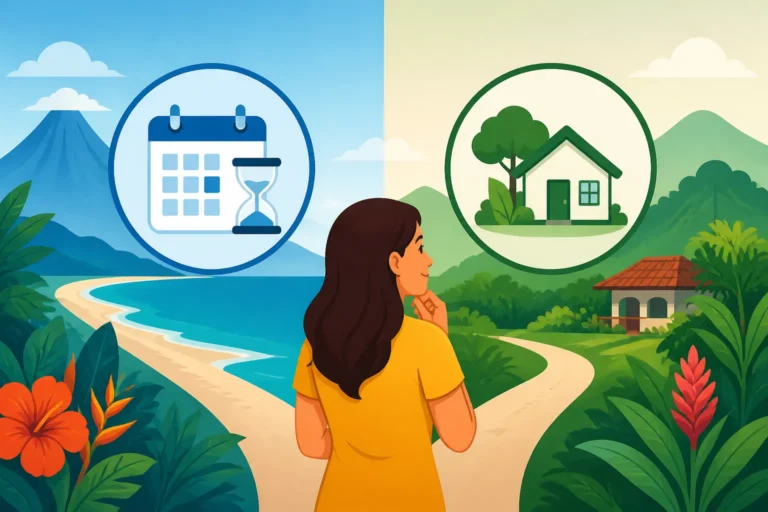
Exceptions and Faster Tracks to Permanent Residency
While the three-year temporary residency is the standard, Costa Rica does offer a few exceptions that allow for a faster, or even immediate, application for permanent residency. These exceptions are primarily based on direct family ties to a Costa Rican citizen. This is where the concept of vínculo (family tie) comes into play, a powerful word in Costa Rican immigration law.
Marriage to a Costa Rican Citizen
This is by far the most direct and common "faster track" to permanent residency. If you marry a Costa Rican citizen, you become immediately eligible to apply for permanent residency. There is no waiting period of temporary residency required. This makes the marriage-based route a very attractive option for those who genuinely fall in love and tie the knot with a local.
However, "immediate eligibility" doesn't mean instant approval. The process still requires submitting a robust application to Migración, including proof of your marriage (marriage certificate), proof of your spouse's Costa Rican citizenship, and, crucially, evidence of a legitimate, ongoing conjugal relationship. Migración is very thorough in reviewing these applications to prevent fraudulent marriages entered solely for immigration purposes. You'll need to demonstrate genuine cohabitation and a shared life. Be prepared for potential interviews, home visits, and a request for various documents and testimonies. It's a real and proper investigation, so don't take it lightly.
This category also allows for the sponsorship of your children (if they are minors or adults with disabilities) through the family reunification process. For more detailed information on sponsoring family, you can look at Family Residency in Costa Rica: How to Bring Your Spouse and Children.
Parent of a Costa Rican Citizen
Another significant exception is if you are the parent of a Costa Rican citizen. If you have a child who is a Costa Rican citizen, you can apply directly for permanent residency, again bypassing the temporary residency requirement. This pathway is designed to keep families together and recognize the rights of Costa Rican citizens.
The key here is proving parentage. You'll need your child's Costa Rican birth certificate, your own birth certificate, and any other documents required to establish the legal relationship. Similar to marriage, this application will be scrutinized to ensure the legitimacy of the parent-child relationship. This is a common route for foreign parents whose children were born in Costa Rica.
Children of a Costa Rican Citizen
If your child is a Costa Rican citizen and is under the age of 25 (or is an adult with a diagnosed disability), they can sponsor you for permanent residency. This is essentially the flip side of the "parent of a Costa Rican citizen" rule. This also recognizes the importance of family unity under Costa Rican law. The age limit is critical here, so timing your application is important if your child is approaching 25.
| Residency Type | Initial Status | Path to Permanent Residency | Typical Timeline | Notes |
|---|---|---|---|---|
| Pensionado | Temporary | After 3 years of temporary status | 3 years (temporary) + processing time | Requires proven pension income. Each temporary DIMEX is usually 1-2 years and must be renewed consistently. |
| Rentista | Temporary | After 3 years of temporary status | 3 years (temporary) + processing time | Requires proven passive income or a substantial deposit in a CR bank. Each temporary DIMEX is usually 1-2 years and must be renewed consistently. |
| Inversionista | Temporary | After 3 years of temporary status | 3 years (temporary) + processing time | Requires a significant investment in CR. Each temporary DIMEX is usually 1-2 years and must be renewed consistently. |
| Digital Nomad | Special Non-Immigrant Visa | No direct path to permanent residency | Up to 2 years (renewable once) | Excellent for remote work, but if PR is the goal, you'll need to switch to another temporary category later. |
| Marriage to CR Citizen | Immediate eligibility for Permanent Residency | Direct application | Immediate eligibility + processing time | Requires legitimate proof of marriage and cohabitation. Subject to thorough review. |
| Parent of CR Citizen | Immediate eligibility for Permanent Residency | Direct application | Immediate eligibility + processing time | Requires proof of parentage and child's CR citizenship. |
The Application for Permanent Residency: What Comes Next
So, you've patiently waited your three years as a temporary resident, or you qualify through a family connection. What's next? You're finally ready to take the leap and officially apply for permanent residency. This process, while familiar in some aspects to your temporary residency application, has its own nuances and requirements. Getting your documents in order and understanding the steps is key.
For a general overview of the entire journey, don't miss our comprehensive resource: How to Get Permanent Residency in Costa Rica (2027).
Required Documents and the Application Process
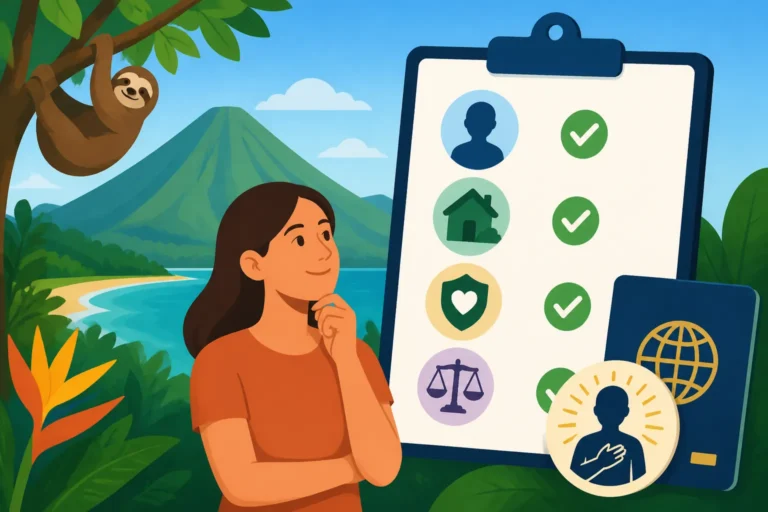
When you apply for permanent residency, Migración will require an updated set of documents. Even though you’ve been living here, they want fresh proof that you still meet the criteria and are a good candidate for permanent status. Here’s a general idea of what you’ll need:
- Application Form: Duly completed and signed.
- Passport: A copy of your entire passport, including all stamped pages.
- Birth Certificate: An apostilled or legalized copy of your birth certificate. This is a standard document for all residency applications. You can learn more about this in Understanding the Documents and Apostille Needed for Residency in Costa Rica.
- Criminal Background Check: An updated criminal record check from your home country (and any other country you've lived in for the past three years), apostilled or legalized and translated into Spanish. Even if you provided one for temporary residency, they will likely ask for a fresh one.
- Current DIMEX Card: Copies of your temporary residency card, proving your continuous status.
- Proof of Funds/Stability: While not as stringent as the initial temporary residency application (as you've already demonstrated this), you'll still need to show you can support yourself. This might be bank statements or a letter from your Caja affiliation.
- Affiliation with the Caja (CCSS): This is absolutely non-negotiable. You must be current and up-to-date with your payments to the Costa Rican social security system. Migración will request a "Constancia de la Caja" (a letter confirming your active affiliation and payments). This is often a sticking point for many. For more information, read Understanding the Caja Affiliation Requirement for Residency in Costa Rica.
- Fingerprints: You will need to get a new set of fingerprints taken by the Ministry of Public Security (Ministerio de Seguridad Pública) in Costa Rica.
- Fees: There are government application fees and likely professional fees if you use an attorney. These can add up, so factor them into your budget. For an idea of the overall financial picture, check out Understanding the Cost and Timeline of the Residency Process in Costa Rica.
It's highly recommended to work with a reputable immigration attorney for your permanent residency application, just as you likely did for your temporary one. They know the system, the specific forms, and the common pitfalls.
Processing Times and Managing Expectations
Ah, processing times. This is where patience truly becomes a virtue in Costa Rica. While the application is "immediate" for marriage or parentage, and "after three years" for others, the actual processing of your permanent residency application itself can take time. It's not uncommon for it to take several months, sometimes even longer than a year.
During this waiting period, you generally maintain your current legal status (e.g., your temporary residency card remains valid until the decision is made, or your lawyer can provide proof of application). However, it's a period of uncertainty, and you'll need to factor this into any travel plans or other administrative needs. Communication from Migración can be sparse, and follow-ups often require persistence.
Maintaining Your Permanent Residency Status
Congratulations! You've navigated the system, jumped through the hoops, and finally received your permanent residency. Now that you've achieved this significant milestone, there are still a few responsibilities to keep in mind to maintain your status.
Renewal Frequency and Physical Presence
Unlike temporary residency, which requires annual or bi-annual renewals, permanent residency offers more stability. Your permanent DIMEX card typically needs to be renewed every five years. This is a much more manageable schedule, but it's still crucial to mark your calendar and initiate the renewal process well in advance of expiration.
Maintaining permanent residency also generally requires demonstrating a connection to Costa Rica. While the rules aren't as strict as some countries, it's expected that you maintain a physical presence in the country. There isn't a hard-and-fast rule about how many days you must be in Costa Rica each year, but long, unexplained absences could potentially raise questions during future renewals. If you plan extended travels, it’s wise to discuss this with your immigration attorney.
Continuous Caja Affiliation
Just like with temporary residency, maintaining your affiliation and payments to the Caja Costarricense de Seguro Social (CCSS) is a continuous requirement for permanent residents. This isn't just about healthcare access; it's a legal obligation tied to your residency status. Failing to keep up with your Caja payments can lead to issues with renewing your DIMEX and could even jeopardize your permanent residency status. This aspect of life in Costa Rica often surprises expats, but it's a cornerstone of the country's social safety net. You can dive deeper into this topic with How the Caja Requirement Connects to Your Residency in Costa Rica.
The journey to permanent residency in Costa Rica is a testament to patience and persistence. While it might seem like a long road, understanding the process, preparing your documents meticulously, and managing your expectations will make the path clearer and ultimately, more rewarding. Welcome home, for good.
Disclaimer
Please remember that immigration laws and requirements in Costa Rica are subject to change without notice. This guide is intended for informational purposes only and does not constitute legal advice. It is always recommended to consult with a qualified Costa Rican immigration attorney or the Directorate General of Migration and Foreigners (DGME) for the most current and personalized guidance regarding your specific situation.