How Do I Set Up Automatic Bill Payments at a Costa Rican Bank?
Ah, the monthly bill dance in Costa Rica! If you've been grappling with logging into multiple platforms, remembering countless client numbers, or worse, finding yourself in a queue at the bank for every single utility payment, you're not alone. It's one of those initial hurdles that can feel incredibly daunting as an expat. This guide is here to unravel the mystery of setting up automatic bill payments at your Costa Rican bank, giving you back precious time and peace of mind.
The Frustration of Manual Bill Payments in Costa Rica (and Why Automate)
Let's be honest, few things are as universally irritating as dealing with bills, and in a new country, it can feel like a special kind of administrative torture. When you first arrive in Costa Rica, you're often thrown headfirst into a world where paying for electricity, water, internet, and even your phone might involve trips to the local Banco Nacional or BAC Credomatic branch, or perhaps a Servimas or Coopealianza kiosk, often with long lines and a language barrier to navigate. It’s a baptism by fire that most of us expats have experienced, and it’s exhausting.
The Manual Maze: Why It's Such a Headache
Imagine this: it's the last day of the month, your electricity bill is due, and you've completely forgotten amidst adapting to Pura Vida life. Suddenly, the lights flicker, and you're in the dark – literally. Or maybe you remember, but you have to carve out an hour from your day to drive to the bank, take a ticket, wait patiently (or impatiently, depending on your personality and the length of the queue), and then explain in broken Spanish which bill you need to pay, reciting an often-long client number. This isn't a one-off; this is potentially every month for ICE (electricity), AyA (water), your internet and cable (Liberty, Kölbi, Claro, Telecable), your phone, and a myriad of other services.
The system here can be fragmented. Some services might allow you to pay through their own app or website, but each requires a separate login, password, and often, a deep dive into an unfamiliar interface. The constant mental load of remembering due dates for each distinct bill, coupled with the fear of late fees or, worse, service disconnection, quickly chips away at that tranquil expat dream. Many of us have been there, watching our internet cut out right before an important video call because we simply forgot to manually push a payment through a specific portal. It's not just an inconvenience; it's a significant drain on your energy and mental bandwidth.
The Peace of Mind Automation Brings
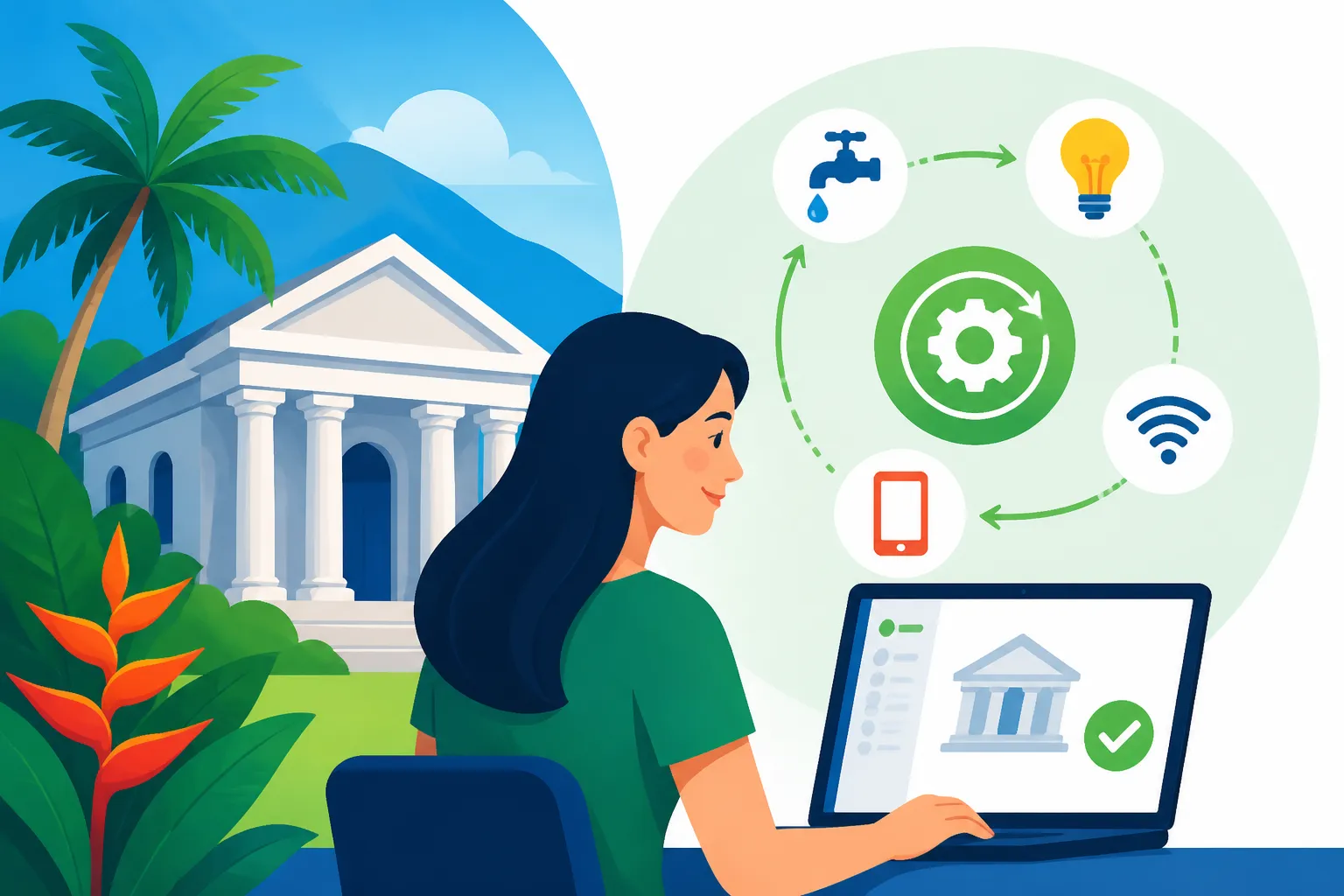
This is where the magic of automatic payments, or débito automático as it's known here, truly shines. Once you have it set up, it’s like a quiet sigh of relief every month. No more scrambling, no more unexpected service cuts, and definitely no more wasted hours in bank queues. Your bank simply handles it, pulling the necessary funds directly from your account on the due date. This fundamental shift frees you up to enjoy why you moved to Costa Rica in the first place, rather than battling administrative tasks.
Beyond the sheer convenience, automation offers financial benefits. You avoid those annoying late fees that can accumulate surprisingly quickly. Your services remain uninterrupted, which is critical for everything from working remotely to simply enjoying your home. Furthermore, having regular, predictable deductions makes budgeting much easier. You can see precisely when and how much is being spent on utilities each month, allowing you to better manage your overall finances. It's a small change that makes a huge difference in your daily quality of life here, helping you feel more settled and in control.
Understanding Your Options for Automatic Payments in Costa Rica
Navigating the world of bill payments in Costa Rica can feel like learning a new language itself. Thankfully, there are established methods for automating payments that, once understood, become incredibly straightforward.
Direct Debit Débito Automático Through Your Bank
This is often the most comprehensive and recommended approach for expats. Débito automático allows your chosen Costa Rican bank to automatically deduct the amount due for your recurring bills directly from your bank account on or before the due date. It’s essentially setting up a standing order for your utilities. The major banks like [Banco Nacional], [BAC Credomatic], Banco de Costa Rica (BCR), and Davivienda all offer this service.
The process typically involves providing your bank with the specific client number for each utility you wish to automate (e.g., your NICE number for ICE, or NIA for AyA) and authorizing them to make these deductions. While initially, this might mean a trip to a bank branch or navigating through an online banking portal that might not be entirely intuitive, the long-term benefits are immense. Your payments are centralized, meaning you only need to monitor your bank account, not a dozen different utility logins. It’s incredibly reliable, provided you always have sufficient funds. The main 'con' is that the initial setup can sometimes be a bit of a bureaucratic hurdle, often requiring an in-person visit, especially if you're not fully comfortable with the online interfaces. To get started, you'll first need to make sure you have a local bank account, and if you haven't yet, you might want to read up on How Do I Open a Bank Account as a Resident in Costa Rica? or even Which Bank Is Best for Expats in Costa Rica?.
Recurring Payments via Utility Company Websites and Apps
Some utility providers in Costa Rica have caught up with technology and offer their own platforms for setting up recurring payments. Companies like ICE (for electricity), AyA (for water), and most internet and mobile providers such as Liberty, Kölbi, and Claro, have online portals or mobile apps where you can link a credit card or a local bank account to enable automatic deductions. This method bypasses the bank as an intermediary for that specific bill.
The main advantage here is that you're dealing directly with the service provider, which can sometimes feel more transparent. If there's an issue with a payment, you contact them directly. However, the downside is decentralization. Each service requires its own login and management, meaning you might have 3-5 different apps or websites to monitor. While convenient for individual services, it doesn't offer the same consolidated view as bank-managed débito automático. For example, if you're looking to automate your electricity bill, understanding How Do I Pay My ICE Electricity Bill Online? could be a good starting point, or for water, checking out How Do I Set Up Water Service (AyA) in Costa Rica?.
Step-by-Step Guide to Setting Up Débito Automático at Your Bank
Alright, vamos! Let’s get down to the nitty-gritty of actually setting up those automatic payments. This might seem like a lot of steps, but trust me, once it’s done, you’ll wonder why you didn't tackle it sooner. Patience is your best friend in this process.
Gathering Your Essentials
Before you even think about stepping into a bank or logging into an online portal, you need to collect all the necessary information. This is critical because even a single incorrect digit can cause delays or outright rejection of your automation request.
- Your Costa Rican Bank Account Details: This includes your full account number (often 17-20 digits, known as the IBAN or cuenta cliente) and perhaps your cédula or DIMEX number linked to the account.
- Client Numbers for Each Utility: This is perhaps the most crucial piece of information. Every utility bill in Costa Rica has a unique client identifier. For ICE (electricity), this is usually called the NICE number (typically 7-9 digits). For AyA (water), it's the NIA number (often 10 digits). For internet, cable, or phone, it's typically a contract or client number, which you'll find prominently displayed on your monthly bill. Make sure you have the exact number for each service you want to automate. Don't guess!
- Biller Names (Official): Know the exact, official name of the company you're paying. For example, "Instituto Costarricense de Electricidad" (ICE) or "Acueductos y Alcantarillados" (AyA).
- Your Identification: Always have your physical DIMEX card (residency card) with you if you're going to the bank.
Having these details neatly organized will streamline the process significantly. It's a small preparation step that saves a lot of potential headaches and repeated trips.
The In-Person Bank Visit (Still Common!)
Despite the digital age, for many expats, the most reliable way to initiate débito automático is still an in-person visit to your bank branch. This is particularly true if you're not fluent in Spanish or if the bank's online system feels a bit too opaque. Take a deep breath, embrace the local pace, and follow these steps:
- Arrive Early: Banks can get busy, especially on Fridays or early in the month. Arriving shortly after they open can save you a significant wait.
- Take a Number (and the Right One): Look for the ticket machine (máquina de tiquetes) and select the option for "Servicio al Cliente" or "Pagos y Servicios." If in doubt, ask someone, "Para afiliar pagos automáticos, ¿cuál tiquete tomo?" (To register automatic payments, which ticket do I take?).
- Explain Your Request: When your number is called, approach the counter and explain that you wish to set up automatic payments (afiliar débitos automáticos) for your utility services. Be prepared to list each service (ICE, AyA, internet, etc.) and provide the corresponding client number and official company name for each. This is where your organized list from the previous step comes in handy.
- Fill Out Forms: You will likely be given a form to fill out for each service you want to automate. These forms will ask for your personal details, bank account information, and crucially, the client number for the utility. Double-check everything before handing it over.
- Confirmation and Timeline: The bank representative will process your request. They might give you a confirmation slip or tell you that it will take a few business days for the automation to become active. It's wise to ask when you can expect the first payment to be made automatically. Many expats find Can Foreigners Open a BAC or Banco Nacional Account in Costa Rica? helpful in understanding the initial setup.
Remember, patience and politeness go a long way. This is also a perfect time to ask about other automated payments, like perhaps How Do I Pay My Caja Bill Each Month in Costa Rica? if you're a resident.
Navigating Online Banking for Auto-Pay Setup
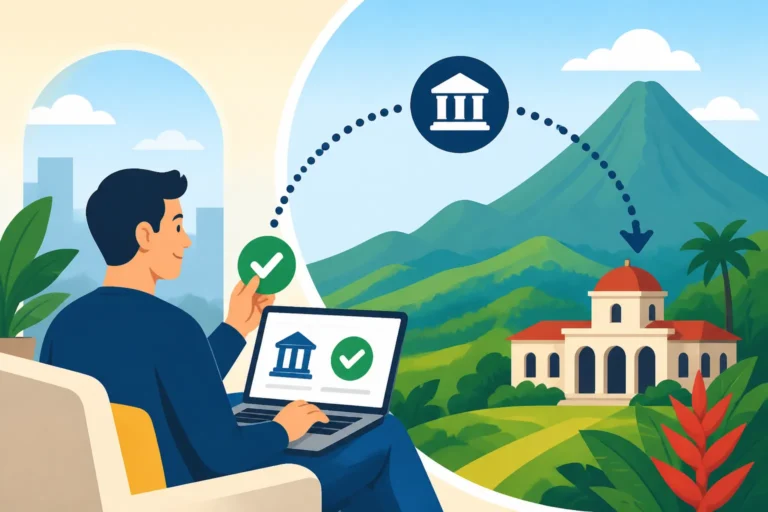
For those who are more comfortable with online banking and whose bank has a robust digital platform, setting up auto-pay can often be done from the comfort of your home. Banks like BAC Credomatic are generally quite good with their online features, and some newer systems at BCR or Banco Nacional are improving. Before you try, you need to have How Do I Set Up Online Banking with a Costa Rican Bank? firmly in place.
Here’s a general path, though exact menu names might vary slightly:
- Log In Securely: Access your online banking portal using your username, password, and any two-factor authentication (like a code sent to your phone).
- Find the Payments Section: Look for sections labeled "Pagos," "Servicios," or "Débitos Automáticos." Sometimes it might be under "Afiliación de Servicios."
- Initiate Auto-Pay Enrollment: Within this section, you'll typically find an option like "Afiliar Nuevo Servicio" (Enroll New Service) or "Programar Pago Automático" (Schedule Automatic Payment).
- Select the Biller: You'll usually see a dropdown list of available utility providers. Carefully select the correct one (e.g., "ICE – Servicio Eléctrico" or "AyA – Acueductos y Alcantarillados").
- Enter Client Number: This is where you input that crucial NICE, NIA, or contract number from your bill. The system might even validate if the number is correct and linked to your name/address.
- Confirm Details and Authorize: Review all the information, specify which account the funds should be drawn from, and confirm the authorization. You might need to use a digital token or a code from your phone to finalize the setup.
Once submitted, the system should give you a confirmation message. It's a good idea to take a screenshot for your records. This is also the method you'd typically use if you're looking for How Do I Set Up Auto-Pay for My ICE and AyA Bills? or similar specific utility setups.
Verification and Monitoring
You've done the hard part! But your job isn't quite finished. It’s absolutely essential to verify that your automatic payments are indeed going through successfully for the first few months.
- Check Your Bank Statements: After the first due date for an automated bill, meticulously review your bank statement (estado de cuenta) to ensure the deduction was made. Look for the transaction, the amount, and the date.
- Set Initial Reminders: For the first two to three months, consider setting a personal calendar reminder for the due dates. This acts as a backup check to ensure nothing falls through the cracks while the system establishes itself.
- What if a Payment Fails? If you notice a payment hasn't gone through, act immediately. First, check your bank account for sufficient funds. If funds were available, contact your bank (using the number on the back of your card or through your online banking secure message system) to inquire why the débito automático failed. If it's a utility issue (e.g., the client number was incorrect), you might need to contact the utility company directly. Remember that managing your funds in Costa Rica might also involve juggling foreign and local accounts, so helpful services like Wise can make it easier to ensure your local accounts are always topped up. This helps avoid payment rejections, which can lead to service interruptions, especially with essential utilities you might have connected to How Do I Set Up Internet in My My Costa Rican Home?.
Key Considerations and Troubleshooting for Expats
Even with débito automático set up, moving to a new country always presents unique challenges. Costa Rica is no exception. While automatic payments are a huge relief, there are still a few things you, as an expat, need to keep an eye on.
Dealing with Fluctuating Bills and Account Balances
Unlike some services that have fixed monthly charges, many utilities in Costa Rica, like electricity (ICE) and water (AyA), will fluctuate based on your consumption. This means the amount deducted via débito automático will change each month. This isn't a flaw in the system; it's just how consumption-based billing works.
The critical takeaway here is to always ensure you have enough funds in your linked bank account. If an automatic payment attempts to go through and your account balance is insufficient, the payment will be rejected. This can lead to late fees, potential service interruption, and the hassle of manually settling the outstanding bill. It’s a good practice to keep a buffer in your account, especially if your utility usage varies significantly. If you’re managing funds from abroad, services like Wise can be invaluable for quickly and efficiently transferring money into your Costa Rican bank account, ensuring you're always covered. This is particularly useful when considering How to Transfer Money Into and Out of Costa Rica as an Expat.
Understanding Service Interruptions and Reconnection
While automatic payments largely prevent service interruptions due to non-payment, they aren't a foolproof shield against all issues. Sometimes, service can be cut for technical reasons, maintenance in your area, or even because there was an unpaid balance from a period before your débito automático was activated.
If your electricity or water goes out and you know your automatic payment went through, don't immediately assume the system failed. Check with your neighbors if their service is also out (indicating a neighborhood-wide issue), or contact the utility provider directly. Having their customer service numbers handy is always a good idea. For example, knowing How Do I Set Up Electricity After Moving to Costa Rica? often means knowing the emergency contact for ICE.
When Things Go Wrong: Getting Help
Despite all your best efforts, sometimes things just don't go as planned in Costa Rica. A payment might mysteriously fail, or you might find yourself in a situation where you need to dispute a charge. Here's a quick guide on who to contact:
- Payment Issues (Funds not deducted, wrong amount): Your first point of contact should always be your bank. They are responsible for executing the débito automático. Have your account details and the specific transaction information ready when you call or visit.
- Service Issues (Interruption despite payment, billing questions): If the payment was successful but you have a problem with the service itself, or you believe a bill is incorrect, contact the utility provider directly. For ICE, you'd contact their customer service. For AyA, you'd call them. Having a basic grasp of Spanish or a local friend who can help translate is incredibly valuable here.
- Persistent Problems: If you encounter persistent issues with either your bank or a utility provider, document everything. Keep records of calls, emails, and any reference numbers. Sometimes, it takes a bit of polite persistence, or perhaps even a visit to the local consumer protection agency (MEIC), to get things resolved. For those dealing with more complex financial situations, such as managing Taxes for Expats alongside local banking, understanding these troubleshooting steps is vital to keep your financial life running smoothly.
| Feature | In-Person Bank Setup | Online Banking Setup | Utility Company Portal Setup |
|---|---|---|---|
| Convenience | Low (requires travel, waiting) | High (from home/anywhere) | Medium (separate login for each utility) |
| Control | High (direct interaction, forms) | High (direct interaction via digital platform) | Medium (each utility managed separately) |
| Consolidation | High (all payments linked to one bank account) | High (all payments linked to one bank account) | Low (scattered across multiple platforms) |
| Bureaucracy | Can be high (forms, waiting, language barrier) | Medium (navigating menus, digital authorization) | Low to Medium (each company has its own process) |
| Reliability | Very High (bank-managed, once set) | Very High (bank-managed, once set) | High (company-managed, usually reliable) |
| Initial Time Invest | High | Medium | Medium to High (repeated for each utility) |
| Ideal For | Expats less tech-savvy, prefer personal interaction | Expats comfortable with digital banking | Expats wanting direct control over specific utility |
Disclaimer
The information provided in this article is for general guidance only and does not constitute professional financial, legal, or immigration advice. While we strive to keep the information up-to-date and accurate, laws, regulations, and banking procedures in Costa Rica can change frequently. Always consult with qualified professionals for advice tailored to your specific situation. We are not responsible for any actions taken based on the information in this article.