Health Insurance in Costa Rica: Caja, INS and International Options Explained
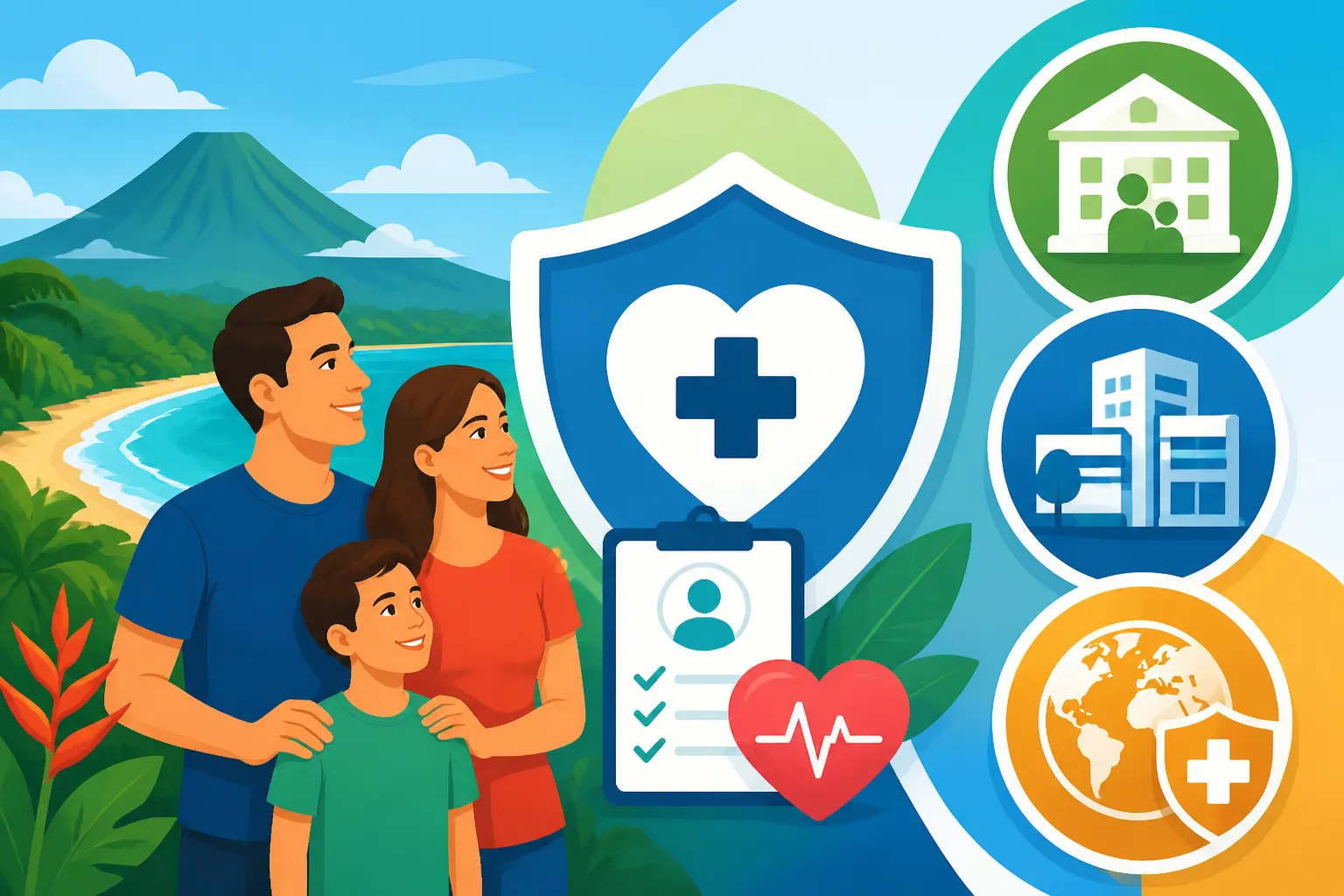
One of the most overwhelming challenges for newcomers in Costa Rica is navigating a healthcare system that feels like a contradictory mix of world-class medical talent and soul-crushing bureaucracy. You might hear that healthcare is free, only to realize you have a mandatory monthly bill, or find yourself wondering why some expats carry three different insurance cards. This guide untangles the web of the Caja, private INS plans, and international coverage to ensure you are never left unprotected in the tropics.
Understanding the Dual System: Public vs. Private Healthcare
Costa Rica operates on a bifurcated healthcare model that is both the envy of Latin America and a source of constant debate among the expat community. To live here successfully, you have to understand that these two systems—the public and the private—don't just exist side-by-side; they often overlap in ways that can be confusing if you aren't prepared.
The Caja (CCSS) – The Social Security Backbone
The Caja Costarricense de Seguro Social, universally known as "the Caja," is the state-run system that provides universal coverage to all citizens and legal residents. For an expat, the Caja is not optional if you are seeking residency. It is a single-payer system funded by mandatory monthly contributions based on your reported income. Once you are in the system, everything is covered: from a simple aspirin for a headache to complex heart surgery and long-term cancer treatments. There are no deductibles, no co-pays, and no premiums based on age or pre-existing conditions.
However, the reality of using the Caja is often a lesson in patience. Because it serves the entire population, the system is frequently bogged down by long wait times for non-emergency procedures. If you need an elective knee surgery, you might be looking at a waitlist that spans months or even years. This is a primary reason why many foreigners look for supplemental options. To get a deeper look at the mechanics, you should read How Costa Rica's Health System Works: The Caja (CCSS) vs Private Explained (2027).
Private Care – Speed and Comfort
On the other side of the coin is the private sector. Costa Rica has become a global hub for medical tourism for a reason. Private hospitals in the San Jose area, such as CIMA, Clinica Biblica, and Hospital Metropolitano, offer facilities that look and feel like high-end hotels, equipped with the latest medical technology. Most of the specialists working here were trained in the United States or Europe and speak fluent English.
In the private system, you pay for speed and convenience. An appointment with a top-tier specialist can often be secured within 24 to 48 hours. However, without insurance, these costs can add up quickly. While a consultation might only cost $100 to $150, a major surgery or a multi-day stay in intensive care can reach tens of thousands of dollars. This creates the central dilemma for the expat: do you rely solely on the state system you are already paying for, or do you add a private layer? This is the core question explored in Public vs Private Healthcare in Costa Rica: Which Should Expats Choose?.
The Caja (CCSS): Mandatory Enrollment and What to Expect
If you are moving to Costa Rica for more than a 90-day tourist stint, the Caja will eventually become a part of your life. For many, the process of "afiliación" (enrollment) is their first true test of Costa Rican "trámites" (paperwork). It is a process that requires residency, a DIMEX card (or a filed application), and a fair amount of stamps and signatures.
How the Caja Requirement Connects to Your Residency in Costa Rica
You cannot have one without the other. To receive your residency card, the Department of Immigration (Migración) requires proof that you are up to date with your Caja payments. This is a common point of frustration for expats who feel they are paying twice—once for their private insurance and again for a public system they may never use. However, the law is clear: the social security system is a collective fund. Your contribution helps maintain the national health infrastructure that keeps the country stable.
Understanding the timing is crucial. You typically apply for residency, and once you have your "expediente" (file number), you can begin the process of joining the Caja. The monthly fee is calculated as a percentage of your income. For retirees (Pensionados), it is based on your pension; for investors (Inversionistas) or those on the Rentista track, it is based on the income you’ve declared to the state. For a detailed breakdown of these costs, see Understanding How Caja Contributions Are Calculated in Costa Rica.
Navigating the EBAIS and Regional Hospitals
Once you are enrolled, your primary point of contact is the EBAIS (Equipo Básico de Atención Integral en Salud). These are local community clinics found in almost every town. This is where you go for routine check-ups, vaccinations, and basic prescriptions. The experience at an EBAIS is hyper-local; you will likely see the same neighbors in the waiting room every time.
If your condition is more serious, the EBAIS will refer you to a regional hospital or a specialized center in San Jose. The system is tiered, and you cannot simply walk into a major hospital for a minor issue. You must follow the "indirect" path starting at your local clinic. This can be frustrating for those used to choosing their own doctors, but it is the way the system manages its massive patient load.
The Reality of Wait Times and Service Quality
It is important to be realistic about the Caja. While the medical expertise is high—Costa Rica’s life expectancy is higher than that of the United States—the "user experience" can be difficult. You might have to arrive at the EBAIS at 5:30 AM to secure a "cupo" (slot) for the day. The pharmacies at the Caja clinics often have long lines, and the formulary of available drugs is limited to what the government has approved.
However, in a true emergency, the Caja is incredible. If you are in a major car accident, the Red Cross will likely take you to a Caja trauma center because they are often better equipped for massive emergencies than smaller private clinics. Many expats choose to use the Caja for their monthly maintenance medications and the private system for everything else. If you are just starting this journey, check out The Expat Guide to Joining the Caja (CCSS) in Costa Rica (2027).
Private Health Insurance Options: INS and Local Carriers
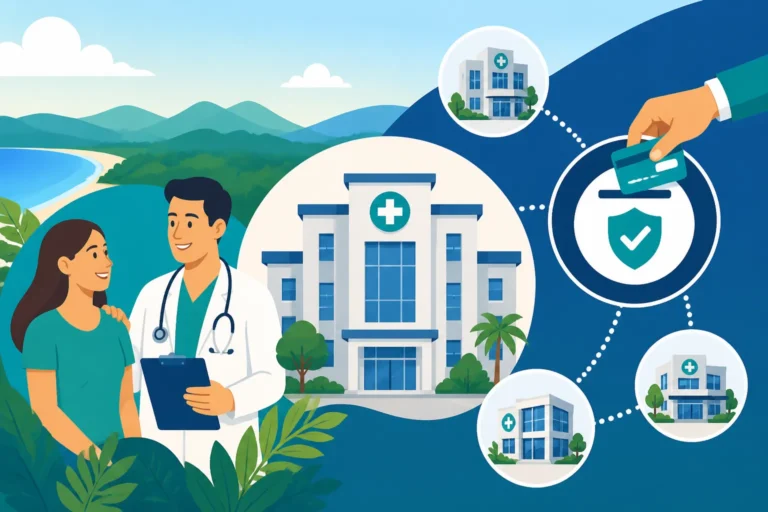
For those who want to bypass the lines of the public system, private insurance is the answer. In Costa Rica, this generally falls into two categories: the state-owned INS (Instituto Nacional de Seguros) and various private international or regional carriers.
INS (Instituto Nacional de Seguros) – The State-Owned Giant
For decades, INS had a monopoly on insurance in Costa Rica. Even though the market is now open, they remain the largest provider. Their medical plans are popular because they have the most extensive network of "direct billing" providers. This means if you go to a participating doctor or hospital, you only pay your co-pay (usually 20%), and INS handles the rest directly with the facility.
INS plans are generally categorized by where they provide coverage. You can get a plan that only covers you within Costa Rica, or one that includes regional or even international coverage. The underwriting process for INS can be strict; if you are over 65 or have significant pre-existing conditions, getting a new policy can be difficult or very expensive.
Local Private Alternatives: Pan-American, ASSA, and BlueCross
Since the insurance market opened up, several other players have entered the field. Companies like Pan-American Life, ASSA, and BlueCross BlueShield Costa Rica offer plans that often compete directly with INS. These plans sometimes offer higher coverage limits for chronic illnesses or better international benefits.
One major advantage of these private carriers is their customer service. They often provide English-speaking agents and more streamlined online portals for filing claims. When choosing between these, it is vital to look at the "Red de Proveedores" (Provider Network). You want to make sure the specific doctors and hospitals you prefer—like those in the San Jose suburbs of Escazu or Santa Ana—are on the list.
Understanding Coverage Tiers and Pre-existing Conditions
The biggest hurdle with local private insurance is the "Pre-existing Condition" clause. Unlike the Caja, which must take you regardless of your health history, private insurers in Costa Rica will exclude anything you were treated for before the policy started. If you have high blood pressure, they may insure you for everything except heart-related issues.
Most private plans have a lifetime limit and annual deductibles. It’s also common for plans to have "waiting periods." For example, you might not be covered for maternity or elective gallbladder surgery until you have been on the plan for 10 to 12 months. This is why many expats choose to start their private coverage the moment they arrive, rather than waiting for their residency to clear.
International Health Insurance for Global Nomads and Expats
Many expats in Costa Rica aren't just "living" here; they are part of a global lifestyle. They might spend six months in Uvita and the other six months traveling through Europe or visiting family in North America. For this group, a local INS plan that only works in Costa Rica isn't sufficient.
Why International Plans Make Sense for Frequent Travelers
International health insurance (often called Global Medical Insurance) provides "portable" coverage. If you are diagnosed with a serious illness while in Costa Rica but want to return to your home country for treatment with a specific specialist, an international plan will typically allow for that. Local Costa Rican plans usually do not cover elective treatment outside of the country.
Furthermore, international plans often have much higher coverage limits—sometimes up to $5 million or $10 million USD—compared to the more modest limits of local plans. They are designed for the high costs of US healthcare, which provides a significant safety net if you find yourself needing emergency care while visiting the States.
Evaluating High-Deductible vs. Comprehensive Plans
When looking at international options, you’ll find a massive range in pricing. A "high-deductible" plan is often used as catastrophe insurance. You might pay $200 a month for a plan with a $5,000 deductible. This means you pay out-of-pocket for your routine EBAIS visits or private check-ups, but you are protected if you have a stroke or a major accident.
Comprehensive international plans, on the other hand, cover everything from office visits to prescriptions with very low out-of-pocket costs. These are luxury products and are priced accordingly, often costing several hundred dollars per month depending on your age. For many, the sweet spot is a mid-range plan that offers solid inpatient (hospitalization) coverage and limited outpatient benefits.
The Role of SafetyWing for Digital Nomads in Costa Rica
For the younger crowd or those here on the new Digital Nomad Visa, traditional expat insurance might feel like overkill. This is where companies like SafetyWing come into play. SafetyWing offers a "Nomad Insurance" product that functions more like a subscription. It is significantly more affordable than traditional global medical insurance and is tailored for people who don't have a fixed permanent address.
While SafetyWing is excellent for emergencies, accidents, and unexpected illnesses, it’s important to note it isn't a full replacement for a comprehensive health plan if you have chronic conditions. However, for a nomad moving between airbnbs in Nosara and Santa Teresa, having that SafetyWing umbrella provides peace of mind against the high costs of private emergency rooms. It’s a great "bridge" while you are figuring out your long-term residency status and Understanding the Difference Between the Caja and Private Insurance in Costa Rica.
| Feature | Caja (CCSS) | INS (Local Private) | International (e.g., SafetyWing/VUMI) |
|---|---|---|---|
| Cost | Percentage of income | Based on age/health | Based on age/coverage area |
| Speed | Slow for non-emergencies | Very Fast | Very Fast |
| Residency | Mandatory for Residents | Optional / Supplemental | Optional / Portable |
| Pre-existing | Always Covered | Usually Excluded | Usually Excluded |
| Hospital Choice | Assigned by Location | Network of Private Hospitals | Global Choice |
| Pharmacy | Limited/Public Formulary | Full Private Access | Full Private Access |
Costs and Comparisons: Budgeting for Your Health
Budgeting for healthcare in Costa Rica is not as simple as looking up a single premium. Because you will likely be paying into at least two systems, you need to look at the "total cost of care."
Calculating Your Monthly Caja Contribution
Your Caja payment is calculated based on your "Ingreso de Referencia" (Reference Income). For most expats, this means a contribution of roughly 7% to 11% of their declared income. If you are a couple, both individuals often have to be covered, though one can sometimes be a "dependent" of the other if only one has residency status.
It is a common mistake to under-report income to save on Caja fees. Not only is this illegal, but it can cause major issues during your residency renewal process. Hacienda (the tax authority) and the Caja have been increasingly sharing data. If you're wondering about the specific steps to get your first bill, read How Do I Enroll in the Caja After Moving to Costa Rica?.
Average Premiums for Private and International Plans
For a healthy 40-year-old, a local private plan through INS or ASSA might cost between $80 and $150 USD per month. As you cross the age 60 threshold, those prices can jump significantly, often doubling or tripling. International plans like those from SafetyWing or Cigna Global can range from $50 a month for basic nomad coverage to $400+ for "gold-standard" global coverage.
You also need to account for deductibles. A "low" deductible in the private world is usually around $500, while many expats opt for a $2,000 to $5,000 deductible to keep monthly premiums manageable. In this scenario, you are essentially self-insuring for the "small stuff" and using the insurance only for major events.
Out-of-Pocket Costs for Uninsured Private Visits
If you decide to skip private insurance and just "pay as you go" for private care, here is what you can expect in 2026:
- Specialist Visit: $100 – $160
- ER Visit (Private): $200 – $500 (just for the triage and initial exam)
- MRI / Advanced Imaging: $400 – $800
- Blood Panels: $50 – $150
- Standard Overnight Hospital Stay: $1,000 – $2,500 (not including procedures)
Many expats find that for minor issues, paying out-of-pocket at a private clinic is actually cheaper and less stressful than trying to file an insurance claim for a $100 bill. You can learn more about managing these logistics in Understanding Private Hospital Networks and Direct Billing in Costa Rica.
Practical Steps: How to Enroll and Choose
The transition from a tourist with travel insurance to a resident with integrated health coverage takes time. You should expect a period of "limbo" that can last several months.
How Do I Enroll in the Caja After Moving to Costa Rica?
The process begins at your local "Sucursal" (branch office) of the Caja. You will need your DIMEX card or the "Plantilla" (the document showing your residency is in process), your passport, and a utility bill to prove your address. They will assign you to a specific EBAIS based on your neighborhood.
Once you are registered at the branch, you must go to your assigned EBAIS to get your "Carnet" (ID booklet). This booklet is what you present whenever you need a doctor or a prescription. It is a paper-heavy process, so keep every receipt and document the Caja gives you in a dedicated folder.
Choosing Between Caja and Private Maternity Care in Costa Rica
Maternity is one of the areas where the two systems diverge most sharply. The Caja provides excellent, medically sound prenatal care and delivery. However, the experience is very "clinical." Partners are not always allowed in the delivery room, and the wards are often shared.
In the private system, at hospitals like Clinica Biblica, the experience is much more personalized. You have a private suite, your chosen OB-GYN is with you throughout, and the amenities are top-notch. However, a private birth can cost $5,000 to $10,000 USD. If you are planning a family, check out Understanding the Difference Between the Caja and Private Insurance in Costa Rica to see how to bridge these two options.
Finding the Right Insurance Broker
In Costa Rica, you don't generally buy insurance directly from the company; you use a "Corredor de Seguros" (Broker). The best part? The broker's services are free to you—they are paid by the insurance companies. A good broker is worth their weight in gold because they will fight for you when a claim is denied.
When looking for a broker, find one who specializes in the expat market. They will understand the nuances of international credit cards, foreign addresses, and the specific hospitals foreigners prefer. They can also help you compare SafetyWing against local INS plans to see which fits your specific travel profile.
Managing Emergencies and Specialized Care
When things go wrong, you don't want to be figuring out the system on the fly. You need to know exactly where to go and who to call.
Understanding Emergency Numbers (911) and Ambulance Care in Costa Rica
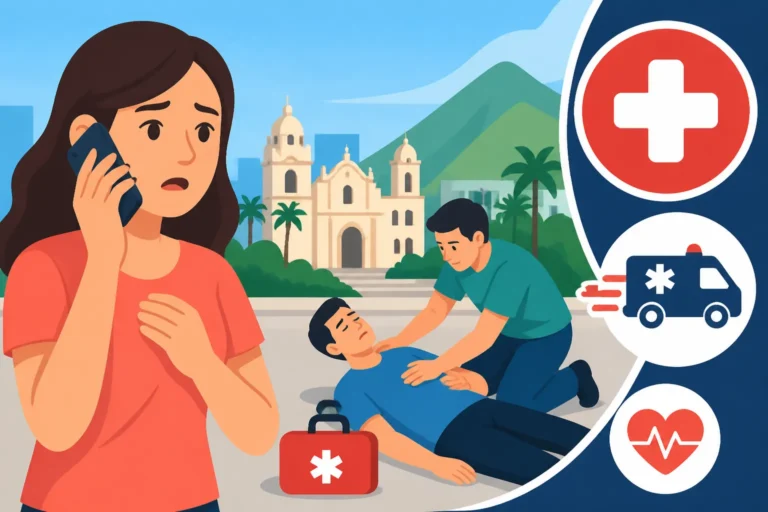
The emergency number in Costa Rica is 911. However, the response can be different than what you are used to. In many rural areas, the Red Cross (Cruz Roja) provides ambulance services. They are a non-profit organization, and while they won't charge you for a life-saving trip, it is customary to provide a donation.
In urban areas, private ambulance services like Emergent 24 are available. Many expats pay a small monthly subscription (around $20) to these private services to ensure a faster response and an English-speaking dispatcher. For a full breakdown of emergency protocols, read Understanding Emergency Numbers (911) and Ambulance Care in Costa Rica.
How to Use Private Hospitals Like CIMA, Clinica Biblica and Hospital Metropolitano
If you have a private emergency, you simply drive to the "Urgencias" (ER) of one of the major hospitals. If you have insurance, you should bring your card and your passport (or DIMEX). Most private ERs will require a "deposit" on your credit card—often $1,000 or more—before they admit you, even if you have insurance. This is to cover anything the insurance company might later refuse to pay.
These hospitals are the crown jewels of Costa Rican medicine. They have specialized wings for everything from oncology to neurosurgery. If you are living in the Central Valley, you are never more than 20-30 minutes from one of these facilities. For those living on the coast, the "Metropolitano" network has been expanding, bringing private ER services to places like Huacas (near Flamingo/Tamarindo) and Quepos. You can read more in How to Use Private Hospitals Like CIMA, Clinica Biblica and Hospital Metropolitano.
Accessing Prescription Meds and Pharmacies
The pharmacy (farmacia) system in Costa Rica is much more accessible than in North America. You can buy many medications—like birth control, blood pressure meds, and even some high-strength painkillers—over the counter without a formal prescription from a doctor. The pharmacist (Regente) is a highly trained professional who can often provide basic medical advice for minor ailments.
However, antibiotics and psychotropic medications (like Xanax or antidepressants) require a special "Receta Digital" (Digital Prescription) from a licensed Costa Rican doctor. If you are bringing medications from home, make sure you have the original bottles and a copy of your doctor's prescription to avoid issues at customs.
Disclaimer
This guide is for informational purposes only and does not constitute professional medical or legal advice. Healthcare laws, insurance regulations, and Caja contribution rates in Costa Rica are subject to change. Always consult with a licensed insurance broker or a legal professional specializing in Costa Rican residency to confirm your specific requirements and coverage options. Individual medical needs vary, and you should perform your own due diligence when selecting a healthcare provider or insurance policy.