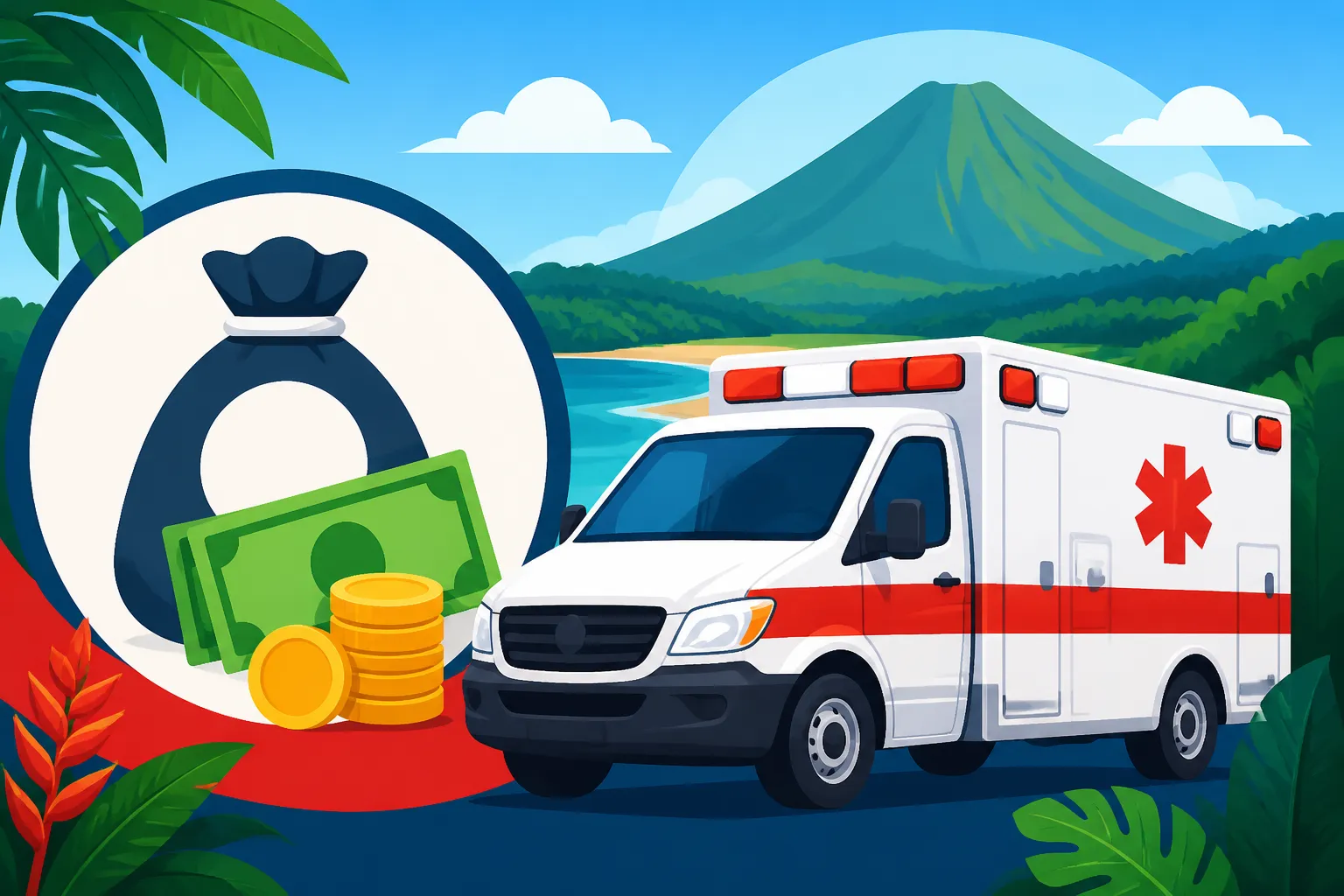
How Much Does an Ambulance Cost in Costa Rica?
Let's face it, navigating a medical emergency in a foreign country is one of those nightmares we all hope to avoid. The panic of not knowing who to call, what to say, and most importantly, how much it's all going to cost, can add immense stress to an already terrifying situation. If you're an expat or a tourist in Costa Rica, understanding the ambulance system and its associated costs is absolutely essential, and this guide is here to break it all down for you, Pura Vida style.
Understanding the Landscape of Ambulance Services in Costa Rica
When a medical emergency strikes, your first thought is probably to dial 911, and that's absolutely the right instinct in Costa Rica. However, what happens after that call, and what kind of ambulance arrives, can vary significantly depending on where you are and the nature of your emergency. We have a dual system here, much like many other aspects of life in the country.
Public Ambulances: The Benemérita Cruz Roja Costarricense
The Cruz Roja Costarricense, our national Red Cross, is the primary provider of emergency ambulance services across Costa Rica. These are the folks who show up when you call 911 for a genuine medical emergency, and they are truly a lifeline for countless people. They are a non-profit, humanitarian organization, and their operations are largely supported by donations, public funds, and volunteers.
Now, here's where it gets a little nuanced, especially for foreigners. In a true, life-threatening emergency, the Cruz Roja will respond and transport you to the nearest public hospital (part of the CCSS or "Caja" system) without asking for payment upfront. This is a fundamental principle of humanitarian aid. However, for services that are deemed less urgent, or for inter-hospital transfers that aren't critical, there might be an expectation of a "suggested donation" or a small fee, particularly for foreigners who are perceived to have greater means. While they won't refuse service, understanding that they operate on a tight budget and rely on contributions is important. It's not a formal bill in the way you might expect from a private service, but rather a request to help them continue their vital work.
For example, if you've broken an ankle hiking in a national park, the Cruz Roja will come, stabilize you, and get you to a hospital. If, after initial treatment, the public hospital needs to transfer you to a more specialized facility for a non-urgent follow-up procedure, that's when the "donation" conversation might arise. For those integrated into the public healthcare system, covered by the Caja, these services are generally covered as part of your contributions. You can learn more about How Costa Rica's Health System Works: The Caja (CCSS) vs Private Explained (2027).
Private Ambulance Services and Their Pricing Structure
Beyond the Red Cross, Costa Rica also has a robust network of private ambulance services. These are typically associated with private hospitals like Clínica Bíblica, CIMA Hospital, or Hospital Metropolitano, or they operate as independent companies like EMS (Emergencias Médicas de Costa Rica). These services do have direct, upfront costs, and they operate on a fee-for-service model.
The main draw of private ambulances is often a quicker response time, especially in urban areas like San José, Escazú, or Heredia, and potentially more advanced equipment or a wider range of medical personnel on board. If you have private health insurance, either a local plan through institutions like INS or an international travel insurance like SafetyWing, these services are often your best bet for direct billing or reimbursement, assuming your policy covers emergency transport.
The pricing for private ambulance services can vary widely, influenced by several factors:
- Distance: Longer transports, especially between cities or from more remote locations, will naturally cost more.
- Level of Care: A basic transfer with a paramedic will be less expensive than an Advanced Life Support (ALS) ambulance staffed with a doctor and equipped for critical interventions.
- Location: Getting an ambulance to a remote beach town will incur different costs than a short hop across downtown San José.
- Urgency: While less common for private services, some might have tiered pricing for immediate dispatch versus scheduled transfers.
Expect costs for private ambulance services to range from approximately $150-$300 for a basic local transfer to a nearby private hospital, potentially escalating to $800-$1500 or more for complex, long-distance, or Advanced Life Support transfers. For tourists, having comprehensive travel insurance like SafetyWing is invaluable for covering these unpredictable, often high costs.
What to Expect When You Call an Ambulance
Knowing the numbers is just the first step; understanding the process and potential challenges can make a world of difference in a high-stress situation.
Making the Call: 911 and Private Service Hotlines
When an emergency hits, your immediate action should be to dial 911. This is the universal emergency number in Costa Rica, connecting you to a central dispatch that coordinates fire, police, and ambulance services (primarily Cruz Roja).
Here's the rub: while many 911 operators in tourist areas or San José might speak some English, it's not guaranteed. Language can be a significant barrier during a crisis. It’s always a good idea to have a few key phrases in Spanish memorized, or better yet, have a local friend, neighbor, or hotel staff member on speed dial who can make the call for you and translate. Clearly state the emergency, your exact location (street address, intersection, nearby landmarks, even GPS coordinates if possible), and the patient's condition. Remember, you can find more details in our guide on What Is the Emergency Phone Number in Costa Rica?.
If you have private insurance or specifically want a private ambulance, it's prudent to have their direct contact numbers saved in your phone. For instance, if you're aiming for a specific private hospital, you might call their emergency line directly, which often dispatches their own ambulance or a contracted service. However, for genuine, life-and-death situations, 911 should always be your first call, as they have the widest reach and coordination capabilities.
Factors Influencing the Cost and Service Level
Beyond the basic public vs. private distinction, several other elements come into play that can influence both the cost and the quality/speed of service you receive.
- Geographic Location and Accessibility: An ambulance response in a bustling San José neighborhood will likely be faster and more straightforward than getting one to a remote farm in Guanacaste or a mountainous region in the Central Valley. Rural areas inherently have fewer resources and longer travel times.
- Severity of the Emergency: For critical, life-threatening events, the Cruz Roja prioritizes speed and immediate intervention, regardless of cost. For non-critical transfers, you might have more options, but also more potential for delay or cost implications.
- Traffic Conditions: Costa Rica, especially the Central Valley, is known for its challenging traffic. During rush hour, even an emergency vehicle with sirens can face significant delays. This doesn't usually impact cost directly but can affect response time.
- Hospital Destination: The ambulance will typically take you to the nearest appropriate hospital. If you're taken to a public hospital first but wish to be transferred to a private one, that secondary transfer will involve additional costs, almost certainly using a private ambulance service. Knowing How to Use Private Hospitals Like CIMA, Clinica Biblica and Hospital Metropolitano can be beneficial.
- Time of Day/Night: While emergency services operate 24/7, logistics can sometimes be more challenging in the dead of night, potentially impacting response or the availability of specific units.
Understanding these variables helps manage expectations. If you're in a critical situation, the primary goal is getting medical attention, and the ambulance will move swiftly. If it's less urgent, you might have a moment to consider options, especially if you have private insurance.
Navigating Payments and Insurance Coverage
The financial side of an emergency can be daunting. Let's break down how payments generally work and how your insurance can protect you.
Out-of-Pocket Expenses and Direct Billing
For Cruz Roja services, as mentioned, direct billing in the traditional sense is rare, especially for life-saving interventions. They operate on donations. If a "suggested donation" is requested for a non-critical transport, it might be collected on the spot, or you might be given information on how to contribute later. It’s always advisable to offer a contribution if you are able, as it supports a vital service.
For private ambulance services, you will absolutely be expected to pay. They often prefer cash (USD or Colones) or credit card directly after the service, or upon arrival at the private hospital. If you're admitted to a private hospital, the ambulance charge will likely be rolled into your overall hospital bill. If you are a tourist, you can rest assured that Can Tourists Access Emergency Care in Costa Rica? is a common concern with solutions.
Here's a rough idea of what you might expect for out-of-pocket costs:
| Service Type | Provider | Estimated Cost Range (USD) | Payment Model | Notes |
|---|---|---|---|---|
| Life-Threatening Emergency | Cruz Roja | $0 – $100 (donation) | Primarily donation-based; rarely direct bill. | Will respond regardless of ability to pay; focuses on public hospitals. |
| Non-Urgent Transfer (Local) | Cruz Roja | $50 – $200 (donation/fee) | "Suggested donation" often requested. | More likely for inter-hospital transfers or less critical situations. |
| Basic Private Transfer (Local) | Private Co. | $150 – $350 | Direct payment (cash/card) or direct billing to insurer. | For stable patients, short distances. |
| Advanced Life Support (ALS) | Private Co. | $400 – $1,500+ | Direct payment (cash/card) or direct billing to insurer. | Involves specialized medical staff and equipment; costs increase with distance and complexity. |
| Inter-Regional Transfer | Private Co. | $800 – $2,500+ | Direct payment (cash/card) or direct billing to insurer. | Long-distance transport, e.g., from coast to Central Valley. |
These figures are estimates and can fluctuate. Always confirm costs if you have the presence of mind and opportunity before committing to a private service for non-life-threatening situations.
How Health and Travel Insurance Can Help
This is where your insurance really shines. Knowing your coverage is paramount before an emergency strikes.
-
Caja (CCSS) Members: If you are a legal resident and contributing to the Caja Costarricense de Seguro Social (CCSS), the public healthcare system, then emergency transport by the Cruz Roja to a public hospital is covered as part of your benefits. You won't face additional charges for these services. However, the Caja does not cover private ambulance services or transport to private hospitals. You can delve deeper into The Expat Guide to Joining the Caja (CCSS) in Costa Rica (2027) for more information.
-
INS (National Insurance Institute) and Local Private Plans: Costa Rica's National Insurance Institute (INS) offers various local health insurance plans, and many private local policies also exist. These plans typically do include coverage for emergency ambulance services, both public (if a fee is charged) and private, up to certain limits or with specific networks. Always check your policy's fine print regarding emergency transport, deductibles, and co-payments. Our article on Understanding INS Health Insurance Plans in Costa Rica might be helpful here.
-
International Travel Insurance (like SafetyWing): For tourists or new expats who haven't yet secured local residency and Caja coverage, international travel insurance is your absolute best friend. Policies like SafetyWing are specifically designed to cover emergency medical expenses for those abroad, and this almost always includes emergency medical transportation by ambulance. Crucially, these plans can cover the high costs of private ambulances and even medical evacuation if necessary. It’s vital to:
- Confirm Coverage: Ensure your policy explicitly covers emergency ground ambulance services and the limits of that coverage. Some policies might only cover transfers to the "nearest appropriate facility."
- Know the Assistance Number: Your insurance provider will have a 24/7 emergency assistance hotline. Call them as soon as it's safe to do so (or have someone call for you) to inform them of the situation and get pre-authorization for services if possible. This makes the claims process much smoother.
- Keep Documentation: Collect all receipts, medical reports, and any documentation related to the ambulance service. You'll need these for reimbursement.
In essence, having some form of insurance that covers emergency medical transport is not just a good idea, it's a necessity when living or traveling in Costa Rica. It provides a critical safety net against potentially astronomical out-of-pocket costs. Our comprehensive guide on Health Insurance in Costa Rica: Caja, INS and International Options Explained covers all these options in detail.
Practical Tips and What to Do in an Emergency
Preparation is key to reducing panic and ensuring the best outcome when an emergency strikes. As an expat who's been through a few hairy situations myself, trust me, a little foresight goes a long way.
Preparing for an Emergency
Before you ever need an ambulance, take these steps to ensure you're as ready as possible:
- Memorize 911 (and practice): Seriously, practice saying your address and a brief description of the emergency in Spanish. Even just "Emergencia médica, por favor. Mi dirección es…" (Medical emergency, please. My address is…).
- Save Key Numbers: Keep 911 on speed dial. Also, save the direct emergency numbers for major private hospitals (Clínica Bíblica: 2522-1000, CIMA: 2208-1000) if you plan on using their services. Don't forget your insurance provider's 24/7 assistance number, like for SafetyWing.
- Know Your Location in Spanish: Write down your full address, including the province, canton, and district. Crucially, know a few distinct landmarks near your home. Costa Rican addresses are often based on landmarks, not just street numbers. "De la pulpería de Don Pedro, 100 metros al sur y 50 al este" (From Don Pedro's corner store, 100 meters south and 50 east) is a common, and very important, way to give directions.
- Medical Information Card: Carry a card with your name, blood type, any known allergies, chronic conditions, medications you take, and emergency contact information (with a local number if possible). You can also note your insurance provider here.
- Emergency Contact: Have a trusted local friend, neighbor, or even a lawyer's number that you can call to help with translation or coordination if needed.
- Understand the Local Healthcare System: Familiarize yourself with Emergency Medical Care in Costa Rica: What Every Expat Needs to Know and Navigating the Costa Rican Healthcare System: An Expat's Roadmap (2027). Knowledge is power, especially when you're vulnerable.
On-the-Spot Considerations
When the emergency is happening, it's tough to think clearly, but if you can manage these, it will greatly assist the process:
- Communicate Clearly (or Delegate): When you call 911, clearly state the nature of the emergency, the number of people affected, and your precise location. If you have a local assisting, let them do the talking.
- Be Ready for the Crew: If possible, ensure the entrance to your property is clear. Have your medical information card and ID ready. If you have private insurance, make sure to have your policy information easily accessible.
- Public vs. Private Decision: If the situation allows for a brief moment of decision (e.g., a non-life-threatening injury where you're conscious and able), consider whether you prefer a public or private hospital. If you opt for private, be prepared to communicate this to the ambulance crew, though in an emergency, they will always prioritize getting you to the nearest appropriate facility first. If you're a SafetyWing policyholder, you'll want to aim for a private facility if your condition allows, as your policy primarily covers private care.
- Don't Hesitate: Regardless of language barriers or cost concerns, do not hesitate to call for help in a real emergency. The priority is your health and safety. The financial details can be sorted out afterward.
Being prepared for medical emergencies in Costa Rica is about more than just knowing numbers; it's about understanding the system, managing expectations, and having your personal information and insurance details ready to go. Pura vida means living life to the fullest, but also being smart and prepared for its inevitable bumps.
Disclaimer
The information provided in this article is for general informational purposes only and does not constitute legal, medical, or financial advice. While we strive to provide accurate and up-to-date information, local laws, regulations, and costs can change frequently. Always consult with qualified local professionals (e.g., healthcare providers, insurance agents, legal counsel) for advice tailored to your specific situation. We are not liable for any actions taken based on the information presented here.