Navigating the Costa Rican Healthcare System: An Expat’s Roadmap (2027)
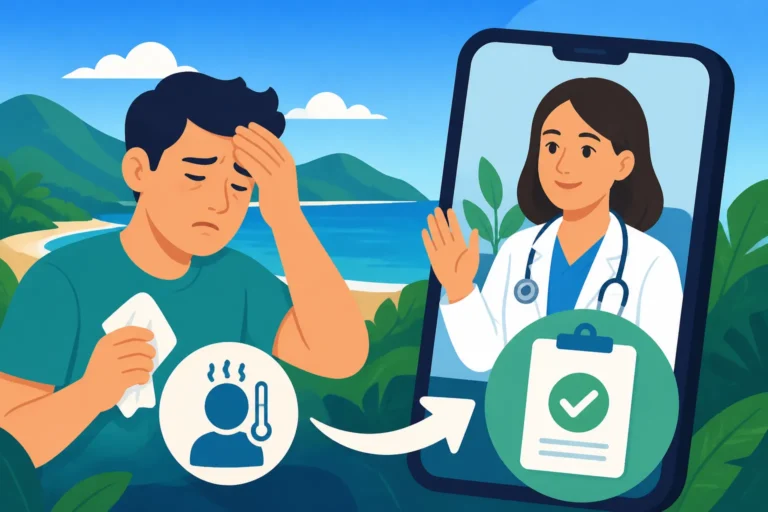
Navigating the bureaucratic maze of a new country is exhausting, but nothing is more stressful than facing a medical issue without knowing where to turn. Many expats arrive in Costa Rica expecting a simple "Pura Vida" experience, only to find themselves lost between public clinic wait times and high private hospital costs. This guide provides a detailed roadmap for managing your health in Costa Rica.
The Dual Nature of Costa Rican Healthcare
One of the most confusing aspects for newcomers is that Costa Rica operates two distinct healthcare systems that run parallel to one another. There is the public system, known as the Caja, and the private system. Understanding how these two interact is the first step toward feeling secure in your new home. For a high-level overview, I recommend reading The Complete Guide to Healthcare in Costa Rica for Expats (2027) to get your bearings on the legalities and general structure.
The Public System Caja CCSS
The Caja Costarricense de Seguro Social, or simply "the Caja," is the backbone of the country’s socialized medicine. It is a mandatory system for all legal residents. When you pay into the Caja, you are contributing to a national fund that provides "free" at-the-point-of-service care to everyone in the system. This includes everything from routine check-ups and prescriptions to major heart surgeries and cancer treatments. There are no deductibles, no co-pays, and no premiums based on your health history.
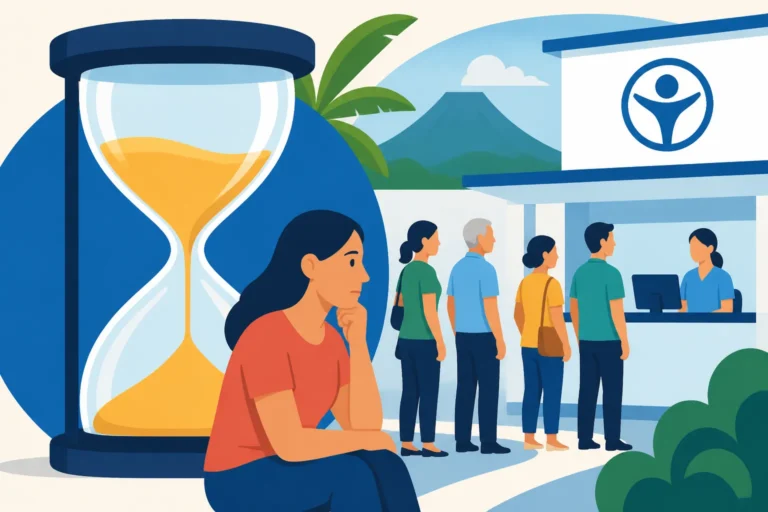
However, the "free" nature of the Caja comes with a different kind of cost: time. Because the system is utilized by the entire population, wait times for non-emergency surgeries or specialist consultations can stretch into months or even years. If you need a hip replacement and it isn't deemed an immediate life-threatening emergency, you will be placed on a list. For many expats, this is the primary frustration. You can dive deeper into the mechanics of this in How Costa Rica's Health System Works: The Caja (CCSS) vs Private Explained (2027).
The quality of care in the Caja is actually quite high, particularly in the major hospitals in San Jose, such as Hospital Mexico or Hospital San Juan de Dios. These facilities house some of the most skilled surgeons and specialists in Latin America. The challenge isn't the skill of the doctors; it’s the administrative burden and the sheer volume of patients. You will often find yourself in crowded waiting rooms, navigating paperwork entirely in Spanish, and dealing with a system that feels archaic if you are used to the digitized efficiency of North American private clinics.
The Private Healthcare Sector
On the other side of the coin is the private sector, which functions much like the healthcare system in the United States or Europe, but often at a fraction of the cost. Private healthcare is where you go when you want convenience, speed, and luxury. Hospitals like CIMA in Escazu or Clinica Biblica in downtown San Jose feel more like high-end hotels than medical facilities. Here, you can usually book a specialist appointment for the following day, and English-speaking staff are the norm rather than the exception.
Expats often use private care for "quality of life" issues—dermatology, elective procedures, minor illnesses, or diagnostic imaging like MRIs and CT scans that would take too long in the public system. You pay out of pocket or use private insurance to cover these costs. It is very common for expats to maintain their mandatory Caja membership for catastrophic issues while using the private system for day-to-day needs.
One thing to keep in mind is that even the best private hospitals in Costa Rica may transfer you to a public hospital for extremely complex, long-term care if your insurance limits are reached or if the public system has specialized equipment that the private sector lacks. This symbiotic relationship is unique and requires a shift in mindset. For more on this, check out How to Use Private Hospitals Like CIMA, Clinica Biblica and Hospital Metropolitano.
Understanding the Caja CCSS for Expats
If you are moving to Costa Rica as a resident, you cannot opt out of the Caja. It is legally tied to your residency status. This often catches retirees and investors off guard, as they see it as an additional "tax" on their lifestyle. However, seeing it as a universal safety net helps frame the cost more positively.
Eligibility and Mandatory Requirements
To enroll in the Caja, you must have an active residency application or a DIMEX (residency card). The government requires proof of your Caja payment history during your residency renewal process. If you fall behind on payments, you may find your residency renewal blocked, which can lead to a cascade of immigration headaches. It is not just about healthcare; it is about your legal right to stay in the country.
The process of joining is notoriously bureaucratic. You usually start at the local Caja office (sucursal) nearest to your home. You will need your passport, your residency documents, and proof of income. If you are a retiree (Pensionado), you will need to show your pension letter. If you are an investor or Rentista, the calculation is based on the income you declared for your residency. This is a manual process that often requires multiple visits and a fair amount of patience.
Once you are registered, you are assigned to a specific EBAIS. The EBAIS is your neighborhood clinic and your entry point into the entire public system. You cannot simply walk into a major hospital for a routine issue; you must go to your EBAIS first and get a referral. This gatekeeping system is essential for managing the load on the large hospitals, but it can feel restrictive if you are used to choosing your own doctors.
Monthly Contributions and Costs
The cost of the Caja is not a flat fee. It is a percentage of your reported income. For employees, it is deducted from the paycheck. For independent contractors or retirees, it is calculated based on a sliding scale. This is where many expats feel the pinch, as a high reported pension can lead to a monthly Caja bill of several hundred dollars. For a detailed breakdown of these numbers, look at Understanding How Caja Contributions Are Calculated in Costa Rica.
The payments are made monthly, and you can pay them through most local banking apps, at grocery stores, or at the Caja office itself. It is vital to keep your receipts or digital confirmations. The "Pura Vida" lifestyle doesn't apply to the Caja’s accounting department; they expect timely payments, and interest accrues on late balances.
While the cost can seem high, remember that it covers everything. If you are diagnosed with a chronic condition like diabetes or hypertension, all your medications, testing supplies, and specialist visits are covered under that one monthly payment. For a family with children, this can actually end up being much cheaper than private insurance in other countries.
The Role of the EBAIS Local Health Clinic
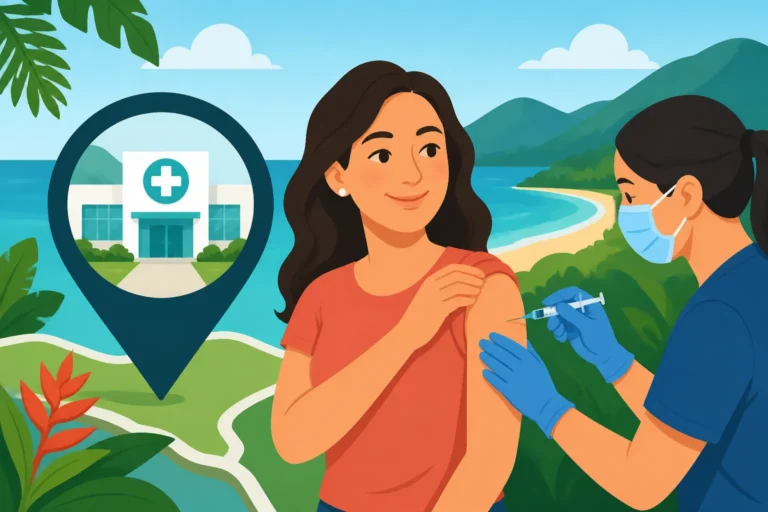
The EBAIS (Equipos Básicos de Atención Integral en Salud) is a foundational part of the Costa Rican identity. These clinics are scattered across every town, ensuring that even the most remote villages have access to a doctor, a nurse, and a pharmacist. As an expat, your EBAIS is where you will go for your annual flu shot, blood pressure checks, and basic prescriptions.
Learning to navigate the EBAIS is a rite of passage. You typically need to arrive early—sometimes before the doors open at 7:00 AM—to secure an appointment for that day. Some clinics have moved to a digital appointment system via the "EDUS" app, which is a lifesaver for tech-savvy expats. Through the app, you can see your medical history, your scheduled appointments, and even your current prescriptions.
I always tell my fellow expats that the EBAIS is the best place to practice your Spanish. While many doctors in the main hospitals speak English, the staff at the local EBAIS often do not. Bringing a translator or using a translation app is common, but showing an effort to speak the local language goes a long way in receiving better, more empathetic care. For practical tips on finding your local branch, see How to Find and Register with an EBAIS Clinic in Costa Rica.
Navigating the Private Healthcare Sector
When you need an answer today, the private sector is your destination. The efficiency here is world-class, and the facilities are often superior to what you would find in mid-sized North American cities.
Major Private Hospitals in the Central Valley
Most of the heavy-hitting private hospitals are located in the Greater Metropolitan Area (GAM), specifically in San Jose, Escazu, and Santa Ana. CIMA Hospital is perhaps the most famous among expats. It is JCI-accredited and has a massive tower of private specialist offices. If you need a cardiologist who trained at the Mayo Clinic, you’ll likely find them there.
Clinica Biblica is another titan, located in the heart of San Jose. It is the oldest private hospital in the country and has a very strong reputation for maternity care and complex surgeries. More recently, Hospital Metropolitano has expanded rapidly, offering a more "middle-ground" price point. They have smaller clinics in coastal areas like Huacas and Lindora, which is a blessing for those living outside the Central Valley.
Choosing between these can be a matter of geography and insurance. Some insurance plans have "direct billing" agreements with certain hospitals but not others. If you are using international coverage like SafetyWing, you will want to check which facilities in the network allow for direct payment versus reimbursement. This can save you from having to put thousands of dollars on a credit card while waiting for a claim to process.
Specialist Consultations and Wait Times
One of the greatest luxuries of private care in Costa Rica is the ability to see a specialist without a referral. If you want to see an ENT (Ear, Nose, and Throat) doctor because you have a sinus infection, you simply call their office and book an appointment. You will pay anywhere from $80 to $150 for the consultation.
These specialists operate out of offices attached to the major hospitals. Because they are private, they have their own schedules and usually offer same-week or even same-day appointments. This is the complete opposite of the Caja, where a referral to an ENT could take six months. For an expat who is used to quick service, the private system is worth every penny for these types of visits.
The doctors in these private offices almost always speak English. Many have done their residencies or fellowships in the US, Canada, or Europe. This level of communication is vital when you are discussing complex health issues. It reduces the "lost in translation" anxiety that often plagues foreigners in the public system. For more on the specifics of these visits, refer to How to Use Your DIMEX to Access Healthcare in Costa Rica.
Health Insurance Options for Expats
Relying solely on the Caja is a risk most expats aren't willing to take, but relying solely on out-of-pocket payments for the private sector can be equally dangerous. This is where insurance comes in.
Public vs Private Insurance
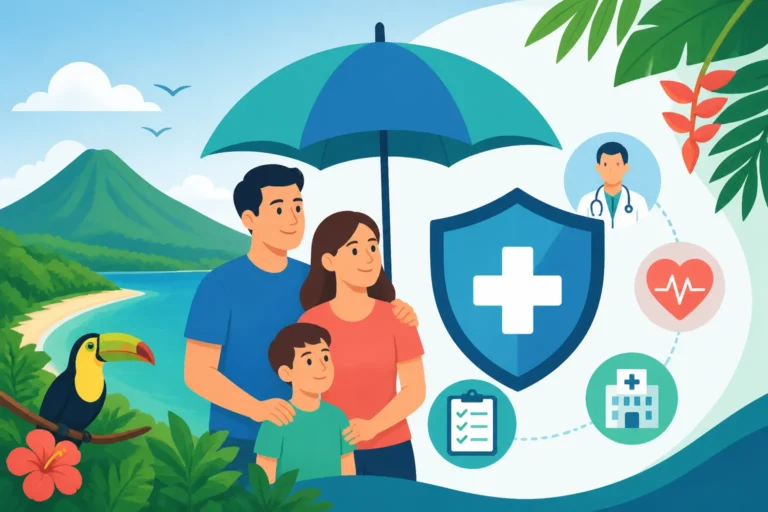
As we’ve established, the Caja is your "public insurance," but many expats supplement this with a private policy. A private policy allows you to bypass the Caja lines and go straight to CIMA or Biblica. There are two main types of private insurance: local and international.
Local insurance is usually provided by INS (Instituto Nacional de Seguros), the government-owned insurance company, or Pan-American. These plans are tailored for the Costa Rican market. They are often cheaper than international plans but have smaller networks and lower coverage limits. They are great for someone who plans to stay in Costa Rica 100% of the time and doesn't mind a bit of paperwork. You can read more about these in Health Insurance in Costa Rica: Caja, INS and International Options Explained.
International insurance, often called "Expat Insurance," is designed for people who move between countries. These plans are more expensive but offer much higher coverage limits and often include coverage in your home country (though usually excluding the US unless you pay a significant premium). For digital nomads or those in the residency waiting period, a provider like SafetyWing is a common choice because it offers flexibility and covers unexpected medical emergencies without the long-term commitment of a local policy.
| Feature | Caja (Public) | Private (Local/INS) | International (Expat) |
|---|---|---|---|
| Cost | Percentage of Income | Age/Health Based | Age/Coverage Based |
| Wait Times | Long (Months/Years) | Short (Days) | Short (Days) |
| Language | Primarily Spanish | Mostly English | Almost Always English |
| Network | Government Facilities | Specific Local Hospitals | Worldwide / Major Local |
| Best For | Catastrophic/Chronic | Routine/Diagnostic | Nomads/High Coverage |
International Health Insurance and SafetyWing
For many newcomers, the first six months to a year are a "gray zone." You might not have your residency yet, so you can't join the Caja, but you’re no longer covered by your insurance back home. This is where travel-medical insurance or nomad insurance becomes a critical bridge.
SafetyWing is frequently mentioned in expat circles because it caters to this specific "in-between" lifestyle. It is particularly useful for those who haven't fully committed to the permanent residency track but are living in Costa Rica on a tourist visa or a digital nomad visa. It provides a safety net for accidents and sudden illnesses, which are the biggest risks when you’re exploring the rainforests or driving on Costa Rica’s notoriously difficult roads.
Having this kind of coverage is also a mental relief. If you end up in a private ER in Liberia after a surfing accident, knowing you have an international provider means you won't be scrambling to figure out how to pay a $5,000 bill. It allows you to focus on recovery rather than the exchange rate. Once you are a full resident, you might transition to a more permanent local solution, but in the interim, these international plans are indispensable.
Local INS Coverage
The Instituto Nacional de Seguros (INS) was once the only insurance provider in the country. While the market has opened up, they remain the dominant force. Their medical plans are comprehensive and have been refined over decades to work seamlessly with the Costa Rican hospital network.
One advantage of INS is that they have a "direct payment" system with almost every private clinic in the country. You show your INS card, pay your deductible or co-insurance, and the hospital bills INS directly. This saves you from the "reimbursement" headache that often comes with foreign insurance companies where you have to mail in receipts and wait weeks for a check.
However, INS does have age limits and pre-existing condition exclusions that can be quite strict. If you are over 70, getting a new policy with INS can be a challenge. In these cases, expats often rely more heavily on the Caja for their chronic conditions and keep a "disaster fund" for private emergencies. Understanding these nuances is a key part of your financial planning in Costa Rica.
Pharmacies and Prescription Management
The pharmacy, or "farmacia," in Costa Rica is more than just a place to pick up pills. It is often the first stop for medical advice.
The Farmacia Experience
In Costa Rica, pharmacists (regentes) have a much broader scope of practice than in many other countries. You can walk into a pharmacy, describe your symptoms to the pharmacist, and they can often recommend a treatment or even administer an injection on the spot. For minor issues like ear infections, rashes, or stomach bugs, the farmacia is often faster and cheaper than a doctor’s visit.
Major chains like Farmacia Fischel and Farmacia La Bomba are everywhere. Fischel tends to be more upscale and is often located in malls or near private hospitals. La Bomba is known for its "discount" model and is the go-to for many locals and expats looking to save money on monthly maintenance meds. Many pharmacies also offer free delivery service via WhatsApp, which is incredibly convenient if you are too sick to leave the house.
One thing that surprises expats is that many medications that require a prescription in the US or Canada are available "over the counter" (OTC) in Costa Rica. While antibiotics and controlled substances (like narcotics or strong psychotropics) strictly require a doctor's signature, many high-end creams, birth control, and blood pressure medications can be purchased by simply asking the pharmacist. For a full guide on this, see Understanding the Costa Rican Pharmacy (Farmacia) System.
Medication Costs and Availability
While healthcare services are generally cheaper in Costa Rica, brand-name medications can actually be more expensive than in the US due to import taxes and a smaller market. This is where generic medications become your best friend. Always ask for the "genérico" version of your prescription to save significant money.
If you are a member of the Caja, your medications are provided at no additional cost. However, the Caja only stocks certain brands and types of drugs (the "formally" approved list). If you need a very specific, modern biological drug for a condition like rheumatoid arthritis, the Caja might not have it, or there may be a long process to get it approved for your specific case. In these instances, you will have to buy it privately.
Availability is generally good in the Central Valley, but if you live in a remote beach town, you might find that the local pharmacy has a limited stock. It is common for expats in rural areas to make a monthly "San Jose run" to stock up on their specific medications. Always keep a copy of your original prescription from your home country, as it can help the local doctor or pharmacist identify the correct equivalent in the Costa Rican pharmacopeia.
Emergency Medical Care and Logistics
When an emergency happens, the "Pura Vida" pace disappears, but you need to know who to call and where to go.
Calling 911 and Ambulance Services
Costa Rica has a unified 911 system. When you call, you can often request an English speaker, though it isn't guaranteed. The 911 dispatcher will coordinate with the Cruz Roja (Red Cross), which is the primary provider of ambulance services in the country. The Red Cross is a non-profit organization, and while their service is "free," it is customary and highly encouraged to make a donation to your local branch.
The Red Cross will almost always take you to the nearest public (Caja) hospital. If you want to be taken to a private hospital like CIMA, you usually need to use a private ambulance service. Many private hospitals have their own ambulance fleets. If you have insurance like SafetyWing or a local INS plan, check if they provide a dedicated emergency number for private transport. This can be the difference between a 40-minute ride to a public clinic and a 15-minute ride to a private ER.
It is a good idea to have the direct phone numbers of the nearest private ambulance service saved in your phone. In the heat of the moment, navigating the 911 system in Spanish can be a barrier you don't want to face. For a more detailed look at what to expect in these moments, see Emergency Medical Care in Costa Rica: What Every Expat Needs to Know.
Emergency Care for Tourists vs Residents
If you are a tourist or a new expat without Caja or local insurance, you will be treated in an emergency at a public hospital, but you will be billed for it afterward. The public system never refuses life-saving care, but they are diligent about collecting payment from non-residents. These bills are still much lower than what you would see in a US hospital, but they are not free.
For residents, your DIMEX card is your "passport" to emergency care. In a Caja emergency room, they will check your status in the system immediately. If you are "moroso" (behind on payments), they will still treat you, but you will be hit with a bill for the full cost of the services. Keeping your Caja payments current is your primary insurance against medical debt.
In the private sector, be prepared to provide a credit card upfront if you don't have a pre-approved insurance direct-billing arrangement. Private ERs in Costa Rica are excellent, but they are businesses. They will often place a "hold" on your credit card for a few thousand dollars before admitting you for observation. This is why having international coverage that provides "guarantee of payment" letters is so important.
Maternity Dental and Mental Health
Not all healthcare is about emergencies. Many expats move to Costa Rica for a better quality of life, which includes dental work and family planning.
Giving Birth in Costa Rica
Costa Rica is a popular destination for "birth tourism" because any child born on Costa Rican soil is automatically a citizen. Beyond that, the care for expectant mothers is exceptional. You have a choice: the Caja, which follows a very traditional, midwife-and-doctor-led approach, or the private sector, which offers a more pampered experience.
In the Caja, prenatal care is handled at your local EBAIS. It is thorough but can feel clinical. You don't always get to choose your doctor, and the person who delivers the baby is whoever is on shift that day. However, the cost is entirely covered by your monthly contribution. In the private sector, you can choose your OB-GYN, have a private suite, and even opt for specific birthing plans. For more details on the options, check out Understanding Maternity and Prenatal Care in Costa Rica.
The cost of a private birth (uncomplicated) usually ranges from $3,500 to $6,000. This is remarkably affordable compared to the US, leading many expat families to choose the private route for the extra comfort and the guarantee of an English-speaking doctor throughout the process.
Dental Care and Medical Tourism
Costa Rica is a global hub for dental tourism. The quality of dental work here is often indistinguishable from the best clinics in Beverly Hills or London, but at 50% to 70% of the price. Whether you need a simple cleaning or a full mouth of implants, you will find world-class specialists in San Jose and Escazu.
Most dental work is private. The Caja does offer basic dental services (extractions and simple fillings), but for anything cosmetic or complex, you will be paying out of pocket. Because the market is so competitive, dentists often have the latest technology, including 3D imaging and in-house labs. If you are curious about the price points, How Much Does Dental Treatment Cost in Costa Rica Without Insurance? provides a great starting point for budgeting.
Many expats find that the money they save on one major dental procedure (like a bridge or implants) pays for their entire move to Costa Rica. It is one of the few areas of healthcare where the "private" option is so affordable that insurance isn't even necessary for many people.
Mental Health Services
Mental health has historically been a bit of a "taboo" subject in Latin America, but that is changing rapidly in Costa Rica. In the public system, you can access psychologists and psychiatrists through a referral from your EBAIS. However, the wait times are long, and the sessions can be brief.
For expats, the private sector is the best route for mental health support. There are many English-speaking therapists who specialize in "expat stress"—the unique anxiety that comes with moving to a new culture. Telehealth has also become very popular, allowing you to speak with a therapist in San Jose while you are living on the beach in Nosara.
The cost for a private therapy session is usually between $60 and $100. Compared to the prices in North America, this makes long-term mental health support much more accessible. It is a vital part of a successful "Pura Vida" transition, as the culture shock of moving can be more taxing than people anticipate.
Practical Roadmap to Getting Started
Once you land, how do you actually get into the system? It isn’t as simple as clicking a button, but following these steps will save you weeks of frustration.
Step-by-Step Enrollment
Your first step is to get your legal residency in order. You cannot join the Caja as a "tourist." While you are waiting for your residency to be approved, you should maintain a high-quality international plan like SafetyWing. This ensures you are covered for the 6-12 months it typically takes for the immigration department (Migración) to process your paperwork.
Once you have your "expediente" (file) from Migración, you can go to the Caja office. I recommend going with a "facilitator" or a lawyer if your Spanish isn't strong. They know which windows to go to and how to handle the inevitable "come back tomorrow" response. Once you are registered and have paid your first month, you take your receipt to your local EBAIS to register your address. This is when you are truly "in" the system.
Don't forget to download the EDUS app. This is the single best tool for navigating the Caja. Once you are registered, your info will appear in the app, and you can start booking appointments and seeing your records. For a more detailed look at using your ID for these steps, see How to Use Your DIMEX to Access Healthcare in Costa Rica.
Finding English-Speaking Doctors
If you are in the Central Valley, finding an English-speaking doctor is as easy as walking into CIMA or Clinica Biblica. Most of the receptionists and almost all the doctors are bilingual. However, if you are at a public hospital or in a rural area, it becomes more difficult.
I always suggest joining local expat Facebook groups for your specific town. People are very vocal about which doctors are "expat-friendly" and speak good English. There are also directories like "HuliHealth" which allow you to filter doctors by specialty, location, and language. This is a fantastic resource for reading reviews and booking private appointments online.
Lastly, don't be afraid to ask. In Costa Rica, a "recomendación" (recommendation) is worth more than a Google ad. Ask your neighbors, your real estate agent, or even your local pharmacist. People here are incredibly helpful and will often go out of their way to make sure you find the care you need. Navigating the healthcare system is a marathon, not a sprint, but with the right roadmap, you can enjoy your new life in the tropics with total peace of mind.
Disclaimer
The information provided in this guide is for educational and informational purposes only and does not constitute medical, legal, or financial advice. Healthcare laws, insurance policies, and Caja regulations in Costa Rica are subject to change. Always consult with a qualified professional, such as a licensed insurance broker, a medical practitioner, or a residency attorney, before making decisions regarding your healthcare or legal status in Costa Rica. Medical outcomes and costs can vary significantly based on individual circumstances.