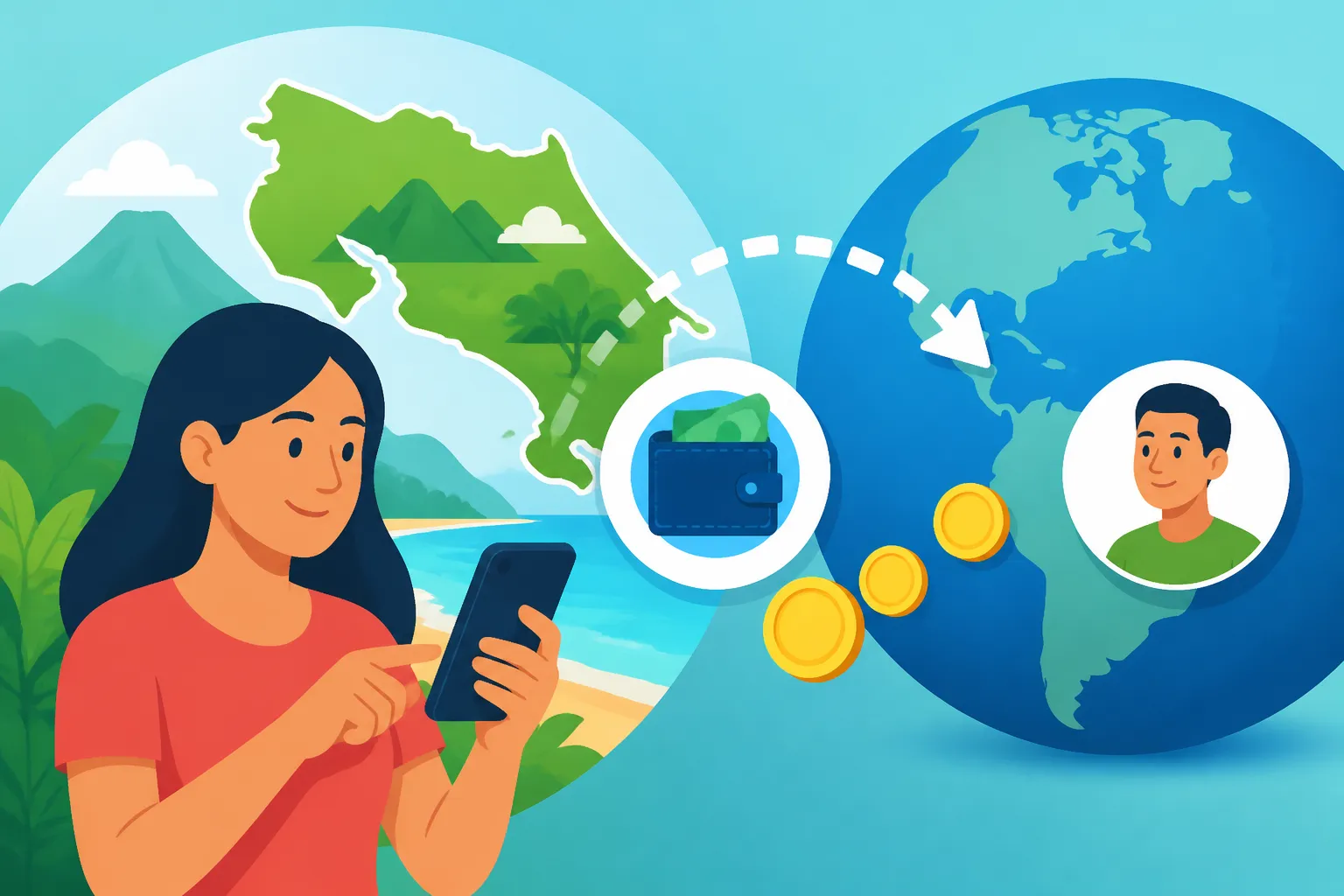
What Is the Best Way to Send Money Abroad from Costa Rica?
Ah, moving money internationally from Costa Rica. This is one of those topics that can quickly turn a pura vida day into a head-scratching, paperwork-filled ordeal. You’ve likely experienced the frustration of trying to navigate local banking systems, only to be met with confusing fees, slow transfers, and exchange rates that feel like they're designed to chip away at your hard-earned funds. This guide is here to demystify the process and help you find the most efficient and cost-effective ways to send your money abroad, ensuring you keep more of your cash in your pocket.
Understanding the Challenges of International Money Transfers from Costa Rica
When you first arrive in Costa Rica, everything feels new and exciting. But then comes the reality of logistics, and that includes managing your finances across borders. It doesn't take long to realize that moving money out of Costa Rica isn't always as straightforward as it might be in your home country. Many expats find themselves scratching their heads, wondering why a simple bank transfer feels like a Herculean task.
The Local Banking System and Its Quirks
Let's be honest, the Costa Rican banking system, while functional, often operates at a different pace and with a different set of rules than what many of us are accustomed to. Whether you're dealing with state-owned institutions like Banco Nacional or Banco de Costa Rica, or private banks such as BAC Credomatic, you'll encounter a few common themes. For starters, the branch experience can be time-consuming, often involving long queues and multiple visits, especially if you're dealing with a complex international transfer.
Even if you've mastered the art of online banking with your local institution – and believe me, that's an achievement in itself for those who remember how it used to be – the options for international transfers can be limited and the interface less than intuitive. Many local banks still rely heavily on physical paperwork for anything beyond simple local transactions. They might ask for detailed justification for the transfer, proof of funds, and a myriad of forms that need to be filled out by hand. It's a system built on robust security, yes, but often at the expense of convenience and speed for the customer. For a deeper dive into the ins and outs, check out our guide on The Expat Guide to Opening a Bank Account in Costa Rica.
Exchange Rate Volatility and Hidden Fees
One of the biggest pain points for expats sending money from Costa Rica is the exchange rate. The Costa Rican Colón (CRC) is constantly fluctuating against major currencies like the US Dollar (USD), Euro (EUR), and Canadian Dollar (CAD). While this is a normal aspect of currency markets, local banks often offer less-than-favorable exchange rates compared to the real mid-market rate you see on financial news sites. This difference, sometimes seemingly small, can add up significantly on larger transfers, essentially acting as an additional, unadvertised fee.
Beyond the exchange rate, traditional wire transfers from Costa Rican banks come with a host of charges. You'll typically pay an outgoing transfer fee from your Costa Rican bank, which can range from $25 to $50 or even more, depending on the bank and the amount. But here's the kicker: there are often intermediary bank fees (conocidos as correspondent bank fees) that deduct an additional amount along the way, and sometimes the recipient's bank will also charge a fee to receive the international wire. These stacked fees can quickly erode the amount of money that actually reaches your recipient, making the total cost of a transfer surprisingly high. Understanding How the Costa Rican Tax Authority (Hacienda) Works (2027) or even just Understanding Foreign Exchange and the Colon vs Dollar in Costa Rica can shed more light on related financial nuances here.
Exploring Your Options for Sending Money Abroad
Navigating the landscape of international money transfers requires knowing your options. While local banks are a familiar starting point, they are far from the only game in town. For expats who prioritize efficiency, cost, and transparency, there are several alternatives worth considering, each with its own set of advantages and disadvantages.
Traditional Bank Transfers Wire Transfers
This is probably the first method most people think of when sending money abroad. You walk into your bank, fill out a form, provide the recipient's bank details (including SWIFT/BIC code and IBAN/account number), and off it goes. As we touched upon earlier, while reliable, these transfers are generally the slowest and most expensive option from Costa Rica. A wire transfer can take anywhere from 3 to 7 business days to complete, sometimes even longer if there are holidays or additional verification steps required by either bank.
The fees are often multi-layered: an initiation fee from your Costa Rican bank, potential fees from intermediary banks, and finally, a receiving fee from the destination bank. These can collectively eat a significant chunk out of your transfer. For example, a $1,000 transfer might incur $30 in outgoing fees, another $15 from an intermediary, and $10 for the recipient to receive it – suddenly, you're looking at $55 in total fees, plus any unfavorable exchange rate margin. It's safe, yes, but certainly not the most economical or speedy choice. If you’re already familiar with How to Set Up Online Banking with a Costa Rican Bank, you might find the online wire transfer option slightly less painful, but the fees and rates remain the same.
Online Money Transfer Services
This is where the magic happens for many expats. Online money transfer services have revolutionized how we send money across borders, largely by offering better exchange rates, lower fees, and quicker processing times compared to traditional banks. Companies like Wise (formerly TransferWise) are leading the charge, operating on a different model that often bypasses the complex, costly SWIFT network used by banks. Instead, they use a local-to-local transfer system, where your money is received in Costa Rica and then a corresponding amount is paid out from their local account in the destination country.
The benefits are clear:
- Lower Fees: Their fee structure is transparent and typically much lower than banks, often a small percentage of the transfer amount plus a fixed minimal fee.
- Real Exchange Rates: They almost always offer the mid-market exchange rate, meaning you get a much fairer rate than what local banks provide, saving you a substantial amount on currency conversion.
- Speed: Transfers can often be completed within hours, or at most 1-2 business days, which is a significant improvement over traditional wires.
- Convenience: The entire process is done online or through a mobile app, meaning no trips to the bank, no queues, and no tedious paperwork.
When comparing options for How to Transfer Money Into and Out of Costa Rica as an Expat, services like Wise stand out for their efficiency. Other services like Xoom (a PayPal service), Remitly, or WorldRemit also operate in a similar space, offering various features depending on the corridor. It’s always good to compare a few for your specific needs, but for many, Wise has become the go-to.
Cryptocurrency for the Tech-Savvy Expat
For those comfortable with digital assets, cryptocurrency offers another alternative for international money transfers. Platforms allow you to convert your local currency into stablecoins (cryptocurrencies pegged to the value of a fiat currency like USD, such as USDC or USDT), send them globally, and then have the recipient convert them back into their local currency. The advantages are compelling: transfers can be nearly instantaneous, fees are often very low (especially for large amounts), and transactions can occur 24/7 without banking hours restrictions.
However, this method comes with a significant learning curve and inherent risks. The cryptocurrency market is known for its volatility, though using stablecoins mitigates this to a large extent. The regulatory landscape for crypto is still evolving in Costa Rica, and the process of converting fiat to crypto and back again requires a certain level of technical understanding. It's not for everyone, and it's essential to understand the technology and risks involved before considering it. Always prioritize security and only use reputable exchanges if you go this route.
Step-by-Step Guide to Using Online Transfer Services
Given their popularity and efficiency, let's walk through how to use an online money transfer service, focusing on Wise, a favorite among many expats for its transparency and ease of use. This isn't just about sending money; it’s about regaining control over your finances and avoiding unnecessary costs.
Setting Up Your Account
First things first, you'll need to create an account. This process is generally straightforward but requires identity verification, a standard procedure known as KYC (Know Your Customer), designed to prevent fraud and money laundering.
- Sign Up: Visit the Wise website or download their mobile app. You'll register with your email address and create a password.
- Verify Your Identity: This is crucial. You’ll typically be asked to provide:
- A clear photo of your passport or Costa Rican residency card (DIMEX). Make sure the picture is well-lit and all details are legible.
- Proof of address, such as a recent utility bill (ICE, AyA) or a bank statement showing your Costa Rican address.
- Sometimes, a selfie or a short video verification might be requested.
This step ensures compliance with financial regulations in both Costa Rica and the destination country. Don't be alarmed; it's a normal part of secure financial services. If you’re still waiting for your DIMEX, understanding How Long Does It Take to Get a DIMEX in Costa Rica? can help manage expectations for other administrative processes.
Once your account is set up and verified, you're ready to make your first transfer. The verification process can sometimes take a day or two, so it’s wise to do it in advance if you have an urgent transfer planned.
Initiating a Transfer with Wise
The beauty of services like Wise lies in their user-friendly interface. Here’s a general rundown of the steps you'll take:
- Enter Amount and Currencies: On the Wise platform, you'll specify how much money you want to send from Costa Rica (in Colones) and which currency you want it to arrive in. Alternatively, you can specify how much you want the recipient to receive in their currency, and Wise will show you how many Colones you need to send.
- Review the Exchange Rate and Fees: This is where Wise shines. Before you confirm anything, you'll see the exact mid-market exchange rate being applied, the small, transparent fee, and the exact amount your recipient will receive. No hidden surprises! This level of transparency is a huge relief after dealing with opaque bank fees.
- Add Recipient Details: You'll need the recipient's full name, address, bank name, SWIFT/BIC code, and their account number (IBAN for European transfers). Double-check these details to avoid delays or incorrect transfers.
- Choose Your Payment Method: From Costa Rica, you'll likely fund your Wise transfer via a local bank transfer (SINPE transfer). Wise will provide you with their local bank details (account number) in Costa Rica to which you'll send the Colones from your Costa Rican bank account. You'll typically do this through your Costa Rican bank's online platform.
- Confirm and Track: Once your payment to Wise is confirmed, they will process the transfer. You'll receive email updates at each stage, and you can track the progress of your money right on their platform or app. Your recipient will also be notified when the money is on its way and when it arrives.
Costs, Exchange Rates, and Transparency
The real differentiator for services like Wise is their commitment to transparency regarding costs. While local banks obscure their profit margins within unfavorable exchange rates and a cascade of small fees, Wise explicitly shows you everything upfront. They pride themselves on using the "real" exchange rate – the mid-market rate – which is the midpoint between the buy and sell prices of a currency pair. This means you're getting the same rate that banks use when they trade with each other.
The fees are typically a small, variable percentage of the transfer amount, plus a tiny fixed fee. For example, sending money from CRC to USD might involve a fee of around 0.8% to 1.5% of the transfer amount, which is significantly less than the combined fees and exchange rate losses from traditional banks. This transparency empowers you to make informed decisions about your money. Plus, knowing exactly what you're paying and what your recipient will get eliminates a lot of the stress associated with international transfers. For ongoing financial management, it's also worth noting how services like these fit into the broader context of Banking in Costa Rica: A Complete Guide for Foreigners (2027).
Practical Tips and Considerations for Expats
Sending money abroad from Costa Rica doesn't have to be a source of constant stress. With the right approach and a bit of planning, you can make the process smooth, cost-effective, and secure. Here are a few practical tips to keep in mind.
Monitoring Exchange Rates and Timing Your Transfers
The foreign exchange market is always in motion, and the Colón's value can fluctuate daily. Keeping an eye on exchange rates can potentially save you a good chunk of money, especially on larger transfers. Many online transfer services, including Wise, offer rate alerts. You can set up notifications to be informed when the Colón reaches a desired exchange rate against your target currency. This allows you to time your transfer strategically, ensuring you get the most bang for your buck.
Sometimes, waiting a day or two for a more favorable rate can make a tangible difference. Similarly, be aware of major economic news or political events that might impact currency values, as these can cause sudden shifts. While you can't predict the market perfectly, a little vigilance goes a long way.
Understanding Tax Implications
When you're moving money internationally, it's easy to focus solely on transfer fees and exchange rates and overlook the broader financial picture. While sending your own money abroad isn't directly taxed as income, the source of that money is what matters. If you're earning income in Costa Rica, whether as an employee or How to Register as Self-Employed with the Caja and Hacienda in Costa Rica, that income is subject to Costa Rican taxes. If you're transferring funds that were earned abroad, Costa Rica operates on a territorial tax system, generally meaning it only taxes income earned within its borders. This is an important distinction, but it doesn't mean you're off the hook in your home country.
Many expats, especially those from countries like the United States, still have tax obligations on their worldwide income, regardless of where they live. This can get complicated quickly, and it's always best to consult with a tax professional specializing in international taxation. Services like Taxes for Expats are specifically designed to help foreigners navigate these intricate cross-border tax regulations, ensuring you comply with both Costa Rican and your home country's requirements. Understanding The Complete Guide to Taxes in Costa Rica for Expats (2027) is paramount here. Proper planning can prevent headaches down the road.
Security and Fraud Prevention
In an increasingly digital world, security is paramount. While online money transfer services are built with robust security measures, it's essential for you to remain vigilant. Always ensure you're using a strong, unique password for your transfer accounts and enable two-factor authentication (2FA) if available. Never share your login credentials with anyone.
When entering recipient details, double and triple-check every single character. A misplaced digit in an account number or a misspelled name can lead to delays or, worse, your money going to the wrong person. It's often impossible to recall a transfer once it's sent to an incorrect account, especially internationally. Be wary of any unsolicited emails or messages asking for personal financial information or requesting you to make urgent transfers. Scammers are everywhere, and they often target expats. If something feels off, trust your gut. A legitimate financial service will never pressure you into an immediate transfer or ask for your password via email. Staying informed about Understanding How to Move to Costa Rica Legally from Abroad (2027) will help you avoid financial pitfalls as well.
Here's a quick comparison of the common methods:
| Feature | Traditional Banks (e.g., Banco Nacional, BAC Credomatic) | Online Transfer Services (e.g., Wise) | Cryptocurrency (e.g., Stablecoins) |
|---|---|---|---|
| Exchange Rate | Often inflated (less favorable than mid-market) | Mid-market rate (the real rate) | Market rate for conversion (can fluctuate for non-stablecoins) |
| Fees | High, multi-layered (outgoing, intermediary, receiving) | Low, transparent (small percentage + fixed fee) | Very low transaction fees, but may have exchange fees to convert to fiat |
| Speed | 3-7 business days | Hours to 1-2 business days | Minutes to hours |
| Convenience | Often requires branch visits, complex forms | Fully online, user-friendly apps | Requires technical understanding, specific platforms |
| Transparency | Low (hidden costs in exchange rates) | High (all fees and rates shown upfront) | High for blockchain transactions, but less so for fiat conversion points |
| Security | High (regulated institutions) | High (regulated, strong encryption, 2FA) | High (blockchain security), but requires user vigilance for wallet security |
| Accessibility | Requires local bank account, specific branch hours | Requires internet, ID verification, accessible 24/7 | Requires internet, crypto wallet, and exchange access |
By understanding these options and following best practices, sending money abroad from Costa Rica can become a simple, stress-free part of your financial routine.
Disclaimer
The information provided in this guide is for general informational purposes only and does not constitute financial, legal, or tax advice. While we strive to provide accurate and up-to-date information, regulations and market conditions can change rapidly. Expats are strongly encouraged to consult with qualified financial advisors, legal professionals, and tax specialists familiar with Costa Rican and international laws before making any financial decisions or undertaking any transactions. We are not responsible for any actions taken based on the information presented herein.