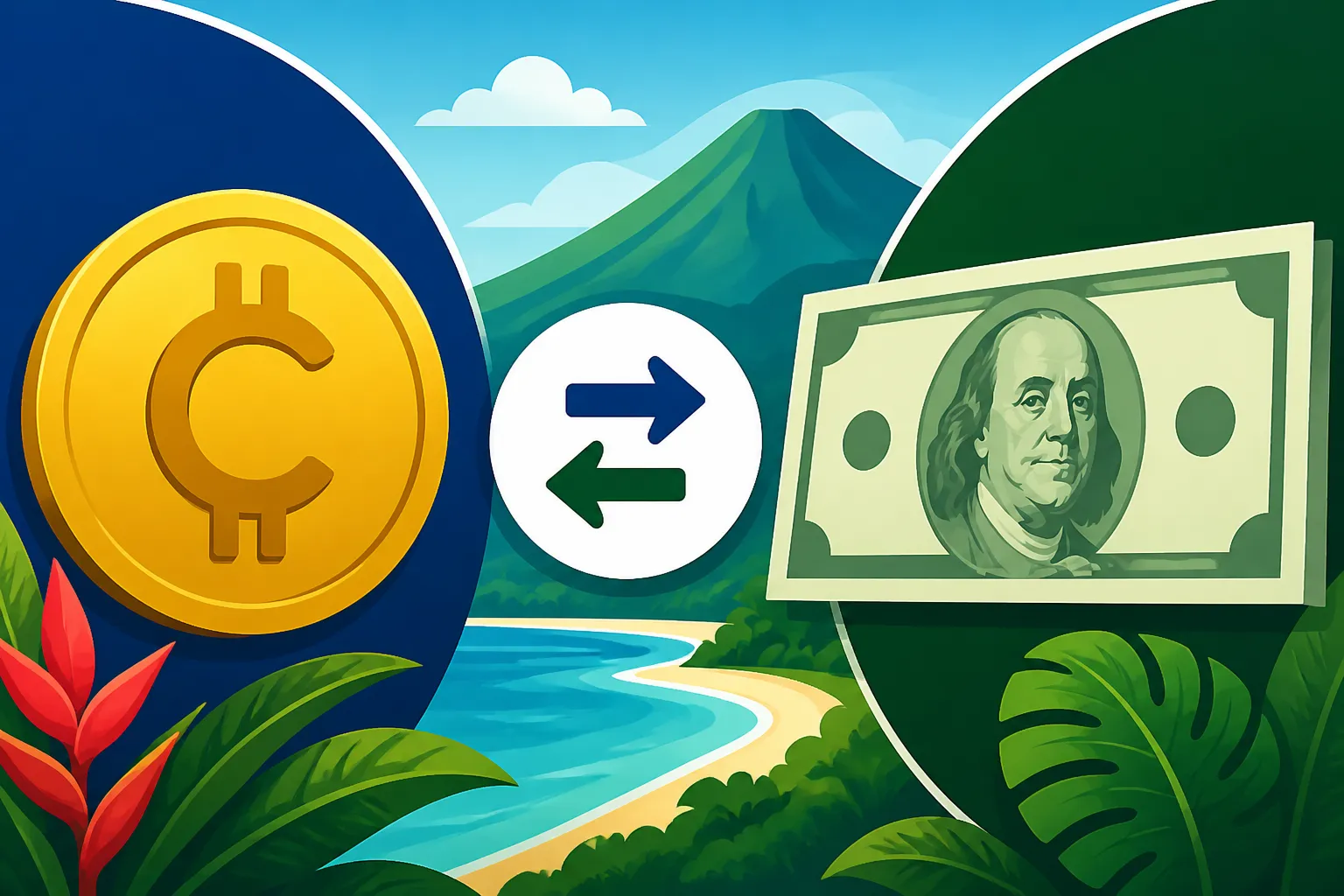
Understanding Foreign Exchange and the Colon vs Dollar in Costa Rica
One of the first things that truly hits you when you move to Costa Rica, beyond the breathtaking natural beauty, is the peculiar dance between the US dollar and the local currency, the Colón. It can feel like you’re constantly doing mental gymnastics, trying to figure out which currency to use, what exchange rate to trust, and whether you're getting a fair deal. This guide is here to walk you through the ins and outs of navigating the foreign exchange landscape in Costa Rica, helping you feel more confident and less bewildered by the money matters here.
The Dual Currency Reality: Colón and US Dollar
Living in Costa Rica, you'll quickly realize that it's a bit of a two-currency tango. While the official currency is the Costa Rican Colón (CRC), the US Dollar (USD) is deeply ingrained in the economy and daily life, especially in tourist areas and for larger transactions. This dual-currency system can be a blessing and a curse, offering convenience in some situations but adding a layer of complexity to others.
A Brief History of the Colón and its Relationship with the Dollar
The strong relationship between the Costa Rican Colón and the US Dollar isn't just a recent phenomenon; it has historical roots deeply tied to Costa Rica's economic landscape. For decades, the US dollar has been seen as a stable currency, especially important for a country that relies heavily on imports and tourism. This has led to the dollar being widely accepted and often preferred for significant purchases, essentially acting as a parallel currency.
Initially, Costa Rica maintained a crawling peg system for its currency, allowing the Colón to depreciate gradually against the dollar. However, in 2006, the Central Bank of Costa Rica (BCCR) shifted to a managed float system, giving the market more say in the exchange rate, but with the BCCR still intervening to smooth out excessive fluctuations. This means the Colón’s value against the dollar isn't fixed but fluctuates daily, influenced by global markets and local economic conditions. For us expats, this constant fluctuation means we need to stay informed, as even small shifts can impact our budgets.
Where You'll Encounter Each Currency
You'll find yourself reaching for different currencies depending on where you are and what you're buying. For everyday expenses like groceries, bus fares, small restaurant meals, and local markets (ferias), the Colón is king. Most smaller businesses, especially outside of major tourist hubs like Tamarindo, Manuel Antonio, or parts of Escazú and Santa Teresa, will only accept colones, or if they accept dollars, they'll give you a less-than-favorable exchange rate.
However, for larger purchases, tourist activities, and transactions with international businesses, the US dollar often takes precedence. Think about booking tours, paying for rental cars, hotel stays, or even buying appliances or vehicles. Many landlords, especially in expat-heavy areas, also prefer to quote rent in dollars. You might even find that some private medical clinics, particularly those popular with medical tourists, list their prices in USD. This is why many expats choose to maintain a dollar bank account alongside their Colón account here, offering flexibility and, sometimes, better rates for dollar-denominated expenses.
The Psychological Impact of a Dual Currency System
Honestly, dealing with two currencies can be a real head-scratcher at first. It feels like your brain is constantly running an internal calculator, especially when you’re trying to compare prices or ensure you’re not getting ripped off. You’ll hear things quoted in both, sometimes interchangeably, and it can be difficult to know which is the "real" price or the better deal. The mental fatigue of converting back and forth, especially with a fluctuating exchange rate, is something almost every expat here experiences.
Beyond the mental math, there’s an emotional aspect. You might find yourself feeling a little vulnerable, especially when you first arrive and your Spanish isn’t perfect. Is that taxi driver giving me a fair rate in colones, or is he trying to take advantage because he knows I’m likely paying in dollars? These moments are part of the learning curve. Don’t worry; with time and practice, you’ll develop a "feel" for prices in both currencies, and those mental conversions will become second nature, or at least less agonizing.
Navigating Exchange Rates and Where to Exchange Money
The exchange rate is the heartbeat of this dual-currency system, constantly moving and impacting your purchasing power. Understanding how it works and where to get the best rate is crucial for managing your finances efficiently in Costa Rica.
Understanding the Official vs. Unofficial Rates
When you talk about exchange rates in Costa Rica, it's important to distinguish between the official rate, often referred to as the "tipo de cambio de referencia," set by the Central Bank of Costa Rica (BCCR), and the rates you'll encounter in daily transactions. The BCCR rate serves as a benchmark, and all banks and legitimate financial institutions will base their buy and sell rates on this official figure, adding a small margin for their service. This is usually very transparent.
However, out in the wild – at small shops, informal vendors, or even sometimes in taxis – you might encounter "unofficial" rates. These are often less favorable to you, as the vendor will round down to make their own profit on the exchange. For instance, if the official rate is 530 colones to $1, a small shop might offer you 500 colones per dollar. While it might seem like a small difference on a few dollars, it adds up over time and certainly doesn't help your expat budget. Always try to know the current BCCR rate (easily found online or via banking apps) before making any dollar-to-colones transactions.
Banks and Exchange Houses (Casas de Cambio)
For exchanging larger sums of money, or simply for reliable and transparent transactions, traditional banks are your safest bet. Banks like Banco Nacional, Banco de Costa Rica, and private institutions such as BAC Credomatic are readily available across the country. They adhere strictly to the BCCR's reference rate, with their own buy/sell margins clearly displayed. If you're looking to open a bank account in Costa Rica, you'll become very familiar with these institutions.
- Pros of Banks: Security, official rates, readily available, ability to exchange large sums. You can often exchange currency directly at the teller or sometimes even at an ATM.
- Cons of Banks: Can involve long wait times, especially on busy days. Some branches might have limits on how much cash they'll exchange for non-account holders.
- Exchange Houses (Casas de Cambio): While less common than banks, you might find dedicated exchange houses in high-traffic tourist areas. Their rates can sometimes be slightly better than banks or offer more convenience without the long queues. However, always exercise caution. Verify their legitimacy and compare rates before committing. It’s vital to be vigilant against counterfeit currency, a rare but present risk.
ATMs and Credit/Debit Cards: Your Everyday Exchange Tools
For most expats, ATMs and credit/debit cards become the primary way to manage daily finances. Using your foreign debit card at a local ATM to withdraw colones is one of the most convenient ways to get local currency. The exchange rate you receive through an ATM is typically very close to the official interbank rate, often better than what you'd get exchanging cash at a bank or shop. However, be aware of a few things.
Firstly, your home bank might charge foreign transaction fees, and the local ATM (e.g., those from Banco Nacional, BAC Credomatic, or Scotiabank) will almost certainly charge a separate fee. These fees vary widely, so it's wise to check with both your home bank and the local ATM provider's fee schedule. Secondly, always choose to be charged in colones at the ATM – never accept the ATM's offer to convert to your home currency (Dynamic Currency Conversion), as this usually results in a much worse exchange rate. This applies to card purchases as well.
Credit and debit cards are widely accepted in supermarkets, larger restaurants, hotels, and many modern businesses. Again, the exchange rate for card transactions is usually very fair, based on the interbank rate. Just remember those foreign transaction fees from your home bank. Having a credit card with no foreign transaction fees can be a huge money-saver when living abroad. It’s also crucial to remember that having a physical card for your DIMEX residency card in Costa Rica is important for many daily interactions, including banking.
| Method of Exchange | Typical Rate Quality | Fees (Likely) | Convenience | Notes |
|---|---|---|---|---|
| Banks (in-person) | Very Good (Official) | Low/None (for account holders) | Moderate (wait times) | Safest for large sums, transparent rates. |
| ATMs (foreign debit card) | Very Good (Interbank) | ATM fee + foreign transaction fee | High (24/7 access) | Always select to be charged in local currency (CRC). |
| Credit/Debit Cards (purchases) | Very Good (Interbank) | Foreign transaction fee | Very High (widely accepted) | Look for cards with no foreign transaction fees. |
| Exchange Houses | Good | Varies | Moderate | Compare rates carefully; less common in smaller towns. |
| Informal Exchange (shops/taxis) | Poor | Implicit markup | High (immediate) | Avoid for significant amounts; often unfavorable rates. |
Strategies for Managing Your Money in Both Currencies
Successfully navigating the Colón and Dollar exchange isn't just about knowing the rates; it's about smart money management strategies that can save you a lot of grief and cash in the long run.
When to Use Dollars and When to Use Colones
This is probably the most common question expats ask, and the answer is nuanced. As a general rule, for everyday, small purchases – groceries, bus fares, coffee, small meals, anything at a local market – always use colones. These vendors often don't want dollars, or if they accept them, they will apply an unfavorable exchange rate, often rounding down significantly. Always have a stash of colones for these daily necessities.
For larger, dollar-quoted expenses like rent (if your landlord prefers USD), some utility bills, or major purchases like a car, it often makes sense to pay in dollars if you have them. Many tourist-oriented businesses, higher-end restaurants, and hotels also readily accept dollars and might even quote prices in USD. If you're paying with a credit card, the point-of-sale system will usually process it in colones first, and your card company will do the conversion, which is generally a fair rate. However, if you are planning to buy property in Costa Rica as a foreigner, expect that transaction to be heavily dollar-denominated from the outset.
Avoiding Common Pitfalls and Scams
Living in a dual-currency environment, especially as a foreigner, can make you a target for some common pitfalls. One of the biggest is being given a terrible exchange rate. Always ask "cuánto es en colones?" (How much is it in colones?) or "cuánto es en dólares?" (How much is it in dollars?) before completing a transaction. Don't let someone quickly tell you a dollar price without you doing your own mental math based on the current rate. It’s also wise to check the cost of living in Costa Rica for expats against the current exchange rates to ensure your budget remains realistic.
Another, more serious, concern is counterfeit currency. This is more prevalent with larger bills, both dollars and colones. When receiving cash, especially $50s, $100s, or ₡20,000 and ₡50,000 notes, quickly examine them. Look for watermarks, security strips, and texture. Banks are the safest place to withdraw money as they have verified currency. If you're unsure about a bill, don't accept it. When you’re opening a bank account in Costa Rica, inquire about how to identify valid currency from their tellers.
Digital Solutions for Transfers and Payments
In today's interconnected world, traditional cash exchanges are only one piece of the puzzle. For expats, digital solutions are increasingly becoming the backbone of their financial management. When you need to transfer money into and out of Costa Rica as an expat, services like Wise (formerly TransferWise) offer competitive exchange rates and much lower fees than traditional bank wire transfers. They facilitate transferring money from your home currency account directly to your Costa Rican Colón or Dollar account, making it a hero solution for managing international funds. I've personally used Wise for years, sending money from my US bank account to my Costa Rican one, and the rates are always transparent, and the fees minimal.
Locally, Costa Rica has embraced digital payments with systems like SINPE Móvil, which is a fantastic tool once you have a local bank account. SINPE Móvil allows you to send and receive money directly between Costa Rican bank accounts using just a phone number, instantly and usually for free. This is incredibly useful for splitting bills, paying local vendors, or even your cleaning person. It’s a game-changer for daily transactions in colones and helps reduce your reliance on cash. Once you're comfortable with how to set up online banking with a Costa Rican bank, exploring SINPE Móvil should be a high priority.
The Impact of Exchange Rates on Your Expat Budget
Currency fluctuations are more than just numbers on a screen; they directly impact your wallet and lifestyle as an expat. Keeping an eye on the Colón-Dollar exchange rate isn't just a good idea; it's essential for maintaining your financial equilibrium.
Inflation and Purchasing Power
The value of the Colón against the dollar can significantly affect your purchasing power, especially if your primary income is in dollars. When the Colón strengthens (meaning you get fewer colones for each dollar), your dollar-denominated income effectively shrinks when converted to colones. This means everything priced in colones – groceries, local services, fuel – becomes more expensive for you. Conversely, if the Colón weakens, your dollars go further, and local expenses become cheaper. This constant shift can make budgeting tricky.
Costa Rica also experiences its own inflation, independent of currency fluctuations, which further erodes purchasing power over time. Understanding how much income tax will I pay in Costa Rica in 2026 or other taxes becomes critical when considering your overall budget against inflation. For instance, if local prices for goods and services rise by 3-5% annually (as they often do), and your dollar income doesn't adjust, you're effectively losing money. Keeping a close watch on the local economic news, even if your Spanish isn't perfect, can give you clues about potential shifts.
Planning for Long-Term Expenses
When it comes to long-term expenses, the currency dynamic becomes even more pronounced. If your rent is quoted and paid in dollars, a weakening Colón against the dollar means less of your dollar income is left for colones-denominated daily expenses. However, if your rent is in colones, and the Colón strengthens, your dollar income takes a hit when it's converted to cover that rent. This is a common conundrum for those who receive their pensions or salaries from abroad.
The same applies to utilities like electricity (ICE) or water (AyA), property taxes, and other recurring bills that are always paid in colones. It's prudent to factor in a buffer for currency fluctuations in your budget. If you're managing your finances primarily in dollars, consider how a 5-10% shift in the exchange rate could impact your ability to cover your monthly colones-based expenses. This strategic planning is especially important when considering the cost of healthcare in Costa Rica: a complete breakdown for foreigners, as some treatments might be quoted in dollars while others require colones.
Managing Foreign Income and Pensions
For many expats, their income comes from outside Costa Rica – pensions, investments, or remote work salaries. This makes you particularly sensitive to the Colón-Dollar exchange rate. If your pension is paid in USD, and you live entirely on it in Costa Rica, you'll feel the pinch when the Colón strengthens, as your monthly dollar amount converts to fewer colones.
This is where thoughtful financial planning really shines. Some expats choose to keep a portion of their funds in a USD account in Costa Rica for dollar-denominated expenses and convert what they need into colones each month. Others might use services like Wise for regular transfers, timing their transfers to catch favorable exchange rates. It's a constant balancing act, but with a bit of foresight and active management, you can mitigate the impact of currency swings on your quality of life. Consider consulting with financial advisors who understand international finances and Costa Rican realities.
Legalities and Important Considerations for Foreigners
Beyond the daily mechanics of currency exchange, there are legal and practical considerations that every expat in Costa Rica needs to be aware of, especially concerning large sums of money and tax implications.
Declaring Large Sums of Money
Costa Rica, like most countries, has strict regulations regarding the declaration of large amounts of cash being brought into the country. If you're arriving in Costa Rica with $10,000 USD or more (or its equivalent in any other currency), you are legally required to declare it upon entry to customs officials. This is not about being taxed on the money, but rather a measure to combat money laundering and illicit financial activities.
Failing to declare cash above this threshold can lead to severe penalties, including the confiscation of the funds and potential legal trouble. It's always best to be transparent and comply with these regulations. If you plan to move with a significant amount of cash, research the exact requirements beforehand and be prepared to fill out the necessary forms. For most people, transferring funds electronically via banks or services like Wise is a much safer and more convenient option than carrying large amounts of physical cash. You can always get more details on how much cash can I bring into Costa Rica? through official sources.
Tax Implications of Currency Exchange
For most day-to-day currency conversions, there aren't direct tax implications from the act of exchanging money itself. However, if you are actively trading currencies or if you are receiving income in one currency and holding it while its value changes before conversion, this could, in theory, create a taxable event under certain circumstances. For example, if you hold a significant amount of dollars and the Colón depreciates substantially, leading to a large "gain" when you convert to colones for expenses, that gain could be considered income in some tax systems.
However, Costa Rica operates on a territorial tax system, meaning it generally only taxes income generated within Costa Rican borders. This is a crucial distinction, particularly for those with foreign-sourced income or pensions. It's imperative to understand your individual tax residency status and how it interacts with currency gains or losses, especially if you're dealing with substantial amounts. For detailed advice, it’s always recommended to consult with a local tax specialist who understands both Costa Rican and international tax laws. You'll find a lot of useful information on this topic in guides like understanding income tax (impuesto sobre la renta) in Costa Rica (2027) and how the Costa Rican tax authority (Hacienda) works (2027). Navigating these waters can be complex, and a service like Taxes for Expats can be invaluable for ensuring compliance in both your home country and Costa Rica.
The Future of the Colón and Dollar in Costa Rica
The relationship between the Colón and the US Dollar is dynamic and constantly evolving. While the dollar's presence in the Costa Rican economy is undeniable and deeply ingrained, there's always discussion about the future. The Central Bank monitors the exchange rate closely, intervening when necessary to prevent excessive volatility that could harm the economy. There's no indication that Costa Rica plans to abandon the Colón for full dollarization, nor is it likely to completely remove the dollar from its economic landscape anytime soon.
What we are more likely to see is a continued managed float, with gradual adjustments reflecting global economic conditions, tourism trends, and local fiscal health. For expats, this means the need to stay informed, adapt your budgeting, and utilize smart financial tools will remain paramount. The dual-currency system is a part of life here, and learning to navigate it efficiently is just another step in becoming a seasoned Costa Rican expat.
Disclaimer
The information provided in this guide is for general informational purposes only and does not constitute financial, legal, or tax advice. While we strive to provide accurate and up-to-date information, currency exchange rates, regulations, and financial practices are subject to change without notice. Expats and visitors to Costa Rica should always consult with qualified professionals, such as financial advisors, tax specialists, and legal counsel, for advice tailored to their specific circumstances. We are not responsible for any actions taken based on the information presented herein.