How Do I Open a Savings Account for My Child in Costa Rica?
Ah, the joys of setting up life in a new country, right? Just when you think you’ve got a handle on your own finances, you start looking at the little ones, wondering how on earth you’re going to help them build a secure future here in Costa Rica. Navigating the local banking system, especially for children, can feel like another one of those bureaucratic hurdles that makes you want to pull your hair out. But don't worry, my friend, I've been there, and this guide is going to walk you through everything you need to know about opening a savings account for your child in Costa Rica, making it as painless as possible.
Why Even Bother with a Kids' Savings Account in Costa Rica?
You might be thinking, "Isn't it enough that I'm managing my own money in colones and dollars?" And believe me, I get it. The financial landscape here can be a bit of a labyrinth. But trust me, setting up a savings account for your child early on in Costa Rica offers some truly wonderful benefits, both practical and educational, that are well worth the initial effort.
Teaching Financial Literacy Early
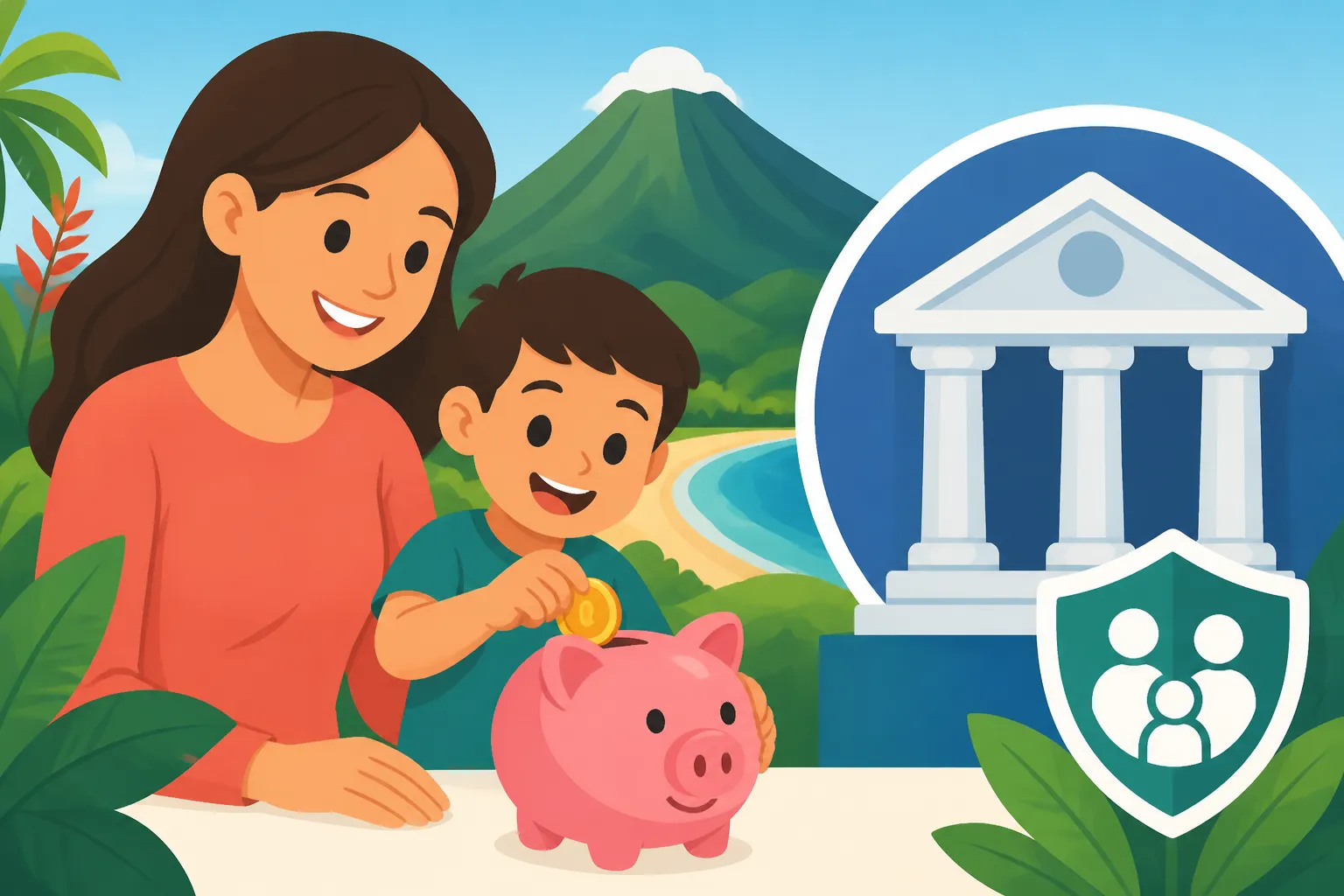
Living in Costa Rica offers a unique opportunity to immerse your children in a new culture, and that extends to their understanding of money. A savings account, even a small one, is a tangible tool for teaching them about financial responsibility. Imagine them saving up their colones from chores or gifts, watching that number grow, and then making a conscious decision to either buy something small at the local pulpería or save for a bigger goal. It's a real-world lesson that goes beyond theoretical concepts.
For instance, my own kids started understanding the value of money when they realized that saving a few hundred colones from helping with groceries could eventually add up to enough for a special treat at the panadería or even contribute to a new surfboard. It teaches delayed gratification and the power of consistent saving – skills that are invaluable no matter where they end up. It’s not just about the money itself; it’s about understanding the economy they live in, the exchange rate quirks, and how their savings fit into their Costa Rican life.
Practical Benefits for Expat Families
Beyond the educational aspect, there are some very real, practical advantages for expat families to establish a local savings account for their children. Let's face it, living abroad often means you're constantly thinking about how to manage funds across borders, and having local reserves for your kids can be a huge relief.
One of the biggest uses I’ve seen among fellow expat parents is saving for school expenses. If your children attend one of the many excellent Understanding the Cost of Private and International Schools in Costa Rica, you know those tuition fees and extra-curricular costs can add up. Having a dedicated fund that's growing right here in Costa Rica means less stress about international transfers or currency fluctuations when those bills come due. It's also a fantastic way to start a nest egg for their future, whether that's for university here in Costa Rica, or for a return to higher education in your home country. Many parents also appreciate having local funds that their children can access for emergencies or when they eventually need money for their first car, an overseas trip, or just establishing their own independence once they hit adulthood. It simplifies future financial planning immensely.
The Nitty-Gritty: Types of Accounts and Key Differences
When you walk into a Costa Rican bank branch, it's easy to get overwhelmed by the terminology. But when it comes to savings accounts for children, things are thankfully a bit more straightforward than, say, trying to understand How the Costa Rican Tax Authority Hacienda Works 2026. Generally, you'll be looking at a "Cuenta de Ahorro para Menores," or a savings account specifically designed for minors.
The Minor's Savings Account (Cuenta de Ahorro para Menores)
This is the bread and butter of children's banking here. A "Cuenta de Ahorro para Menores" is typically opened by a parent or legal guardian in the child's name. Critically, while the funds legally belong to the minor, the parent or guardian is the one who administers the account until the child reaches the age of 18. This means you, as the parent, will have full control over deposits, withdrawals, and monitoring, ensuring the money is used responsibly or saved diligently for future goals.
Most major banks in Costa Rica offer these types of accounts. Think of institutions like Banco Nacional, Banco de Costa Rica, or even private banks like BAC Credomatic. They are generally quite similar in their basic functionality, varying mostly in minimum deposit requirements, specific interest rates, and perhaps the perks they offer (though for a child's savings account, "perks" are usually pretty minimal). The key is that the child's cédula de menor (if they are a Costa Rican citizen or resident) or their passport/DIMEX is linked to the account, but the financial responsibility and control remain with the adult until the child officially comes of age. At 18, they can usually transition the account into their own name as an adult, assuming full control.
Custodial Accounts vs. Joint Accounts
In Costa Rica, the "Cuenta de Ahorro para Menores" functions very much like a custodial account in other countries. The parent is the custodian (administrator), and the child is the beneficiary. This is the prevailing model, and frankly, it's what you'll encounter almost everywhere here.
Joint accounts, where both the parent and the minor have equal access and control, are not typically available for minors in Costa Rica. The banking system prioritizes the protection of the minor's assets by placing the adult as the sole administrator. This means you won't be able to open an account where your 10-year-old can waltz into the bank and make withdrawals on their own. And honestly, for most expat parents, this is a relief. It provides a layer of security and control that ensures those savings are actually saved for the intended long-term goals. While it might seem like a small detail, understanding this distinction early on can save you a lot of confusion when speaking with bank representatives.
Interest Rates and Fees to Look Out For
Let's talk money, specifically how much your child's money might earn and what it might cost to keep it. Savings accounts, especially for minors, aren't typically high-yield investments. Don't expect to get rich off the interest alone. However, every little bit helps, right?
Interest rates in Costa Rica for savings accounts can vary quite a bit depending on the bank and whether the account is in colones (CRC) or US dollars (USD). Generally, colones accounts might offer slightly higher nominal interest rates to offset inflation, but these are still relatively modest, often in the low single digits. USD accounts, while offering stability against currency fluctuations, tend to have even lower interest rates, sometimes barely above zero. It's always a good idea to What Documents Do I Need to Open a Bank Account in Costa Rica? and compare offerings.
Typical Savings Account Interest Rates (Approximate, Subject to Change – 2026):
| Feature | Colones (CRC) Savings Account | US Dollar (USD) Savings Account |
|---|---|---|
| Typical Interest | 0.5% – 2.5% annually | 0.05% – 0.5% annually |
| Minimum Balance | Varies, often ¢5,000 – ¢25,000 | Varies, often $10 – $100 |
| Monthly Fees | Rarely for basic accounts | Rarely for basic accounts |
| Associated Card | Debit card (administrator) | Debit card (administrator) |
| Accessibility | Online banking, ATM | Online banking, ATM |
Most basic savings accounts for minors do not charge monthly maintenance fees, which is great news. However, always double-check this with the bank. You might encounter fees for specific services, like requesting a physical statement instead of relying on online banking, or for excessive withdrawals. Also, be mindful of minimum balance requirements. Some accounts might require you to maintain a certain amount to avoid a small fee or to earn interest. Before you commit, sit down with a bank representative and ask for a clear breakdown of all potential fees and the current interest rates. Understanding these details upfront can prevent any unpleasant surprises down the road.
The Gauntlet of Documentation: What You’ll Actually Need
Alright, this is where the real "expat adventure" begins – gathering documents. Costa Rican bureaucracy, while well-intentioned, loves its paperwork. When opening any bank account here, especially one involving a minor, you need to be prepared. Think of it as a treasure hunt where the treasure is financial peace of mind.
Documents for the Parent/Guardian
As the administrator of the account, your documents are paramount. The bank needs to know exactly who you are, where you live, and that your funds are legitimate. This is part of the "Know Your Customer" (KYC) regulations, which are strict worldwide, and certainly here in Costa Rica.
You’ll typically need:
- Valid Identification: Your current, valid Costa Rican residency card (DIMEX) is the absolute gold standard. If you're very new and still on a tourist visa, opening a bank account might be more challenging, as most banks require residency. However, if you are a resident, make sure your How Do I Get My DIMEX Residency Card in Costa Rica? is up to date.
- Proof of Address (Comprobante de Domicilio): This usually means a recent utility bill in your name. Think ICE (electricity) or The Expat Guide to Setting Up Utilities ICE AyA in Costa Rica (water) bills from the last three months. If the utility bill isn't in your name, some banks might accept a letter from your landlord, notarized, along with a copy of their ID and their utility bill. It’s always best if it’s directly in your name, so plan ahead.
- Proof of Income/Funds: Banks need to verify the source of your money to comply with anti-money laundering laws. This could be recent pay stubs (if employed here), bank statements from your local or international accounts, or a "carta de trabajo" (employment letter). If you're self-employed, a declaration from Filing Your Tax Return with Hacienda in Costa Rica The Complete Walkthrough 2026 or a letter from your accountant detailing your income can work. For those with income from abroad, explaining Understanding Costa Rica's Territorial Taxation of Foreign Income might come up. My advice? Bring more than you think you need.
For my fellow US citizens, be prepared for additional forms related to FATCA (Foreign Account Tax Compliance Act) and CRS (Common Reporting Standard). These are standard international requirements for reporting financial accounts held by foreign citizens. Don't be alarmed; it's just more paperwork. You might also want to consult with a specialist in The Complete Guide to Taxes in Costa Rica for Expats 2026 to ensure you're on top of all your obligations.
Documents for the Child
Even though you’ll be the administrator, the account is in your child's name, so their identification is also crucial.
You'll need:
- Birth Certificate: This is fundamental. If your child was born outside Costa Rica, you will need an apostilled and translated version of their birth certificate. This process can take time, so don't leave it to the last minute. The apostille certifies the authenticity of the document for international use, and an official translation (by a traductor oficial here) makes it legally valid in Costa Rica.
- Identification for the Child:
- If your child is a Costa Rican citizen or a resident with their own DIMEX card, that’s what they’ll use.
- If they are a foreign national without Costa Rican residency, their foreign passport will be required. In rare cases, if they are undergoing residency processing, a temporary ID might be accepted, but generally, a valid passport is key. Ensure it's not expired!
- For children who are also residents, ensuring How the Caja Requirement Connects to Your Residency in Costa Rica is in order is also part of their official status.
Navigating the Bank Bureaucracy
Look, I'm not going to sugarcoat it: dealing with banks anywhere can be a pain, and Costa Rica is no exception. Patience, my friend, is your most valuable asset. The "Pura Vida" pace often extends to administrative processes.
Here are a few tips based on my experience and that of countless other expats:
- Make an Appointment: Don't just show up hoping for the best. Call ahead, explain what you want to do (open a cuenta de ahorro para menor), and make an appointment. This ensures you get dedicated time with a customer service representative who can guide you.
- Bring Copies: Banks love copies. Bring originals for verification, but also a full set of photocopies of everything. Seriously, everything. Your ID, your child's ID, utility bills, income statements – multiple copies. It often saves a trip back home or to a copy shop.
- Be Prepared to Explain: Sometimes, the gestor (bank officer) might ask specific questions about the source of funds or why you're opening the account. Be polite, clear, and consistent in your answers.
- Language Barrier: If your Spanish isn't fluent, bring a trusted friend or a professional translator. While many bank employees in larger branches speak English, it's not guaranteed, and you don't want misunderstandings when it comes to legal and financial matters.
- The "One More Document" Syndrome: Don't be surprised if, after bringing everything on the list, they ask for one more obscure document. It happens. Take a deep breath, smile, and figure out how to get it. It's just part of the process here.
It might feel like a lot, but once it's done, it's done. And then you can enjoy the satisfaction of knowing you’ve laid a solid financial foundation for your child right here in paradise.
The Process: Step-by-Step to "Pura Vida" Savings
Once you've got your documents lined up, the actual process of opening the account flows pretty logically. It's mostly about making informed choices and then following through with the bank's procedures.
Choosing the Right Bank
This is a crucial first step. Costa Rica has a mix of state-owned banks and private institutions, and each has its pros and cons.
- State Banks (Bancos Estatales): Think Banco Nacional de Costa Rica and Banco de Costa Rica. These are generally the largest, most established, and have the most branches across the country, even in smaller towns. They are often perceived as very stable. Their processes can sometimes feel a bit slower and more bureaucratic, but they are reliable.
- Private Banks (Bancos Privados): BAC Credomatic is a prominent example, and there are others like Promerica and Davivienda. Private banks often pride themselves on more efficient customer service, better online banking platforms, and sometimes more innovative product offerings. If you value speed and digital convenience, a private bank might be a good fit.
- Cooperativas: Smaller credit unions, or cooperativas, also exist (e.g., CoopeAnde, Coopealianza). While they can offer a more personalized, community-oriented experience, their reach and services for foreigners might be more limited. I’d generally recommend sticking with the larger, more expat-friendly banks for a child's first account unless you have a strong personal connection to a specific cooperativa.
Consider which bank aligns best with your existing banking relationships (if you already have an account), their branch accessibility in your area, and the quality of their online banking services. For instance, if you already bank with BAC Credomatic, it might be simpler to open your child's account there for ease of transfers and management. Also, think about whether you want a colones or USD account, or both, and ensure the chosen bank offers the currency option you prefer.
The Application and Initial Deposit
Once you've chosen your bank and secured an appointment, here’s how the application process typically unfolds:
- Meet the Gestor: You'll sit down with a bank representative, often called a gestor or ejecutivo de cuenta. This is where you'll present all your carefully gathered documents. They will review them, make copies (even if you brought your own, they often prefer to make their own official copies), and enter your information into their system.
- Fill Out Forms: Prepare for a stack of forms. These will include the application for the minor's savings account, KYC forms for both you and your child, and possibly those FATCA/CRS declarations I mentioned earlier. Read them carefully, and if anything is unclear, ask for clarification. Don't sign anything you don't understand, even if the urge to just get it over with is strong!
- Initial Deposit: You'll typically be required to make an initial deposit to activate the account. This can usually be done in cash (colones or USD, depending on the account currency) or by transferring funds from your existing Costa Rican bank account. If you need to bring funds from abroad specifically for this, services like Wise are fantastic for competitive exchange rates and lower fees compared to traditional wire transfers. It's a lifesaver for getting your money here efficiently.
- Signatures and Confirmation: Once all the paperwork is completed and the initial deposit is made, you'll sign various documents, acknowledging your role as the account administrator. The bank will then provide you with account details, online banking access (if applicable), and potentially a debit card issued in your name, linked to the child's account, for you to manage. Remember, this debit card is for your use to administer the funds, not for your child.
The entire process, from sitting down to walking out with an active account, can take anywhere from 30 minutes to a couple of hours, depending on the bank's efficiency and how complex your particular situation is. Take a deep breath and enjoy the moment when it's all done!
Managing the Account and Future Considerations
Once the account is open, managing it is generally pretty straightforward, especially with modern online banking.
- Online Access: Most Costa Rican banks have decent online banking platforms, allowing you to monitor transactions, make transfers, and check balances from the comfort of your home. This is incredibly convenient for keeping an eye on your child's savings and making regular deposits.
- Regular Contributions: You can set up automatic transfers from your primary account to your child's savings account, making consistent saving effortless. Even small, regular contributions add up significantly over time.
- Teaching Responsible Use: As your child grows, you can involve them more in understanding their savings. Show them the online balance, discuss financial goals, and perhaps even let them contribute a portion of their allowance. This reinforces the financial literacy lessons we talked about earlier.
- When They Turn 18: This is a big one. When your child legally becomes an adult at 18, they will generally need to visit the bank with their updated identification (their adult cédula de identidad if they are Costa Rican, or their DIMEX if they are a resident) to formally take over the administration of the account. You, as the former administrator, will typically need to be present to facilitate this transfer of control. This transition makes the account fully theirs, giving them complete independence over their savings.
Opening a child's savings account in Costa Rica is a fantastic way to integrate your family financially into your new home and equip your children with essential life skills. It might require a bit of patience and paperwork, but the long-term benefits are truly "Pura Vida."
Disclaimer
The information provided in this guide is intended for general informational purposes only and does not constitute financial, legal, or professional advice. While we strive to provide accurate and up-to-date information, the laws, regulations, and banking practices in Costa Rica can change. It is essential to consult with a qualified local financial advisor, legal professional, or the specific bank directly for advice tailored to your individual circumstances before making any financial decisions. We are not responsible for any actions taken based on the information presented herein.