How Long Does It Take to Get a DIMEX in Costa Rica?
One of the most common anxieties I hear from new expats, especially those navigating the early stages of establishing roots here in Costa Rica, revolves around "the DIMEX." It's not just a card; it's your official welcome, your proof of legal status, and your key to unlocking so many aspects of life in paradise. But the journey to actually getting that physical card in your hand can feel like an eternity, shrouded in bureaucratic mystery. This guide aims to pull back the curtain on the DIMEX process, giving you a realistic understanding of the timelines involved and what to expect as you wait for your essential identification.
Understanding the DIMEX Card: More Than Just an ID
Let's face it, when you first arrive, Costa Rica's administrative processes can feel like a labyrinth designed by someone who really enjoys paperwork. And the DIMEX card, while seemingly just an ID, is at the very heart of proving your legal status as a resident. It's not just for showing off at the beach club; it’s fundamental to your daily life here.
What Exactly is a DIMEX?
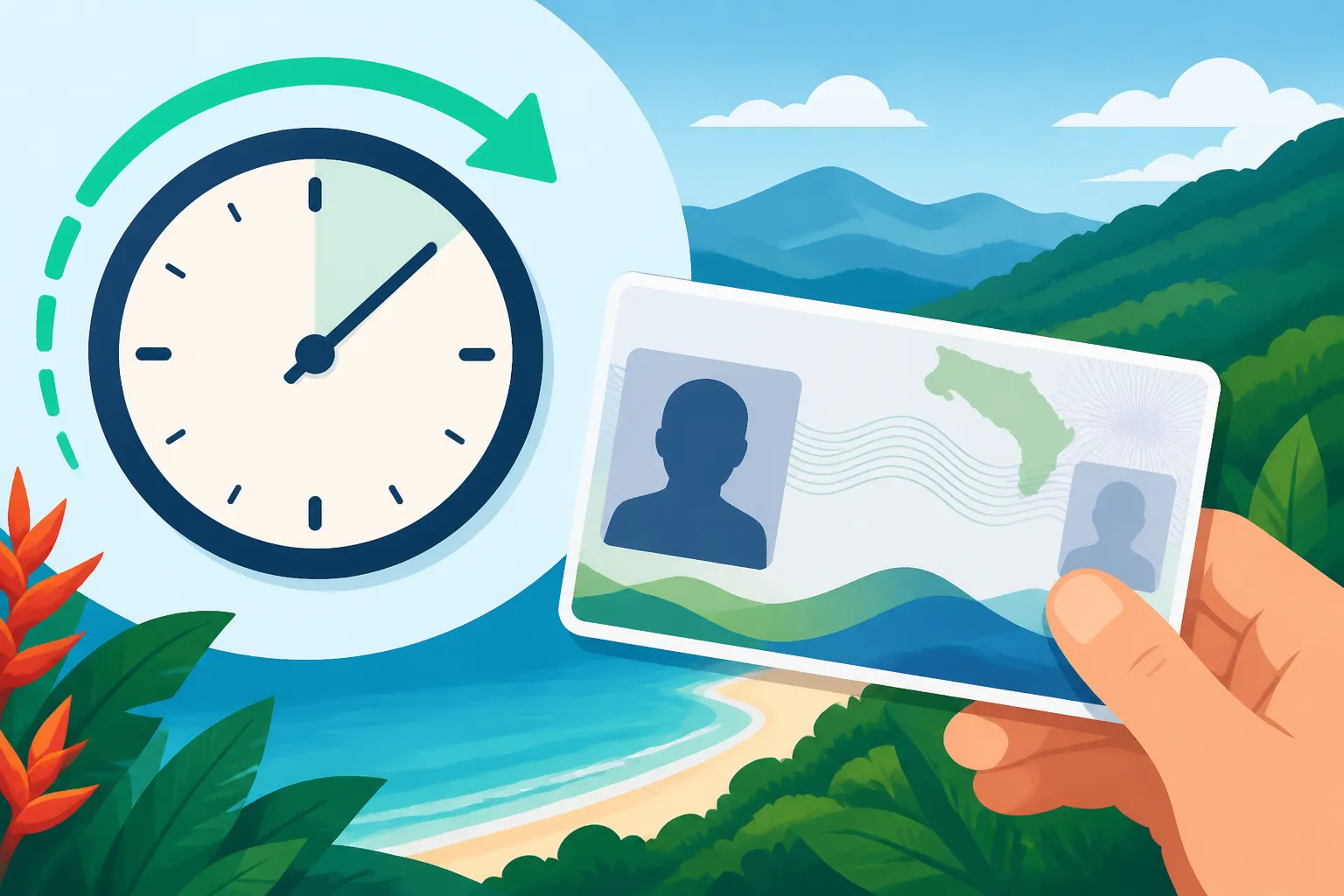
DIMEX stands for Documento de Identificación Migratoria para Extranjeros, which literally translates to "Migratory Identification Document for Foreigners." In essence, it's your official Costa Rican residency card. Think of it like a Green Card or a national ID in your home country, but specifically for non-citizens who have been granted residency. It includes your photo, personal details, residency category (like Pensionado, Rentista, Inversionista, or family-based residency), and an expiration date.
Before the DIMEX system was streamlined, expats often carried a laminated paper document or a passport with a stamp, which was less secure and more prone to damage. The DIMEX is a more robust, credit-card-sized piece of plastic, complete with security features, making it a proper national identification document. It’s what you’ll use to open bank accounts, sign contracts, access public healthcare, and prove your legal right to be in the country for extended periods. Without it, you’re essentially still operating as a tourist, even if your residency application has been approved.
Why the DIMEX Matters for Expats
The DIMEX card is your golden ticket to truly integrating into Costa Rican society and enjoying the benefits of your residency status. Without it, you'll constantly run into roadblocks. Imagine trying to get a local phone plan, register your child in school, or even just pick up a package at the post office – most of these activities require a valid Costa Rican ID, which, for you, is the DIMEX. It’s the official proof that you're no longer just visiting; you're living here legally.
Beyond the practicalities, the DIMEX also provides a sense of security and belonging. You’re no longer counting down the days until your next "visa run" or worrying about tourist visa overstays. It grants you the peace of mind that comes with knowing you have a recognized legal status. This card is your gateway to accessing the public healthcare system, or "La Caja" (CCSS), which is often a mandatory component of your residency. For many, the process of how the Caja requirement connects to your residency in Costa Rica is a significant hurdle, and the DIMEX is the physical manifestation of your compliance. It signifies that you are contributing to the social fabric and are entitled to the same basic rights and services as other legal residents.
The Initial Residency Application: The Longest Stretch
Ah, the initial residency application. This is where most of the waiting game truly begins, and it's where patience becomes less a virtue and more a survival skill. It's not uncommon for expats to feel like they're yelling into a bureaucratic void during this period, wondering if their carefully assembled stack of documents will ever see the light of day.
Initial Filing to Approval: The Bureaucratic Maze
Once you’ve submitted your complete residency application to the Dirección General de Migración y Extranjería (DGME), often through an attorney, the clock truly starts ticking. But it's not a straightforward countdown. This stage is by far the longest and most unpredictable part of the entire process. Migración has a lot on its plate, and while they are processing applications, the sheer volume can lead to significant backlogs.
Typically, you're looking at an initial waiting period of anywhere from 9 to 18 months, and sometimes even longer, for the DGME to issue an aprobación (approval) for your residency category. This approval means that, in principle, your application meets all the legal criteria. During this time, your application might be assigned to a specific immigration officer, reviewed, sent back for clarification (known as a prevención), or simply sit in a queue. If you receive a prevención, it means you need to provide additional documents or correct something. Responding promptly is crucial, as any delay on your part simply extends the overall timeline. Each prevención will add more time, as your application gets re-queued after you submit the requested information.
The actual timeline can fluctuate based on the type of residency you've applied for (some, like Pensionado or Rentista, might have slightly more defined processes than others), the current workload at Migración, and even national holidays. For example, during peak times like right after major holidays or when new immigration laws have just come into effect, the queues can swell. It’s during this initial period that many expats ponder: How Long Does Costa Rican Residency Take to Process? The answer is complex, but this phase definitely accounts for the bulk of it.
Common Delays and How to Prepare
When dealing with a government bureaucracy, delays are not just a possibility; they are an expectation. The key to mitigating frustration is understanding why these delays happen and how you can proactively address them.
One of the most frequent culprits is incomplete or incorrect documentation. Migración is meticulous, and if even one document is missing an apostille, an official translation, or an expiry date, your application will be flagged for a prevención. For instance, if your birth certificate isn't properly authenticated or your marriage certificate isn't translated by an official Costa Rican translator, you'll face a delay. This is why having a clear understanding of what documents do I need for Costa Rican residency? is paramount before you even submit your application.
Another common source of delay is the background check process. While you provide a police clearance from your home country, Migración also conducts its own internal checks. Sometimes, these can take longer to process, especially if there are any discrepancies or if information needs further verification. System backlogs, as mentioned, are also a perpetual issue. The DGME often operates with limited staff and resources compared to the volume of applications they receive, leading to inherent slowness.
How to Prepare:
- Double-check everything: Before submission, have your attorney (or yourself, if you’re brave enough to go the DIY route) meticulously review every single document against the official requirements.
- Get certified translations: Ensure all foreign documents are translated by an official Costa Rican translator (a traductor oficial).
- Factor in extra time: Assume the longest possible timeline, not the shortest. It's better to be pleasantly surprised than sorely disappointed.
- Stay in communication: If you're working with an attorney, maintain regular contact to check for prevenciones or updates.
- Maintain your status: While your residency application is pending, you are technically still a tourist. Remember to do your 90-day visa runs to maintain legal status in the country. Otherwise, you could accrue fines or complicate your application.
From Approval to DIMEX Issuance: The Final Hurdle
You’ve received that glorious news: your residency application has been approved! ¡Felicidades! This is a massive milestone. But hold on, you're not quite done yet. There's still a critical final step to get that physical DIMEX card into your hands, and it involves another round of appointments and waiting.
Scheduling Your DIMEX Appointment
Once your residency is approved by Migración, you will typically receive notification – either directly if you applied yourself, or more commonly, through your immigration attorney. This approval notification will grant you a specific file number (expediente) and instruct you on the next steps, which is to get your DIMEX processed.
The actual printing and issuance of the DIMEX card is handled by two main institutions: Correos de Costa Rica (the national post office) and select branches of Banco de Costa Rica (BCR). You will need to schedule an appointment at one of these locations.
The process usually involves:
- Waiting for the approval to be registered: After Migración approves your case, it takes a few days, sometimes up to a week or two, for that approval to be officially registered in the systems of Correos or BCR. You can't just walk in the day after approval.
- Scheduling online or by phone: Most people schedule their appointments online through the respective institution's portal or by calling their customer service line. These appointments can sometimes be booked a few weeks out, depending on demand.
- Choosing your location: You can pick a Correos or BCR branch that is convenient for you. Many expats in the Central Valley opt for locations in San José, Escazú, or Santa Ana, but branches across the country offer the service.
- Paying associated fees: There are fees for the physical DIMEX card, which vary slightly by residency type and validity period. These are paid at the time of your appointment.
This final appointment is crucial. It's where your fingerprints are officially taken (again, usually), your photo is captured for the card, and all your final details are confirmed. It’s a significantly less stressful experience than the initial application submission, but still requires attention to detail.
The Day of the Appointment and Receiving Your Card
So, the day of your DIMEX appointment arrives! What should you bring?
- Your passport (the one you used for the residency application).
- The official approval letter from Migración (or proof of approval, often a printout from your attorney).
- Proof of payment for the Caja Costarricense de Seguro Social (CCSS) or an INS health insurance policy. This is a non-negotiable step: you must demonstrate that you are enrolled in the national healthcare system or a private plan like those offered by Cigna Global or the Costa Rican equivalent, INS, as it is a requirement for your residency. Understanding health insurance in Costa Rica: Caja, INS and International Options Explained is key here.
- Any other identification documents you might have used in your application.
- The exact amount for the DIMEX issuance fee, or a method of payment acceptable to the institution (cash or local debit card are usually safest).
The appointment itself is relatively quick. You’ll present your documents, pay the fee, have your photo taken, and usually provide biometric data (fingerprints). The staff will then enter your details into the system.
Now, for the final waiting period: receiving the actual physical card. Once your appointment is complete, the card isn't printed on the spot. It usually takes another 2 to 3 weeks for the physical DIMEX card to be printed and delivered. If you did your appointment at Correos de Costa Rica, you can often opt to have it delivered to a specific post office branch or, for an extra fee, directly to your home address. If you chose a BCR branch, you'll typically pick it up from that same branch once it's ready.
So, from the moment of your official residency approval to having the DIMEX card in your hand, you're usually looking at an additional 3 to 6 weeks, give or take, factoring in scheduling and delivery.
Here's a simplified breakdown of the estimated timelines:
| Stage | Estimated Timeframe (General) | Notes |
|---|---|---|
| Initial Residency Application Submission | 0 | Day you submit all documents to DGME. |
| DGME Review & Approval | 9 – 18 months (or longer) | This is the longest phase. Can be delayed by prevenciones (requests for more info), backlogs, complexity of case. |
| Post-Approval Processing | 1 – 2 weeks | Time for DGME approval to register in Correos/BCR systems. |
| DIMEX Appointment Scheduling | 1 – 4 weeks | Depends on availability at Correos/BCR. Book as soon as possible after approval. |
| DIMEX Card Issuance & Delivery | 2 – 3 weeks | After the appointment, for the card to be printed and delivered to chosen location/address. |
| Total Estimated Time | 10 – 20 months | This is a realistic average from initial submission to holding the physical card. Individual experiences will vary wildly. Some may get it faster, many will wait longer. |
Factors Influencing Your DIMEX Timeline
While I've given you some general timelines, it's really important to understand that these are averages. There are several factors that can significantly speed up or slow down your personal journey to getting that coveted DIMEX card. It's not a one-size-fits-all process here in Costa Rica.
Application Category and Documentation
The specific type of residency you’re applying for plays a huge role in the processing time. Certain categories, like Pensionado (retiree residency) or Rentista (independent income residency), tend to be more straightforward and might see slightly faster processing because the requirements are well-defined and applicants usually come prepared with all the necessary financial proofs. On the other hand, more complex categories, such as Vinculo (family ties) if it involves multiple dependents, or Inversionista (investor residency) with intricate business plans, can inherently take longer due to the additional scrutiny required for the supporting documentation.
Also, the quality and completeness of your documentation cannot be overstated. A perfectly organized application, with every single document apostilled, translated, and presented exactly as Migración requires, has a much better chance of sailing through with fewer prevenciones. Any missing stamp, expired criminal record check, or incorrect translation can send your application back to the queue, adding weeks or even months to the process. This is why many experienced expats emphasize getting all your ducks in a row for "what documents do I need for Costa Rican residency?". Missing a single utility bill in your name can cause a headache, never mind crucial documents from abroad.
Navigating the System with and Without Assistance
This is a big one. You might be tempted to try and tackle the residency application yourself to save money. While technically possible, be warned: navigating the Costa Rican immigration system without professional legal assistance is a monumental undertaking. Immigration law and procedures are complex, constantly evolving, and primarily in Spanish.
An experienced immigration attorney who specializes in expat residency (and there are many excellent ones in Costa Rica) knows the system inside and out. They understand the nuances of each residency category, what specific documents Migración is looking for, and how to properly format and submit everything to minimize the chances of a prevención. They can also follow up with Migración, track your application, and quickly respond to any requests for additional information. This expertise can shave significant time off your overall waiting period, simply by avoiding common pitfalls. For example, they’ll be well-versed in understanding the cost and timeline of the residency process in Costa Rica, and can manage expectations.
If you choose to go it alone, be prepared for a steep learning curve, potentially more trips to Migración or other government offices, and a higher likelihood of delays due to procedural errors or misunderstandings. While it might save you some attorney fees upfront, it could cost you more in time, stress, and potential fines if you miss a critical deadline or requirement.
Seasonal Fluctuations and System Updates
Government agencies, even in tropical paradise, are subject to seasonal ebbs and flows, as well as unexpected system changes. For instance, right after the main holiday season in December and January, there can often be a surge of new applications or a backlog from the slower holiday period, leading to extended wait times. Similarly, if Migración introduces a new online portal, implements a new policy, or experiences a server crash (it happens!), these internal system updates can temporarily slow down processing for everyone.
New residency categories, like the recent Digital Nomad Visa, can also temporarily shift resources and attention, potentially impacting the processing times for other traditional residency types. It's not about being intentionally difficult; it's simply a reality of government operations globally. Staying informed through reputable expat forums, local news, or your attorney can sometimes give you a heads-up on these kinds of fluctuations, allowing you to adjust your expectations accordingly. For instance, if you're tracking How long until I can apply for permanent residency in Costa Rica?, you'll want to stay up-to-date on any policy shifts that might affect the clock.
Remember, the Costa Rican immigration system is a living, breathing entity, and its pace is rarely dictated by urgency. The best approach is to prepare thoroughly, submit correctly, and cultivate a deep well of pura vida patience. While you wait, you can still focus on other aspects of your move, like arranging for your belongings to be shipped – companies like Sirelo can help with international moves, ensuring your home goods arrive while you await your official ID. Also, consider options like Cigna Global for health insurance to cover you during the interim period before your Caja affiliation is fully active.
Disclaimer
The information provided in this article is for general informational purposes only and does not constitute legal, financial, or immigration advice. While we strive to keep the information accurate and up-to-date, immigration laws and procedures in Costa Rica are subject to change without notice. Always consult with a qualified Costa Rican immigration attorney or relevant government authority for advice tailored to your specific situation. Reliance on any information in this article is solely at your own risk.