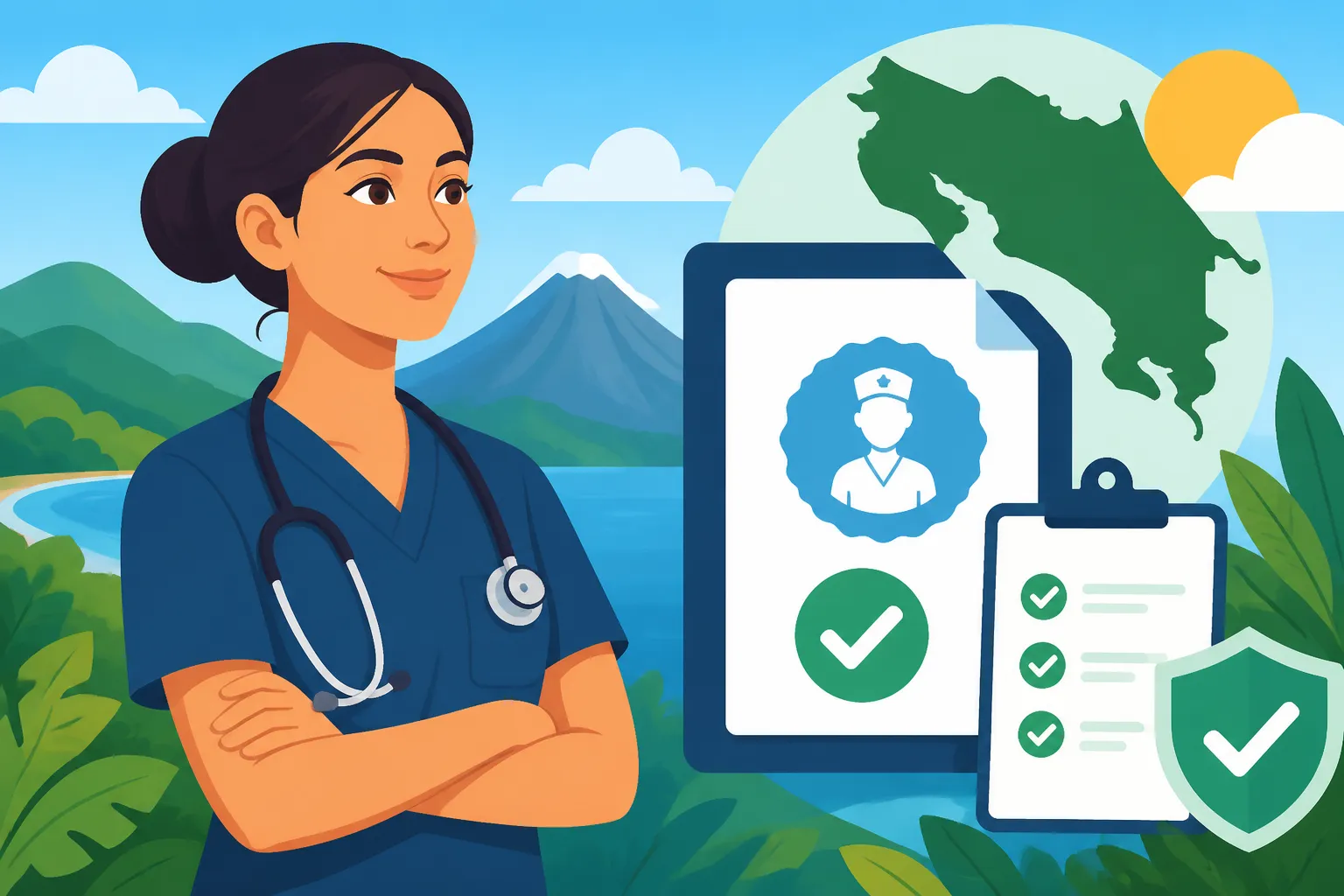
How Do I Validate My Nursing Degree in Costa Rica?
Okay, so you’ve got your hard-earned nursing degree from back home, and you’re dreaming of putting those skills to use here in beautiful Costa Rica. But then the reality hits: how on earth do you make your foreign qualifications count in a completely different country? The process of validating your nursing degree in Costa Rica can feel like navigating a dense jungle without a machete, but don't despair. This guide is here to hack a path through the bureaucratic wilderness, offering you a clear, step-by-step roadmap to get your nursing credentials recognized and pave the way for a fulfilling career in Pura Vida land.
The Initial Hurdle: Understanding the System
Why Your Foreign Credentials Aren't Automatically Valid
It's a common misconception among new expats that once you arrive, your professional qualifications from your home country will automatically be accepted here. Oh, if only it were that simple! Costa Rica, like most nations, has a robust system in place to ensure that all professionals, especially those in critical fields like healthcare, meet specific national standards. This isn't about doubting your expertise or the quality of your education; it's purely about regulatory compliance and protecting public health within the country's unique legal framework. Every country has its own nuances in professional practice, ethical guidelines, and educational benchmarks, and Costa Rica is no different.
Think about it from their perspective: they need to verify that the curriculum you completed aligns with local educational requirements, that your practical training was sufficient, and that your institution is recognized internationally. This process can be lengthy and, let’s be honest, often frustrating. It means digging up every single document you can imagine, from transcripts to detailed course descriptions, and then waiting—sometimes for a very long time—for a committee to review it all. Many expats find this initial hurdle to be one of the most significant administrative challenges, right up there with getting your residency. It's a system designed for thoroughness, which often translates to slowness, so managing your expectations from the start is key.
The Key Player: CONARE and How It Works
The central authority responsible for recognizing foreign university degrees in Costa Rica is the Consejo Nacional de Rectores (CONARE). This isn't just some small government office; CONARE is essentially the national council of university rectors, representing the country's main public universities. They are the gatekeepers for academic degree validation, and for a nursing degree, their approval is absolutely essential before you can even think about practicing. You can't bypass them; they are the starting point for academic recognition.
CONARE's role is to meticulously evaluate the academic content of your foreign degree against the standards of equivalent programs offered by Costa Rican public universities. They look at everything: the number of credits, the detailed course syllabi, the duration of your studies, and even the accreditation status of your alma mater. This process is highly detailed and leaves little room for ambiguity. Their decision directly impacts whether your degree is considered equivalent, partially equivalent (meaning you might need to complete additional courses), or, in rare cases, not equivalent at all. You'll primarily interact with their Oficina de Reconocimiento y Equiparación de Títulos y Grados (Office for Recognition and Equivalence of Titles and Degrees), which is located in San Pedro, Montes de Oca, near the University of Costa Rica.
The Step-by-Step Validation Process
Gathering Your Documentation: It's a Marathon, Not a Sprint
Before you even think about knocking on CONARE's door, you need to arm yourself with an arsenal of documents. And when I say "arsenal," I mean it. This isn't just your diploma; it's practically your entire academic life in paper form, all notarized, apostilled, and translated. Expect to dig through old university files, contact your previous institutions, and possibly pay quite a bit for official copies and certifications. It’s a tedious but non-negotiable step that sets the foundation for your application.
You'll typically need your original degree certificate, official academic transcripts showing all courses and grades, a detailed syllabus or course description for every single course you took (yes, really!), proof of clinical hours completed during your program, and sometimes even a letter from your university explaining their grading system or the program's accreditation. All these documents must first be apostilled in your home country (or legalized, if your country isn't part of the Hague Apostille Convention). Once that's done, they need to be officially translated into Spanish by a public translator authorized by the Ministry of Foreign Affairs in Costa Rica. This entire document preparation phase alone can take weeks or even months and rack up significant costs. Ensure everything is pristine; any missing document, unofficial translation, or incorrect apostille can send you right back to square one, prolonging the agony. For a general overview of this, you might want to read How to Get Your Foreign Degree Recognized in Costa Rica.
The Application Submission and Review
Once your mountain of meticulously prepared documents is ready, it's time to submit your application to CONARE. This is typically done in person at their offices in San José, or potentially through an authorized representative if you’re using a lawyer (which many expats opt to do for this complex process, and honestly, I don't blame them). Be prepared for detailed scrutiny by the intake staff. They will painstakingly check to ensure every required document is present, correctly authenticated with the apostille, and officially translated. Don't be surprised if they spot something minor and ask you to correct it on the spot or return another day.
After successful submission, your application officially enters the review phase. This is where patience truly becomes a virtue. The CONARE committee will take your curriculum and compare it directly to local nursing programs offered by public universities like the Universidad de Costa Rica (UCR) or Universidad Nacional (UNA). They are looking for alignment in terms of scientific rigor, practical components, ethical training, and credit hours. This deep dive into your educational background can take anywhere from six months to over a year, depending on the complexity of your degree, the country of origin, and the current backlog at CONARE. During this time, it's not uncommon to receive requests for additional information or clarification from the committee, so be ready to respond promptly and accurately.
Potential Requirements for Bridging Courses or Exams
It's entirely possible that after diligently reviewing your foreign nursing degree, CONARE might determine that while your qualifications are largely excellent, there are certain areas where your curriculum doesn't perfectly align with Costa Rican academic standards. This isn't a rejection; it's a common outcome, especially for degrees from vastly different educational systems. In such cases, they won't simply reject your degree outright. Instead, they might recommend or require you to complete specific bridging courses, undertake additional practicums, or even pass certain examinations through a local university.
This isn't necessarily a bad thing; it's a clear pathway to making your degree fully equivalent and accepted within the Costa Rican framework. These bridging requirements often focus on Costa Rican specific healthcare laws, public health policies, tropical diseases prevalent in the region, or particular public health practices that might not have been a major component of your original training. For instance, if your program didn't have extensive coursework on epidemiology relevant to Latin America, they might ask you to complete a module on it. While this adds more time and expense to the already lengthy process, it’s a tangible route forward. If you anticipate needing to improve your Spanish for these additional studies, or just for professional life, platforms like iTalki can be incredibly helpful for finding tutors specialized in medical or professional vocabulary.
Beyond Validation: Getting Licensed to Practice
Registering with the Colegio de Enfermeras de Costa Rica
Just having your degree validated by CONARE isn't the final step to practicing nursing in Costa Rica. That recognition is purely an academic endorsement – it says your education is good enough. The next, equally crucial step, is to register with the official professional body: the Colegio de Enfermeras de Costa Rica (College of Nurses of Costa Rica). This is the equivalent of your national nursing board or council back home, and membership is absolutely mandatory to legally work as a nurse in the country. Without this, even with a CONARE-approved degree, you cannot practice.
To register, you'll need to present your CONARE resolution confirming your degree's equivalence, along with a host of other personal and professional documents. This will typically include your Costa Rican residency card (DIMEX), a valid passport, a criminal record check (both from your home country and Costa Rica), and proof of your professional integrity. The Colegio will verify all your documents and ensure you meet their ethical and professional standards for practice. They often have their own set of fees for initial membership and an annual professional license renewal. This is also where you'll get your carné (professional ID card) which you'll need to display when practicing. The process to get your DIMEX, often through pathways like the Pensionado or Rentista residency, is a prerequisite; so understanding How the Caja Requirement Connects to Your Residency in Costa Rica is also crucial.
Navigating the Job Market and Language Barrier
Once your degree is validated by CONARE and you're officially registered with the Colegio, you're officially eligible to practice! ¡Felicidades! You've conquered the administrative Everest. However, the job hunt then begins in earnest, and this is where the language barrier can become a significant factor. While some private hospitals, especially those catering to medical tourism like Hospital CIMA, Clínica Bíblica, or Hospital Metropolitano, may have a higher demand for English-speaking nurses, the vast majority of healthcare settings, particularly in the public system (the Caja), operate entirely in Spanish.
You'll need strong communication skills to interact effectively with patients, their families, doctors, and other staff. This isn't just about basic conversation; it's about understanding complex medical terminology and nuanced patient needs. Many expats find it incredibly beneficial to invest heavily in Learning Spanish in Costa Rica: A Complete Guide for Expats before and during their job search. Consider tailoring your CV to Costa Rican standards; learning How to Write a Costa Rican-Style CV and Cover Letter can give you a significant edge in the local market. Networking within the expat community and with local healthcare professionals can also open doors. Be prepared that even with all your qualifications, finding that first nursing position can take time and persistence, especially if your Spanish isn't fluent. Don't underestimate the importance of local connections.
Common Challenges and Real-World Advice
Patience, Persistence, and Professional Help
Let me be blunt: the degree validation and licensing process in Costa Rica is not for the faint of heart. It requires an extraordinary amount of patience and persistence. You will almost certainly encounter delays, requests for documents you thought you already submitted, and seemingly illogical bureaucratic hurdles. It’s easy to get discouraged, to feel like you’re hitting your head against a wall, but remember, countless others have navigated this path successfully. It's a rite of passage for many professionals here.
Many expats find that hiring a local attorney or a specialized consultant who understands the CONARE and Colegio processes can be invaluable. While it certainly adds to the overall cost, a good lawyer can help ensure your documents are perfectly prepared, follow up on your application, and navigate any issues that arise. They can speak the "bureaucratic Spanish" that most of us expats struggle with, saving you countless hours of frustration and potential mistakes that could lead to even longer delays. Think of it as an investment in your future career here. The Costa Rican legal system has its own quirks, and having an experienced guide makes all the difference, especially when dealing with entities that aren't accustomed to foreign credentials.
Financial Considerations and Timeframes
The financial outlay for degree validation and licensing can also be substantial. Beyond the CONARE application fees (which are often several hundred dollars), you have to factor in the costs of:
- Apostille/Legalization: Varies by country, but can be expensive for many documents.
- Official Translations: Public translators in Costa Rica charge per page, and a full academic transcript and syllabus can be dozens of pages long. Expect to spend hundreds, if not thousands, of dollars here.
- Bridging Courses/Exams: If required, these will have tuition fees, which can range widely depending on the university and duration.
- Colegio Fees: Initial registration and annual membership fees.
- Legal/Consultant Fees: These can range from a few hundred to a couple of thousand dollars or more, depending on the complexity and how much assistance you require.
Here’s a rough breakdown of potential costs and timelines you might encounter:
| Item | Estimated Cost (USD) | Estimated Timeframe | Notes |
|---|---|---|---|
| Document Gathering & Apostille | $200 – $800 | 2 weeks – 3 months | Varies by home country, institution, and number of documents |
| Official Spanish Translations | $500 – $2,000+ | 1 week – 1 month | Per page rate; dependent on the volume of academic documents |
| CONARE Application Fee | $300 – $600 | Immediate | Paid upon submission to cover administrative review |
| CONARE Review Process | N/A | 6 months – 1.5 years+ | Highly variable; this is often the longest waiting period |
| Bridging Courses/Exams (if required) | $500 – $3,000+ | 3 months – 1 year+ | Varies by specific university, course load, and credit hours |
| Colegio de Enfermeras Registration Fees | $100 – $300 | 1 month – 3 months | Includes initial registration and first year's mandatory membership |
| Legal/Consultant Assistance | $1,000 – $3,000+ | Throughout the process | Optional but highly recommended for navigating complexities |
So, while the dream of practicing nursing in Costa Rica is absolutely achievable, it requires a significant investment of both time and money. Make sure your financial planning includes these potential expenses. And once you do start earning, remember to look into services like Taxes for Expats to understand your income tax obligations in Costa Rica, because the fiscal side of working here is another adventure entirely. For a broader overview of the healthcare system, you might find The Complete Guide to Healthcare in Costa Rica for Expats (2027) helpful, as well as How Costa Rica's Health System Works: The Caja (CCSS) vs Private Explained (2027). Understanding The Expat Guide to Joining the Caja (CCSS) in Costa Rica (2027) will also be critical once you secure employment, as public healthcare contributions are mandatory for residents. Knowing Understanding Costa Rican Labor Law and Worker Rights (2027) is also crucial for any working professional.
The journey to validate your nursing degree and practice in Costa Rica is undoubtedly complex, but it's a testament to your dedication and passion. With thorough preparation, a good grasp of Spanish, and a healthy dose of patience, you can absolutely achieve your goal and contribute your skills to this beautiful country.
Disclaimer
The information provided in this guide is for general informational purposes only and does not constitute legal, financial, or professional advice. While we strive to provide accurate and up-to-date information, regulations and procedures in Costa Rica can change frequently without prior notice. It is highly recommended to consult directly with CONARE, the Colegio de Enfermeras de Costa Rica, and a qualified legal professional specializing in immigration and professional licensing in Costa Rica for advice tailored to your specific situation.