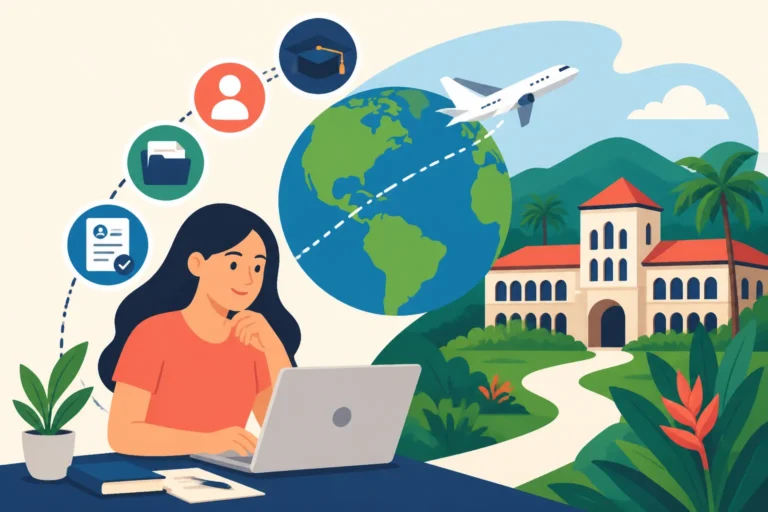
How to Get Your Foreign Degree Recognized in Costa Rica
So, you've decided to make the leap, move to Costa Rica, and now you're wondering how your carefully earned degree from back home will hold up here. Believe me, you're not alone. Many of us arrive with a mix of excitement and trepidation, quickly realizing that "Pura Vida" doesn't always translate to "smooth sailing" when it comes to navigating bureaucracy. Getting your foreign degree recognized in Costa Rica can feel like pushing a boulder uphill, but it's a vital step for many professions. This guide is here to walk you through the labyrinth, sharing the wisdom of those who've been there, done that, and still remember the paperwork nightmares.
The Initial Shock: Why Degree Recognition Matters in Costa Rica
When you first dream of Costa Rica, you imagine pristine beaches, lush rainforests, and a relaxed pace of life. What often doesn't make it into the glossy brochures is the intricate administrative process that awaits anyone looking to formally work in many fields. For many expats, the idea that their hard-earned diploma, which was their ticket to professional success elsewhere, might not be immediately valid here can be a real jolt. It's not about your skills or intelligence, but about the specific legal and academic frameworks that Costa Rica has in place to protect its educational and professional standards. Ignoring this step, or underestimating its complexity, can lead to significant headaches down the line.
Navigating the Bureaucratic Labyrinth
Let's be blunt: Costa Rican bureaucracy can test the patience of a saint. The system for recognizing foreign degrees is no exception. It's not a single, streamlined process, but rather a multi-stage journey involving several distinct institutions, each with its own set of rules, forms, and waiting periods. You might find yourself gathering documents, getting them authenticated, having them translated, and then submitting them to one office, only to find out you need to repeat a similar, but slightly different, process for another. It's easy to get frustrated, to feel like you're being asked for the same information multiple times, or to simply not understand why a particular step is necessary. This isn't unique to Costa Rica; many countries have complex systems, but the feeling of being an outsider trying to understand an unfamiliar process can amplify the challenge.
The crucial thing to remember is that this system, while seemingly convoluted, is designed to ensure that foreign credentials meet national standards and that those practicing regulated professions are properly qualified. It's a consumer protection measure, really. However, for the expat on the ground, it often feels like an endless series of hoops. Expect to make multiple trips to various government offices, each with its own specific hours and quirks. Some offices might prefer you show up early in the morning, others might have a specific day of the week dedicated to foreign applicants. Be prepared to ask many questions, and don't be afraid to double-check information, as procedures can sometimes shift or be interpreted differently by various officials. It's a marathon, not a sprint, and patience will be your most valuable asset.
The Legal Ramifications of Unrecognized Credentials
Thinking about just diving in and working without getting your degree recognized? Hold your horses. For many professions, especially those in regulated fields like healthcare, engineering, law, or education, working without proper recognition and, often, affiliation with a professional college, is simply illegal. This isn't a small detail; it can lead to severe penalties, including fines, deportation, and even criminal charges, not to mention a ban on future residency applications. Employers in these fields, particularly larger companies or public institutions, will absolutely require proof of recognized credentials before they even consider your application. They don't want to risk their own licenses or face legal action.
Even for professions that aren't strictly regulated, having your degree recognized can significantly enhance your standing in the job market. It demonstrates your commitment to integrating into the local system and provides official validation of your expertise. Imagine being a dentist from another country. You can't just set up a practice here. You'd need your dental degree recognized by CONARE, then register with the Colegio de Cirujanos Dentistas de Costa Rica. Without that, you're just someone who says they're a dentist, which simply won't fly. Understanding the legal framework is paramount; ignorance of the law is rarely an acceptable excuse. For a deeper dive into the broader legal aspects of employment, you might want to read our guide on Understanding Costa Rican Labor Law and Worker Rights (2027).
Practical Implications for Your Career and Life
Beyond the legalities, an unrecognized degree can throw a wrench into your practical career aspirations. Many companies, even those not in strictly regulated fields, will often prefer or require local recognition, especially when dealing with promotions or certain types of projects. If your plan involves working for a Costa Rican company, particularly in a management, technical, or specialized role, this step is practically non-negotiable. It helps them compare your qualifications against local graduates and understand your professional standing within the Costa Rican context.
Furthermore, an unrecognized degree limits your options. You might find yourself pigeonholed into roles that don't fully utilize your skills, or having to accept lower-paying positions simply because you lack the official stamp of approval. It can also affect your ability to pursue further education in Costa Rica, as local universities will need to understand the equivalency of your prior studies. This whole process isn't just about a piece of paper; it's about opening doors, validating your professional identity, and fully integrating into the Costa Rican professional landscape. It's an investment in your future here, both professionally and personally.
Understanding the Key Players: CONARE and Your Professional College
When embarking on the quest to have your foreign degree recognized in Costa Rica, you'll quickly learn that there isn't just one office or one person you deal with. Instead, there are two primary entities that will play pivotal roles: CONARE and the specific professional college pertaining to your field. Think of them as two gates you need to pass through, often sequentially, each with its own set of guardians and requirements. Understanding their distinct functions and how they interact is fundamental to navigating this process successfully.
The Role of CONARE (National Council of University Rectors)
CONARE, or the Consejo Nacional de Rectores, is the big kahuna when it comes to academic validation in Costa Rica. This institution is responsible for evaluating the academic equivalency of your foreign university degree to a Costa Rican university degree. They are looking at your transcripts, course descriptions, the accreditation of your previous institution, and the overall curriculum to determine if it meets the standards of a licenciatura or maestría (master's) degree awarded by a public Costa Rican university. They don't care about your job experience or whether you're a good person; their focus is purely academic.
The process with CONARE is often the first major hurdle. You'll submit a hefty package of documents (more on that later), and their team of academic experts will review everything. They compare your program's content, duration, and level with equivalent programs offered at Costa Rican universities. This is where those detailed course descriptions become incredibly important. If CONARE decides your degree is equivalent, they will issue a resolution, which is essentially the academic recognition you need. This resolution is a prerequisite for almost any further professional registration you might need. Think of it as getting your academic passport stamped – without it, many other doors won't open. Be prepared for a potentially lengthy wait time here, as their caseload can be significant.
The Importance of Colegios Profesionales
Once CONARE has given its academic blessing, your journey is far from over for many fields. The next, and often more demanding, step is affiliation with a Colegio Profesional – a professional college or association. Costa Rica has mandatory professional colleges for a wide range of fields, from doctors (Colegio de Médicos y Cirujanos) and lawyers (Colegio de Abogados y Abogadas) to engineers (Colegio Federado de Ingenieros y Arquitectos – CFIA), architects, psychologists, accountants (Colegio de Contadores Públicos), and even journalists. These colleges serve as regulatory bodies, setting ethical standards, overseeing professional practice, and, critically for expats, controlling who can legally practice their profession in the country.
Affiliation with a professional college typically requires not only your CONARE resolution but also additional documentation, and sometimes, even supplementary examinations or internships. For example, a foreign doctor, even with CONARE approval, might need to pass a local equivalency exam and complete a residency period supervised by the Colegio de Médicos y Cirujanos before being fully licensed. The requirements vary wildly from one Colegio to another, so identifying your specific professional body early on and thoroughly researching their individual rules is crucial. This step is where many expats hit a wall, as the additional requirements can be extensive and expensive.
Different Paths for Different Professions
It’s crucial to understand that not all professions are created equal in the eyes of Costa Rican law and its professional colleges. While virtually all university-level degrees will go through CONARE for academic validation, the requirements for professional licensing afterward diverge significantly.
For some fields, particularly those deemed critical for public safety or welfare, like medicine, law, or certain branches of engineering, the path through the professional college is notoriously rigorous. You might face comprehensive exams covering Costa Rican specific laws, medical practices, or engineering codes. You could be required to complete supervised practical experience, which means you might essentially be re-doing parts of your training. These are not just minor hoops; they are often significant, multi-year commitments that require a deep understanding of Spanish, local regulations, and cultural nuances in professional practice. If you're a lawyer, for instance, you'll need to demonstrate proficiency in Costa Rican legal statutes, which are very different from common law systems.
On the other hand, for some professions that are not strictly regulated by a Colegio Profesional, such as many business degrees, arts degrees, or certain IT specializations, the CONARE recognition might be sufficient for employers. In these cases, your CONARE resolution simply acts as an official endorsement of your academic background. However, even here, a potential employer might still have a preference for candidates who have gone through the full recognition process, as it signals a deeper commitment to working within the Costa Rican system. Always investigate your specific profession's requirements thoroughly. A good resource for understanding various professional pathways might be found in our guide on The Complete Guide to Working in Costa Rica as a Foreigner (2027), which touches on general employment requirements.
The General Process: Step-by-Step for Most Degrees
Alright, let's get down to the nitty-gritty of the process. While specific requirements can change and individual cases always present unique challenges, there's a general roadmap that most expats will follow when seeking to get their foreign degree recognized in Costa Rica. This isn't a walk in the park; it's a detailed, document-heavy journey that demands meticulous attention to detail. Skipping a step or getting a document wrong can set you back weeks, if not months.
Gathering Your Documentation: The Pre-Apostille/Legalization Stage
This is where the real work begins, and it's often the longest and most frustrating part because you're dealing with institutions in your home country. Before you even think about CONARE, you need to compile a specific set of documents from your university and government. These generally include:
- Original Degree Certificate/Diploma: The actual piece of paper you received when you graduated. It needs to be the original, or a certified true copy.
- Official Academic Transcripts: These should be sealed and sent directly from your university to CONARE (or provided to you in a sealed envelope to present to CONARE, depending on their specific rules at the time). They need to list all courses taken, grades, and credits.
- Course Descriptions (Syllabi): This is absolutely critical and often overlooked. You'll need detailed descriptions for all courses listed on your transcripts, including the number of hours, learning objectives, and content. Your university's registrar or departmental office should be able to provide these. Sometimes, they're available online. If not, you may need to recreate them based on old catalogs, which can be a huge pain. The more detailed, the better, as this helps CONARE evaluate equivalency.
- Proof of University Accreditation: Documentation showing that your degree-granting institution was officially accredited in your home country. This could be a letter from the Ministry of Education or a recognized accreditation body.
- Passport Copy: A clear copy of your valid passport.
- Birth Certificate: Your original birth certificate.
For documents like your birth certificate or a marriage certificate (if applicable), ensure you obtain new, original copies if yours are old or heavily used. The fresher the document, the less likely you'll face issues. It's truly a scavenger hunt, and it’s best to start this well in advance of your move or even starting your residency application.
The Critical Step of Apostille or Legalization
Once you have your original degree, transcripts, accreditation proof, and birth certificate, you cannot just send them to Costa Rica. They need to be officially authenticated for international use. This is where the apostille or legalization process comes in.
- Apostille: If your home country is a signatory to the Hague Apostille Convention (and most are, including the US, Canada, UK, Australia, and most of Europe), you will need to get an apostille stamp on each original document. This usually involves taking your documents to a designated authority in your home country (often the Secretary of State, Department of Foreign Affairs, or similar). An apostille verifies the authenticity of the signature and seal on the document. Without this, your documents will not be accepted in Costa Rica.
- Legalization: If your home country is not a signatory to the Hague Apostille Convention, your documents will need to go through a more complex "legalization" process. This typically involves getting the documents certified by the Ministry of Foreign Affairs in your home country, and then further authenticated by the Costa Rican Embassy or Consulate in your home country. This is a multi-step process that requires even more planning and time.
Important Note: The apostille or legalization must be on the original document or a certified true copy of it. If you have a photocopy of your degree, it first needs to be certified as a true copy by the issuing authority or a notary, and then apostilled. This step cannot be done in Costa Rica; it must be done in the country where the document originated. This is often a major source of delay and frustration for expats who are already living in Costa Rica and realize they need to send documents back home.
Official Translations: Don't Skimp Here
Once your documents are apostilled or legalized, if they are not in Spanish, they absolutely must be translated by an official translator recognized by the Costa Rican Ministry of Foreign Affairs (Ministerio de Relaciones Exteriores y Culto). This is not a job for your bilingual friend, no matter how fluent they are. An unofficial translation will be rejected outright, wasting your time and money.
You can often find a list of authorized translators on the Ministry's website or by asking at CONARE itself. The cost of these translations can add up quickly, especially for lengthy transcripts and course descriptions. Expect to pay per page or per word. Ensure the translator understands the precise terminology for academic and legal documents. A good translator will know how to correctly render academic terms and legal phrases in a way that is recognized and accepted by Costa Rican institutions. It's a precise art, not just a literal word-for-word conversion. You need to submit both the original apostilled document and its official Spanish translation together. Do not laminate any original documents; this can invalidate the apostille and make it impossible for Costa Rican officials to verify.
The CONARE Gauntlet: Submitting Your Academic Records
So, you've survived the initial documentation scramble, the apostille hunt, and the official translations. Congratulations, you've cleared a major hurdle! Now, it's time to face CONARE directly. This is the stage where Costa Rican academics evaluate your foreign education against local standards. It can feel a bit like a bureaucratic black box, but knowing what they’re looking for and what to expect can ease some of the anxiety.
The Application Form and Fee: Getting Started
First things first, you'll need to obtain CONARE's specific application forms for degree recognition. These are usually available on their website, or you can pick them up in person at their offices, typically located in San Pedro, Montes de Oca, within the greater San José area. Fill them out meticulously, ensuring every blank is completed accurately. Any missing information or errors can lead to your application being returned, delaying the entire process.
Along with the forms, there will be an application fee. This fee can vary, so it's essential to check the most current amount on CONARE's website or by contacting them directly. The fee is usually paid at a designated bank, and you'll need to provide the proof of payment with your application. Keep all receipts and copies of everything you submit. This is a golden rule for any bureaucratic process in Costa Rica: always keep a copy of everything, and get a timestamped receipt whenever possible. It’s your only proof you’ve done what you needed to do.
What CONARE Really Looks For in Your Transcripts
When CONARE reviews your application, they are not just glancing at your degree title. They are deeply analyzing your academic history. This is why those detailed course descriptions and syllabi are so vital. They want to see:
- Course Content and Breadth: Did your degree cover a similar range of subjects and depth as a comparable Costa Rican program? For example, if you have an engineering degree, did you take core mathematics, physics, and engineering principles courses that align with local curricula?
- Credit Hours/Duration: The total number of credits and the length of your program (e.g., a 4-year bachelor's, 2-year master's) are compared to the standard duration for equivalent degrees in Costa Rica.
- Accreditation of Your Institution: They verify that your university was a legitimate, accredited institution in your home country.
- Level of Study: They determine if your degree is equivalent to a diplomado, bachillerato, licenciatura (the common professional degree in Costa Rica, often equivalent to a master's or post-graduate diploma in other systems), or maestría. This is a critical distinction, as the licenciatura is often the minimum requirement for professional practice.
If there are significant differences, CONARE might ask for additional information, or even recommend that you take supplementary courses at a Costa Rican university to cover any perceived gaps. This is why a comprehensive and well-organized submission package is your best defense against delays or requests for further study. It might also be useful to review How to Get Your Foreign University Degree Recognized (Reconocimiento) in Costa Rica for more specific documentation tips.
Waiting Game: Timelines and Follow-ups
After you submit your complete application package to CONARE, the waiting game truly begins. There's no sugarcoating it: this can take a long time. Depending on their current caseload, the complexity of your degree, and how often their academic committees meet, it could be anywhere from six months to over a year, sometimes even longer for highly specialized fields. This is one of the most common frustrations for expats – the uncertainty and the lack of a clear, fixed timeline.
During this period, direct follow-up calls or emails are generally acceptable, but frequent, impatient inquiries won't speed things up and might even annoy officials. It's best to allow a reasonable amount of time to pass (e.g., a few months) before gently inquiring about the status. When you do follow up, have your application number and all relevant details ready. Be polite and persistent, but respectful of the process. Remember, there's no fast track. Many expats find this waiting period a test of their resolve, but eventually, if your documents are in order and your degree meets their standards, you will receive a resolution. This resolution will be either a formal recognition of equivalency or a request for additional information/coursework.
Professional College Affiliation: The Next Hurdle
Congratulations if you've made it through CONARE! That’s a massive step. But for many professions, especially those regulated for public safety and well-being, the journey isn't over. Now, you need to turn your attention to the relevant Colegio Profesional (Professional College or Association) to gain the legal right to practice your profession in Costa Rica. This stage can be even more demanding than CONARE, as it moves beyond academic equivalency to practical, ethical, and legal licensing.
Identifying Your Specific Professional College
The first crucial step is to correctly identify which Colegio Profesional governs your field. This might seem obvious, but sometimes professions have overlapping or distinct colleges depending on the specialization. For example, while engineers and architects might fall under the umbrella of the Colegio Federado de Ingenieros y Arquitectos (CFIA), a specific type of therapist might belong to a different health-related Colegio than a general practitioner.
You can usually find a list of recognized professional colleges on government websites or by directly asking at CONARE once you receive your resolution. Once identified, immediately visit their website or contact them directly to understand their specific requirements for foreign professionals. Their rules are paramount, and they often operate independently with their own set of bylaws and regulations, which can differ significantly from one Colegio to another. Don't assume that just because you have CONARE approval, the Colegio will automatically accept you. They have their own mandate to protect public interest and the integrity of their profession.
Additional Requirements: Examinations and Internships
Here's where things can get really challenging. Many professional colleges impose significant additional requirements beyond just the CONARE resolution. These can include:
- Professional Equivalency Exams: This is very common, especially for fields like medicine, law, or complex engineering. These exams test your knowledge of Costa Rican laws, specific local practices, regulations, and even professional ethics. They are often rigorous, in Spanish, and may require extensive study of Costa Rican-specific content. For instance, a foreign lawyer would need to demonstrate a thorough understanding of Costa Rican civil, penal, and constitutional law.
- Supervised Internships or Residencies: Some colleges require foreign professionals to complete a supervised internship or residency period in Costa Rica. This is designed to ensure you are familiar with local working conditions, protocols, and cultural aspects of professional practice. These can be lengthy, unpaid, or low-paid, and can add significant time to your licensing process.
- Proof of Spanish Fluency: While not always a formal exam, many professional colleges will implicitly or explicitly require a high level of Spanish fluency, particularly for professions that involve direct communication with clients or patients.
- Ethics and Professional Conduct Courses: You might need to complete specific courses on the ethical guidelines and professional conduct expected within your field in Costa Rica.
These additional hurdles can feel daunting, especially if you've already spent years in your profession. It truly tests your commitment to establishing your career in Costa Rica. For those looking to improve their Spanish skills, a platform like iTalki can be incredibly helpful for finding tutors specializing in professional or technical Spanish, which could be invaluable for these exams or for daily practice.
The Costs Involved in Professional Affiliation
Beyond the time and effort, there are often substantial financial costs associated with professional college affiliation. These typically include:
- Application Fees: Fees to submit your application to the professional college.
- Membership Fees: Annual or recurring membership fees to maintain your active status with the college. These are mandatory to legally practice.
- Examination Fees: If exams are required, there will be fees associated with taking them.
- Course/Training Fees: If you're required to take supplementary courses or training, these will incur additional costs.
- Insurance: Many professional colleges require members to hold professional liability insurance, which is another recurring expense.
These costs, combined with the often-lengthy process, highlight the significant investment required to practice regulated professions in Costa Rica. It's vital to factor these into your financial planning as you consider moving. While our guide on The Cost of Healthcare in Costa Rica: A Complete Breakdown for Foreigners (2026) covers medical expenses, the costs here are professional, and should be considered separately. Remember that these fees are non-refundable, so ensure you meet all requirements before committing financially.
Special Cases and Common Roadblocks
While the general process applies to many, some degrees and situations present unique challenges. It's important to be aware of these potential roadblocks so you can prepare accordingly or even consider alternative pathways if the traditional route proves too difficult or time-consuming. Costa Rica, like any country, has its quirks, and navigating these special cases requires extra diligence and often, a hefty dose of patience.
Medical and Legal Degrees: The Toughest Path
If you hold a medical or legal degree from a foreign institution, be prepared for the most rigorous and lengthy recognition process. These professions are among the most tightly controlled in Costa Rica, and for good reason – they deal directly with public health, safety, and justice.
For medical doctors, the Colegio de Médicos y Cirujanos de Costa Rica has some of the most stringent requirements. Beyond CONARE's academic equivalency, you will almost certainly be required to:
- Pass a comprehensive equivalency exam in Spanish, covering Costa Rican medical practices, public health system (the Caja), and laws. This exam is notoriously difficult.
- Complete a period of supervised social service or residency in a Costa Rican hospital or clinic, which can last a year or more, and may be unpaid or minimally paid. This is designed to integrate you into the local healthcare system and ensure you understand endemic health issues and local protocols.
- Demonstrate a high level of Spanish proficiency, often through an interview or specific language examination.
Similarly, lawyers face an equally arduous journey with the Colegio de Abogados y Abogadas de Costa Rica. Costa Rica operates under a civil law system, which is fundamentally different from common law systems prevalent in many English-speaking countries. Expect to:
- Pass extensive exams on Costa Rican civil, penal, administrative, and constitutional law. This often requires significant self-study or even enrolling in specific local university courses to bridge the knowledge gap.
- Prove mastery of legal Spanish, including specific legal terminology.
- Potentially complete a period of supervised practice or demonstrate a certain number of years of local experience.
Due to the extreme difficulty and time commitment, many foreign medical and legal professionals choose to work in related fields that don't require direct licensing (e.g., medical research, international legal consulting for foreign firms not practicing Costa Rican law), or they focus on opportunities in medical tourism, which might operate under different frameworks depending on the specific role.
Technical Degrees and Vocational Training
Degrees and certifications from technical institutes, community colleges, or vocational training programs often fall into a grey area. CONARE primarily deals with university-level degrees (bachelor's, master's, doctorates). If your foreign technical qualification is below the university level, getting direct recognition can be challenging or even impossible through CONARE.
In these cases, you might need to:
- Seek Recognition from Specific Institutions: If your technical field has a specific public institution or regulatory body (e.g., INA – Instituto Nacional de Aprendizaje for vocational training), they might have a process for recognizing foreign certificates or for assessing your competencies.
- Demonstrate Experience: For many technical trades, practical experience and a portfolio of work might be more valuable to potential employers than a formal piece of paper, especially if direct certification is not mandatory.
- Enroll in a Local Program: Sometimes, the most straightforward path is to enroll in a local technical or vocational program to gain a Costa Rican qualification, even if it feels redundant.
For skills that don't require formal licensing, an employer might be more interested in your abilities and references than a formal recognition document. However, for skilled trades that do have local certifications (e.g., electricians, plumbers), you will need to ascertain the specific requirements of the regulating body, which may involve exams or supervised work.
When Your Degree Doesn't Quite Match Up
It's not uncommon for CONARE to find that a foreign degree, while valid, doesn't perfectly align with a directly equivalent program in Costa Rica. This can happen due to differences in curriculum, credit systems, or the focus of specialized programs.
In such scenarios, CONARE might issue a resolution that:
- Requires Supplementary Courses: You might be instructed to take specific courses at a Costa Rican university to cover academic gaps identified in your foreign degree. This adds time and expense, but it's a pathway to full recognition.
- Grants Partial Recognition: In rare cases, they might grant a partial recognition, or recognize your degree at a lower level than you expected (e.g., a licenciatura might only be recognized as a bachillerato).
- Rejects Recognition (Rare but Possible): If your institution is not accredited, or the program is deemed too dissimilar to anything offered locally, outright rejection is possible, though less common if all initial documentation is correct.
If you face these issues, don't despair immediately. Consult with a lawyer specializing in immigration and academic affairs. They might be able to help you appeal a decision or understand the best way forward. Remember, every foreign degree is unique, and the evaluation process is highly individualized. It's a journey that often requires resilience and adaptability.
What to Do While You Wait: Practical Advice for Expats
The degree recognition process, as we've established, can be a long one. For many expats, this means a period of uncertainty, where your professional aspirations are in a holding pattern. However, this doesn't mean you have to put your life on hold! There are plenty of proactive steps you can take to not only make the wait more productive but also to set yourself up for greater success once that coveted recognition comes through. This period is an excellent opportunity for personal growth and practical integration into Costa Rican life.
Temporary Workarounds and Volunteer Opportunities
While you cannot legally practice a regulated profession without proper recognition and affiliation, there are often temporary workarounds or roles that don't require this specific licensure. Many expats find work in:
- English Teaching: This is a very common path for native English speakers, as demand is high. While some institutions prefer recognized education degrees, many language academies will hire based on TEFL/TESOL certifications and native fluency. This offers a steady income and a great way to improve your Spanish.
- Remote Work for Foreign Companies: If you're lucky enough to have a remote job with a company outside of Costa Rica, this is an ideal situation. You can earn an income without needing local degree recognition or a work permit, especially if you're on a digital nomad visa or a Rentista residency. This allows you to financially support yourself while waiting. For more on this, check out Working Remotely from Costa Rica: The Definitive Expat Guide (2027).
- Volunteering: Volunteering in your field, or a related area, can be an excellent way to gain local experience, expand your professional network, and keep your skills sharp. It shows initiative and can lead to paid opportunities later on. Just be sure that your volunteer role doesn't infringe on any regulated professional activities.
- Unregulated Sectors: Consider working in sectors that don't require specific professional degrees, such as tourism, hospitality, or certain administrative roles, particularly if they cater to an international clientele.
This interim period is also a good time to revisit your financial plans. Understanding How to Register as Self-Employed with the Caja and Hacienda in Costa Rica might be helpful if you consider freelance work.
Boosting Your Spanish Skills for the Process (and Life!)
Let's be real: trying to navigate complex bureaucracy in a language you're not fully comfortable with is a recipe for disaster. Investing in your Spanish during this waiting period is perhaps the single most impactful thing you can do. Not only will it help you communicate more effectively with CONARE officials, professional college staff, and potential employers, but it will also open up your world in Costa Rica exponentially.
- Formal Classes: Enroll in a reputable Spanish language school. Many offer intensive programs that can rapidly improve your fluency.
- Private Tutors: Platforms like iTalki are fantastic for finding affordable, flexible online tutors. You can even find tutors specializing in academic or professional Spanish to help you understand complex terminology you'll encounter in documents or during interviews with professional colleges. Regular conversation practice is key.
- Immersion: Don't just study in a classroom. Immerse yourself! Watch local TV, listen to Costa Rican radio, read local newspapers, and, most importantly, talk to Ticos every chance you get. Join local clubs, participate in community events, and make Costa Rican friends.
- Practice with Documents: Take your degree recognition forms or professional college guidelines and try to understand them in Spanish. This practical application will solidify your vocabulary and comprehension.
Beyond the practicalities of degree recognition, genuine Spanish fluency is the key to truly embracing the Pura Vida lifestyle. It's how you connect with the culture, understand the nuances, and build lasting relationships. Our guide on Learning Spanish in Costa Rica: A Complete Guide for Expats offers more detailed strategies.
Financial Planning During the Transition
The costs associated with degree recognition (translations, apostilles, application fees, potential travel, professional college fees) can add up, and the time without a fully recognized income stream can be stressful. Prudent financial planning is essential.
- Budget Meticulously: Understand all the potential costs involved and create a realistic budget that accounts for both the recognition process itself and your living expenses during the wait.
- Emergency Fund: Ensure you have a robust emergency fund to cover unexpected delays or additional requirements.
- Explore Residency Options: If you haven't secured your residency yet, consider options like the How to Apply for Rentista Residency in Costa Rica or the digital nomad visa if you qualify, as these can provide a stable legal status while you navigate professional licensing.
- Tax Implications: Even if your income is from abroad, you need to understand your tax obligations in Costa Rica. Brands like Taxes for Expats specialize in helping foreigners navigate international tax complexities, which is crucial for compliant living here. You'll definitely want to look into The Complete Guide to Taxes in Costa Rica for Expats (2027) to ensure you're squared away.
This period of transition, while challenging, is also an opportunity to solidify your financial foundation in Costa Rica. Being prepared financially will reduce stress and allow you to focus on the process itself, rather than worrying about day-to-day expenses.
Alternative Paths and Leveraging Unrecognized Skills
So, what if the formal degree recognition process for your particular profession proves to be too long, too expensive, or simply impossible? Or perhaps you've decided that battling the bureaucracy isn't how you want to spend your Pura Vida years. The good news is that living and thriving in Costa Rica doesn't always hinge on having a officially stamped diploma. Many expats carve out incredibly successful and fulfilling lives by leveraging their skills, experience, and entrepreneurial spirit in alternative ways. This often means thinking outside the traditional employment box and focusing on what you can do, rather than what the system says you can't do (yet).
The Freelance and Remote Work Advantage
This is a huge game-changer for many expats in Costa Rica, especially in the modern age. If your skills are transferrable to a digital environment, the world is your oyster.
- Working for International Clients: Many foreign professionals in Costa Rica continue to work for clients or companies located outside the country. This can include fields like graphic design, web development, content writing, virtual assistance, online marketing, consulting, and much more. The beauty of this is that your foreign degree's recognition in Costa Rica often becomes irrelevant to your clients back home, as long as you can deliver quality work.
- Digital Nomad Visas: Costa Rica has embraced the digital nomad movement, offering a specific visa that allows remote workers to legally reside here for extended periods. This is a perfect pathway if your income comes from outside the country. For more details on this, explore The Complete Guide to the Costa Rica Digital Nomad Visa (2027).
- Leveraging Online Platforms: Websites like Upwork, Fiverr, or specific industry-focused freelance platforms can connect you with international clients seeking your expertise. Your reputation and portfolio will matter far more than a local stamp of approval on your degree.
The key here is that if your client base is global, Costa Rica becomes your base of operations rather than the source of your employment. This not only bypasses the degree recognition issue but also often offers a higher earning potential than many local jobs.
Entrepreneurship: Building Your Own Path
For those with an entrepreneurial drive, Costa Rica offers fertile ground, especially in sectors that cater to the growing expat community or the burgeoning tourism industry. Instead of trying to fit into an existing system, you can create your own.
- Starting a Business: You can start your own business in Costa Rica, leveraging your professional skills in an unregulated capacity (e.g., a foreign architect might offer design consulting without stamping plans, or an accountant might offer bookkeeping for international clients). Popular expat-led businesses include real estate services, tour operations, boutique hotels, restaurants, coaching, and online services.
- Identifying Market Gaps: Look for needs within the expat or local community that aren't being met. Perhaps your foreign expertise can fill a niche. Many expats succeed by offering services to other expats, such as relocation consulting, property management, or specialized fitness classes.
- Investment and Business Ventures: For those with capital, The Inversionista (Investor) Residency in Costa Rica: A Complete Guide (2027) offers a pathway to residency through investment, which can include starting a business that creates local jobs and contributes to the economy. This is a direct way to leverage your experience and capital without needing a specific degree recognized for employment purposes.
Becoming an entrepreneur comes with its own set of challenges, including navigating local business registration and tax laws, but it offers immense freedom and the ability to dictate your own professional terms. You can get started with guides like Self-Employment in Costa Rica: Registering a Business and Going Independent (2027).
The Value of International Experience in Costa Rica
Even if your degree isn't formally recognized for direct professional practice, your international experience and education still hold immense value. Many multinational corporations or companies operating in Costa Rica's free trade zones specifically seek out professionals with diverse backgrounds and international perspectives.
- Multinational Companies: Companies like Intel, Amazon, or specialized BPO (Business Process Outsourcing) firms often have different hiring criteria. They might prioritize English fluency, international business experience, and specific skill sets over local degree recognition, especially if the role is internally focused or serves international clients. These companies often have their own internal validation processes for foreign credentials.
- Unique Perspective: Your experience from another country can be a significant asset in a globalized economy. You bring different ways of thinking, problem-solving, and cultural understanding that can be highly valued by forward-thinking companies.
- Networking: Get out there and network! Attend professional meetups, industry events, and expat gatherings. You never know who you might meet who is looking for exactly your unique combination of skills and international background. Sometimes, the right connection can open doors that formal processes cannot. Our guide, The Expat Guide to Finding a Job in Costa Rica (2027), has more tips on networking.
Ultimately, your journey in Costa Rica is yours to define. While formal degree recognition is a pathway for many, it's not the only pathway. By understanding your options, being adaptable, and embracing the entrepreneurial spirit, you can build a successful and fulfilling life, professional or otherwise, in this beautiful country.
Required Documents for Foreign Degree Recognition (General Overview)
Here's a simplified table of the key documents typically required for foreign degree recognition in Costa Rica. Please remember that this is a general overview, and specific requirements can vary based on your home country, the nature of your degree, and the professional college involved. Always confirm the latest list directly with CONARE and your respective professional college.
| Document Category | Specific Document | Stage Required | Notes |
|---|---|---|---|
| Academic Credentials | Original Degree Certificate / Diploma | CONARE (Academic Recognition) | Must be Apostilled or Legally Authenticated. |
| Official Academic Transcripts | CONARE (Academic Recognition) | Must be sealed and sent directly by your university or provided in a sealed envelope. Apostilled/Authenticated. | |
| Detailed Course Descriptions (Syllabi) | CONARE (Academic Recognition) | Crucial for equivalency evaluation. Obtain from university. Apostilled/Authenticated if part of official university documents. | |
| University Accreditation Proof | CONARE (Academic Recognition) | Letter from Ministry of Education or accrediting body in your home country. Apostilled/Authenticated. | |
| Personal Identification | Valid Passport (Copy) | CONARE / Professional College | Clear, notarized copy of your biographical page. |
| Birth Certificate (Original) | CONARE / Professional College | Must be Apostilled or Legally Authenticated. | |
| Legal & Administrative | Official Spanish Translations | CONARE / Professional College | All non-Spanish documents (including Apostille) must be translated by an official Costa Rican translator. |
| CONARE Application Form | CONARE (Academic Recognition) | Completed accurately and in full. | |
| CONARE Application Fee Payment Receipt | CONARE (Academic Recognition) | Proof of payment of the non-refundable fee. | |
| CONARE Resolution | Professional College (Licensing) | This is the document from CONARE confirming academic equivalency, required before professional college steps. | |
| Professional Licensing | Professional College Application Form | Professional College (Licensing) | Specific to your profession's regulatory body. |
| Professional College Application Fees | Professional College (Licensing) | Payment receipt for registration and/or examination fees. | |
| Proof of Spanish Fluency | Professional College (Licensing – sometimes) | May be required for client-facing roles (e.g., through interview, specific exam, or a language certificate). | |
| Professional Exams / Internships (Proof) | Professional College (Licensing – often) | If required, proof of passing exams or completing supervised practice. | |
| Criminal Background Check (from home country) | Professional College (Licensing – sometimes) | Apostilled/Authenticated and officially translated. Check specific college requirements. |
Disclaimer
The information provided in this guide is intended for general informational purposes only and does not constitute legal or professional advice. While we strive to offer accurate and up-to-date content based on personal experience and general knowledge, administrative procedures in Costa Rica can change frequently. It is imperative that you consult with a qualified Costa Rican immigration attorney, a lawyer specializing in academic or professional recognition, and the relevant government institutions (CONARE and your specific Professional College) for advice tailored to your individual circumstances. We are not responsible for any actions taken based on the information presented herein.