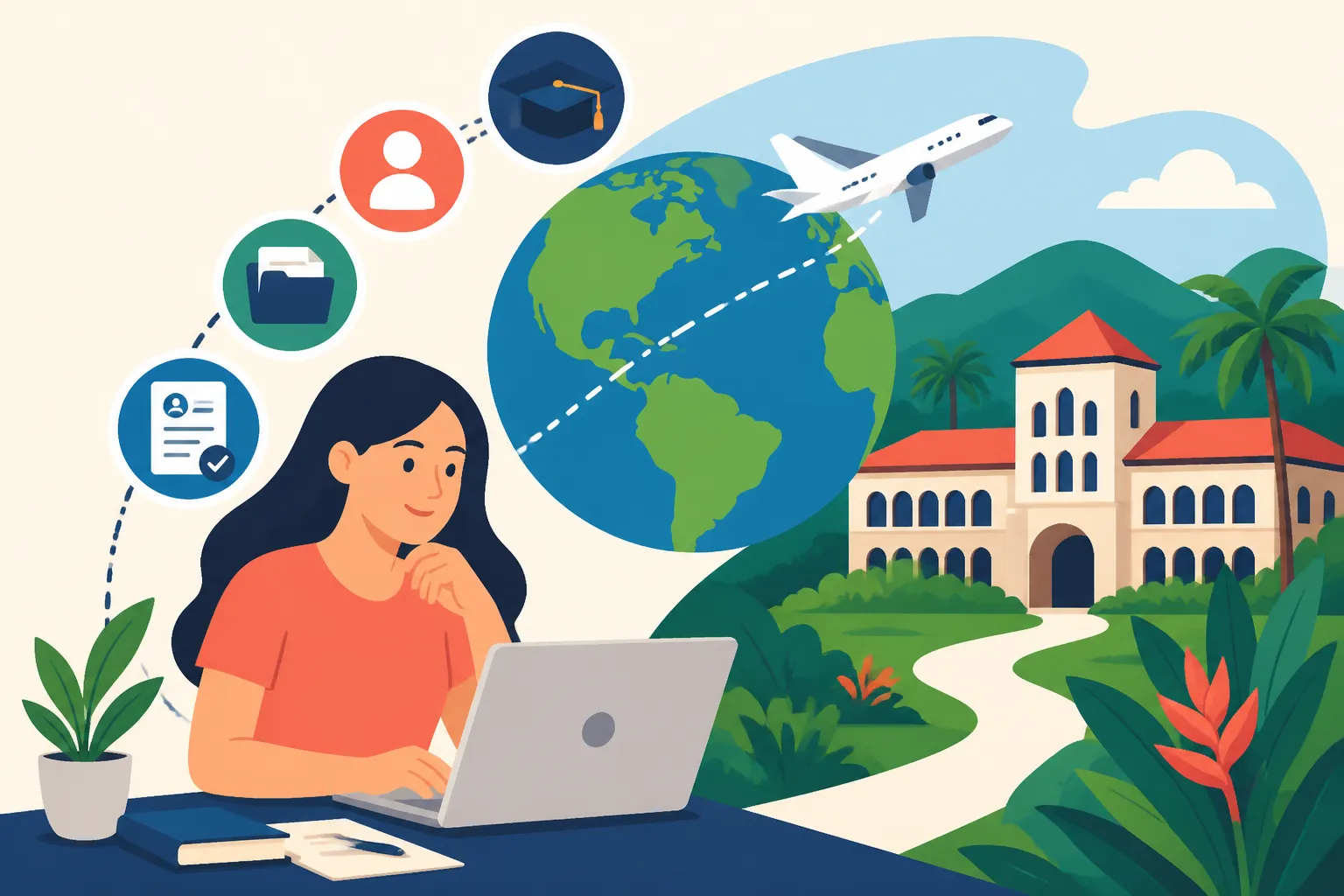
How Do I Apply to a University in Costa Rica from Abroad?
So, you’ve been bitten by the Pura Vida bug, and now you’re not just thinking about visiting Costa Rica, but truly immersing yourself by pursuing higher education here. That’s a fantastic dream, but let me tell you, applying to a university in Costa Rica from abroad can feel like navigating a jungle without a map. There are unique administrative hurdles, language requirements, and cultural nuances that can catch even the most prepared expat off guard. This guide is here to help you cut through the red tape, understand the system, and successfully apply to a Costa Rican university, all from the comfort of your home country.
Understanding the Landscape of Higher Education in Costa Rica
When you're thinking about continuing your education in a new country, especially one as vibrant and culturally rich as Costa Rica, it's essential to understand the academic landscape. It's not just about finding a program; it's about finding the right program in the right institution that fits your academic goals, your budget, and your lifestyle here. The Costa Rican higher education system offers a diverse range of options, from highly competitive public universities steeped in tradition to more flexible private institutions with international flair.
Public vs. Private Universities
Let’s talk brass tacks about public versus private universities because this is where a lot of international students start their journey, and it’s a crucial distinction.
Public Universities: Costa Rica boasts several excellent public universities, often considered the crème de la crème of higher education in the country. The University of Costa Rica (UCR), National University (UNA), Costa Rica Institute of Technology (ITCR), State Distance University (UNED), and Technical National University (UTN) are the big names you'll hear. They are renowned for their academic rigor, research contributions, and often have a more traditional university experience. For Costa Rican citizens and permanent residents, tuition is incredibly affordable, almost negligible in comparison to what you'd pay in North America or Europe. However, for international students, while still more affordable than many private options, the tuition fees are significantly higher than what locals pay. Getting into a public university, especially for popular programs, is exceptionally competitive. You're not just competing with other international applicants; you're up against thousands of highly motivated Costa Rican students who have been preparing for these entrance exams for years. Don't underestimate this challenge; the entrance exams are notoriously difficult and require a deep understanding of subjects taught within the Costa Rican high school curriculum, often in Spanish, which can be a huge hurdle.
Private Universities: Then we have the private sector, which offers a much broader array of programs and often greater flexibility, especially for international students. Institutions like ULACIT, UCIMED, and the Universidad Véritas are popular choices. These universities often have more diverse course offerings, faster application processes, and may even offer some programs or courses in English, especially at the graduate level or in fields like business and international relations. Tuition fees here are higher than what international students would pay at public universities, but the application process tends to be more straightforward and less competitive. ULACIT, for example, is often favored for business, engineering, and technology programs, while Véritas is well-regarded for design and architecture. UCIMED is a popular choice for medical sciences. If you’re looking for a smoother entry and potentially a more tailored international student experience, private universities often provide that path.
Popular Fields of Study for International Students
Costa Rica's unique natural environment and strategic position have shaped its academic strengths. For international students, certain fields of study truly shine and attract a global cohort.
Environmental Science and Sustainable Development: Given Costa Rica’s global reputation for conservation and biodiversity, it's no surprise that environmental science, ecology, sustainable development, and eco-tourism programs are top-notch. Universities here offer incredible opportunities for fieldwork and hands-on learning, allowing you to study in one of the most biodiverse places on Earth. If you're passionate about protecting the planet, you'll find a wealth of knowledge and practical experience waiting for you.
Spanish Language and Culture: Many international students come here specifically to master Spanish. While dedicated language schools are plentiful, some universities offer excellent Spanish language and culture programs, sometimes even combined with other academic disciplines. This is a fantastic way to achieve true immersion, not just in the language but also in the rich Latin American culture. For a comprehensive look, check out our guide on Learning Spanish in Costa Rica: A Complete Guide for Expats.
Business, Technology, and International Relations: As Costa Rica integrates further into the global economy, its universities are developing strong programs in business administration, international relations, and various technology fields. With a growing tech sector and many multinational companies operating in the country, these degrees can open doors to exciting career paths, both locally and internationally. ULACIT, in particular, has a strong reputation in these areas.
Health Sciences: For those aspiring to careers in medicine, dentistry, or other health-related fields, universities like UCIMED offer robust programs. While the path to practicing medicine in Costa Rica as a foreigner can be complex due to professional licensing requirements, obtaining your degree here is a solid foundation.
Navigating the Application Process from Abroad
Alright, now for the nitty-gritty: actually getting your application together from a different country. This is where patience truly becomes a virtue, my friends. The Costa Rican bureaucracy has its own rhythm, and it’s best to embrace it with a deep breath and a good cup of coffee. Starting early, being meticulous, and preparing for the unexpected are your best strategies.
Key Documents and Their Preparation
Before you even think about hitting 'submit' on an online application, you need to gather your arsenal of documents. This isn't just a list; it's a treasure hunt.
- Academic Transcripts and Diplomas: Your high school diploma, and if you've attended university before, all your university transcripts. These need to be the official versions, sealed, and often sent directly from your previous institutions. This can be a pain point, as many international universities aren't used to Costa Rican requirements.
- Birth Certificate: A certified copy of your birth certificate.
- Passport Copy: A clear, color copy of your valid passport, showing all relevant pages, including your photo, passport number, and expiration date. Make sure it has plenty of validity left – usually at least six months beyond your intended arrival.
- Letters of Recommendation: Some programs, especially graduate ones, will ask for these. Choose professors or employers who know you well and can speak to your academic abilities and character.
- Statement of Purpose/Motivation Letter: This is your chance to shine! Articulate why you want to study your chosen field, why you chose Costa Rica, and what your future aspirations are.
- Proof of Financial Solvency: You’ll need to demonstrate you can support yourself financially throughout your studies. This might be bank statements, a letter from a sponsor, or scholarship documentation.
- Health Certificate: Some universities may require a general health certificate from a doctor.
- Criminal Record Check: For visa purposes, and sometimes for the university itself, you'll need a criminal record check from your home country, and any country you’ve resided in for more than six months in the past few years.
This list isn’t exhaustive, and each university will have its own specific requirements, so always, always check the individual university's international admissions page. Don't be afraid to contact their admissions office directly with questions – in Spanish, if possible, to demonstrate initiative! For those with previous degrees, understanding How to Get Your Foreign University Degree Recognized (Reconocimiento) in Costa Rica is also a crucial step, though typically handled after initial acceptance, it's good to be aware of. Also, when it comes to enrolling, you might find our guide on What Documents Do I Need to Enroll at a Costa Rican University quite helpful.
The Importance of Official Translations and Apostilles
Here's a step that often trips up even the most organized applicants: official translations and apostilles. This isn't just a suggestion; it's a non-negotiable requirement.
Official Translations: Any document not originally issued in Spanish must be translated by an official translator (a traductor oficial) in Costa Rica. You cannot just use any translator, even if they are professional in your home country. These translators are certified by the Costa Rican Ministry of Foreign Affairs and are the only ones whose translations are legally accepted. My advice? Don't even bother getting them translated in your home country. It’s almost always rejected. Send the original documents (or apostilled copies) to a trusted service or contact the university for a list of approved traductores oficiales in Costa Rica. It will save you a world of headache and re-doing expenses. I once knew an expat who thought they could save a few bucks by having a bilingual friend translate their college transcripts. Big mistake. The university rejected it flat out, and they had to scramble to get official translations, delaying their enrollment by an entire semester.
Apostille or Legalization: This is the process of getting your documents certified so they are recognized in other countries. If your home country is a signatory to the Hague Apostille Convention (most Western countries are), you'll need to get an apostille stamp on your original documents (or certified true copies) from the appropriate authority in your home country (e.g., Secretary of State in the U.S., Foreign and Commonwealth Office in the UK). If your country isn't a signatory, you'll have to go through a more complex "legalization" process, usually involving your country's Ministry of Foreign Affairs and the Costa Rican consulate or embassy in your home country. This step takes time, so start it early. Like, yesterday early. Without proper apostilles or legalization, your documents are just pretty pieces of paper to the Costa Rican authorities.
Language Proficiency and Preparatory Steps
Even if you’re planning on immersing yourself in Spanish once you arrive, you need to prove you have a solid foundation before you even step foot in a classroom. Most programs are taught entirely in Spanish, and universities won’t budge on language requirements. This part of the process demands honest self-assessment and proactive preparation.
Assessing Your Spanish Skills
Before you even think about submitting that application, you really need to take an honest look at your Spanish. Most university courses, even at private institutions, are taught entirely in Spanish. While some universities might offer English-taught programs, especially at the graduate level, the vast majority expect a high level of fluency. Many universities will require you to demonstrate this with an official Spanish proficiency test like the DELE (Diplomas de Español como Lengua Extranjera) or SIELE (Servicio Internacional de Evaluación de la Lengua Española). And let me tell you, cramming last minute isn't going to cut it. These tests assess reading, writing, listening, and speaking, and they require sustained effort to achieve the necessary levels.
You'll want to start boosting your Spanish skills well in advance. I’ve known plenty of expats who found services like iTalki incredibly useful for connecting with native Spanish speakers for personalized tutoring, which can make a world of difference in your confidence and comprehension. Being able to practice with someone who understands the nuances of Costa Rican Spanish, or even just academic Spanish, can give you a significant edge. Don't just focus on conversational Spanish; you need to be comfortable with academic vocabulary and complex grammatical structures. Public universities, especially, often have a very high bar for language proficiency, assuming you've been educated in the local system.
Entrance Exams and Foundation Courses
If you're aiming for one of the public universities, brace yourself for the entrance exam (the examen de admisión). This isn't your typical standardized test. It’s highly competitive and specifically designed around the Costa Rican national curriculum.
Public University Entrance Exams: These exams usually cover subjects like Spanish, mathematics, social studies, and natural sciences. The format and content might be very different from what you're used to in your home country. For example, the Spanish section isn't just about grammar; it delves into Costa Rican and Latin American literature and critical analysis that requires a deep cultural context. Many local students spend years preparing for these exams with specialized academies. As an international student, your best bet is to find preparatory courses in Costa Rica that specifically target these exams. Some universities even offer their own preparatory programs for international students, but spaces can be limited. Don't underestimate the difficulty; many bright students don't get in on their first try simply because they weren't prepared for the specific format and content. If you're looking into specific details, our guide How Do I Apply to the University of Costa Rica as an International Student offers more tailored advice.
Private University Aptitude Tests: While private universities generally don't have the same high-stakes entrance exams as public ones, many still require their own aptitude tests or interviews. These are usually designed to assess your general academic readiness, critical thinking, and sometimes English proficiency if the program has international components. These tests are typically less daunting but still require preparation to ensure you put your best foot forward. Often, private universities also look at your overall profile, including extracurriculars and letters of recommendation, more holistically than public institutions.
Financial Planning and Post-Acceptance Logistics
Getting accepted is a huge victory, but it's not the end of the road. You need a solid financial plan and a clear understanding of the immigration process to ensure your academic journey in Costa Rica is smooth sailing. Living and studying abroad requires careful budgeting and adherence to legal requirements.
Understanding Tuition Fees and Living Costs
Money talks, and when you’re studying abroad, it shouts. Tuition fees vary wildly between institutions and programs.
Tuition Fees:
- Public Universities: While subsidized for Costa Ricans, international student fees are higher but still often represent good value compared to universities in North America or Europe. For example, tuition at the University of Costa Rica for international students might be a few thousand dollars per semester, depending on the program. For more specific details, you might want to look at How Much Does It Cost to Study at the University of Costa Rica? and How Much Is Tuition at Private Universities in Costa Rica.
- Private Universities: These can range from moderate to quite expensive, with some programs rivaling tuition rates in certain developed countries. Expect anywhere from $3,000 to $8,000+ per semester, depending on the university and degree. Scholarships for international students are generally limited, so factor this into your budget.
Living Costs: Costa Rica is not as cheap as many people imagine, especially in popular expat areas or around major universities. Your cost of living will depend heavily on your lifestyle choices, but here’s a rough idea:
| Expense Category | Estimated Monthly Cost (USD) | Notes |
|---|---|---|
| Rent (Shared/Student Housing) | $300 – $700 | Varies greatly by location (San Jose vs. smaller towns) and amenities. |
| Utilities (Water, Electricity, Internet) | $80 – $150 | Electricity can be high, especially with AC. Internet is usually reliable. |
| Groceries | $250 – $400 | Eating local produce and cooking at home saves money. |
| Transportation | $50 – $150 | Public buses are affordable. Taxis/Uber add up. If you own a car, add fuel/maintenance. |
| Books & Supplies | $50 – $100+ | Depends on program. Some textbooks are available used or digitally. |
| Personal Expenses (Social, Entertainment) | $150 – $300+ | Coffee, cinema, weekend trips. Can vary wildly. |
| Total Estimated Monthly Budget | $880 – $1,800+ | This is a broad range; individual habits will dictate the real figure. |
For a more in-depth look at typical expenses, our article The Complete Guide to Cost of Living in Costa Rica for Expats (2026) is an invaluable resource. Remember, even as a student, if you're earning income, especially from abroad, you'll need to understand your tax obligations in Costa Rica. It's easy to overlook this when you're focused on studies, but getting it wrong can cause headaches later. Many international students find themselves needing to understand their tax situation, particularly if they're receiving income from a home country or doing some remote work. Resources like Taxes for Expats can be incredibly helpful for navigating these complexities, ensuring you're compliant both in Costa Rica and back home. Don't forget, if your parents are supporting you, they'll also need to be aware of how their financial support is viewed for tax purposes in their home country versus yours.
Visa and Residency Considerations for Students
This is perhaps the most critical logistical step after acceptance: securing your legal right to study and reside in Costa Rica. You simply cannot study long-term on a tourist visa.
The Student Visa (Visa de Estudiante): Once you receive your letter of acceptance from a recognized Costa Rican university, you'll need to apply for a student visa. This process typically starts at the Costa Rican consulate or embassy in your home country before you travel. Do not just show up in Costa Rica on a tourist visa hoping to switch it; while sometimes possible, it’s far more complicated and risky. The student visa process requires many of the same documents as your university application, plus proof of acceptance, proof of financial solvency, and a clean criminal record. It can take several months to process, so apply well in advance of your intended start date.
Maintaining Legal Status: Once you arrive on your student visa, you'll need to register with the Dirección General de Migración y Extranjería (DGME) to obtain your DIMEX (foreigner identification card) as a student resident. This card is your official ID and proof of legal residency. Maintaining your student status means regularly attending your courses and renewing your student residency as required. Failing to do so can lead to fines, deportation, and make it very difficult to re-enter or gain residency in Costa Rica in the future. For a broader overview of the immigration landscape, check out The Complete Visa and Residency Guide for Relocating to Costa Rica (2027) and our more specific advice on How to Get Your DIMEX Residency Card in Costa Rica. Also, a burning question for many students is Can International Students Work Part-Time in Costa Rica? The answer is generally yes, but it often requires specific permission and is tied to your student visa, so don't assume you can just pick up any job without checking the rules with Migración.
Remember, the goal is not just to get in but to stay legal and thrive during your studies. This means understanding and respecting the local laws and bureaucratic processes. It might feel like a lot, but with careful planning and a good attitude, your dream of studying in Costa Rica can absolutely become a reality.
Disclaimer
Please remember that while this guide provides comprehensive information based on current knowledge and typical experiences, immigration laws, university policies, and financial regulations in Costa Rica can change. It is always advisable to consult directly with the specific university's international admissions office, a qualified Costa Rican immigration attorney, and a tax professional for the most up-to-date and personalized advice regarding your situation.