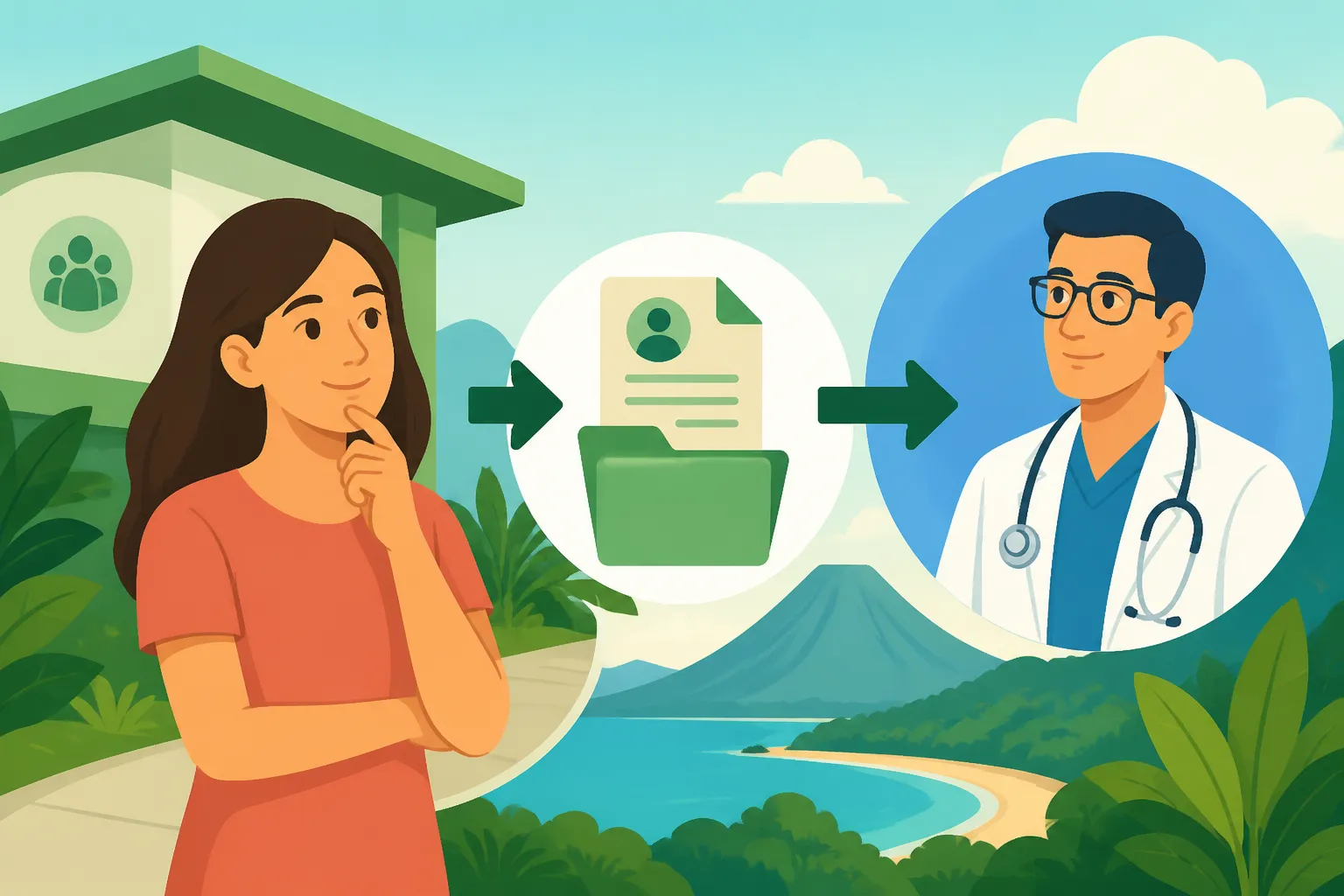
How Do I Get a Specialist Referral Through the Caja in Costa Rica?
Navigating the public healthcare system in Costa Rica can feel like a labyrinth, especially when you are dealing with a health concern that requires more than a standard check-up. Many expats feel overwhelmed by the bureaucracy of the Caja (CCSS) and the seemingly endless wait times for specialist care. This guide provides a clear, step-by-step roadmap to obtaining a specialist referral while managing the realistic expectations of the public system.
The Foundation of Specialist Referrals: Starting at Your EBAIS
In the Costa Rican public health system, known as the Caja or CCSS, you cannot simply call up a cardiologist or a neurologist and book an appointment. The system is strictly hierarchical and begins at the community level. The first point of contact for every resident, whether local or foreign, is the Equipo Básico de Atención Integral en Salud, commonly referred to as the EBAIS. This is your local primary care clinic, and it serves as the essential gatekeeper for everything that follows.
The Gatekeeper System in the CCSS
The EBAIS is designed to handle primary care, including vaccinations, basic blood work, and general consultations. Think of the general practitioner at your EBAIS as the conductor of your medical orchestra. They are responsible for evaluating your condition and determining if your needs exceed the scope of primary care. To get started, you must be properly registered at the clinic assigned to your specific neighborhood. If you are still in the early stages of residency, you should review How to Find and Register with an EBAIS Clinic in Costa Rica to ensure you are in the system correctly.
The process of moving from a general practitioner to a specialist is based on medical necessity as defined by the CCSS protocols. This means you must present your symptoms to the EBAIS doctor, who will then decide if a referral is warranted. It is often helpful to bring any previous medical records from your home country, though these must often be translated into Spanish to be officially recognized by the staff.
Making Your Initial General Consultation
Securing an appointment at an EBAIS can be one of the most frustrating aspects of the process. In many communities, people still line up at 5:00 AM to get one of the limited "cupos" (slots) for the day. However, the system is slowly digitizing. Most expats now use the EDUS (Expediente Digital Único en Salud) app to book appointments. When you sit down with your doctor, be prepared to describe your symptoms clearly in Spanish. If your Spanish is not proficient, bringing a trusted friend or a professional translator is highly recommended to ensure nothing is lost in translation.
During this visit, the doctor will likely order preliminary tests, such as basic lab work or an X-ray, which are performed on-site or at a nearby regional clinic. Only after these results are reviewed will the doctor generate the electronic referral. This is the moment you officially enter the specialist queue. To understand the legalities of using your residency status for this, see How to Use Your DIMEX to Access Healthcare in Costa Rica.
The Referral Pathway: From Primary Care to Specialist Hospitals
Once the general practitioner determines that you need specialized care, they will issue what is known as an "interconsulta." This is an internal referral document that moves your file from the primary level (EBAIS) to the secondary or tertiary level of the healthcare system. Understanding this hierarchy helps you realize where you might need to travel for your treatment.
Understanding the Inter-Consultation Form
The interconsulta contains the doctor's clinical notes, the justification for the specialist visit, and a priority ranking. The CCSS categorizes referrals based on urgency: emergency, priority, or ordinary. It is important to realize that the "ordinary" category is where most chronic, non-life-threatening issues land, and this is where wait times are longest.
Once the referral is keyed into the system, it is sent to the regional hospital or a specialized national hospital, such as Hospital México, Hospital San Juan de Dios, or Hospital Calderón Guardia in San José. You will rarely get a date for your appointment on the same day. Instead, the specialist department at the receiving hospital must review the referral and assign it a spot on their calendar. You can learn more about this general structure in How Costa Rica's Health System Works: The Caja (CCSS) vs Private Explained (2027).
Secondary and Tertiary Levels of Care in Costa Rica
The Costa Rican system is divided into levels of complexity. Secondary care usually happens at regional hospitals (like those in Liberia, San Carlos, or Puntarenas). These hospitals handle general surgery, internal medicine, pediatrics, and OB-GYN services. If your condition is highly complex—for example, requiring neurosurgery or advanced oncology—your referral will move to a tertiary hospital, mostly located in the Central Valley.
Because of this centralization, expats living in coastal areas like Tamarindo or Nosara must be prepared for long travel days to San José for specialist appointments. The logistics of this travel can be taxing, which is why some expats choose to maintain a supplemental policy like SafetyWing to handle urgent diagnostics or second opinions while they wait for their Caja appointment to materialize.
| Level of Care | Facility Type | Services Provided |
|---|---|---|
| Primary | EBAIS / Clinics | General medicine, nursing, basic labs, pharmacy |
| Secondary | Regional Hospitals | General surgery, orthopedics, internal medicine |
| Tertiary | National Hospitals | Specialized surgeries, oncology, cardiology, neurology |
Managing Wait Times and Navigating the System
The "Listas de Espera" (waiting lists) are a frequent topic of conversation among both locals and expats in Costa Rica. While the quality of medical care in the Caja is world-class, the administrative volume is massive. It is not uncommon to wait several months, or in some cases, over a year, for a non-urgent specialist consultation.
The Reality of Waiting Lists
Wait times vary drastically depending on the specialty and the specific hospital. For instance, ophthalmology and orthopedics often have the longest queues, while specialties like infectious diseases might move faster. The system prioritizes patients based on the severity of their condition, not the order in which they applied. This can be frustrating for someone with a chronic but non-emergency issue, such as a stable hernia or a need for a knee replacement.
To manage this gap, many expats use a hybrid approach. They might pay out-of-pocket for a private specialist to get an immediate diagnosis and then take those private results back to the EBAIS to see if it can expedite the Caja process. For more on the costs involved in the private sector, see The Cost of Healthcare in Costa Rica: A Complete Breakdown for Foreigners (2026). Having a plan for these intervals is crucial; many digital nomads and residents rely on SafetyWing to cover unexpected medical needs that fall outside the "ordinary" waitlist of the public system.
Tips for Tracking Your Referral Status
Do not simply go home and wait for a phone call that may never come. You must be proactive in tracking your referral. The EDUS app is your best friend here; it allows you to see your "citas" (appointments) and track the status of your referrals in real-time. If the app doesn't show an update after a few weeks, it is often necessary to visit the "Archivo" or "Validación de Derechos" window at your regional hospital to confirm they received the referral.
Consistency is key. Sometimes referrals get lost in the digital shuffle, or the hospital may have an outdated phone number for you. Keeping your contact information current in the CCSS database is vital. For a broader look at this journey, consult Navigating the Costa Rican Healthcare System: An Expat's Roadmap (2027).
Comparing Public Referrals with Private Specialist Access
For many expats, the decision to use the Caja specialist referral system comes down to a balance of cost versus time. While the Caja is "free" at the point of service (covered by your monthly residency contributions), the time investment can be significant.
When to Skip the Caja for Private Consultations
If you have a condition that is causing significant pain or interfering with your ability to work, waiting for a Caja referral might not be viable. In Costa Rica, private specialists are highly accessible. You can often see a top-tier specialist at Clinica Biblica or CIMA within 48 hours. The cost for a consultation usually ranges from $80 to $150. For detailed pricing, see How Much Does a Specialist Consultation Cost in Costa Rica?.
Many residents choose to utilize private specialists for the initial diagnosis and then use the Caja for long-term, expensive medications or major surgeries. This "dual system" strategy is common. For example, you might get your MRI done privately to save six months of waiting, and then bring that MRI to your EBAIS doctor to facilitate the next steps in the public system.
Coordinating Care Between Systems
If you decide to seek private care, always ask for a detailed medical report (epicrisis) in Spanish. This document is essential if you ever want to "bridge" your private care back into the public system. The EBAIS doctors are generally open to seeing private results, but they are not legally required to follow the recommendations of a private doctor. They will still need to perform their own evaluation.
Using an international insurance provider like SafetyWing can be an excellent way to bridge these gaps, especially for diagnostic imaging or specialists that are not immediately available in your local area. It provides a level of flexibility that the public system, by its nature as a high-volume government entity, cannot offer. For those still weighing their choices, the guide on Public vs Private Healthcare in Costa Rica: Which Should Expats Choose? offers a deep dive into these trade-offs.
Ensuring you have all your paperwork in order is the most important step. Without a valid DIMEX and an active Caja payment, the referral process cannot even begin. If you are unsure of your current standing, check The Expat Guide to Joining the Caja (CCSS) in Costa Rica (2027) to make sure you are fully covered and ready to access the specialist care you need.
Disclaimer
The information provided in this guide is for educational and informational purposes only and does not constitute medical or legal advice. The Costa Rican healthcare system (CCSS) regulations and wait times are subject to change. Always consult with a qualified healthcare professional or a legal expert regarding your specific residency and health insurance requirements in Costa Rica.