Can I Work Remotely from Costa Rica for a Foreign Company?
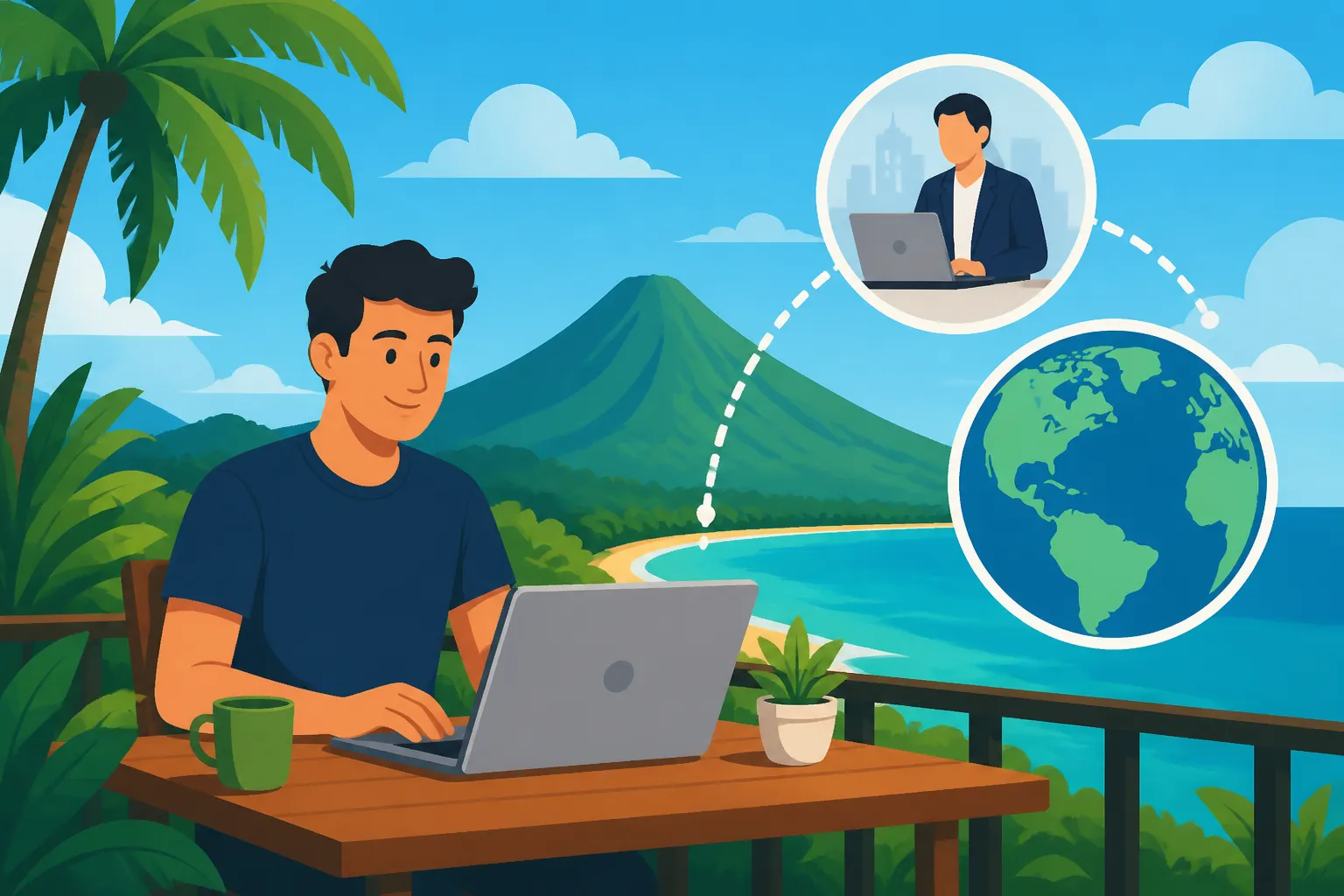
Oh, the dream of working from your laptop with the sounds of howler monkeys in the distance and a fresh gallo pinto for breakfast! Many of us expats share that vision of relocating to Costa Rica and continuing our careers remotely for companies back home. But let me tell you, while it's absolutely achievable, there are crucial legal and practical steps you must understand to avoid a rude awakening. This guide will walk you through the essential facts about working remotely from Costa Rica for a foreign company, ensuring you can live your Pura Vida dream legally and sustainably.
The Legal Status of Remote Work for Foreign Companies in Costa Rica
Navigating immigration and work regulations in a new country can feel like trying to paddle a dugout canoe upstream against a strong current – it's tough, and you need the right tools and know-how. The biggest misconception I see folks arrive with is thinking that because their money comes from outside Costa Rica, the local rules don't apply. That's a dangerous assumption, my friends.
Tourist Visa Limitations and "Visa Runs"
Let's be unequivocally clear: a standard tourist visa does not grant you the right to work in Costa Rica, not even remotely, and not even if your employer is based in another country. When you enter Costa Rica on a tourist stamp, you're explicitly here as a visitor, for tourism purposes. Engaging in any form of "economic activity" – and yes, remote work for a foreign company falls under that umbrella, regardless of where your paycheck originates – is technically a violation of your tourist status.
Now, I know, I know. Many people arrive and do it anyway. They're often called "perpetual tourists" or "visa runners." You come in, get your 90-day stamp (or sometimes less, depending on the immigration officer's mood), work remotely for three months, then hop over the border to Panama or Nicaragua for a few days, and come back for another stamp. This used to be a widely accepted, albeit technically illegal, workaround. However, Costa Rican immigration authorities have become increasingly savvy and stricter about this practice. They keep records. If you're doing too many "visa runs," you risk being denied re-entry, given a shorter stay, or even fined. Imagine being at the border, bags packed, ready to return to your little slice of paradise, only to be told, "No, gringo, you can't come back in." It happens. Don't put yourself in that precarious position. Living in constant fear of border crossings is not the Pura Vida you signed up for. If you want to understand more about this, our guide on How Long Can I Stay in Costa Rica on a Tourist Visa? details the specific rules and risks.
The Digital Nomad Visa (Rentista and Pensionado Alternatives)
Here's the good news: Costa Rica has heard the calls of remote workers and, in a smart move, introduced a specific visa category for you! The Digital Nomad Visa, officially known as the "Law to Attract Workers and Remote Providers of International Services" (Law No. 10.008), is your golden ticket. This visa was specifically designed for people like you and me – folks who earn their income from outside Costa Rica but want to live and work from within its beautiful borders. It provides a legal, safe, and transparent pathway to do just that.
Before the Digital Nomad Visa, some remote workers explored other residency options like the Rentista (independent means) or Pensionado (retiree) categories. While these are legitimate pathways to residency, they're generally designed for individuals with passive income streams or pensions, not for active employment, even if remote. The Rentista requires a fixed deposit in a Costa Rican bank or proof of a consistent income stream, but the intent is not to actively work within the country for a foreign entity. Similarly, Pensionado is for retirees receiving a pension. While you can technically engage in remote work once you have any form of legal residency, the Digital Nomad Visa is explicitly tailored for your situation, making it the most direct and least ambiguous route for remote professionals. It clearly defines your status and the benefits that come with it, avoiding any grey areas with immigration authorities.
Understanding the Digital Nomad Visa Requirements
So, you're sold on doing things by the book with the Digital Nomad Visa – excellent choice! Now, let's dive into the nitty-gritty of what you'll need. This process, like much of Costa Rican bureaucracy, requires patience and meticulous attention to detail.
Income Threshold and Proof
The core requirement for the Digital Nomad Visa is proving a consistent, stable income from a foreign source. Currently, the law stipulates an income of at least $3,000 USD per month for a single applicant. If you're bringing your family (spouse, children under 25, or dependents with disabilities), that threshold increases to $4,000 USD per month. It's vital to check the latest regulations, as these figures can be adjusted. You'll want to review our guide on Understanding the Income Requirements for the Digital Nomad Visa for the most current information.
How do you prove this income? This is where you need to get your ducks in a row. Acceptable forms of proof typically include:
- Bank Statements: You'll need statements covering the past 12 months, clearly showing consistent deposits that meet or exceed the monthly threshold. These should be from a bank in your home country or where your foreign company pays you.
- Employment Contracts: If you're an employee of a foreign company, a copy of your employment contract, translated into Spanish by an official Costa Rican translator, will be necessary. This contract should clearly state your salary and that your work can be performed remotely.
- Invoices or Client Contracts: For freelancers or independent contractors, a compilation of invoices or contracts with foreign clients, demonstrating consistent income over the last year, will be required. This can be a bit more work to compile, but it's crucial.
- Affidavits: In some cases, a sworn affidavit from your employer or clients, confirming your remote work arrangement and income, might also be requested, along with other supporting documents.
The key here is consistency and reliability. They want to see that this isn't a one-off payment but a steady stream of income that will allow you to support yourself (and your family) without becoming a burden on the Costa Rican state. So, start gathering those documents early!
Other Key Documents and Application Process
Beyond income, there's a stack of other documents you'll need to prepare. This is where the paper chase begins, and it can feel a bit daunting, but take it one step at a time.
- Valid Passport: Of course, your passport needs to be current and have at least six months of validity remaining.
- Criminal Background Check: You'll need a criminal record certificate from your country of origin (and any country you've resided in for the past three years). This document needs to be apostilled (or legalized by a Costa Rican consulate if your country isn't part of the Hague Apostille Convention) and then officially translated into Spanish. This is non-negotiable.
- Birth Certificate / Marriage Certificate: If you're applying with family, your birth certificate, and your marriage certificate (if applicable) will also need to be apostilled and translated. Don't forget, if you have children, their birth certificates too.
- Health Insurance: You'll need proof of international health insurance that covers you for the duration of your stay, or you can opt to join the local public healthcare system, known as the Caja Costarricense de Seguro Social (CCSS), once your visa is approved. Many expats find a combination of both is the best solution for their needs, covering immediate private care while benefiting from the public system for major events. Our article on Do I Have to Join the Caja to Get Residency in Costa Rica? provides more context on this requirement.
- Application Form and Fee: There's an official application form you'll fill out, usually online, and associated government fees.
The application process for the Digital Nomad Visa is largely done through a dedicated online portal. You'll upload your digitized documents, pay the fees, and then await a response. Once pre-approved, you'll typically need to visit the Migración offices in person to finalize the process, submit original documents, and get your DIMEX (ID card for foreigners). This card is essentially your Costa Rican ID and proof of residency. Trust me, getting that DIMEX in hand feels like winning the lottery after all the paperwork! For a step-by-step guide, make sure to check out The Complete Guide to the Costa Rica Digital Nomad Visa (2027).
Tax Implications for Remote Workers in Costa Rica
Ah, taxes. The one thing we can't escape, no matter where we live. But here's some really good news regarding Costa Rica and remote work for foreign companies: it's often more favorable than you might expect, thanks to the country's tax system.
Costa Rica's Territorial Tax System and Foreign Income
Costa Rica operates under a territorial tax system. What does that mean for you? In simple terms, Costa Rica generally only taxes income generated from economic activities within its borders. If your income is earned from a foreign company, and the services you provide are consumed outside of Costa Rica, then that income is typically considered foreign-sourced and not subject to Costa Rican income tax. This is one of the most attractive features for digital nomads and remote workers in Costa Rica.
For holders of the Digital Nomad Visa, this territorial tax principle is a cornerstone of the visa's benefits. The visa is specifically designed for individuals who derive their income from abroad, and part of its appeal is that this foreign-sourced income is explicitly exempt from Costa Rican income tax for the duration of the visa. This is a huge relief for many, as it simplifies financial planning considerably.
However, there's a crucial caveat: if you start providing services to a Costa Rican entity or client while you're physically present in Costa Rica, then that specific income would be considered locally sourced and therefore subject to Costa Rican income tax. So, if your foreign company decides to open a branch here, and you start working for that local branch, or if you take on a side gig consulting for a local Costa Rican business, those earnings would fall under local tax laws. It's important to keep these distinctions clear.
It's also essential to remember that while Costa Rica might not tax your foreign income, your home country very well might. For instance, if you're a U.S. citizen or green card holder, you have tax obligations to the IRS regardless of where you live and earn your money. You might qualify for the Foreign Earned Income Exclusion or Foreign Tax Credit, but you still have to file. This is where specialized services like Taxes for Expats can be incredibly helpful in navigating your home country's tax laws while living abroad. They can ensure you remain compliant on both ends without double taxation. For a deeper dive into the overall tax landscape, our guide on The Complete Guide to Taxes in Costa Rica for Expats (2027) is an invaluable resource.
Local Expenses and Declarations
Even if your primary income isn't taxed in Costa Rica, you'll still encounter taxes and fees for local consumption and services.
- Value Added Tax (IVA): Just like pretty much everywhere else, you'll pay sales tax (IVA, or Impuesto al Valor Agregado) on most goods and services you purchase locally. This is typically 13%, but it can vary for certain items. This isn't an income tax, but a consumption tax that everyone pays.
- Caja Contributions: As a legal resident (including Digital Nomad Visa holders), you are required to contribute to the Caja Costarricense de Seguro Social (CCSS), the public health system. This isn't a tax on your income in the traditional sense, but a mandatory monthly payment based on your declared income (or, in the case of Digital Nomads, often a set minimum or based on the income you used for your visa application). This ensures you have access to public healthcare. Our article How the Caja Requirement Connects to Your Residency in Costa Rica goes into detail about this.
- Hacienda Registration (If Local Income): If, at any point, you do earn local income from a Costa Rican source, you'll need to register with Hacienda (the Costa Rican tax authority) and obtain a NITE (Número de Identificación Tributaria Especial) or a local tax ID. This would require you to file local tax declarations for that specific income.
The beauty of the Digital Nomad Visa is the clarity it offers regarding your foreign income. It significantly reduces the complexity compared to other residency categories where active income generation might be viewed differently.
Practicalities and Lifestyle of a Remote Worker in Costa Rica
So, you've got your visa, your taxes are sorted (mostly!), and you're ready to embrace the Pura Vida lifestyle while still crushing it at your job. Great! But let's talk about the practical realities of setting up your remote work life here. It's not all hammocks and sunsets; there are logistical considerations.
Connectivity and Infrastructure
When you're working remotely, reliable internet is paramount. Gone are the days when Costa Rica's internet was a perpetual struggle. Today, you'll find excellent connectivity, especially in more populated areas.
- Internet: In the Central Valley (San José, Escazú, Heredia, Alajuela) and many popular expat beach towns (Tamarindo, Jacó, Dominical, Nosara), you can get fiber optic internet with speeds comparable to what you'd find in North America or Europe. Providers like ICE (Kolbi), Liberty, and Tigo offer solid plans. However, if you venture into truly remote areas, you might be relying on slower DSL, satellite internet, or even mobile hotspots. Always check the internet infrastructure in your chosen location before you commit to a long-term rental. Don't assume that just because a place looks beautiful, it has fiber.
- Power Stability: Generally, power is quite reliable in the Central Valley. Outages are rare and usually short. However, in more rural or coastal areas, especially during the rainy season (May to November), power outages can be more frequent due to storms, falling trees, or infrastructure issues. If your job absolutely requires constant uptime, consider investing in a UPS (Uninterruptible Power Supply) for your electronics or even a small generator if you're in a more remote area.
- Co-working Spaces: For those who thrive on community and a dedicated workspace, San José and its surrounding areas, as well as some popular beach towns, now boast several co-working spaces. These offer reliable internet, backup power, comfortable seating, and a chance to network with other remote professionals. It's a great way to escape the home office (or the sounds of your neighbor's rooster) and maintain a professional environment.
Cultural Integration and Language
While your work might be for a foreign company, your life will be firmly rooted in Costa Rica, and embracing the local culture will make your experience infinitely richer.
- Spanish is Key: While many Costa Ricans, especially in tourist areas or the Central Valley, speak some English, everyday life, particularly outside the expat bubbles, happens in Spanish. Learning Spanish isn't just polite; it's essential for navigating bureaucracy, making friends, ordering food, understanding local news, and generally feeling at home. Imagine trying to explain a medical issue or a car problem without being able to communicate effectively – it's incredibly frustrating! Tools like iTalki can be a fantastic way to get started with online tutors, allowing you to practice from the comfort of your home or co-working space.
- Pura Vida Pace: Costa Rica operates on "Tico time," which is generally a bit slower and more relaxed than what many North Americans or Europeans are used to. Appointments might start a little late, processes take longer, and direct communication isn't always the norm. Patience is not just a virtue here; it's a survival skill. Embrace it, don't fight it. It's part of the charm, but it can also be an adjustment when you're used to a faster pace.
- Community: Many expats find strong communities in Costa Rica, both with fellow foreigners and with friendly locals. Engaging in local activities, volunteering, or simply hanging out at the local soda (small restaurant) are great ways to integrate. For more tips on immersing yourself, read our guide on Learning Spanish in Costa Rica: A Complete Guide for Expats.
Banking and Local Finances
Once you have your Digital Nomad Visa and your DIMEX card, opening a local bank account becomes a much smoother process. This is vital for managing your day-to-day expenses in colones (the local currency) and avoiding hefty foreign transaction fees.
- Opening a Bank Account: With your DIMEX in hand, you can open a bank account at one of the state-owned banks like Banco Nacional or Banco de Costa Rica, or at a private bank such as BAC Credomatic. State banks are generally more conservative, while private banks might offer a wider range of services, sometimes with better English-speaking staff. You'll typically need your DIMEX, proof of address (a utility bill often suffices), and proof of income (even if foreign-sourced, to show you can support yourself). You can learn more about this in our article The Expat Guide to Opening a Bank Account in Costa Rica.
- Colones vs. Dollars: While U.S. dollars are widely accepted in many tourist areas and for larger purchases, the local currency is the Colón (CRC). It's best to handle everyday transactions in colones to get the best exchange rate and avoid confusion. Many banks allow you to have both a Colón and a Dollar account.
- Digital Payments: Costa Rica has a robust digital payment system, including SINPE Móvil, which allows for instant transfers via phone numbers, very common for small transactions. Your local bank account will allow you to access these convenient systems.
| Feature | Tourist Visa (working remotely) | Digital Nomad Visa |
|---|---|---|
| Legality of Remote Work | No, technically illegal | Yes, fully legal and endorsed |
| Length of Stay | Max 90 days (variable), requires "runs" | 1 year, renewable for 1 additional year |
| Income Source | Foreign (hidden from CR authorities) | Foreign (declared for visa, tax-exempt) |
| Minimum Income Required | None (but living costs apply) | $3,000/month (individual), $4,000 (family) |
| Access to Public Healthcare | No | Yes (mandatory CCSS contribution) |
| Local Bank Account | Difficult, often requires a "friendly" bank | Easy with DIMEX |
| Local Driver's License | Only foreign license for duration of tourist visa | Can apply for Costa Rican license with DIMEX |
| Tax on Foreign Income | Not applicable (as it's illegal work) | Exempt from Costa Rican income tax |
| Stability/Peace of Mind | Low, risk of denied re-entry | High, legal status and benefits |
Disclaimer
The information provided in this guide is for general informational purposes only and does not constitute legal, financial, or tax advice. While we strive to provide accurate and up-to-date information, laws and regulations in Costa Rica are subject to change. It is strongly recommended that you consult with a qualified Costa Rican immigration attorney, tax professional, or financial advisor for advice tailored to your specific situation before making any decisions related to residency, taxes, or remote work.