What Is the Difference Between an Entry Stamp and Residency in Costa Rica?
One of the most common points of confusion I see among newcomers, whether they're just visiting or dreaming of a life here, is the stark difference between a simple tourist entry stamp and official residency status in Costa Rica. Many arrive with good intentions but a fundamental misunderstanding, leading to unnecessary stress, legal issues, and financial woes. This guide will meticulously break down these two distinct statuses, explaining what each entails, their limitations, and why getting it right is absolutely crucial for anyone spending more than a vacation here.
Understanding the Tourist Entry Stamp
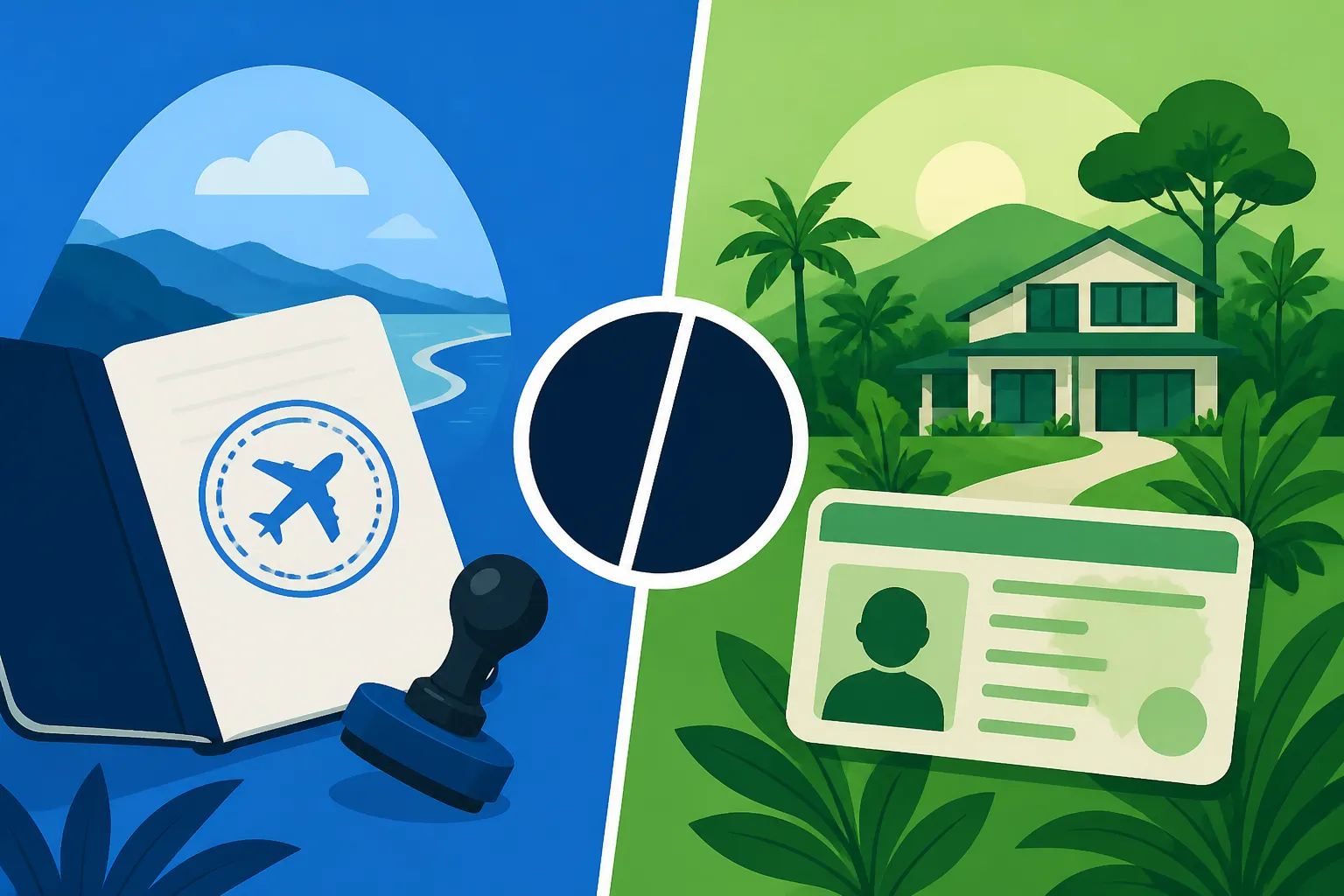
When you first arrive in Costa Rica, after a long flight and navigating customs at Juan Santamaría (SJO) or Daniel Oduber Quirós (LIR) airports, you'll pass through immigration. The officer will glance at your passport, ask a few questions, and then, with a thud, stamp your passport. That, my friends, is your entry stamp. For many, it's the start of an amazing adventure, but it comes with a very specific set of rules and limitations that are often overlooked.
The Temporary Nature of a Tourist Stay
That entry stamp, typically valid for 90 days, marks you as a temporary visitor, a guest in our beautiful country. It's designed for vacations, short business trips, or exploring whether Costa Rica might be a good fit for you in the long run. It is not a green light for settling in indefinitely. The government, through the Dirección General de Migración y Extranjería (DGME), grants this period based on your nationality and the discretion of the immigration officer, but 90 days is the standard for most Western passports.
During this time, you're expected to behave like a tourist. You can enjoy the beaches of Guanacaste, hike through cloud forests, or explore the vibrant markets of San José. You can even rent a car using your foreign driver's license, though typically only for the duration of your visa stamp, up to 90 days. But here's the kicker: this temporary status does not grant you the right to work, establish long-term contractual obligations, or access the full suite of public services that residents enjoy. Many an expat has tried to skirt these rules, leading to legal troubles, fines, or even deportation. It’s a common misconception that simply leaving the country for a few days and returning, often referred to as a "visa run," resets your clock indefinitely. While this can be done, it’s not a sustainable or legally guaranteed strategy for long-term living, and immigration officers are increasingly scrutinizing these patterns. You can learn more about this in our guide on How Do I Do a Visa Run from Costa Rica?.
Limitations and Risks of Relying on Entry Stamps
Living long-term on tourist stamps, or "perpetual tourism" as some call it, is fraught with limitations and risks. First and foremost, you cannot legally work in Costa Rica without proper work permits, which are typically tied to a residency status. This means no local employment, no formal freelancing for Costa Rican companies, and often, difficulties even opening a proper bank account that isn't a basic savings account. You’ll find yourself constantly having to withdraw cash or rely on international cards, which can incur fees.
Secondly, access to healthcare is severely limited. While tourists can access emergency medical care in Costa Rica, and private hospitals like CIMA, Clínica Bíblica, and Hospital Metropolitano will treat you, you'll be paying out of pocket or relying on your international travel insurance. Companies like Cigna Global offer excellent international coverage that can bridge this gap, but it’s crucial to have it. You won't have access to the national healthcare system, the Caja Costarricense de Seguro Social (CCSS), which provides affordable and comprehensive care to residents. If you get seriously ill or have an accident, those private hospital bills can rack up incredibly quickly. Imagine trying to explain your status in an emergency room while simultaneously worrying about your limited visa. It's a nightmare scenario, and one you absolutely want to avoid. Furthermore, should you overstay your permitted time, you face significant fines upon departure, and potentially even a ban from re-entry, making your return to this beautiful country much more complicated. Our article What Happens If I Overstay My Tourist Visa in Costa Rica? delves into these consequences.
Diving into Official Residency Status
Now, let's talk about what it means to be a resident. This is where the real stability and integration into Costa Rican life begin. Official residency is a legal recognition by the Costa Rican government that you are authorized to live in the country for an extended period, under specific conditions. It's a formal, documented status, evidenced by your DIMEX (Documento de Identificación Migratoria para Extranjeros) card, which replaces your passport as your primary ID within the country.
The Path to Legal Status
Gaining residency is not an overnight process, and it certainly requires patience, paperwork, and often, a good immigration lawyer. There are several categories of residency, each designed for different situations:
- Pensionado Residency: For retirees with a guaranteed lifetime income of at least $1,000 USD per month from a pension or retirement fund. This is a popular route for many expats.
- Rentista Residency: For individuals who can demonstrate a stable income of at least $2,500 USD per month, usually through a fixed deposit in a Costa Rican bank or other verified sources. This often requires a significant upfront deposit, typically around $60,000, to cover a two-year income requirement.
- Inversionista (Investor) Residency: For those willing to invest a significant sum (currently $150,000 USD) in a business, property, or other approved projects in Costa Rica.
- Digital Nomad Visa: A newer option for remote workers, requiring a minimum monthly income of $3,000 USD (or $4,000 for a family). This is a temporary visa (initially for one year, renewable for a second) and has slightly different benefits than traditional residency categories, but it grants many similar privileges, like banking and local driving.
- Family (Vínculo) Residency: For those with immediate family ties to a Costa Rican citizen or resident, such as a spouse or child.
Each category has its own set of detailed requirements, document lists (often requiring apostilles or legalizations), and processing times that can range from months to over a year. It's a bureaucratic journey, but one that is well worth it for the peace of mind it brings. Our comprehensive guide, The Complete Guide to Costa Rica Residency for Expats (2027), covers these categories in detail.
Rights, Benefits, and Responsibilities of Residents
Once you have your shiny DIMEX card, a whole new world opens up. You gain a level of legal security and access to services that are simply unavailable to tourists.
- Healthcare: As a resident, you are legally required and entitled to join the Caja Costarricense de Seguro Social (CCSS), the public healthcare system. Your monthly contributions are based on your declared income, and in return, you get comprehensive medical care, from doctor visits and prescriptions to surgeries and hospital stays. It's a huge relief for many to know they have access to this system, though some still opt for supplemental private insurance for quicker access to specialists or certain amenities. Learn more about Do I Have to Join the Caja to Get Residency in Costa Rica? and How Costa Rica's Health System Works: The Caja (CCSS) vs Private Explained (2027).
- Banking: Residents can open formal bank accounts, including checking accounts, with local banks like Banco Nacional, BCR, or BAC Credomatic. This makes paying bills, receiving funds, and generally managing your finances much simpler and more secure. You can set up online banking, use local payment apps like SINPE Móvil, and integrate into the local financial system. Our article Banking in Costa Rica: A Complete Guide for Foreigners (2027) walks you through this.
- Work and Business: Depending on your residency category, you may have the right to work. Pensionados and Rentistas generally cannot work as employees but can own and operate businesses. The Digital Nomad visa explicitly allows remote work for foreign entities. Other categories, particularly through family ties or specific work visas, allow for employment. This opens up opportunities for integration and economic contribution.
- Driving: With a DIMEX, you can convert your foreign driver's license into a Costa Rican one, eliminating the need to leave the country every 90 days to keep your foreign license valid.
- Stability: Perhaps the most significant benefit is the legal stability. You no longer have to worry about visa runs, overstaying your welcome, or the uncertainty that comes with perpetual tourism. You can sign long-term rental agreements, buy property, and truly establish roots without looking over your shoulder. When shipping your belongings to Costa Rica for a long-term stay, knowing you have residency simplifies the customs process significantly. Reputable international moving companies, like Sirelo, can help you navigate the logistics, but having your residency in place is a game-changer for importing household goods.
Key Differences and Why They Matter for Expats
The distinction between an entry stamp and residency isn't just a bureaucratic formality; it fundamentally shapes your life in Costa Rica. Understanding these differences is paramount for anyone considering a move or extended stay.
Let's break down the most critical aspects in a straightforward comparison:
| Feature | Tourist Entry Stamp (Temporary Visitor) | Official Residency (Legal Resident) |
|---|---|---|
| Legal Status | Short-term visitor, permission to visit. | Legal permission to live and reside long-term under specific category. |
| Duration of Stay | Typically 90 days (can vary by nationality), resets with "visa run" (not guaranteed). | Renewable periods (1-2 years initially for temporary, then permanent options). |
| Work Rights | NO legal right to work for Costa Rican entities. | YES, depending on residency category (e.g., Digital Nomad, specific work visas, own business). |
| Healthcare Access | Emergency care (private, self-pay/travel insurance). | Full access to public Caja system (mandatory contributions), can supplement with private. |
| Banking | Limited to basic savings accounts, often challenging. | Full access to local banking services (checking, loans, etc.). |
| Driver's License | Foreign license valid for duration of entry stamp (max 90 days). | Can convert to a local Costa Rican driver's license. |
| Property Ownership | Can own property, but may face administrative hurdles without local ID. | Streamlined process for property ownership and financial transactions. |
| Contracts | Difficult to sign long-term leases, utility contracts. | Ease of signing all types of contracts (rent, utilities, services). |
| Legal Stability | High uncertainty, risk of fines/deportation for overstaying/working illegally. | High stability, defined rights and responsibilities. |
| Children's Education | Can enroll in private schools; public school enrollment can be challenging. | Easier enrollment in public and private schools, often required for public. |
This table makes it clear: if you're serious about living in Costa Rica, even for just a year or two, an entry stamp simply won't cut it. It creates a constant state of limbo and prevents true integration. The peace of mind, access to essential services, and legal grounding that residency provides are invaluable.
Imagine trying to open a bank account to pay your bills with just a passport stamp that expires in a few weeks. Or needing medical attention for a chronic condition while only having travel insurance and no access to the national system. These are not hypothetical scenarios; they are daily realities for many who misunderstand this fundamental difference. Embracing the residency process, despite its bureaucratic hurdles, is an investment in your future and your well-being in Costa Rica.
Navigating the Transition from Tourist to Resident
So, you've spent some time here on your entry stamp, fallen in love with the Pura Vida lifestyle, and decided you want to make Costa Rica your home. Excellent! You're not alone. Many expats start this way. The good news is that it is absolutely possible to transition from being a tourist to an official resident, but it requires a strategic approach and a good deal of patience.
The Application Process While in Costa Rica
While it's often recommended to start the residency application process from your home country, especially for certain categories, many people begin their journey while already in Costa Rica on a tourist visa. This is generally permissible. However, it’s critical to understand that simply submitting your application does not grant you immediate resident status or halt the clock on your tourist visa. You are still a tourist until your residency is officially approved. This is a common source of anxiety for many applicants.
The process involves gathering a multitude of documents, many of which must be apostilled or legalized in your home country before you even arrive in Costa Rica. These often include birth certificates, marriage certificates, criminal background checks, and proof of income. Once you have these documents, translated into Spanish by an official Costa Rican translator, and you've decided on the appropriate residency category, you'll submit your application to Migración (DGME).
The "Waiting Game" and Interim Measures
After submitting your application, you enter what's affectionately known as the "waiting game." This period can last for several months, sometimes even over a year, depending on the volume of applications and the complexity of your case. During this time, you'll typically be given a comprobante de solicitud (application receipt). This receipt is vital, as it proves you have an active residency application pending.
Here's where it gets a little tricky:
- Staying Legal: While your application is pending, you are still bound by your tourist visa's expiration date. Many people choose to continue doing visa runs to avoid overstaying, especially if their application is expected to take a long time. However, with your comprobante, you can often apply for an extension of stay at Migración. This allows you to remain in the country legally while your application is processed, without needing to exit and re-enter. It’s a huge relief and a more stable option than repeated border hops.
- Provisional Access to Caja: Once your residency application has been formally accepted and is under review (often after an initial review period), you may be able to begin provisional payments to the Caja (CCSS). This means you start contributing to the public health system, and in return, you get access to medical services even before your DIMEX card is physically issued. This is an incredibly important step, ensuring you have healthcare coverage during the potentially long wait. Our guide The Expat Guide to Joining the Caja (CCSS) in Costa Rica (2027) explains this in detail.
- No Work Rights Yet: It's important to remember that even with an active application and a comprobante, you generally do not have legal work rights until your residency is fully approved and your DIMEX card is issued. Relying on remote work for a foreign company is often the most viable income strategy during this interim period.
Working with an experienced immigration lawyer is almost universally recommended for navigating this complex process. They can advise you on the best residency category for your situation, ensure all your documents are correct, submit your application, and advocate on your behalf with Migración. This small investment can save you immense time, stress, and potential pitfalls in the long run.
Ultimately, the journey from entry stamp to official resident is a testament to your commitment to making Costa Rica your home. It’s a process that demands patience and thoroughness, but the rewards of legal stability, full access to services, and true integration are immeasurable for those ready to embrace Pura Vida in the long term.
Disclaimer
The information provided in this article is intended for general guidance and informational purposes only and does not constitute legal, financial, or medical advice. Regulations and laws in Costa Rica can change, and individual circumstances vary. It is highly recommended to consult with qualified legal professionals, tax advisors, and healthcare providers for advice tailored to your specific situation before making any decisions related to immigration, finances, or health in Costa Rica.