Understanding Background Checks and Criminal Record Requirements for Residency
One of the most anxiety-inducing parts of moving to Costa Rica and applying for residency isn't just gathering all the forms, it's the deeply personal aspect of presenting your entire past for scrutiny. The requirement for criminal background checks often catches people off guard or leaves them wondering exactly what’s needed and what could jeopardize their dream. This guide aims to pull back the curtain on the criminal record requirements for Costa Rican residency, helping you navigate this often daunting step with clarity and less stress.
The Inevitable Reality: Why Costa Rica Needs Your Background Check
Let's be honest, submitting a background check can feel invasive. It's like putting your entire adult life on display for a government agency in a foreign country. But from Costa Rica's perspective, it's a fundamental step in protecting its national security and maintaining the peaceful, secure environment that so many expats cherish. They want to know who is coming to live here permanently, just as your home country would want to know about someone applying for residency within its borders. It’s about due diligence, and it's something every applicant, regardless of their country of origin or the type of residency they're seeking, will face.
The Rationale Behind the Requirement
Think about it from a societal viewpoint. Costa Rica, like any sovereign nation, has a right and a responsibility to vet individuals who wish to become long-term residents. The country has a relatively low crime rate compared to many other nations in the region, and maintaining that sense of security is paramount. When you apply for residency, you’re essentially asking to become a part of the national fabric, to enjoy the benefits and assume the responsibilities of living here. Part of that social contract involves demonstrating that you don't pose a threat to public safety or order. This isn't about being suspicious of every expat; it's a standardized procedure designed to ensure a safe and harmonious community for everyone. It's a foundational piece of the puzzle, right alongside proving your financial stability or family ties, showing that you are a person of good standing.
Beyond just security, it's also a measure to prevent individuals from using Costa Rica as a haven from legal issues in their home countries. Immigration departments worldwide are keen to avoid situations where individuals with serious criminal pasts could exploit residency programs. For us expats, it’s just one more bureaucratic hurdle, but understanding the rationale behind it can help shift your perspective from frustration to acceptance of the process.
Who Needs a Background Check?
This isn't a selective process; nearly everyone applying for any type of temporary or permanent residency in Costa Rica will need to provide a criminal record certificate. Whether you're coming in on a Pensionado (Retiree) Residency in Costa Rica, a Rentista Residency in Costa Rica, an Inversionista (Investor) Residency, or even a Digital Nomad Visa, this document is a non-negotiable part of the dossier. The requirement typically applies to all applicants over the age of 18. If you're applying with your family, every adult dependent will also need to submit their own certificate.
This means if you're a couple moving here, both you and your spouse will need individual background checks. If you have adult children accompanying you, they too will need to provide one. There are no exemptions based on age beyond the 18-year-old threshold, nor are there any based on your profession or financial standing. It’s truly a universal requirement for anyone seeking long-term stay. The only exceptions might be very specific, highly specialized visa categories that are not typical for general expats, but for the vast majority of us, it’s simply part of the game.
Getting Your Criminal Record Certificate in Your Home Country
This is where things can get a little tricky, as the exact process depends entirely on your country of origin. What’s critical is understanding which type of check Costa Rica needs and how to properly authenticate it so it’s accepted by Migración (DGME). My advice, from someone who's been through it? Start this process early. Seriously, like, yesterday early. Delays here can hold up your entire residency application.
Federal vs. Local Checks: What You Need
This is a common point of confusion. Many countries have multiple levels of criminal record checks: local (city or county), state/provincial, and national/federal. For Costa Rican residency, the national or federal-level criminal record certificate is almost always what's required. This means a document issued by a central government agency that covers your entire country of citizenship, not just the state or city you last lived in.
For example, if you're from the United States, you'll need an FBI Identity History Summary (often called an "FBI background check"). Local police checks or state-level reports are typically insufficient. For Canadians, it’s usually a criminal record check from the RCMP (Royal Canadian Mounted Police). Australians would seek a National Police Certificate, and those from the UK would generally need a police certificate from ACRO (Association of Chief Police Officers Criminal Records Office). It’s crucial to research the specific national agency in your country responsible for issuing these comprehensive checks. Do not just walk into your local police station and expect them to provide the correct document for international use; they often can't.
The certificate needs to reflect your current status, meaning it should be issued as recently as possible, typically within six months of your residency application submission. This "freshness" requirement is important, so don't get it too far in advance, or you might find yourself needing to re-apply, doubling your effort and waiting time.
The Apostille or Legalization Process: Don't Skip This!
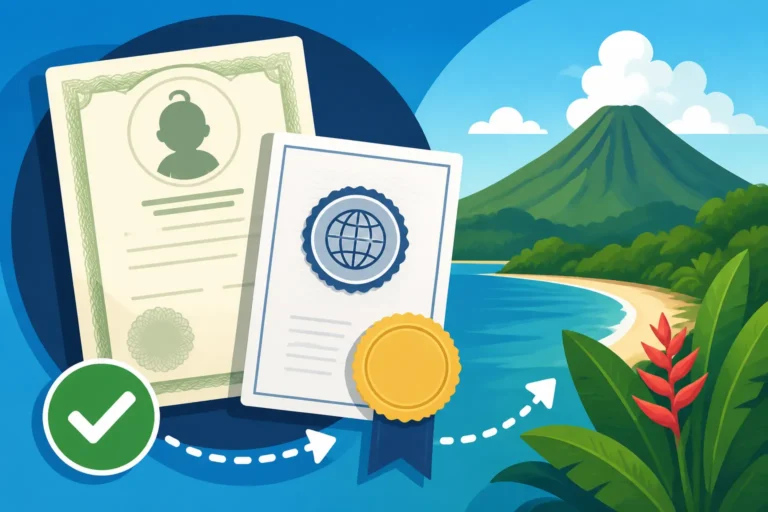
Once you have your shiny, clean criminal record certificate from the national authority, you're not done yet. This document, like many others required for your application, must be apostilled or legalized. This is perhaps one of the most vital steps and, unfortunately, one of the most often misunderstood. What exactly is an apostille? It's an international certification that authenticates the seals and signatures of officials on public documents. It essentially verifies that your document is legitimate and was issued by a recognized authority in your home country, making it valid for international use in countries that are part of the Hague Apostille Convention. Costa Rica is a signatory to this convention.
If your home country is part of the Hague Convention, you'll need an apostille. This is usually obtained from your country's equivalent of the Secretary of State or Department of Foreign Affairs. For instance, in the US, the Department of State authenticates federal documents like the FBI check. If your country is not a signatory to the Hague Convention, then your document will need to be "legalized" by the Costa Rican consulate or embassy in your home country. This is a more complex and often more time-consuming process involving multiple layers of authentication (local notary, then foreign affairs department, then the consulate). This step is non-negotiable. Without proper authentication, your background check will be rejected by Migración, bringing your application to a grinding halt. Seriously, learning How to Get Your Documents Apostilled for Costa Rican Residency is paramount.
Common Pitfalls and How to Avoid Them
I’ve seen it all, or at least heard countless stories. The most common pitfall is simply getting the wrong type of background check. Some people get a local police report, only to have it rejected. Others get an online "instant" background check that isn't from the official government agency. Remember, it must be from the national government authority, and it must be the original document. Digital copies, no matter how official they look, won't cut it.
Another major stumbling block is the apostille. People often forget this step, or they try to get a state-level apostille for a federal document (which won't work). Make sure the apostille is applied to the original national background check by the correct federal-level authority. And once it's apostilled, do not remove the apostille. It will often be a separate page securely attached to your document. Handle it carefully.
Finally, timing is everything. As mentioned, the background check and apostille generally need to be issued within six months of your residency application submission. If you get it too early, you might find yourself back at square one. Factor in processing times for both the background check and the apostille in your home country, which can range from a few weeks to several months depending on the agency and current workload. I personally recommend using a reputable courier service, like one often used with Sirelo, to send these critical documents to Costa Rica or securely store them until you're ready to submit. Losing an apostilled document means starting over, and that's a headache nobody needs.
Here's a quick summary table of the key steps for this document:
| Step | Description | Estimated Time (Varies by Country) | Common Pitfalls |
|---|---|---|---|
| 1. Identify Correct Agency | Determine the national-level agency in your home country responsible for issuing federal criminal record certificates (e.g., FBI in USA, RCMP in Canada). | 1-3 days (research) | Requesting a local or state-level check; relying on unofficial online services. |
| 2. Obtain Criminal Record | Apply for your federal criminal record certificate. Ensure it's the original document, not a printout of an email or digital file. | 1-12 weeks | Submitting a non-original document; getting it too early (exceeding 6-month validity). |
| 3. Get Apostille/Legalization | If your country is a Hague Convention signatory, get an apostille from the appropriate federal authority (e.g., US Department of State). If not, have it legalized by the Costa Rican consulate in your country. This is part of Understanding the Documents and Apostille Needed for Residency in Costa Rica. | 2-8 weeks | Forgetting the apostille/legalization; getting a state-level apostille for a federal document; removing the apostille once attached. |
| 4. Prepare for Translation | Keep the document, including the apostille, together and safe. It will need to be translated by an official Costa Rican translator. | N/A | Losing the document; damaging the apostille; attempting to translate it yourself or using a non-approved translator. |
Translating and Validating Your Documents in Costa Rica
So you've navigated the tricky waters of getting your background check and having it apostilled. Phew! But the journey isn't quite over. Now, these documents, which are still in your native language, need to be understood by the good folks at Migración. This means official translation and often another layer of validation within Costa Rica itself. It’s a bit like a relay race, where each step has to be perfectly executed to pass the baton to the next.
The Official Translation Requirement
Once your criminal record certificate and its attached apostille arrive in Costa Rica (or you bring them yourself), they must be translated into Spanish by an official translator approved by the Ministry of Foreign Affairs of Costa Rica (Ministerio de Relaciones Exteriores y Culto). You cannot just use any translator, even if they are perfectly fluent. The Costa Rican government maintains a list of certified "traductores oficiales" who are authorized to perform these translations for legal and governmental purposes. Their seal and signature on the translation attest to its accuracy and official status.
Finding one of these official translators is usually straightforward; many immigration lawyers can recommend one, or you can find lists online. Be prepared for the cost, as official translations can be pricey, often charged per page. They will translate both your criminal record certificate AND the apostille. Yes, even the apostille needs translating! This meticulousness is just how things work here. A misstep here, like using an uncertified translator, will lead to your documents being rejected and further delays to your application for The Complete Guide to Costa Rica Residency for Expats (2027). It's frustrating, I know, but adhering to these rules is key to a smooth process.
Ministry of Foreign Affairs Authentication
For certain documents, after being translated by an official translator, they might need one more stop at the Ministry of Foreign Affairs of Costa Rica for further authentication, often referred to as a "reconocimiento de firma." This step verifies the signature and seal of the official translator, essentially confirming that they are indeed on the government's approved list and that their translation is therefore valid for submission to government agencies like Migración.
While not all documents require this secondary authentication after translation, it's a good practice to confirm with your immigration attorney if your criminal record certificate translation needs it. It adds another layer of bureaucracy and cost, but it's better to be overly prepared than underprepared when dealing with Migración (DGME). Your immigration lawyer, who plays a crucial role in Understanding the Cost and Timeline of the Residency Process in Costa Rica, will be able to guide you on which specific documents need this extra stamp of approval. Once all these steps are complete, your criminal record certificate is finally ready to be included in your full residency application dossier.
What Happens if You Have a Criminal Record?
This is the question that keeps many aspiring expats up at night. What if you do have something in your past? Will it automatically disqualify you from residency in Costa Rica? The answer, like many things in the labyrinthine world of immigration, is nuanced. It's not always a hard "no," but it certainly complicates things. Migración has a degree of discretion, and the nature and severity of the offense play a huge role.
Minor Infractions vs. Serious Offenses
Let's talk about the difference between a minor infraction and a serious offense. A minor traffic ticket, an old misdemeanor, or something that resulted in a small fine and no jail time in your distant past might not be an automatic deal-breaker. Migración's concern is generally with serious felonies, crimes of moral turpitude, violent offenses, or recent convictions. If your record shows a distant DUI from 20 years ago, for example, your lawyer might be able to argue that it's not indicative of your current character or a threat to Costa Rican society. They will often consider the age of the offense, its severity, and whether it resulted in a prison sentence.
However, if your record includes recent felony convictions, especially for crimes involving violence, fraud, drug trafficking, or sexual offenses, your chances of obtaining residency diminish significantly. Costa Rica takes its security seriously, and these types of offenses are generally viewed as disqualifying. There's no published, exhaustive list of what will and won't be accepted, which adds to the uncertainty, but common sense dictates that violent crimes and serious offenses against persons or property will be viewed very unfavorably. It's truly a case-by-case evaluation.
The Discretionary Power of Migración
Here's where the rubber meets the road: Migración (the Dirección General de Migración y Extranjería or DGME), the governmental body in charge of immigration, has significant discretionary power. This means that even if you have a minor blot on your record, it's not necessarily an automatic rejection, but it will flag your application for closer review. They look at the overall picture, and your lawyer's ability to present your case effectively can make a substantial difference. They might ask for additional documentation, such as character references, proof of rehabilitation, or a detailed explanation of the circumstances surrounding the offense.
If you have anything on your record, even something you consider minor, it is absolutely critical to be honest and upfront with your immigration attorney from day one. Do not try to hide it, as it will likely come out in the background check anyway, and then your entire application can be jeopardized due to misrepresentation. Your lawyer can advise you on the best course of action, whether it's preparing a letter of explanation, gathering extra supporting documents, or simply managing your expectations regarding the outcome. There's also the possibility of being asked to return to your home country to rectify any outstanding legal matters before your residency can proceed. In some severe cases, if your application is denied, you'll want to understand What Happens If My Costa Rica Residency Application Is Denied?, so having that legal advice early on is vital.
Maintaining Your Clean Record and Future Considerations
Getting your residency approved after all that paperwork and waiting is a huge relief. You finally have your DIMEX card – your official identification and proof of legal residence. But the expectation of maintaining a clean record doesn't just end there. Living in Costa Rica means adhering to its laws, and understanding that your past (and future) conduct can impact your continued residency.
Staying Out of Trouble in Costa Rica
Living in Costa Rica is generally peaceful, but like anywhere, laws exist, and they need to be respected. Expats are not immune to local laws, and engaging in criminal activity here can have severe consequences, including the revocation of your residency and deportation. It’s not just about major crimes; repeated minor infractions, like traffic violations, while usually not leading to immediate deportation, can certainly be a black mark if you ever have to go before Migración for a review or renewal.
The best advice is simple: follow the laws. Don't engage in illegal activities, respect local customs, and understand that you are a guest in this country. Being part of the community means being a good citizen, and that includes upholding the legal framework. Even something as seemingly innocuous as working without proper authorization (if your residency category doesn't permit work) can lead to serious issues, including fines and potential deportation. This is especially relevant if you are seeking to Convert from Tourist Status to Residency in Costa Rica or trying to navigate The Expat Guide to Finding a Job in Costa Rica (2027) while waiting for the proper documentation.
Renewing Your Residency and New Checks
Your temporary residency in Costa Rica isn't forever; it needs to be renewed periodically, typically every one or two years. When you go through the renewal process, Migración generally conducts an internal check of your record within Costa Rica. They want to ensure you haven't accumulated any significant criminal charges since you first obtained your residency. This is why maintaining a clean record here is so important.
While you usually won't be asked to provide another federal background check from your home country for routine renewals (unless there's a specific flag or concern), your conduct within Costa Rica is constantly under review. If you've been charged with serious crimes in Costa Rica, your residency renewal will almost certainly be denied, leading to revocation and deportation. This is just another reason why understanding and respecting the local legal system is crucial for a long and happy life as an expat in this beautiful country. Making sure you always have a valid DIMEX residency card requires careful attention to the renewal process. For detailed information, check out How to Renew Your Temporary Residency (DIMEX) in Costa Rica.
Disclaimer
Please remember that I am an expat blogger and not a legal professional. The information provided in this article is for general guidance and informational purposes only and does not constitute legal advice. Immigration laws and procedures in Costa Rica are subject to change and vary based on individual circumstances. It is crucial to consult with a qualified Costa Rican immigration attorney or legal expert for advice tailored to your specific situation before making any decisions related to your residency application.