How to Get a Birth Certificate and Documents Apostilled for Costa Rica
Oh, the joy of moving to Costa Rica! You’ve probably spent countless hours dreaming of pura vida on the beach or sipping coffee in the Central Valley. But before you get to fully embrace that dream, there's a bureaucratic beast to contend with: getting all your official documents in order. One of the biggest headaches, and often the most confusing, is figuring out how to get your birth certificate and other critical paperwork apostilled for Costa Rica. Trust me, I’ve been through it, and this guide is here to walk you through every frustrating, yet necessary, step.
Understanding the "Why": The Importance of Apostilled Documents in Costa Rica
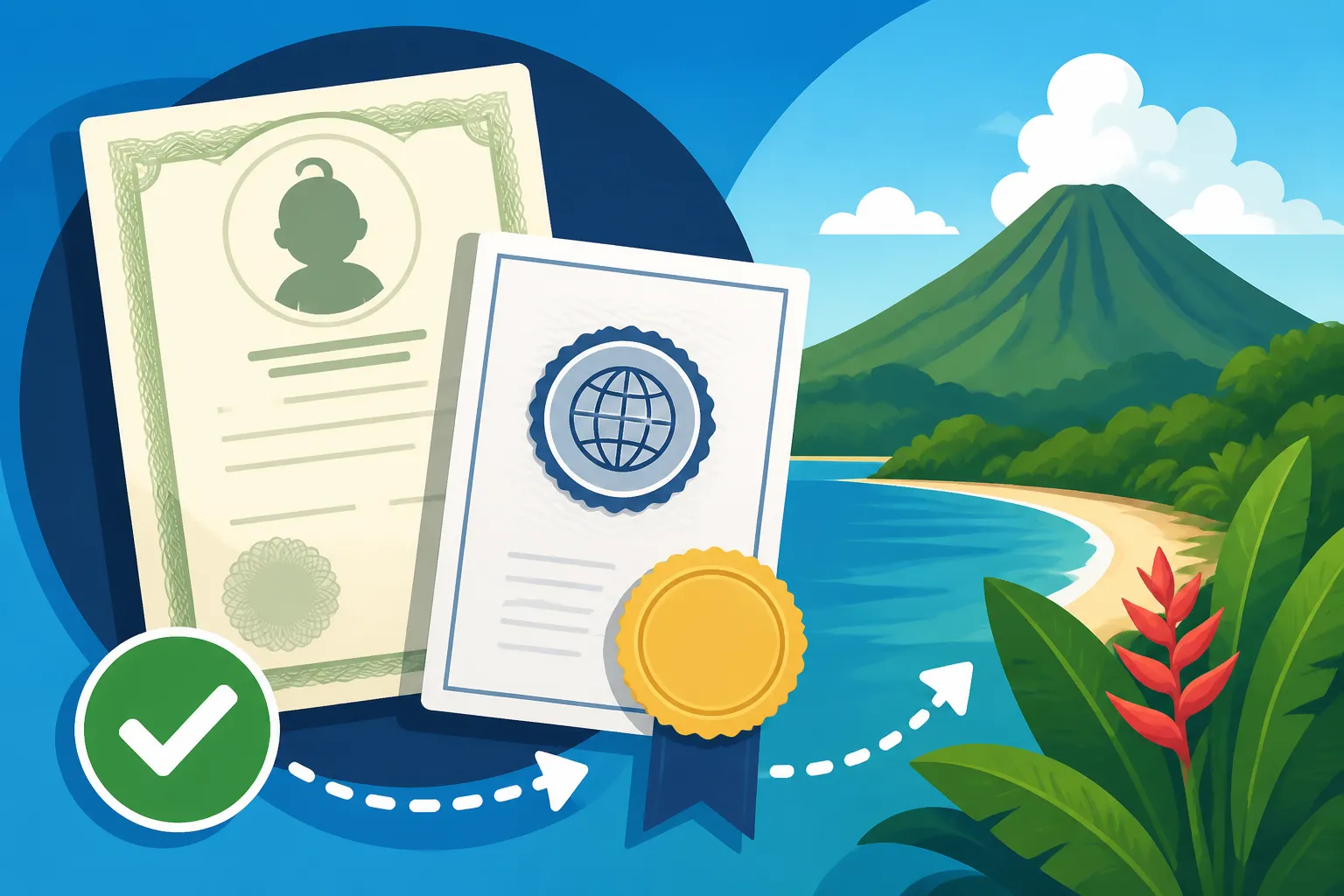
When you decide to make Costa Rica your home, you're not just changing countries; you're entering a whole new administrative ecosystem. The Ticos have their way of doing things, and it often involves a lot of official stamps and seals. An apostille is one of those crucial stamps, acting as an international verification that your document is legitimate. Without it, your carefully gathered paperwork is essentially useless here, destined to be politely, but firmly, rejected by immigration officials.
Why Apostilles Are a Non-Negotiable Requirement
Think of an apostille as a global handshake between governments. Costa Rica, like many countries, is a signatory to the Hague Apostille Convention. This international treaty simplifies the process of legalizing documents for use in other signatory countries. Before this convention, you'd often have to get your documents authenticated by multiple government offices in your home country, then again by the Costa Rican embassy or consulate there. It was a nightmare. The apostille streamlines this by providing a single certification that is accepted by all member countries.
So, when Migración (the General Directorate of Immigration) or any other Costa Rican institution asks for an "apostilled birth certificate," they're not just being difficult – they’re following an internationally agreed-upon standard. It's their way of ensuring that the documents you're presenting from your home country are genuine and haven't been tampered with. It protects them, and ultimately, it protects you and the integrity of the process. Trying to skip this step, or presenting a document that isn't properly apostilled, is a surefire way to have your residency application stalled or outright denied. It's frustrating, I know, but it’s the system.
Common Documents Requiring Apostille for Expats
You might be surprised by how many documents will likely need this special certification. It's not just your birth certificate. Depending on your specific residency category or what you're trying to accomplish, the list can grow.
Here’s a general rundown of the most common documents that typically require an apostille for expats in Costa Rica:
- Birth Certificate: This is almost universally required for any residency application. It establishes your identity and parentage.
- Marriage Certificate: If you're applying for residency with your spouse, or if your spouse is sponsoring you for family residency, your marriage certificate will need an apostille. This proves the legal standing of your union.
- Police Clearance Certificate / Background Check: Absolutely essential for almost all residency types. This document proves you don't have a criminal record in your home country (or any country you've lived in for a certain period).
- Divorce Decrees: If you've been divorced, this document will be needed to prove the termination of previous marriages, especially if you're now married and applying with a new spouse.
- Educational Diplomas/Transcripts: If you're planning to work in a regulated profession or get your foreign degree recognized in Costa Rica, your educational documents will need to be apostilled.
- Affidavits of Support / Income Documents: For certain residency categories like Pensionado (retiree) or Rentista (annuitant), you'll need documents proving your income. While often not the income statements themselves, sometimes supporting declarations from financial institutions might need an apostille.
- Death Certificates: If you're a widow/widower applying for certain benefits or residency, this might be required.
For those navigating the initial hurdles, understanding what exactly is needed is paramount. You'll find a deeper dive into all the paperwork necessary for establishing your new life here in our guide, Understanding the Documents and Apostille Needed for Residency in Costa Rica. The exact list can vary slightly depending on your specific situation, such as whether you’re seeking the How to Get the Pensionado (Retiree) Residency in Costa Rica (2027) or The Expat Guide to the Rentista Residency in Costa Rica (2027), but these are the main culprits. Always double-check with your immigration lawyer or the Migración website for the most current and specific requirements related to your application. Don't assume anything; an extra apostille is better than a missing one!
The Apostille Process in Your Home Country: A Step-by-Step Guide
Alright, let's get down to the nitty-gritty. This is where the real legwork begins. The process, while generally similar, can have maddeningly specific nuances depending on where your documents originated. The goal is to get that precious stamp or attached certificate from the competent authority in your home country.
Locating Your Birth Certificate (and Other Vital Records)
Before you can even think about an apostille, you need the original document. This might sound obvious, but you'd be surprised how many people only have photocopies or digital versions. For apostille purposes, you almost always need a certified original or a certified copy issued by the custodian of that record.
For a birth certificate, this typically means the vital records office (or equivalent) in the state, province, or country where you were born. If you were born in the US, for instance, you'd contact the Department of Health or the Office of Vital Records in your specific state. They can issue a certified copy, often with a raised seal, which is what the apostille process requires. Old, faded certificates from decades ago might need to be re-issued to meet current standards. Don't use a "commemorative" birth certificate; it needs to be the official, certified legal document.
Similarly, for marriage certificates, you'll contact the county clerk or vital statistics office where the marriage was registered. Police clearance certificates are usually obtained from a national agency (like the FBI in the US or the RCMP in Canada) or sometimes local police departments, but ensure it's the correct official one for international use. Divorce decrees come from the court that issued the divorce. Getting these initial, correct copies is the foundational step. If this part is wrong, the entire apostille process will fail.
The Authentication and Certification Steps Before Apostille
This is where things can get a little convoluted, as some documents need an extra layer of authentication before they can even get the apostille. This "pre-certification" step is often the one that trips people up.
Let's use a US example:
If your birth certificate was issued by a county in, say, California, you first need to get it certified by the county clerk, then it often needs to be further certified by the California Secretary of State before it can receive the apostille from the federal US Department of State. Not all documents require this multi-layer approach, but many do. The general rule is: the document needs to be certified by a state or provincial authority before it can be apostilled by a federal (or designated state) authority.
For educational documents, for example, your university diploma might first need to be certified by the registrar's office, then perhaps by a state-level education department, and then by the apostille authority. This chain of custody proves the legitimacy of each signature and seal along the way. It’s painstakingly slow, but crucial. You're building a verifiable paper trail for the Costa Rican authorities to follow.
Obtaining the Apostille: Federal vs. State Level Nuances
Once your document has gone through any necessary preliminary certifications, it's finally ready for the actual apostille. The location where you obtain the apostille depends entirely on which authority issued the original document and in which country.
In the United States, the apostille can be issued by either a state Secretary of State's office or the US Department of State in Washington D.C.
- State-level apostilles are for documents issued by state or county authorities (e.g., birth certificates, marriage certificates, divorce decrees, educational diplomas from state universities). You'd apply to the Secretary of State's office in the specific state where the document originated.
- Federal-level apostilles are for documents issued by US federal agencies (e.g., FBI background checks, Consular Reports of Birth Abroad, documents from federal courts). For these, you must apply to the Office of Authentications at the US Department of State in Washington D.C.
Important Note for the US: Many people mistakenly send state-issued documents to the federal Department of State, or vice-versa. This will lead to immediate rejection and wasted time, so be absolutely certain you’re sending it to the correct authority.
In other countries, the process follows a similar logic. For example:
- In the UK, apostilles are issued by the Legalisation Office of the Foreign, Commonwealth & Development Office (FCDO).
- In Canada, the process historically involved a two-step "authentication and legalization" process, but Canada acceded to the Hague Apostille Convention on January 11, 2024. Now, documents issued by federal authorities will be apostilled by Global Affairs Canada, and provincial authorities (such as those for birth certificates) will be apostilled by the relevant provincial body. This is a recent and significant change for Canadians moving abroad, making the process much simpler than it used to be!
The specific application forms, fees, and processing times vary significantly by country and even by state/province. Some offer expedited services for an additional fee, which can be a lifesaver if you're up against a deadline for your residency application. Don't forget to factor in mail delivery times, especially if you're relying on international shipping; this is where a reliable service like Sirelo might come in handy for tracking those precious documents.
Navigating the Process from Different Countries
Each country, even within the framework of the Hague Convention, has its own peculiarities when it comes to getting documents apostilled. As a seasoned expat, I've seen friends from all corners of the globe struggle, each with their unique bureaucratic hurdles. Let's break down some common scenarios.
The US Apostille Process: Federal and State Variations
As mentioned earlier, the US system is a bit of a two-tiered beast. It’s not enough to know what needs an apostille; you need to know who provides it.
- State-Issued Documents: This is where most of your vital records fall: birth certificates, marriage licenses, divorce decrees, educational diplomas from state-funded universities, and notarized documents signed within a specific state. For these, you must apply to the Secretary of State's office in the specific state where the document was issued or notarized. For example, if you were born in Florida, your birth certificate will need an apostille from the Florida Department of State. If your marriage certificate is from Texas, it's the Texas Secretary of State. Each state has its own forms, fees (typically $5-$25 per document), and processing times, which can range from a few days to several weeks. Many states offer walk-in or expedited services, but always confirm beforehand.
- Federal-Issued Documents: These are documents that come directly from US federal government agencies. The most common one for expats is the FBI Identity History Summary Check (often called an FBI background check). Other examples include documents issued by the US Patent and Trademark Office, military records, or Consular Reports of Birth Abroad. For these, you must send your documents to the US Department of State's Office of Authentications in Washington D.C. Their processing times can be notoriously long, sometimes stretching for months, so plan far in advance. You can check their website for current processing times and specific instructions.
Remember, a common mistake is sending an FBI background check to a state Secretary of State or a birth certificate to the federal Department of State. This will result in an immediate rejection and further delays, prolonging your residency journey. Always confirm the issuing authority of your document before deciding where to send it.
The Canadian Apostille Equivalent: Legalization and Authentication
For a long time, Canadian expats faced a more complex two-step process: authentication by Global Affairs Canada (or a provincial authority) and then legalization by the Costa Rican Embassy or Consulate in Canada. This was a massive pain point for Canadians.
However, as of January 11, 2024, Canada officially joined the Hague Apostille Convention! This is fantastic news for anyone moving to Costa Rica from Canada.
- Federal Documents: Documents issued by the Government of Canada (e.g., RCMP criminal record checks) will now be apostilled by Global Affairs Canada in Ottawa.
- Provincial/Territorial Documents: Documents issued by a provincial or territorial authority (e.g., birth certificates, marriage certificates, educational documents from provincial institutions) will be apostilled by the relevant provincial or territorial authority. Each province/territory will designate its own "competent authority" for issuing apostilles. For example, in Ontario, it might be the Ministry of the Attorney General.
This change significantly simplifies the process, as the Costa Rican authorities will now directly accept the Canadian apostille without further legalization. This means one less trip to the embassy, one less waiting period, and a lot less stress. While the exact provincial procedures are still rolling out and may vary, the overall shift is a huge win. Always check the official websites of Global Affairs Canada and your provincial government for the most up-to-date procedures.
The UK Apostille Process: FCDO and Notary Services
For those coming from the United Kingdom, the process is generally more straightforward than the old Canadian system, and arguably less convoluted than the US state/federal split.
- Most Documents: The vast majority of documents issued in the UK – including birth certificates, marriage certificates, academic qualifications, and police certificates – are apostilled by the Legalisation Office of the Foreign, Commonwealth & Development Office (FCDO). You can apply online via their website and then send your original documents by post. They also offer a premium service for faster processing.
- Documents requiring prior notarization: Sometimes, certain documents or copies might need to be certified by a UK notary public or solicitor before the FCDO will apostille them. This is often the case for powers of attorney, company documents, or statutory declarations. The notary public will attest to the authenticity of the signature or document, and then the FCDO will apostille the notary's signature and seal.
The FCDO website is very clear about the process, fees, and current processing times. Generally, it's an efficient service, but ensure your documents are originals or certified copies from the issuing authority, as they will reject photocopies or uncertified documents. Using a reliable international courier for sending and receiving your documents is highly recommended to avoid loss or delays.
The entire process of getting your documents prepared can be quite the marathon. You’re not just dealing with Migración here, but essentially navigating the bureaucracies of two different countries! It's why many expats opt for an immigration lawyer to help with the full The Complete Guide to Costa Rica Residency for Expats (2027), as they understand these intricate requirements.
The Impact of Not Having an Apostille (or a Bad One)
I've seen it happen time and again: an expat, eager to get their residency approved, submits what they believe is all the correct paperwork, only to have it rejected because a vital document lacks the proper apostille. It's soul-crushing, frustrating, and ultimately, a huge waste of time and money.
Common Pitfalls and Delays in the Residency Process
The Costa Rican immigration office, Migración, is notoriously strict when it comes to document requirements. They have to be. Their job is to ensure that everyone living here legally has presented verifiable, legitimate paperwork. A missing or improperly apostilled document is a giant red flag that will halt your application dead in its tracks.
Here are some common scenarios:
- Rejection at the Intake Stage: You arrive for your appointment at Migración (or your lawyer submits your file), and the intake officer immediately spots the missing apostille. Your entire application won't even be accepted. You'll be sent away to get the document correctly processed, and you'll have to book a new appointment, which could be weeks or months away.
- Request for Additional Documentation (Prevención): If your application is initially accepted but an issue with an apostille is found during the review process, Migración will issue a "prevención" – a formal request for additional or corrected documents. You’ll typically be given a specific timeframe (often 10 working days, though extensions can sometimes be granted) to provide the corrected paperwork. This means a frantic scramble to get an apostille from your home country, which, as we’ve discussed, takes time.
- Expired Apostille (Yes, It Happens): While apostilles themselves generally don't "expire," the underlying document (like a police background check) often does. A police certificate, for instance, is typically only considered valid for 3-6 months from its issue date. If you get the apostille, but then too much time passes before Migración reviews it, you might need to get a new police certificate AND a new apostille.
- Incorrect Apostille Type: Sending a state-issued document for a federal apostille (or vice-versa in the US) is a classic mistake. The apostille will be wrong, and Migración will reject it. This means starting the apostille process all over again.
These delays aren't just an annoyance; they can severely impact your ability to live legally in Costa Rica. You might find yourself needing to leave the country for a visa run if your tourist visa is about to expire, all because of a paperwork error. This is a real struggle for many who are trying to manage their legal status, and highlights why paying attention to these details is so vital.
The Cost of Mistakes: Time, Money, and Frustration
Beyond the emotional toll, getting the apostille wrong carries tangible costs.
- Time: This is arguably the most valuable commodity. Each delay means more time living in a state of limbo, potentially unable to legally work, access certain services, or even get your How to Get Your DIMEX Residency Card in Costa Rica. If you have to redo an apostille, you're looking at weeks, if not months, added to your already lengthy residency timeline. Consider how long it takes to process anything here – now double that frustration!
- Money: Apostille fees aren't usually exorbitant (typically $5-$50 per document), but courier fees, especially international expedited ones, can quickly add up. If you have to send documents back and forth multiple times, those costs multiply. Then there are potential visa run expenses, renewed background check fees, and if you're like many, paying an immigration lawyer to help untangle the mess, which adds to the overall The Cost of Healthcare in Costa Rica: A Complete Breakdown for Foreigners (2026) or general cost of your move.
- Frustration and Stress: This is the unspoken cost that truly wears people down. The endless bureaucratic loops, the language barriers, the waiting games—it's enough to make anyone question their pura vida dreams. I’ve seen strong individuals brought to tears over document issues. It's a reminder that moving abroad is not for the faint of heart, and staying organized and meticulous is your best defense.
To avoid these headaches, the best advice I can give is to start the document gathering and apostille process early. Don't wait until the last minute. Give yourself plenty of buffer time, especially for documents coming from national agencies with long processing queues. And if you're not absolutely sure, consult with an experienced immigration lawyer in Costa Rica. They've seen it all and can guide you through the specific requirements for your situation.
Beyond the Apostille: Translations and Notarizations in Costa Rica
So, you’ve done it! You wrestled with your home country's bureaucracy and emerged victorious, apostilles in hand. Congratulations! But don't pop the celebratory Imperial just yet. Your documents aren't quite ready for official submission in Costa Rica. There are two more crucial steps you need to take here: official translations and sometimes, local notarizations.
Official Translations: Why They're Crucial and Where to Get Them
This step is non-negotiable. Any document you submit to a Costa Rican government entity that is not in Spanish must be translated by an official, sworn translator (a "traductor oficial") authorized by the Costa Rican Ministry of Foreign Affairs (Ministerio de Relaciones Exteriores y Culto).
- Why it's Crucial: Costa Rica is a Spanish-speaking country. While many officials might speak English, all official records and legal proceedings are conducted in Spanish. An official translator not only translates the text but also adds their official seal and signature, certifying that the translation is accurate and complete. This ensures that the Costa Rican authorities are reading an exact, legally recognized version of your foreign document. A translation done by your bilingual friend or an online service will be summarily rejected.
- Where to Get Them: You need to use a "traductor oficial" registered with the Ministry of Foreign Affairs. These translators are certified to handle legal and official documents. You can often find lists of authorized translators on the Ministry's website or through reputable immigration law firms. Most larger cities like San José, Escazú, and Heredia will have plenty of options. The cost varies per document and length, but expect to pay a fee per page or per document. It's often worth getting a quote from a few different translators. When choosing a translator, consider their experience with legal documents for Migración, as they understand the specific terminology and formatting required.
Keep in mind that you generally translate the original document and its apostille. So, the apostille certificate itself will also be translated into Spanish. This is why you need to complete the apostille process in your home country first, before getting anything translated here in Costa Rica.
Local Notarizations: When and Why You'll Need Them Here
While your home country documents are apostilled and then translated, sometimes you'll need documents created or certified within Costa Rica to be notarized by a Costa Rican public notary ("notario público"). This is a separate process from the apostille.
-
When you'll need them:
- Affidavits: If you need to make a sworn statement for your application (e.g., an affidavit of financial support from a local guarantor, or a declaration about your intentions to reside in Costa Rica), a local notary will draft and witness your signature.
- Copies of Documents: Sometimes, instead of submitting the original document (even after translation), Migración might accept a certified copy. A Costa Rican notary can make a "copia fiel" (true copy) of your original, translated, and apostilled document. They physically compare the copy to the original and stamp it as a true representation. This is often useful if you only have one original of a crucial document and want to keep it safe while submitting copies.
- Powers of Attorney (Poderes): If you've hired an immigration lawyer (which I highly recommend for How to Apply for Pensionado Residency in Costa Rica Step by Step or any other residency type), you'll sign a Power of Attorney (POA) giving them legal authority to represent you with Migración. This POA must be signed before a Costa Rican notary public.
- Bank Letters: If you’re opening a bank account in Costa Rica, banks like BAC Credomatic or Banco Nacional often require various forms to be signed and sometimes notarized, especially when dealing with foreign funds or if you don't yet have your DIMEX card.
-
Why they’re needed: A Costa Rican notary public is a highly trusted legal professional, authorized by the government to witness signatures, certify documents, and ensure legal acts are performed correctly. Their seal and signature add a layer of legal validity within the Costa Rican system.
So, while the apostille process is all about making your foreign documents valid here, local notarizations are about making your local actions and copies officially recognized within Costa Rica. It's another layer of bureaucracy, yes, but it ensures everything is above board. Working with a good lawyer is key here, as they often have official translators and notaries on staff or can recommend trusted ones, streamlining this final, crucial step in getting your documents ready for official submission. The entire journey, from securing your original documents to getting that final signature from Migración and receiving your How to Get Your DIMEX Residency Card in Costa Rica, truly is a testament to perseverance.
Disclaimer
The information provided in this guide is intended for general informational purposes only and does not constitute legal, financial, or immigration advice. While we strive to provide accurate and up-to-date information, laws and procedures in Costa Rica are subject to change without notice. We strongly recommend consulting with a qualified Costa Rican immigration lawyer or other relevant professionals for advice tailored to your specific situation. Reliance on any information in this guide is solely at your own risk.