Can I Bring My Whole Family When I Move to Costa Rica?
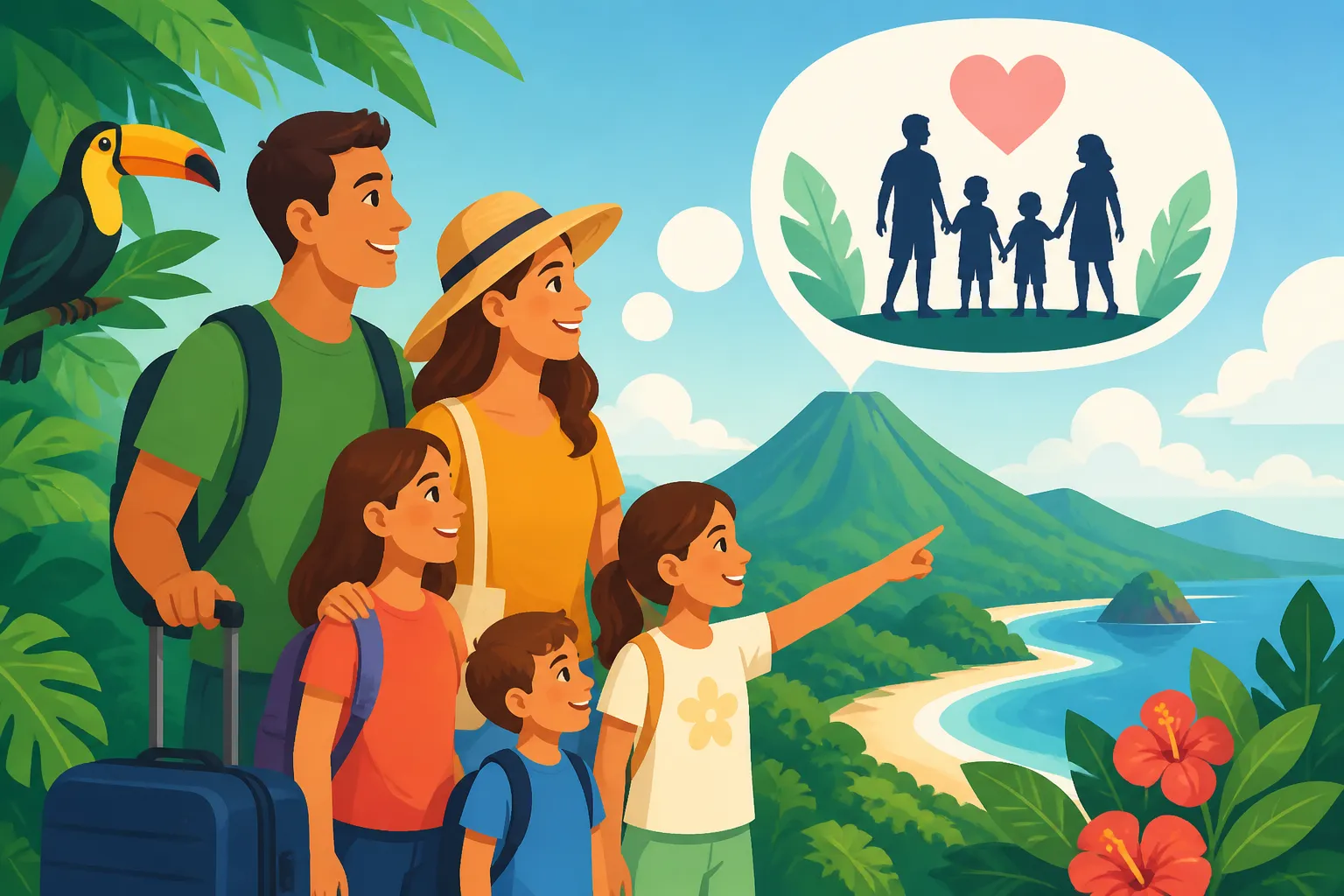
Oh, the big family move to Costa Rica! Believe me, I know that mix of excitement and sheer terror you’re feeling right now. The thought of starting anew in a beautiful place like Costa Rica is thrilling, but then the reality hits: how do you get your entire family there, legally and (relatively) smoothly? It's not just about packing bags; it's about navigating a bureaucracy that can feel like a jungle thicker than anything in Manuel Antonio. This guide is here to walk you through the nitty-gritty of bringing your loved ones, addressing common hurdles, and sharing practical advice to make your family's transition to Pura Vida as stress-free as possible.
The Good News: Family Residency is Absolutely Possible (But It's a Journey!)
Let's start with the most important reassurance: yes, you absolutely can bring your whole family to Costa Rica when you move here. The Costa Rican immigration system, known as Migración, does have provisions for family members to join a primary resident. However, it's crucial to understand that it’s usually a dependent process, meaning their ability to get residency hinges on your approved status. Think of it as a domino effect; your residency needs to be solid first, and then theirs can fall into place. It takes patience, plenty of paperwork, and an unwavering spirit, but countless families have done it successfully.
Understanding the "Family Tie" Residency (Vínculo)
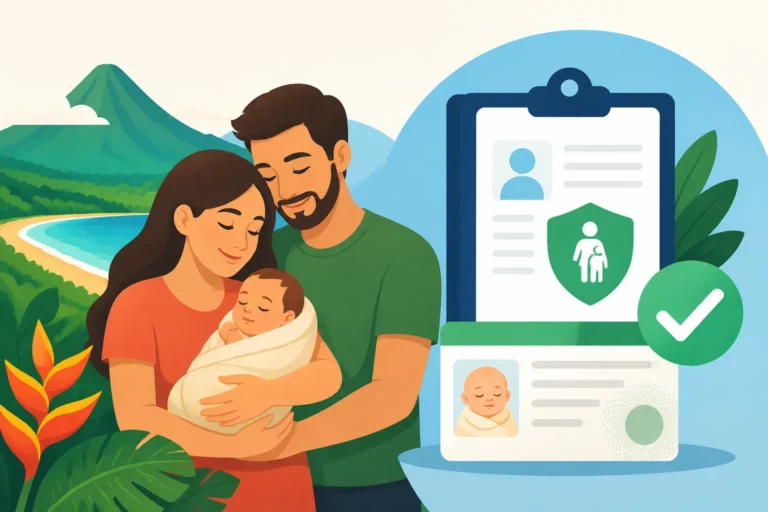
The primary mechanism for bringing family members is often through what's known as "Vínculo" or family ties. This category is specifically designed for close relatives of a primary resident. The beauty of this is that once you, as the main applicant, secure your residency – be it a Pensionado (Retiree) Residency in Costa Rica (2026), a Rentista Residency in Costa Rica (2026), or even a work permit-based residency – your immediate family can apply under your umbrella. The process is about proving your legitimate relationship to each family member you wish to bring. This means marriage certificates for spouses and birth certificates for children and, in some cases, parents. These documents are the bedrock of your application and must be meticulously prepared, usually requiring apostilles and official translations.
The primary applicant, typically the one with the direct income or investment proving their eligibility for a specific residency category, acts as the anchor. Their approved status provides the legal foundation for the rest of the family to apply. Without a valid primary residency, it becomes much more complex, if not impossible, for dependents to obtain their own status through family ties. This hierarchical structure is something many expats find a bit frustrating, as it means you often have to wait for one application to progress significantly before even starting the others, extending the overall timeline for the whole family to be legally settled.
Dependent Categories: Who Can You Bring?
Costa Rican immigration law is quite clear about who can be included as a dependent under a primary resident's application. It's generally focused on immediate family, but there are some nuances to be aware of:
- Spouse: Your legally married spouse can absolutely be included. You'll need an original, apostilled marriage certificate (or legally recognized equivalent from your home country) to prove your marital bond. It sounds simple, but ensuring your marriage certificate meets all the specific Costa Rican requirements can sometimes be a paperwork headache.
- Children: Minor children (under 18 years old) are typically straightforward to include. For adult children, the rules get a bit tighter. Generally, they can be included if they have a certified disability or if they are full-time students (usually up to age 25, though this can vary and requires proof of enrollment). This means if you have adult children who aren't disabled and aren't planning to enroll in a Costa Rican university, they might need to explore their own independent residency path, which can be a significant hurdle.
- Parents: Yes, you can even bring your parents, but there are specific conditions. They must typically be financially dependent on you, and there might be age requirements as well. Proving financial dependency can involve bank statements, affidavits, and other documentation demonstrating that you are indeed their primary means of support. This particular category often requires extensive documentation to convince Migración of the genuine dependency.
It’s truly a huge relief to know that your core family unit can journey with you. Just remember that each member’s application will require its own set of documents, translated and apostilled, adding to the overall cost and complexity. When you're gathering documents for Family Residency in Costa Rica: How to Bring Your Spouse and Children (2027), it can feel like you're collecting a library's worth of official stamps and signatures, but it's all part of the process to establish your new life here.
Navigating the Application Maze for Your Loved Ones
Getting residency in Costa Rica, even for a single person, is rarely a quick dash. When you're bringing a whole family, it becomes more of a marathon, punctuated by sprints of document gathering and long waits. Each family member’s application needs to be treated with the same meticulous attention to detail as the primary applicant's, sometimes even more so, because their eligibility is directly tied to yours. Patience isn't just a virtue here; it's a survival skill.
Essential Documents for Each Family Member
This is where the rubber meets the road, or more accurately, where the ink meets the paper. Every single member of your family, regardless of age, will require a dossier of documents. The exact list can vary slightly depending on their age and relationship to the primary applicant, but here's a general rundown of what you'll need for each dependent:
- Birth Certificates: Original, apostilled birth certificates are a must for every single family member. This is how Migración verifies their age and parentage.
- Marriage Certificates: For your spouse, an original, apostilled marriage certificate is non-negotiable. If you have any children born outside of your current marriage, or if you're a blended family, you might need additional documentation to clarify relationships.
- Criminal Record Checks: Any family member over the age of 18 will need a recent criminal record check from their country of origin and any country they've lived in for the past three years. These also need to be apostilled. Imagine collecting these for multiple adult children who might have lived in different countries – it can be quite a task!
- Passport Copies: Clear, notarized copies of every page of each family member's current passport are required.
- Passport Photos: Standard, recent passport-sized photos for everyone.
- Proof of Relationship: While birth and marriage certificates are the primary proof, sometimes Migración asks for additional evidence, especially for adult children or dependent parents, to further confirm the bona fide nature of the relationship and dependency.
- Translated Documents: Every single foreign document needs to be officially translated into Spanish by an authorized translator in Costa Rica. This is not a step you can skip or do with a simple Google Translate!
To give you a clearer picture, here’s a table outlining common documents needed:
| Document Type | For Primary Applicant | For Spouse | For Minor Children (<18) | For Adult Children (>18, Student/Disabled) | For Dependent Parents |
|---|---|---|---|---|---|
| Passport Copy | Yes | Yes | Yes | Yes | Yes |
| Birth Certificate | Yes | Yes | Yes | Yes | Yes |
| Marriage Certificate | Yes (if applicable) | Yes | N/A | N/A | N/A |
| Criminal Record Check | Yes | Yes | N/A | Yes | Yes |
| Passport Photos | Yes | Yes | Yes | Yes | Yes |
| Proof of Funds/Income | Yes | N/A | N/A | N/A | N/A |
| Proof of Dependency | N/A | N/A | N/A | Yes (e.g., school enrollment, medical) | Yes |
Remember, all foreign documents must be apostilled in your home country (or legally certified if your country isn't part of the Hague Apostille Convention) before you even get them translated. This step is a common pitfall for many, causing frustrating delays. When you're ready to submit, ensuring all your Documents and Apostille Needed for Residency in Costa Rica are in perfect order is paramount.
The Importance of a Smooth Primary Application
Your family’s journey into Costa Rican residency truly begins and largely depends on your own, the primary applicant's, successful approval. Migración needs to establish your legal right to reside in the country before they can grant derived rights to your dependents. This sequential process means that any delay in your application directly impacts the timeline for your spouse, children, and parents. I've seen firsthand how agonizing this wait can be, especially when families are separated or living in limbo while one application crawls through the system.
It's common for people to submit all family applications concurrently once the primary applicant's file is complete. However, Migración will typically process the primary application first, often issuing requests for additional information or clarification (known as "prevenciones"). Only once these are satisfied and the main residency is approved in principle will the dependent applications follow suit. This can lead to situations where you, as the primary applicant, might receive your DIMEX (residency card) while your family members are still waiting, sometimes for many more months. This isn’t to scare you, but to prepare you for the reality that the process is designed for meticulous verification, not speed. Managing expectations within your family about these potential staggered approvals is important for everyone's sanity.
The Caja Requirement for the Whole Crew
One of the cornerstones of living in Costa Rica as a resident is joining the public healthcare system, the Caja Costarricense de Seguro Social (CCSS), often simply called "La Caja." This isn't just for you; it's a mandatory requirement for every single member of your family who obtains residency. Once your residency is approved, you'll all need to affiliate with the Caja and make monthly contributions. This can sometimes come as a surprise to new expats, especially if they’ve been relying on private international insurance up to that point.
The good news is that once affiliated, your entire family has access to the comprehensive public healthcare system, which covers everything from doctor's visits and prescriptions to hospital stays and even surgeries. The cost of your monthly Caja contributions is calculated based on your declared income (for Pensionado, Rentista, Digital Nomad) or salary (if working for a Costa Rican company), and it covers your entire household listed on your residency. This means that while it's an ongoing expense, it provides peace of mind knowing your family's health needs are covered. Understanding How the Caja Requirement Connects to Your Residency in Costa Rica is crucial, as non-compliance can affect your residency status. For many, supplementing this with private insurance like Cigna Global for quicker access to specialists or private hospitals is a popular choice, especially during the initial waiting period for Caja activation or for specific needs. If you want to understand the system better, reading The Expat Guide to Joining the Caja (CCSS) in Costa Rica (2027) can be incredibly helpful.
Practicalities and Preparing Your Family for the Move
Moving your entire life, not just yourself, to a new country like Costa Rica is an undertaking of epic proportions. It’s not just about the paperwork; it's about setting up a new daily rhythm, a new support system, and preparing everyone, especially children, for significant changes. There are financial, logistical, and emotional aspects that need careful consideration to ensure a smooth transition for your whole family.
Financial Considerations for a Family Move
Let’s be real: moving a family is more expensive than moving solo. While Costa Rica can be more affordable than many Western countries, bringing a family significantly increases your monthly outlay. You’re not just accounting for your own expenses anymore.
- Increased Cost of Living: From groceries to utilities, every daily expense multiplies. If you were thinking about a quaint small home, you might now need something larger, which means higher rent or property purchase costs. The Complete Guide to Cost of Living in Costa Rica for Expats (2026) will give you a detailed breakdown, but always assume family expenses will be on the higher end.
- School Fees: Unless you opt for local public schools (which might mean a significant language barrier initially), private or international schools can be a substantial cost. These can range from a few hundred dollars to well over a thousand per child per month, not including uniforms, books, and activities.
- Healthcare Contributions: As mentioned, mandatory Caja contributions are based on income, but if you choose to supplement with private insurance, like a plan from Cigna Global, that’s an additional, often considerable, expense for each family member. It’s worth exploring your options in Health Insurance in Costa Rica: Caja, INS and International Options Explained.
- Residency Application Costs: Each family member’s application comes with government fees, attorney fees (if you use one, which is highly recommended for families), and costs for document authentication and translations. These add up quickly.
Budgeting for these multiplied costs is paramount. It’s not just about meeting the minimum income requirements for your residency; it’s about having enough discretionary income to provide a comfortable life and cover unexpected expenses for everyone in your care.
Settling In: Schools, Language, and Culture Shock
Moving is hard on adults, but for kids, it can be a whirlwind of emotions and adjustments. Preparing them for the changes ahead is key.
- Schools: This is often one of the biggest decisions for expat families. Public schools are free but are entirely in Spanish, and the curriculum and teaching styles might be different from what your children are used to. Private and international schools offer English-language instruction and often a more familiar curriculum (e.g., American, British, or IB), but they come at a significant cost. You’ll want to research Schools and Education in Costa Rica: A Complete Guide for Expat Families well in advance. Consider visiting schools during a scout trip if possible. Finding a community with good schools, like those in How to Find Family-Friendly Neighborhoods in San Jose, can make a huge difference.
- Language Barrier: While many Costa Ricans in tourist areas speak English, daily life, especially outside major expat hubs, is conducted in Spanish. Your children, particularly younger ones, might pick up Spanish quickly, but expect a period of adjustment. Learning some basic Spanish as a family before you arrive, or enrolling in immersion programs upon arrival, can ease the transition for everyone.
- Culture Shock: It’s real, and it affects everyone differently. The pace of life, the way things get done (or don’t get done as quickly), and even social norms can be a surprise. Kids might miss friends, familiar foods, or favorite activities. Create open lines of communication, validate their feelings, and actively seek out activities and communities that help them feel at home. Embrace the adventure and focus on the positive aspects of this incredible new chapter.
Moving Your Entire Household (and Pets!)
The logistical nightmare of moving an entire household across international borders is enough to make anyone reconsider. It’s a lot more than just suitcases.
- Shipping Belongings: Will you ship all your furniture, sentimental items, and household goods? Or will you arrive with essentials and buy everything new? This decision impacts your budget, timeline, and stress levels. Companies like Sirelo can help you compare international moving services, which is invaluable when coordinating a large family move. They can help you understand the customs process for personal effects, which in Costa Rica can be lengthy and complex.
- Pet Immigration: Your furry (or feathered, or scaled) family members are just as important! Bringing pets to Costa Rica requires veterinary certificates, vaccinations, and sometimes specific import permits. Start this process early, as regulations can change, and you want to ensure your beloved companions can join you without issues.
- The Initial Days: Once you land, it's not over. You'll need temporary accommodation while you search for your permanent family home, get connected with utilities, and start the enrollment process for schools. Reading The Complete Guide to Moving to Costa Rica: Your First 90 Days (2027) can help you prepare for that critical initial period. Don't underestimate the emotional toll of settling in; it’s a marathon, not a sprint. Take it one step at a time, celebrate small victories, and remember why you chose this amazing journey for your family.
Bringing your entire family to Costa Rica is a dream that many expats achieve. It requires meticulous planning, a thick skin for bureaucracy, and a whole lot of Pura Vida spirit to navigate the challenges. But the reward – a life of adventure, natural beauty, and a tight-knit family experience in a truly special country – is absolutely worth it.
Disclaimer
The information provided in this guide is for general informational purposes only and does not constitute legal, financial, or medical advice. Immigration laws, tax regulations, and healthcare policies in Costa Rica are subject to change without notice. While we strive to provide accurate and up-to-date information, readers should consult with qualified legal professionals, tax advisors, and healthcare providers in Costa Rica for advice tailored to their specific situation. Reliance on any information in this guide is solely at your own risk.