What Happens If I Overstay My Tourist Visa in Costa Rica?
Oh, the dreaded "what if" scenario when your tourist visa stamp is inching closer to its expiration date, or worse, you've realized it's already passed! It’s a situation that brings a cold sweat to many expats and long-term visitors in Costa Rica, and believe me, you're not alone in feeling that anxiety. This guide is here to pull back the curtain on exactly what happens if you overstay your tourist visa in Costa Rica, detailing the fines, the consequences, and how to navigate this tricky situation, all from the perspective of someone who’s seen it all.
The Slippery Slope of Overstaying Your Welcome
Let's face it, life in Costa Rica has a way of making time fly. One minute you're landing, dazzled by the pura vida charm, and the next you realize your 90 days are almost up. The standard tourist visa, for most nationalities, grants you a 90-day stay. This isn't a suggestion; it's a strict legal limit. And missing it, even by a day, can plunge you into a bureaucratic nightmare that's far from the relaxed vibe you came for.
The Standard Tourist Visa and Its Limits
When you first arrive at Juan Santamaría International Airport (SJO) or Daniel Oduber Quirós International Airport (LIR), or even via a land border crossing, your passport will receive a stamp. That stamp is your golden ticket, and crucially, it indicates the exact date your authorized stay expires. For the vast majority of visitors from countries like the United States, Canada, and most of Europe, this is typically 90 days. But here's the kicker: it’s not always 90 days! Immigration officers at their discretion can grant less, sometimes 30 or 60 days, especially if you arrive with a one-way ticket or appear to have no solid departure plan. This is why you simply must check that stamp as soon as you get it. Do not assume you automatically get 90 days.
I’ve heard countless stories, truly, of people who simply miscalculated or, perhaps more commonly, misplaced their passport for a few weeks and forgot to double-check. There are also the unfortunate cases: an unexpected illness that required prolonged recovery, a delayed flight that pushed a departure past the deadline, or simply, plain old forgetfulness in the midst of adjusting to life here. While these circumstances might be perfectly valid human experiences, unfortunately, for the Dirección General de Migración y Extranjería (DGME), often referred to simply as Migración, they don't always constitute a valid legal excuse for overstaying. The law is the law, and "ignorance is not an excuse," as they say. This is a common pitfall that makes understanding how long you can stay in Costa Rica on a tourist visa crucial for every visitor.
The Fines: It's Not Just a Slap on the Wrist
So, you've overstayed. What's the immediate financial impact? Costa Rica imposes a daily fine for every day you remain in the country beyond your authorized tourist stamp. As of 2024, the penalty for overstaying a tourist visa is generally set at $100 USD per month or any fraction of a month of overstay. Yes, you read that right: even if you overstay by just one day into a new month, you're looking at the full $100 for that partial month.
Let's play out a scenario: Imagine your visa expires on October 1st. If you depart on October 15th, you've overstayed by 15 days, which falls into the "fraction of a month" category for October. That means you'll be charged $100. If you leave on November 15th, you've overstayed all of October (one full month) and 15 days of November (a fraction of a month). That would be $100 for October + $100 for November, totaling $200. This fine is mandatory and must be paid before you are allowed to leave the country.
Where do you pay this multa (fine)? Typically, it's paid at the immigration counter right at the airport when you're exiting. They have a system, they'll see your overstay immediately when they scan your passport, and they'll direct you to a nearby window or office to make the payment. You'll need cash (USD or Colones) or, in some cases, a credit card, though cash is always safest to ensure there are no payment processing hiccups delaying your departure. Don't expect to argue your way out of it; the immigration officers are simply enforcing the law. It's a rather unpleasant surprise right before you board your flight home, I can tell you.
Beyond the Fines: The Deeper Repercussions
Paying a fine is one thing, but the implications of overstaying can stretch much further than just a few hundred dollars. These deeper repercussions can affect your ability to return to Costa Rica in the future and complicate any long-term plans you might have.
Entry Bans and Future Travel to Costa Rica
This is where things can get truly serious. While simply paying the fine and departing might seem like the end of it, an overstay is a black mark on your immigration record. Migración officials do keep records, and if you have a history of overstaying, it could lead to complications when you try to re-enter Costa Rica, even as a tourist. In some cases, depending on the length of the overstay or the discretion of the immigration officer at the point of re-entry, you could be denied entry outright, or given a much shorter stamp (e.g., 30 days instead of 90) with a stern warning.
More severely, repeated overstays or particularly long ones could result in an explicit entry ban for a certain period. This means you would be formally prohibited from entering Costa Rica for several months or even years. Imagine planning a dream vacation or a return visit to see friends, only to be turned away at the border because of a past oversight. It's a real possibility, and it's devastating. The digital record system implemented by Migración means that every entry and exit, and every infraction, is logged and easily accessible. The days of flying under the radar are long gone. This is why understanding the 180-day tourist stay and its limits in Costa Rica is paramount, even if you’re just visiting for a short period.
Complications for Residency Applications
Now, if your plan was to eventually move to Costa Rica and apply for residency, an overstaying incident can throw a massive wrench into your plans. Migración is, understandably, very particular about who they grant long-term residency to. An applicant with a history of violating the country's immigration laws is not seen favorably. Even if you paid your fine upon departure, that overstay is still noted on your record.
When you apply for residency through routes like the Pensionado (Retiree) Residency in Costa Rica or the [Rentista Residency in Costa Rica], Migración conducts thorough background checks. They look at your adherence to past visa requirements. An overstay can flag your application for additional scrutiny, cause significant delays, or even lead to an outright denial. You might be asked to provide detailed explanations and demonstrate extraordinary circumstances for your overstay, which can be a difficult burden to prove after the fact. It's an unnecessary hurdle that can easily be avoided with careful planning and vigilance. Furthermore, if you're trying to move to Costa Rica legally from abroad, having a clean immigration record makes the entire process smoother.
Navigating an Overstay Situation
Okay, so you've found yourself in this predicament. Don't panic, but do act. There are ways to navigate this, and while it might not be pleasant, being informed and prepared is your best defense.
Proactive Steps If You Realize You've Overstayed
The moment you realize you've overstayed, or are about to, take action. The best approach is to deal with it before you're at the airport. You can try contacting the Dirección General de Migración y Extranjería (DGME) directly. While their phone lines can be notoriously difficult to get through to, visiting one of their regional offices might be an option if you are near one, particularly their main office in La Uruca, San José. Explain your situation, inquire about the exact fine amount, and see if there's a way to pay it in advance. This shows good faith and might smooth the exit process at the airport.
However, for many expats, dealing with Costa Rican bureaucracy in Spanish can be daunting. In such cases, seeking legal advice from an immigration attorney specializing in expat affairs is highly recommended. They can guide you through the process, confirm the exact fine, and sometimes even facilitate payment or communication with Migración on your behalf, potentially easing the stress of your departure. They can also advise on how such an incident might affect future residency applications, such as trying to get your DIMEX residency card in Costa Rica.
What to Expect at the Airport
If you haven't proactively dealt with the overstay, then the airport exit process will be where you confront it head-on.
- Immigration Counter: As you approach the immigration counter to get your exit stamp, the officer will scan your passport. Their system will immediately flag the overstay.
- The Announcement: They will inform you that you have overstayed your visa and that a fine is due. This is usually done calmly but firmly.
- Payment Instructions: You will be directed to a separate payment window or office, usually nearby within the airport. You'll need to go there, pay the assessed fine (cash is always recommended for smooth transactions), and get a receipt.
- Return to Counter: With your payment receipt in hand, you'll return to the immigration officer. They will then process your exit stamp.
- Potential Questions/Warnings: Depending on the officer and the length of your overstay, you might be asked why you overstayed. They might issue a verbal warning about future entries or stamp your passport with a note.
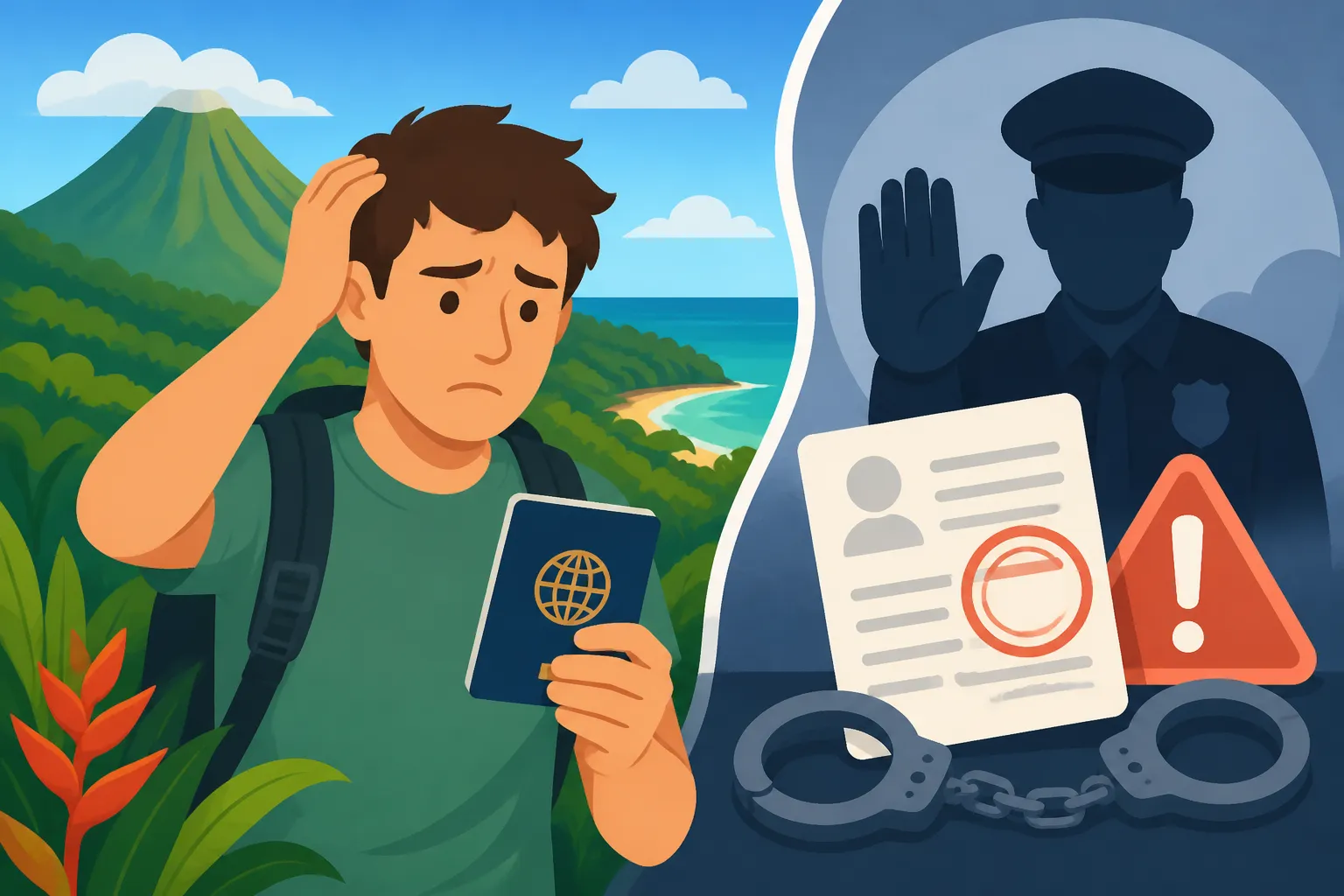
The atmosphere can be tense, and it can certainly be an embarrassing experience. While you won't be arrested or detained for a simple overstay and fine payment, it's not a pleasant way to end your time in Costa Rica.
Avoiding an Overstay in the First Place
Prevention is always better than cure, especially when it comes to immigration matters.
- Check Your Stamp Immediately: As soon as you clear immigration upon arrival, open your passport and look at that entry stamp. Circle the expiry date on your calendar, or better yet, set a reminder on your phone.
- Know the Rules: Be aware of the standard 90-day rule for your nationality, but never assume. Always confirm the date on your stamp.
- Plan Your Exit or Residency Application: If you intend to stay longer than your initial tourist visa allows, you must plan either a timely "visa run" or initiate your residency application well in advance. For example, understanding the requirements for the Costa Rica Digital Nomad Visa could provide a legal path to a longer stay without running afoul of immigration rules.
- Set Reminders: Multiple reminders, ideally a month out, two weeks out, and a week out, can save you a lot of grief.
- Consider a Visa Run: A common strategy for many long-term visitors is the "visa run," which involves exiting Costa Rica (often to Panama or Nicaragua) for at least 72 hours, then re-entering to get a fresh tourist stamp. However, this method is not a guarantee of a new 90-day stamp, and repeated visa runs can also draw unwanted attention from immigration. Make sure you understand how to do a visa run from Costa Rica if this is your chosen path.
Dealing with Health and Logistics While Overstaying
Overstaying isn't just about fines and future travel; it also impacts your daily life and access to essential services within Costa Rica.
Accessing Healthcare During an Overstay
This is a critical area where being undocumented can really bite you. While Costa Rica's public healthcare system, the Caja Costarricense de Seguro Social (CCSS) or "Caja," is accessible to legal residents, it's generally not for tourists, and certainly not for overstayers. If you experience a medical emergency while overstaying, you will still receive treatment in both public and private hospitals, as saving lives is paramount. However, you will be expected to pay upfront for services in private facilities, and public hospitals will also eventually bill you for their services.
The real problem arises with routine care or if you have international health insurance like Cigna Global. Most international health insurance policies require you to be legally present in the country to validate claims. If you're an overstayer, your insurance provider might deny coverage, citing a violation of the terms and conditions related to legal residence. This means any doctor's visits, prescription medications, or planned procedures could come entirely out of your pocket, potentially at significantly higher rates than if you had valid insurance or residency. Remember, even with excellent insurance, it often only covers you when you are compliant with local laws. This makes understanding emergency medical care in Costa Rica what every expat needs to know even more crucial if you are out of status.
Practical Challenges of Living Undocumented
Life as an undocumented overstayer in Costa Rica presents numerous practical hurdles that can quickly erode any sense of pura vida.
- Banking: It's incredibly difficult, if not impossible, to open a new bank account or even maintain an existing one once your legal status expires. Banks require valid identification, which for foreigners usually means a current visa or residency card (DIMEX).
- Driving: While you can drive on your foreign license for the duration of your valid tourist visa, once that expires, so does your legal right to drive. If you're stopped by transit police, you could face hefty fines, vehicle impoundment, and severe complications. You certainly can't get a Costa Rican driver's license without legal residency.
- Renting: While some landlords might be lax, many legitimate rental agreements require proof of legal status. Renewing a lease or finding a new place becomes much harder, leaving you vulnerable to less scrupulous landlords or precarious living situations.
- Employment: It is illegal to work in Costa Rica on a tourist visa, and this applies even more so if you're an overstayer. This leaves you reliant on undeclared income or depleting savings, adding financial stress to an already uncertain situation.
- Psychological Toll: Perhaps the biggest, yet least talked about, challenge is the psychological toll. Living in constant fear of being caught, restricted in your movements, and unable to fully participate in society creates immense stress and anxiety. It completely undermines the joy and freedom that draws many to Costa Rica in the first place.
Here's a quick summary of the consequences of overstaying your tourist visa:
| Consequence | Description | Severity |
|---|---|---|
| Monetary Fine | $100 USD per month or fraction of a month overstayed, payable upon departure at the airport or immigration office. | Moderate |
| Entry Ban/Denial | Possible denial of future entry or shorter visa stamps upon re-entry, especially for repeated or lengthy overstays. Can lead to formal, temporary bans. | High |
| Residency Application Issues | Overstaying is a "black mark" on your immigration record, potentially causing delays, additional scrutiny, or outright denial of future residency applications (e.g., Pensionado, Rentista, Digital Nomad). | High |
| Healthcare Access Issues | International health insurance may be invalidated; routine medical care becomes cash-only and potentially more expensive. Emergency care remains available, but billing can be complicated. | High |
| Logistical Difficulties | Inability to legally drive, open/maintain bank accounts, secure legitimate housing, or work. Daily life becomes significantly more challenging and precarious. | High |
| Psychological Stress | Constant fear of being caught, limited freedom, and living in uncertainty can lead to significant mental and emotional strain. | High |
For those looking to make a permanent move, remember that companies like Sirelo can assist with the logistics of moving your belongings, but they cannot help you navigate immigration laws. That part is entirely up to you and your due diligence.
The message here is clear: while Costa Rica is welcoming, it also expects visitors to respect its laws. Being diligent about your visa status will save you a world of trouble and ensure your pura vida experience remains truly pure.
Disclaimer
The information provided in this article is intended for general informational purposes only and does not constitute legal advice. Immigration laws and regulations in Costa Rica are subject to change. It is strongly recommended to consult with the Dirección General de Migración y Extranjería (DGME) or a qualified Costa Rican immigration attorney for the most accurate and up-to-date information regarding your specific situation.