Can I Change from a Tourist Visa to a Work-Eligible Residency in Costa Rica?
Oh, the age-old question that many of us expats have pondered, often with a mix of hope and sheer confusion: "Can I just transition from being a tourist to a fully legal worker here in Costa Rica?" It's a tempting thought, especially when you fall head over heels for this beautiful country. But let me tell you, navigating the Costa Rican immigration system is rarely as straightforward as we wish it would be. This guide will meticulously break down the realities, the pathways, and the essential steps to change your status from a casual visitor to a work-eligible resident, validating the real frustrations you’re likely to encounter along the way.
The Tourist Visa Trap: Why Direct Conversion is Tricky (or Impossible)
Let's be brutally honest from the get-go: Costa Rica's immigration laws aren't designed to allow a seamless hop from a tourist visa straight into a work permit without some serious hoops to jump through. I've seen countless hopeful expats arrive, fall in love, and then hit a brick wall when they realize their tourist status is, well, just that – for tourism. It's frustrating, I know, but understanding this fundamental difference is your first step to success.
The Fundamental Difference: Tourist vs. Resident Intent
The core issue here is intent. When you enter Costa Rica on a tourist visa, or simply as a tourist from a visa-exempt country, you are stating, implicitly or explicitly, that your purpose is temporary. You're here to vacation, explore, relax, and then leave. The immigration authorities (Dirección General de Migración y Extranjería, or DGME) take this very seriously. A tourist is not here to live, work, or establish long-term roots.
This is why the process often feels like it's fighting against your natural desire to stay. You're trying to pivot from a temporary visitor status to a permanent, contributing resident, and the system isn't built for that kind of agile change within its borders without specific, pre-defined pathways. Many expats resort to the infamous "visa run," where they leave the country for a few days, typically to Panama or Nicaragua, and then re-enter for another 90 days. While this might extend your stay, it explicitly reinforces your status as a tourist and does nothing to advance your legal residency or work eligibility. In fact, relying too heavily on visa runs can sometimes raise red flags with immigration, making future residency applications even more scrutinized.
The "Leaving the Country" Requirement
For the vast majority of residency categories that would eventually grant you work eligibility, the application process historically required you to be outside Costa Rica at the time of initial application. This is a massive point of confusion and a source of immense frustration for many. You might be happily settled in a rental, trying to build a new life, only to find out you need to pack a bag, cross a border, and submit your paperwork from a different country.
Why is this the case? It largely goes back to the intent. If you're applying for residency, you're signaling a long-term commitment, and the government prefers that you initiate that formal process from outside, or through specific channels, rather than as an "overstaying" tourist. There are, of course, exceptions. For example, if you marry a Costa Rican citizen, you generally can apply for residency from within the country. Similarly, if you have a child born in Costa Rica, that can open a pathway. But these are specific "family ties" scenarios, not general work-eligible paths for someone simply wanting to find a job.
Even for categories that allow you to start the application process in Costa Rica (like the newer Digital Nomad visa, which we'll discuss), there's often still a requirement to leave the country for the final stamping of your DIMEX (residency card). It’s a bit of a bureaucratic dance, but it's a critical aspect to understand from the outset.
Navigating Work-Eligible Residency Routes from Tourist Status
So, if you can't just wave a magic wand and become a working resident while sipping a cafecito on your tourist visa, what are your actual options? The good news is, there are legitimate pathways. They just require planning, patience, and often a temporary exit from paradise.
The "Leaving and Applying" Strategy
This is the traditional and most common route for many aspiring expats who don't have immediate family ties in Costa Rica. It involves making a deliberate decision to pursue residency, gathering all your documents while in Costa Rica, then strategically leaving the country to submit your application.
Here's how it generally works:
- Identify Your Residency Category: First, you need to figure out which residency category you qualify for. The most common ones that can lead to work eligibility (either directly or through self-employment) are Rentista (income-based), Pensionado (retiree), or Inversionista (investor). While Pensionado doesn't directly grant a work permit, it allows for self-employment.
- For those considering an income-based route, understanding the specific requirements is key. You can find detailed information on How to Apply for Rentista Residency in Costa Rica, which outlines the fixed deposit or consistent income requirements.
- If you're thinking about investing, The Inversionista (Investor) Residency in Costa Rica: A Complete Guide (2027) offers a deep dive into the investment thresholds and processes.
- Gather Your Documents: This is where the real legwork begins. Birth certificates, marriage certificates (if applicable), police background checks from your home country and any country you've lived in for the past three years, a copy of your entire passport, and proof of funds or pension. Every single non-Spanish document must be apostilled in your home country (or legalized by a Costa Rican consulate if your country isn't part of the Hague Apostille Convention) and then officially translated into Spanish by a Costa Rican certified translator. This part is critical and time-consuming, so start early!
- Leave Costa Rica: Once your documents are ready, you typically need to leave Costa Rica to formally submit your application. This can be done via a Costa Rican consulate in your home country or in a neighboring country (though applying from a consulate in your country of origin is generally preferred and often smoother). The idea is that your residency application is initiated from outside the country where you wish to reside long-term.
- The Waiting Game: After submission, you enter the notoriously long waiting period. Residency applications can take anywhere from a few months to two years, or even more, depending on the category, the completeness of your documents, and the current backlog at DGME. During this time, you usually cannot legally work in Costa Rica. This is a critical financial consideration. Many choose to use this time to travel or stay in their home country, though some choose to re-enter Costa Rica as a tourist and continue with visa runs, understanding the risks.
Special Cases: Digital Nomad Visa and Family Ties
Thankfully, the Costa Rican government has recognized the changing global landscape and introduced some more flexible options.
The Digital Nomad Visa
This is a game-changer for many. Introduced in 2022, The Complete Guide to the Costa Rica Digital Nomad Visa (2027) specifically targets individuals who work remotely for companies or clients outside Costa Rica. What makes it special is that you can apply for this visa from within Costa Rica, provided you meet the stringent requirements.
The key criteria for the Digital Nomad Visa include:
- Income: Demonstrating a stable monthly income of at least $3,000 USD (or $4,000 USD if applying with dependents) from foreign sources for the past 12 months. This is a crucial aspect, and you'll want to thoroughly understand Understanding the Income Requirements for the Digital Nomad Visa.
- Health Insurance: You'll need to provide proof of international health insurance that covers you for the duration of your stay in Costa Rica. Many expats opt for reputable international providers like Cigna Global for comprehensive coverage before they are eligible for the national public health system (Caja).
- Remote Work: Your work must be performed remotely for a company or clients outside Costa Rica. You cannot work for a Costa Rican entity.
While you can apply from within Costa Rica, if approved, you will eventually receive a provisional resolution. To get your actual DIMEX card, you may still be required to exit and re-enter the country, and then visit the DGME offices to finalize your status. This visa allows you to stay for one year, renewable for a second, and while it doesn't grant you a traditional "work permit" for local employment, it legitimizes your remote work activity and lengthy stay in Costa Rica.
Residency Through Family Ties
If you have a direct family connection to a Costa Rican citizen or a legal resident, your path is significantly different and often smoother.
- Marriage: Marrying a Costa Rican citizen is one of the most direct ways to gain residency and eventually work authorization. You can generally initiate this application from within Costa Rica. The process involves registering your marriage with the Civil Registry and then applying for "Vínculo" (family bond) residency.
- Children: If you have a child born in Costa Rica, you, as the parent, can apply for residency based on this family tie. This is another pathway that allows for in-country application and typically comes with work authorization. This is covered in more detail in guides like Family Residency in Costa Rica: How to Bring Your Spouse and Children.
These family-based residencies acknowledge your immediate connection to the country's population, which streamlines the process compared to economic-based categories.
The Reality of Gaining Work Authorization as an Expat
Let's talk about the brass tacks: actually getting permission to work in Costa Rica. This is often where expectations clash with the intricate realities of local labor laws.
Direct Employment Sponsorship: A High Hurdle
If your dream is to move to Costa Rica and simply find a job with a local company as a foreign employee, you're looking at an uphill battle. Costa Rican labor law is highly protective of its national workforce. For an employer to hire a foreigner, they usually have to prove that:
- No qualified Costa Rican citizen or legal resident is available for the position.
- The foreigner possesses specialized skills or knowledge that are critically needed and scarce locally.
This typically means going through a rigorous and often lengthy process with the Ministry of Labor (Ministerio de Trabajo y Seguridad Social, MTSS). For most general positions, this is simply not feasible or worth the employer's effort. You can delve deeper into the legal framework for foreigners seeking employment in The Complete Guide to Working in Costa Rica as a Foreigner (2027). This type of direct employment work permit is typically tied to a specific job and employer, and changing jobs would require a new application process.
Therefore, you'll rarely find a job advertised locally that explicitly offers to "sponsor" a work visa for an expat who isn't already a resident. Most foreign hires are either for very specialized roles within multinational corporations, or they are expats who have already secured their own residency that permits work. For an understanding of how to obtain formal work permission once residency is granted, consult How to Get Permission to Work as a Resident in Costa Rica.
Self-Employment and Business Ownership: The More Common Path
For many expats, the most viable and common route to "working" in Costa Rica is through self-employment or by starting their own business. Once you secure a residency type that allows for economic activity (like Rentista, Inversionista, or even Pensionado if you declare yourself an independent professional), you can then register as self-employed.
This path requires:
- Residency: First and foremost, you need legal residency that permits income-generating activities.
- Registration with Hacienda: This is the Costa Rican tax authority. You'll need to register as a taxpayer (if you haven't already through your residency process) and get your tax ID (NITE or TIN). This is where you declare your economic activity.
- Affiliation with the Caja: The Caja Costarricense de Seguro Social (CCSS) is the public health and pension system. As a self-employed individual, you are legally obligated to affiliate and pay monthly contributions. This not only fulfills a legal requirement but also provides you with access to the national healthcare system. Getting affiliated is crucial and often confusing, so a guide like How to Register as Self-Employed with the Caja and Hacienda in Costa Rica can be incredibly helpful.
- Business Structure: Depending on your business, you might operate as a sole proprietor (persona física con actividad lucrativa) or form a company (like a Sociedad Anónima or SRL).
This approach empowers you to create your own income stream without relying on a Costa Rican employer to sponsor you, which aligns much better with the realities of the immigration system. Many find this route more flexible and rewarding. For a comprehensive look at setting up your own venture, read Self-Employment in Costa Rica: Registering a Business and Going Independent (2027). For those needing assistance with the complex logistics of moving their lives to start a business or new chapter, services like Sirelo can be invaluable for comparing international moving companies and planning the move.
The Health Insurance Requirement
Regardless of your path to residency, one constant hurdle (and a very important one!) is health insurance. For virtually all residency types, you are required to demonstrate comprehensive health coverage.
- Public System (Caja): Once your residency is approved and you receive your DIMEX card, you will be required to affiliate with the Caja Costarricense de Seguro Social (CCSS). Your monthly contributions, usually calculated as a percentage of your declared income, cover you and your dependents for public healthcare services and a portion of your pension. This is a mandatory step for maintaining your legal residency. A detailed guide on The Expat Guide to Joining the Caja (CCSS) in Costa Rica (2027) can walk you through this process.
- Private/International Insurance: Before your Caja affiliation is complete, or if your residency category specifically allows it (like the Digital Nomad Visa), you might need private or international health insurance. Many expats opt for robust international plans, such as those offered by Cigna Global, especially during the initial transition period or if they prefer access to private hospitals. It’s vital to ensure your policy meets Costa Rica's requirements. You can compare options and understand the nuances in Health Insurance in Costa Rica: Caja, INS and International Options Explained.
Understanding this requirement early will save you headaches down the road, as it's a non-negotiable part of the residency process.
Practical Steps and Avoiding Pitfalls
Moving from tourist to work-eligible resident is a marathon, not a sprint. Here are some practical steps to keep in mind to make your journey smoother, and to avoid common pitfalls.
Consult Legal Expertise
This cannot be stressed enough: hire a reputable immigration lawyer in Costa Rica. The legal landscape is complex, bureaucratic, and constantly evolving. Trying to navigate it on your own is like trying to cross a jungle without a guide – you might get through, but you’ll likely get lost, bitten, and take twice as long. A good lawyer will:
- Assess your eligibility for various residency categories.
- Guide you through the document gathering process, ensuring everything is correctly apostilled and translated.
- Liaise with DGME (Migración) on your behalf.
- Keep you informed of any changes in law or procedure.
- Help you avoid common mistakes that lead to delays or rejections.
Don't skimp on this. It's an investment that can save you significant time, money, and stress in the long run.
Document Preparation is Paramount
I've seen so many cases get delayed because of incorrect or incomplete documents. "Pura Vida" bureaucracy can be legendary for its meticulous demands. Be prepared for every single document to be scrutinized.
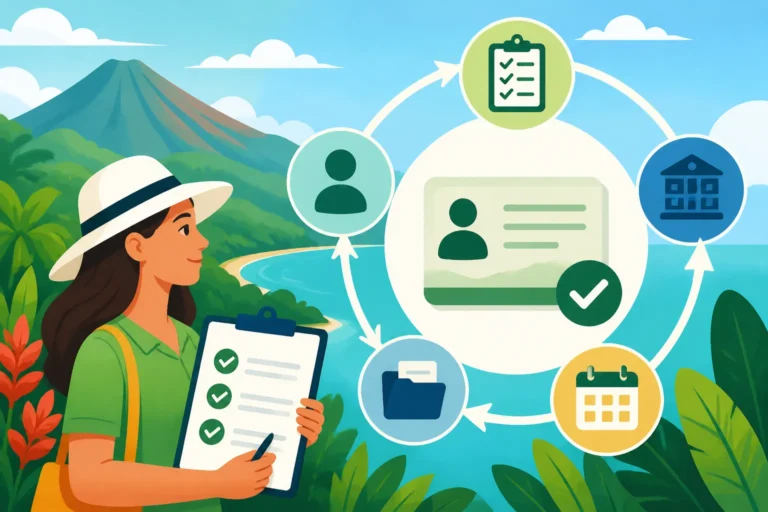
Here's a quick checklist of commonly required documents, though your lawyer will provide the definitive list for your specific situation:
| Document Type | Requirement | Notes |
|---|---|---|
| Passport | Full copy of all pages, valid for at least six months. | Must be clear and readable. |
| Birth Certificate | Original, apostilled/legalized, and officially translated into Spanish. | For main applicant and all dependents. |
| Marriage Certificate | Original, apostilled/legalized, and officially translated into Spanish (if applicable). | For spouses applying together. |
| Police Background Check | From your country of origin and any country lived in for the past 3 years. | Original, apostilled/legalized, translated. Must be recent (usually <6 months old). |
| Proof of Income/Funds | Bank statements, pension letters, investment certificates. | Specific amounts and duration depend on residency category. Must be translated. |
| Fingerprints | Taken in Costa Rica, usually after initial application submission. | Organized by your lawyer. |
| Passport-Sized Photos | Recent, specific dimensions may apply. | Usually required for the application. |
| Registration with Local Consulate | Proof of registration with your country's embassy/consulate in Costa Rica. | May be required for some categories. |
Financial Planning
Moving to Costa Rica and establishing residency, especially without immediate work authorization, requires a solid financial cushion. Factor in:
- Legal Fees: These can range from a few thousand dollars upwards, depending on the complexity of your case and the lawyer's experience.
- Application Fees: Fees paid directly to the Costa Rican government for processing your residency.
- Document Costs: Fees for apostilles, translations, and obtaining original certificates.
- Travel Costs: If you need to leave and re-enter the country, factor in flights and accommodation.
- Living Expenses: You might be living in Costa Rica for many months without legal work. Ensure you have enough savings to cover your cost of living, including rent, food, utilities, and transportation.
For a comprehensive overview of the entire residency process and its costs, consider reading The Complete Guide to Costa Rica Residency for Expats (2027). Planning your move thoroughly, perhaps using resources like Sirelo to compare logistics and costs for shipping belongings, can make a huge difference in reducing unexpected expenses.
Remember, patience is not just a virtue in Costa Rica; it's a necessity. The process is slow, but with the right preparation and expert guidance, changing your status from a tourist to a work-eligible resident is absolutely achievable.
Disclaimer
The information provided in this guide is for general informational purposes only and does not constitute legal, financial, or immigration advice. Immigration laws and procedures in Costa Rica are subject to change without notice. It is essential to consult with a qualified Costa Rican immigration attorney or legal professional for advice tailored to your specific situation. We do not endorse any specific brand or service mentioned, and readers should conduct their own due diligence.