Can I Study in Costa Rica on a Tourist Visa?
It’s a common dream, isn't it? You envision yourself living the Pura Vida lifestyle, surrounded by lush rainforests and friendly locals, all while finally mastering Spanish or even pursuing a degree. Many expats and aspiring students arrive in Costa Rica on a standard tourist visa, hoping to seamlessly transition into a student role. However, the reality of Costa Rican immigration law is often quite different from the dream, and trying to formally study on a tourist visa can quickly lead to frustration and legal headaches. This guide will walk you through what's truly possible, what's not, and the proper pathways for legitimate study here in paradise.
The Blunt Truth: Formal Study on a Tourist Visa is a No-Go
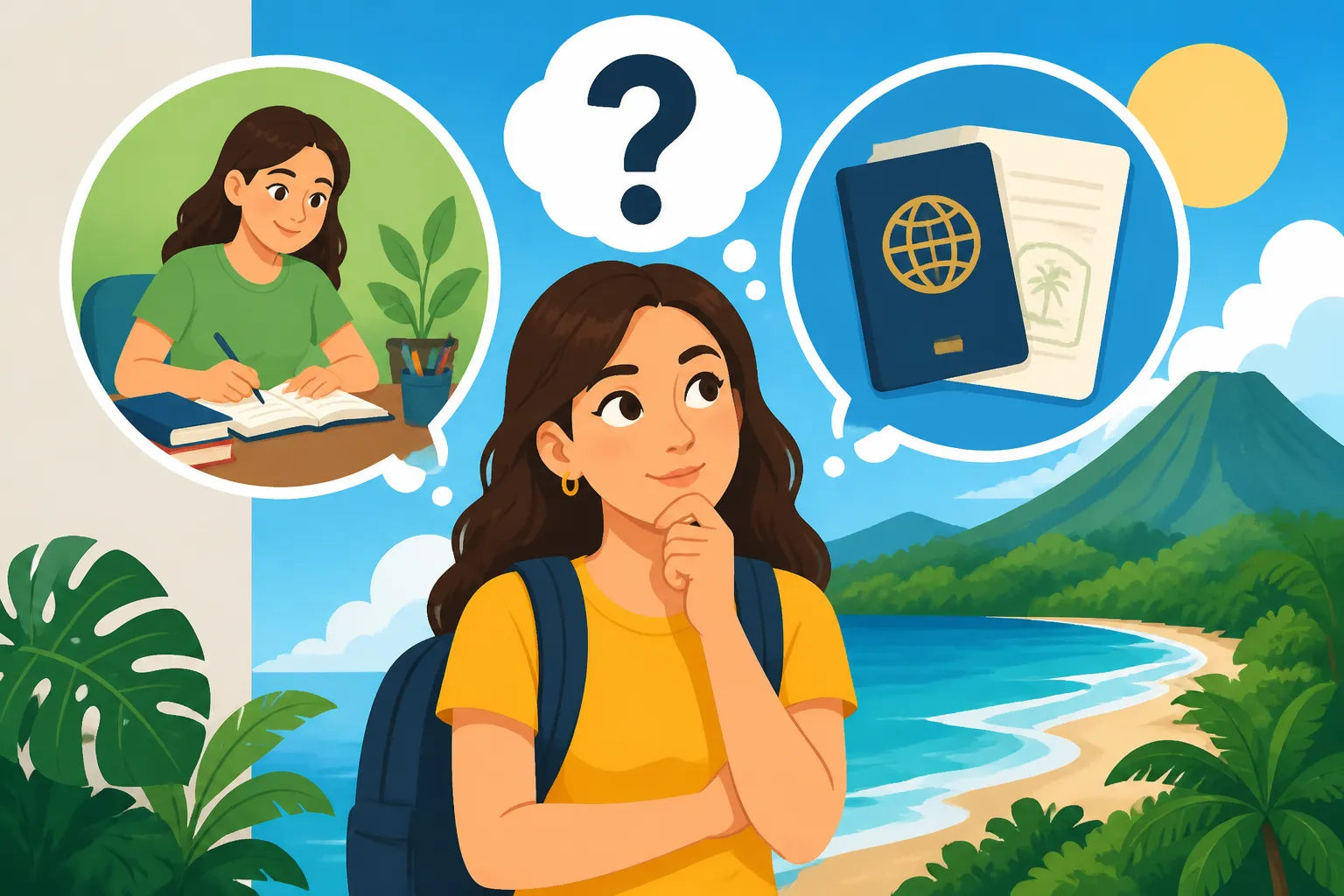
Let's cut right to it, because it’s important to manage expectations from the very beginning: if your goal is to enroll in a university, a technical institute, or any other long-term, accredited academic program that leads to a degree or formal qualification in Costa Rica, doing so on a tourist visa is simply not permitted. Your tourist entry stamp, which most nationalities receive upon arrival for 90 or 180 days, is strictly for tourism. It's designed for vacationing, exploring, visiting friends or family, and enjoying the country's natural beauty. It explicitly does not grant you the right to reside, work, or undertake formal academic studies that aim for a recognized credential within the Costa Rican education system.
This isn't just a minor bureaucratic hurdle; it’s a fundamental principle of immigration law. The intent of your entry matters deeply to the Dirección General de Migración y Extranjería (DGME). If you enter as a tourist but immediately try to enroll in a degree program, you’re essentially misrepresenting your purpose for being in the country. Universities and accredited institutions are very aware of these rules and will typically require proof of proper student visa status before allowing you to register for official courses. They won't risk their own accreditation or face penalties for enrolling someone illegally.
Trying to bypass these rules or hoping "no one will notice" can have severe consequences. You might be denied enrollment, lose any tuition fees paid, or even face fines, deportation, and a ban from re-entering Costa Rica if Migración determines you've violated the terms of your tourist stay. It's a frustrating reality for many who come here with good intentions, but understanding this distinction upfront can save you a lot of grief down the road.
What You Can Do: Short-Term Learning and Cultural Immersion
Now, don't despair! While formal degree programs are off-limits for tourists, Costa Rica is incredibly welcoming to those who want to engage in short-term learning, cultural activities, and personal enrichment. The key difference lies in the nature and duration of the program, and whether it’s recognized as part of a formal academic system or is simply a recreational or cultural experience.
The most popular and perfectly legitimate way to "study" on a tourist visa is to enroll in a Spanish language school. These are abundant throughout the country, from bustling San José to tranquil beach towns. Programs can range from a week to several months, and they are generally considered cultural immersion rather than formal academic study that leads to a degree. You attend classes, practice your Spanish, and often participate in cultural excursions, all while your primary status remains that of a tourist. You won't be earning a degree, but you'll be gaining invaluable language skills and cultural understanding. In fact, many people intentionally plan their visits around these intensive courses. If improving your Spanish is a priority, you'll find an array of options, and a good starting point for your research could be our guide on Learning Spanish in Costa Rica: A Complete Guide for Expats.
Beyond language, there are countless workshops, retreats, and short courses that are entirely permissible for tourists. Imagine joining a week-long yoga retreat in the mountains of Monteverde, a cooking class to master traditional Costa Rican cuisine, a surf camp on the Pacific coast, or an ecological workshop focused on local biodiversity. These activities are designed for visitors, enhance your tourist experience, and do not imply an intent to reside or gain official academic credentials. They are recreational, educational, and perfectly aligned with the spirit of a tourist visa. Many people integrate these enriching experiences into their broader travel plans.
Another common activity for tourists is short-term volunteering. Many expats and travelers choose to give back by volunteering with conservation projects, animal rescue centers, or community initiatives. Provided these opportunities are genuinely unpaid and short-term (typically a few weeks to a couple of months), they are generally accepted as part of a tourist's experience. The crucial element here is that the primary purpose of your stay must remain tourism, and you should not be receiving any form of payment or benefit beyond basic accommodation or meals. Always ensure that the organization you volunteer with is reputable and understands the nuances of immigration rules for foreign volunteers.
The Proper Channels: Pathways for Legitimate Study in Costa Rica
If your aspirations involve a formal degree, vocational certificate, or a long-term academic program at a recognized Costa Rican institution, then you absolutely must pursue the appropriate legal pathway. This means applying for a specific student visa or ensuring your chosen residency category permits study. It requires patience, meticulous documentation, and understanding the local bureaucracy.
The primary route for formal study is obtaining a student visa, which is a type of temporary residency. This process begins long before you even set foot in Costa Rica (or, ideally, shortly after you arrive as a tourist, but before your tourist status expires, and always with the intent to change your status). First and foremost, you need to be accepted by an accredited educational institution in Costa Rica. This could be a public university like the University of Costa Rica (UCR) or the National University (UNA), or a private university. Once you have your official acceptance letter, you can begin the arduous process of applying for your student visa through the Dirección General de Migración y Extranjería (DGME).
The documentation required for a student visa is extensive and typical for any residency application. You’ll need:
- Official acceptance letter from a recognized Costa Rican educational institution.
- Proof of financial solvency to demonstrate you can support yourself without working illegally. This might include bank statements, a letter from a sponsor, or proof of scholarship.
- Criminal background checks from your home country and any country you've lived in for the past three years, all properly apostilled or legalized.
- Original birth certificate, also apostilled or legalized.
- Marriage certificate if applicable (also apostilled/legalized).
- Photocopies of your passport, and passport photos.
- Enrollment in the Caja Costarricense de Seguro Social (CCSS), the public health system, once your residency is approved.
- Official translations of all foreign documents into Spanish by a sworn translator in Costa Rica.
It’s a bureaucratic marathon, and the processing times can be lengthy. Many applicants choose to hire an experienced immigration lawyer to navigate the complexities, which can be a wise investment given the detailed requirements. For more general information on the process, our guide on The Complete Guide to Costa Rica Residency for Expats (2027) can provide a broader context. If you're coming from abroad with previous academic achievements, you might also need to look into How to Get Your Foreign Degree Recognized in Costa Rica to ensure your credentials are valid for higher education in Costa Rica.
Furthermore, some other residency categories, while not primarily for study, do allow you to undertake academic programs once you've secured your legal status. For instance, if you obtain The Expat Guide to the Rentista Residency in Costa Rica (2027) or How to Get the Pensionado (Retiree) Residency in Costa Rica (2027), your primary means of support comes from passive income or a pension. While these categories don’t specifically grant you permission to study, they don't generally prohibit it either, as your financial solvency is already established. Similarly, dependents who come under a Family Residency in Costa Rica: How to Bring Your Spouse and Children visa often have the right to study within the country. However, always confirm the specifics of your chosen residency category with an immigration attorney to ensure full compliance.
Planning Your Educational Journey: Practical Steps and Considerations
Once you've wrapped your head around the immigration requirements, the next step is to get down to the practicalities of planning your legitimate study abroad experience in Costa Rica. This isn't just about visas; it's about integrating into a new country and preparing for daily life.
First, thoroughly research your chosen educational institution. Each university or school will have its own specific admissions process and deadlines for international students. Look for a dedicated international student office or contact person who can guide you through their specific requirements, including language proficiency tests (most university courses are in Spanish!), transcript evaluations, and application fees. Some universities also offer scholarships specifically for international students, so it's worth checking out resources like How to Apply for a Scholarship at a Costa Rican University.
Document preparation is paramount. As mentioned, expect to gather numerous official documents from your home country. Birth certificates, academic transcripts, diplomas, and police records will almost certainly need to be apostilled or legalized by the relevant authorities in your country of origin. This process can take weeks, sometimes months, so start this well in advance. Once in Costa Rica, these documents will need to be translated into Spanish by a traductor oficial (sworn translator) recognized by the Ministry of Foreign Affairs. These details are often overlooked but can cause significant delays. You might find further assistance by reviewing What Documents Do I Need to Enroll at a Costa Rican University?.
Consider your financial planning. Studying abroad can be expensive, and Costa Rica is no exception, especially if you opt for private institutions. Beyond tuition, you’ll need to budget for living expenses, books, transportation, and leisure. Costa Rica's cost of living can vary significantly depending on where you choose to reside. Having a solid financial plan and demonstrable proof of funds is a non-negotiable part of the student visa application.
Healthcare is a crucial element. As a temporary resident (which a student visa grants you), you will be required to enroll in the Caja Costarricense de Seguro Social (CCSS), the public healthcare system. Your monthly contributions to the Caja are mandatory and a condition of maintaining your residency status. While the Caja provides comprehensive care, many expats also opt for private health insurance to supplement their coverage, particularly during the initial waiting period for Caja enrollment, or for quicker access to specialists and private hospitals. Companies like Cigna Global offer robust international health insurance plans that can provide peace of mind. For a deeper dive into your options, check out Health Insurance in Costa Rica: Caja, INS and International Options Explained and The Expat Guide to Joining the Caja (CCSS) in Costa Rica (2027).
Logistics of moving and settling in are the final pieces of the puzzle. Once your student visa is approved, you’ll be issued a DIMEX card, which is your Costa Rican ID. This card is essential for everything from banking to accessing public services. If you’re bringing a lot of belongings, comparing international moving services can be helpful; companies like Sirelo can assist in getting quotes from various movers to make your relocation smoother. You'll need to sort out housing, which could be dorms, a rented apartment, or a homestay. Setting up utilities like electricity (ICE) and water (AyA), and getting internet service, are all practical steps you'll need to tackle. Knowing how to navigate The Expat Guide to Setting Up Utilities (ICE/AyA) in Costa Rica and Banking in Costa Rica: A Complete Guide for Foreigners (2027) will be invaluable.
Remember, even with a student visa, your status needs to be maintained. This means fulfilling your academic obligations, renewing your DIMEX card when required, and ensuring your Caja payments are up to date. While the path to formal study in Costa Rica isn't as simple as just showing up, it is absolutely achievable with proper planning and adherence to the country's immigration laws.
Summary of Study Eligibility
To help clarify the various scenarios, here's a quick overview of study eligibility based on your immigration status:
| Type of Study/Activity | Tourist Visa | Student Visa (Temporary Residency) | Other Residency Categories (e.g., Pensionado, Rentista) |
|---|---|---|---|
| Formal Degree Program (University, Vocational School) | No | Yes | Yes (if primary intent of residency is maintained) |
| Spanish Language Schools (short to medium term) | Yes | Yes | Yes |
| Workshops, Retreats (Yoga, Cooking, Surf, Art) | Yes | Yes | Yes |
| Unpaid, Short-Term Volunteering | Yes | Yes | Yes |
| Online Courses for Foreign Institutions | Yes | Yes (as an ancillary activity) | Yes (as an ancillary activity) |
| Paid Internships / Work-Study Programs | No | Yes (may require specific work permit) | No (unless it falls under work-eligible residency) |
Disclaimer
Please remember that immigration laws and requirements can change. While this guide provides comprehensive information based on current regulations in Costa Rica, it is always advisable to consult directly with the Dirección General de Migración y Extranjería (DGME) or a qualified immigration attorney for the most up-to-date and personalized advice regarding your specific situation before making any significant decisions. This information is for general guidance only and does not constitute legal advice.