Do I Need a Generator or Backup Power in Costa Rica?
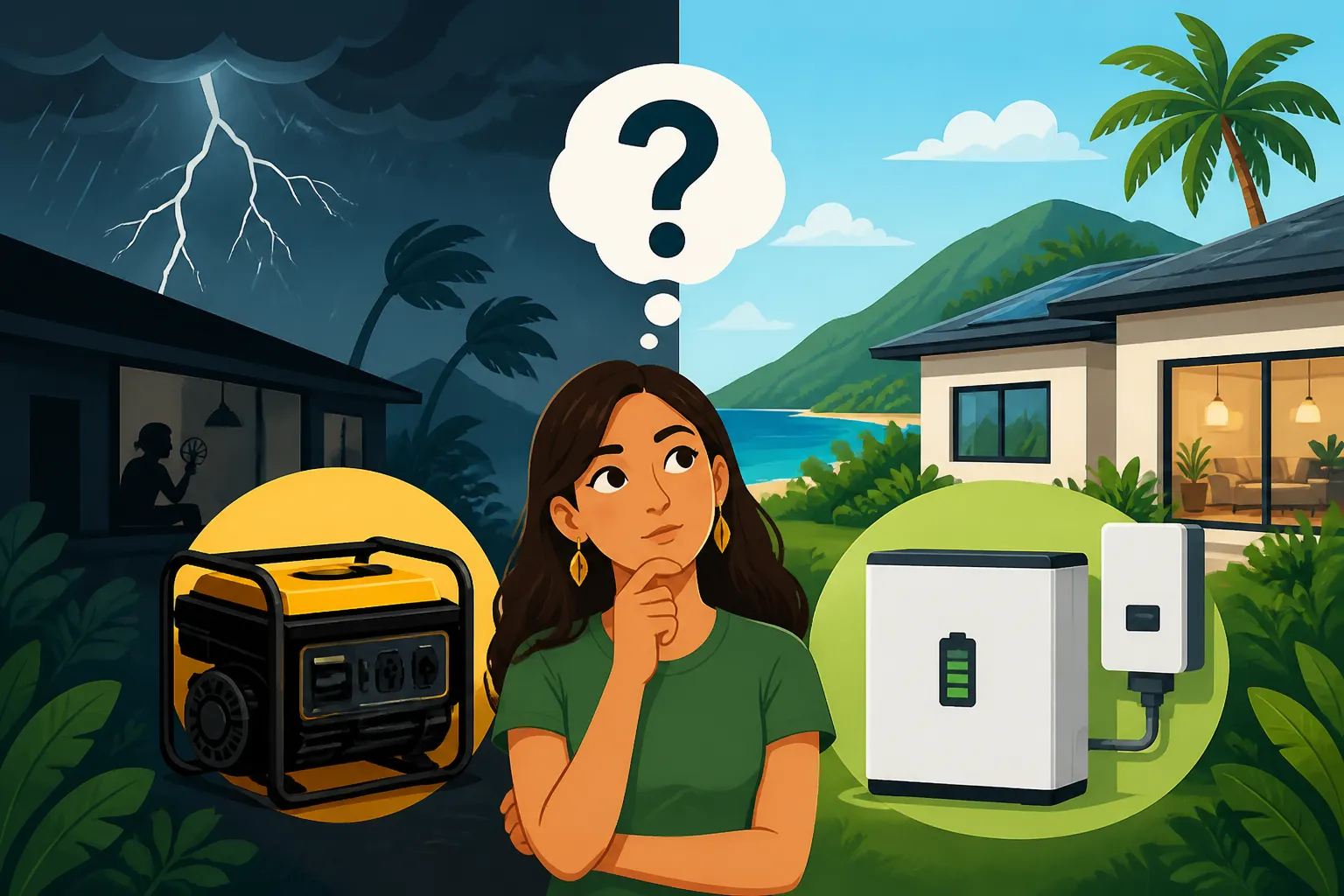
One of the questions that keeps many aspiring expats up at night, or at least makes them pause during a sunny afternoon, is how reliable the power actually is here in Costa Rica. You've heard the stories, perhaps experienced a flicker or two on a vacation, and now you're wondering: do I really need a generator or some kind of backup power solution for my Pura Vida home? This guide is going to walk you through the honest reality of electricity here, help you assess your own needs, and explore the backup options available, so you can make an informed decision and sleep soundly, even when the lights go out.
The Reality of Power Outages in Costa Rica
Let's be blunt: power outages are a part of life in Costa Rica. If you're moving here expecting the same rock-solid grid reliability you might have in, say, North America or Western Europe, you're going to be in for a rude awakening. But before you panic, understand that "part of life" doesn't necessarily mean daily blackouts in every corner of the country. It's more nuanced than that. The key is understanding why they happen and where you're likely to experience them most.
Common Causes of Outages
The reasons for a power cut here are often quite different from what you might be used to. It's not always about a major grid failure; sometimes it's something surprisingly mundane, or even a bit wild.
First and foremost, the weather. Ah, the glorious rainy season! While it brings lush greenery and fills the rivers, it also brings some seriously intense thunderstorms, torrential downpours, and strong winds. These can cause trees, often already weakened or overgrown, to fall onto power lines. Landslides, particularly in mountainous regions, can take out poles and lines. It’s a common sight during a heavy storm to hear a crack, see a flash, and then… darkness. Sometimes, the rain itself, especially prolonged downpours, can cause issues with older transformers or connections. It’s frustrating, absolutely, especially when you’re in the middle of a video call or trying to cook dinner.
Then there's the wildlife. Believe it or not, our incredible nature can be a culprit! Monkeys swinging on lines, sloths slowly traversing wires, even iguanas or snakes getting into transformers – these aren't urban legends; they happen. It’s one of those uniquely Costa Rican problems that, while charming in theory, can be a real pain when it cuts your power for hours.
Infrastructure also plays a role. While Costa Rica's national utility, ICE (Instituto Costarricense de Electricidad), and its various regional distributors like CNFL, Coopelesca, and JASEC, work hard to maintain the grid, some areas have older infrastructure that's more prone to issues. Upgrades are ongoing, but it's a massive undertaking. Sometimes, utility companies will schedule planned maintenance, and while they usually try to give notice, these can still result in temporary outages. The good news is that for routine outages, especially in more populated areas, ICE is generally quite responsive in getting power restored.
Lastly, and sometimes most frustratingly, human error or vehicle accidents. A car hitting a power pole, construction work accidentally severing a line, or even just general wear and tear going unnoticed until it fails – these can all lead to unexpected interruptions. It's a combination of these factors that makes being without power a fairly regular, albeit usually short-lived, experience for many.
Regional Differences in Reliability
Now, the frequency and duration of these outages aren't uniform across the entire country. Where you choose to live will significantly impact your experience.
If you're in one of the more urbanized areas like the Greater Metropolitan Area (GAM), which includes San José, Escazú, Heredia, and Alajuela, you'll generally find the power grid to be more robust. There's a higher population density, more businesses, and therefore a stronger emphasis on maintaining a stable supply. Outages do happen, but they tend to be shorter in duration. You might lose power for an hour or two a few times a month during the peak rainy season, but it's less likely to be an all-day affair unless there's a major incident. Hospitals like CIMA or Clinica Biblica, major shopping centers, and office parks usually have their own robust backup systems, so they're less affected. If you're setting up your How to Set Up Electricity (ICE/CNFL) in Your Costa Rican Home in a city, you're likely in a better spot for power stability.
Venture out into the more rural and coastal areas, however, and the picture changes. Places like parts of Guanacaste (especially off the main tourist corridors), the Southern Zone (Ojochal, Dominical, Uvita), the Caribbean coast, or even remote mountain towns often experience longer and more frequent outages. This is partly due to the extensive natural environment (more trees, more wildlife, rougher terrain for lines) and partly because the infrastructure might be older or less extensively maintained compared to the urban core. For example, a heavy rainstorm in the Southern Zone could easily mean a 6-8 hour outage, or even longer if it's a major pole replacement needed in a difficult-to-access area. If you live on a mountain with a private well, losing power can also mean losing your water supply if your pump runs on electricity – a detail often overlooked when considering Understanding Water Service (AyA) and Bills in Costa Rica.
It’s crucial to do your homework based on your chosen location. Talk to locals, join expat Facebook groups for that specific area, and ask directly about the power situation. What's an "acceptable" level of outages for one person, especially someone living a more relaxed, off-grid lifestyle, might be completely unacceptable for a remote worker or someone with specific medical needs.
Assessing Your Personal Need for Backup Power
Deciding whether you need backup power isn't a one-size-fits-all answer. It's deeply personal and depends entirely on your lifestyle, your health, and your tolerance for inconvenience. As an expat, you're already navigating so many changes; don't let this one catch you off guard.
Factors to Consider for Your Lifestyle
When contemplating a generator or other backup, think about what truly matters to you if the lights go out.
Are you a remote worker, perhaps one who relies on stable internet and power for client meetings or deadlines? If so, even a few hours without power can be a disaster for your productivity and reputation. Many digital nomads or those embracing Working Remotely from Costa Rica: The Definitive Expat Guide (2027) find that a reliable backup power source, even if just for their essential office equipment, is non-negotiable. Imagine losing power right before a big presentation – the stress alone isn't worth it.
Do you or anyone in your household have medical devices that require continuous electricity? This is perhaps the most critical factor. CPAP machines, oxygen concentrators, or refrigerated medications (which touches on Understanding the Costa Rican Pharmacy (Farmacia) System) cannot be without power for extended periods. For these situations, a robust backup solution isn't a luxury; it's a necessity for Emergency Medical Care in Costa Rica: What Every Expat Needs to Know.
What's your tolerance for discomfort? Are you someone who can happily read a book by flashlight and enjoy the quiet, or do you quickly get agitated without AC, fans, or television? Costa Rica can get hot and humid, especially at night. Losing power can mean no fans, no AC, and a very uncomfortable sleep. Your refrigerator and freezer will also start warming up, risking food spoilage, which can be a real blow to your grocery budget, adding to your overall The Complete Guide to Cost of Living in Costa Rica for Expats (2026).
Consider your budget. Generators, especially whole-home standby units, are a significant investment, both upfront and for ongoing maintenance and fuel. Battery backup systems can also be costly. Is the peace of mind worth the financial outlay for you? Remember, integrating a backup solution is another step in getting your home fully set up, much like navigating The Expat Guide to Setting Up Utilities (ICE/AyA) in Costa Rica or figuring out How to Set Up Internet and Cable in Costa Rica.
Critical Appliances and Their Power Needs
Not all appliances draw the same amount of power, and understanding this is key to choosing the right backup solution. You might not need to power your entire house, just the essentials.
Think about what you absolutely cannot live without:
- Refrigerator/Freezer: Essential for food safety. These typically need intermittent power to kick on the compressor. A modern fridge might draw 100-200 watts when running, but the startup surge can be higher.
- Internet Router/Modem: Crucial for remote work and communication. These are low-power devices, usually under 50 watts.
- Lights: A few LED bulbs are very low wattage (5-15 watts each).
- Fans: Essential for comfort, especially in warmer climates. A ceiling fan might use 50-75 watts, a box fan less.
- Water Pump: If you have a well or a cistern with a pump, this is critical for basic sanitation and drinking water. Pumps can draw a significant amount of power, often 750-1500 watts or more, and have a high startup surge.
- Medical Devices: As mentioned, these are non-negotiable. Check the wattage requirements for any specific devices.
- Charging Devices: Phones, laptops, tablets. These usually require minimal power.
Here’s a rough idea of power consumption for common household items. Keep in mind these are averages, and specific models will vary. This table can help you calculate what size generator or battery backup you might need for your critical items.
| Appliance / Device | Approximate Running Wattage | Notes |
|---|---|---|
| Refrigerator (modern) | 100-200 W (intermittent) | Startup surge can be 500-1000 W. |
| Freezer (modern) | 100-200 W (intermittent) | Startup surge can be 500-1000 W. |
| Internet Router/Modem | 10-50 W | Low consumption, crucial for connectivity. |
| LED Light Bulb | 5-15 W | Very efficient, easy to power multiple. |
| Ceiling Fan | 50-75 W | Good for comfort. |
| Water Pump (well/cistern) | 750-1500 W | High power demand, critical for water supply. High startup surge. |
| Laptop Charger | 50-100 W | Essential for remote work. |
| Phone Charger | 5-20 W | Low demand, easy to keep devices topped up. |
| Medical Device (CPAP) | 30-60 W | Varies greatly, critical for health. |
| Television (LED) | 50-150 W | Medium consumption, for entertainment. |
| Microwave | 600-1500 W | High, but typically used for short bursts. |
| Coffee Maker | 800-1500 W | High, but for short periods. |
| AC Unit (small window) | 800-1500 W | High, often too much for smaller backups. High startup surge. |
To estimate your total need, add up the running wattage of the simultaneous critical items you want to power. Remember to account for startup surges for compressors (fridge, freezer, AC, pump), which can be 3-5 times the running wattage. This is why a generator is usually rated in "starting watts" and "running watts."
Exploring Backup Power Solutions for Expats
Once you've assessed your needs, it's time to look at the practical solutions available here in Costa Rica. There are options ranging from simple and affordable to complex and costly.
Generators: Types, Pros, and Cons
Generators are the traditional heavy-hitters when it comes to backup power. They burn fuel to generate electricity, and they come in a few main types.
Portable Generators: These are the most common choice for many expats.
- Pros: Generally less expensive, easier to purchase and move, and can be used for other tasks (like power tools). They're widely available at hardware stores (ferreterías) and large retailers like EPA.
- Cons: Require manual starting and connecting (often with extension cords), produce exhaust fumes (must be operated outdoors and away from windows), are noisy, require fuel storage (gasoline or propane), and need regular maintenance. You also have to be present to start them up. They come in various sizes, from small units (2,000 watts) that can power a fridge and a few lights to larger ones (7,500+ watts) that can handle more. For those who frequently move or want flexibility, a portable generator might be a good fit, and services like Sirelo can assist with transporting such equipment during your move.
Standby (Whole-Home) Generators: These are more sophisticated, permanent installations.
- Pros: Automatically turn on when the power goes out, usually run on propane or natural gas (if available), are quieter than portables, and can power a significant portion or all of your home without manual intervention. This offers true peace of mind.
- Cons: Much more expensive (unit plus installation), require professional installation (electrical work, fuel lines), and still need regular maintenance. They also take up a dedicated space on your property. For many, this level of investment is only justified if they have critical medical needs, run a business from home, or simply want maximum convenience and comfort.
Fuel Types:
- Gasoline: Most common for portable generators. Easy to find, but fuel degrades over time, so you need to store it safely and rotate it.
- Propane (LPG): Cleaner-burning, longer shelf life, and often used for standby generators or dual-fuel portables. You'll need propane tanks or a dedicated tank on your property.
- Diesel: Less common for residential use, usually for very large generators.
Maintenance for any generator is crucial in Costa Rica's climate. Humidity, dust, and even insects can affect performance. Regular oil changes, spark plug checks, and fuel system cleaning are essential. Neglecting maintenance means your generator might fail when you need it most.
Alternative Backup Options
Generators aren't the only game in town. Depending on your specific needs, other solutions might be more suitable or work in conjunction with a small generator.
UPS (Uninterruptible Power Supply) Units: These are battery packs with surge protection and an inverter.
- Pros: Perfect for computers, internet routers, and small electronics. They provide instant, seamless power transfer, preventing data loss. They are quiet and require no fuel.
- Cons: Limited run-time (minutes to a few hours for a router), can't power large appliances, and batteries eventually need replacing. For a remote worker, a UPS for your modem, router, and laptop is almost a must-have, especially when relying on your home internet for Working Remotely from Costa Rica: The Definitive Expat Guide (2027).
Battery Backup Systems (Solar-Integrated or Standalone): These are larger versions of UPS units, often coupled with inverters, and sometimes integrated with solar panels.
- Pros: Can provide silent, clean power for longer durations for multiple appliances, especially if linked to solar. They can be scalable. If you're looking into solar anyway, adding battery storage makes a lot of sense.
- Cons: High upfront cost, complex installation (especially solar-integrated systems), and battery capacity limits what you can power and for how long. However, for continuous power for essentials without the noise or fumes of a generator, they are excellent.
Gas Stoves and Water Heaters: This isn't strictly backup power, but it's important to consider. Many homes in Costa Rica already use propane tanks for their stoves and water heaters. If you lose electricity, you can still cook and have hot water. If your current setup is all-electric, switching your stove or water heater to gas can significantly reduce your dependence on electricity during an outage.
Passive Cooling and Lighting: Sometimes, the best "backup" is to simply be prepared to live without electricity for a bit.
- Natural Ventilation: Ensure your home has good airflow to reduce heat buildup.
- Flashlights & Candles: Keep plenty readily accessible. Headlamps are fantastic for hands-free lighting.
- Rechargeable Fans: Small, battery-operated fans can offer some relief from the heat.
- Power Banks: Keep several fully charged power banks for your phones and tablets. Staying connected to the outside world, even if it's just through your phone's data connection (using an eSIM from a provider like Airalo can be great for this if your regular internet is down), is vital.
Practical Tips for Managing Outages
Even with backup power, a few practical habits can make life easier during a blackout. These are things you'll pick up naturally as you integrate into Costa Rican life and learn about How Reliable Is the Electricity Grid in Costa Rica?.
First, always keep your essential devices charged. Your phone, laptop, power banks, and any rechargeable lights should ideally be topped up when the power is on. This is simple but often overlooked.
Second, have emergency supplies ready. This isn't just about power; it's part of general preparedness when you're going through The Complete Guide to Moving to Costa Rica: Your First 90 Days (2027). Think flashlights, candles, matches/lighters, a battery-powered radio, and some bottled water.
Third, know your utility company's outage reporting system. For ICE or CNFL, there are usually apps or phone numbers to report outages and get updates. Knowing how to reach them can give you an estimated restoration time.
Fourth, keep your fridge and freezer closed. Every time you open them, you let cold air out. Plan meals that don't require refrigeration if you anticipate a long outage.
Finally, connect with your neighbors. Community spirit is strong in Costa Rica, and neighbors often look out for each other. They might have a generator you can borrow for a short time, or just offer a cup of coffee from their gas stove. It's all part of the Pura Vida experience, even the challenging bits!
In conclusion, while you might not need a generator to survive in Costa Rica, having some form of backup power, whether it's a small portable generator for essentials or simply a good supply of charged power banks and flashlights, is a very sensible approach. It provides a layer of comfort and security that can significantly improve your expat experience when those inevitable "apagones" (power outages) happen.
Disclaimer
The information provided in this guide is intended for general informational purposes only and does not constitute professional advice. While we strive to provide accurate and up-to-date information, circumstances in Costa Rica can change rapidly. Readers are encouraged to consult with local experts, such as electricians or legal professionals, for advice tailored to their specific situation. We are not responsible for any actions taken based on the information presented herein.