How Reliable Is the Electricity Grid in Costa Rica?
Oh, the infamous question of electricity in Costa Rica! Believe me, as an expat who's been here through countless rainy seasons, I’ve had my fair share of flickering lights, sudden blackouts, and the frantic scramble for candles or a charged phone. It’s one of those things that can feel utterly frustrating when you're used to rock-solid power back home. But let’s be real, you’re in the tropics, and things operate a little differently. This guide is going to walk you through what to really expect from the electricity grid here, why those outages happen, and most importantly, how to prepare so you’re not left completely in the dark.
Understanding the Costa Rican Electricity Landscape
When you first arrive in Costa Rica, especially if you're coming from a country with super-stable infrastructure, the idea of a power outage might feel like a rare, inconvenient anomaly. Here, it’s more of a fact of life, though certainly not an everyday occurrence. The national electricity grid is primarily managed by the Instituto Costarricense de Electricidad (ICE), alongside a few municipal companies like CNFL in the Greater Metropolitan Area (GAM) and co-ops in other regions.
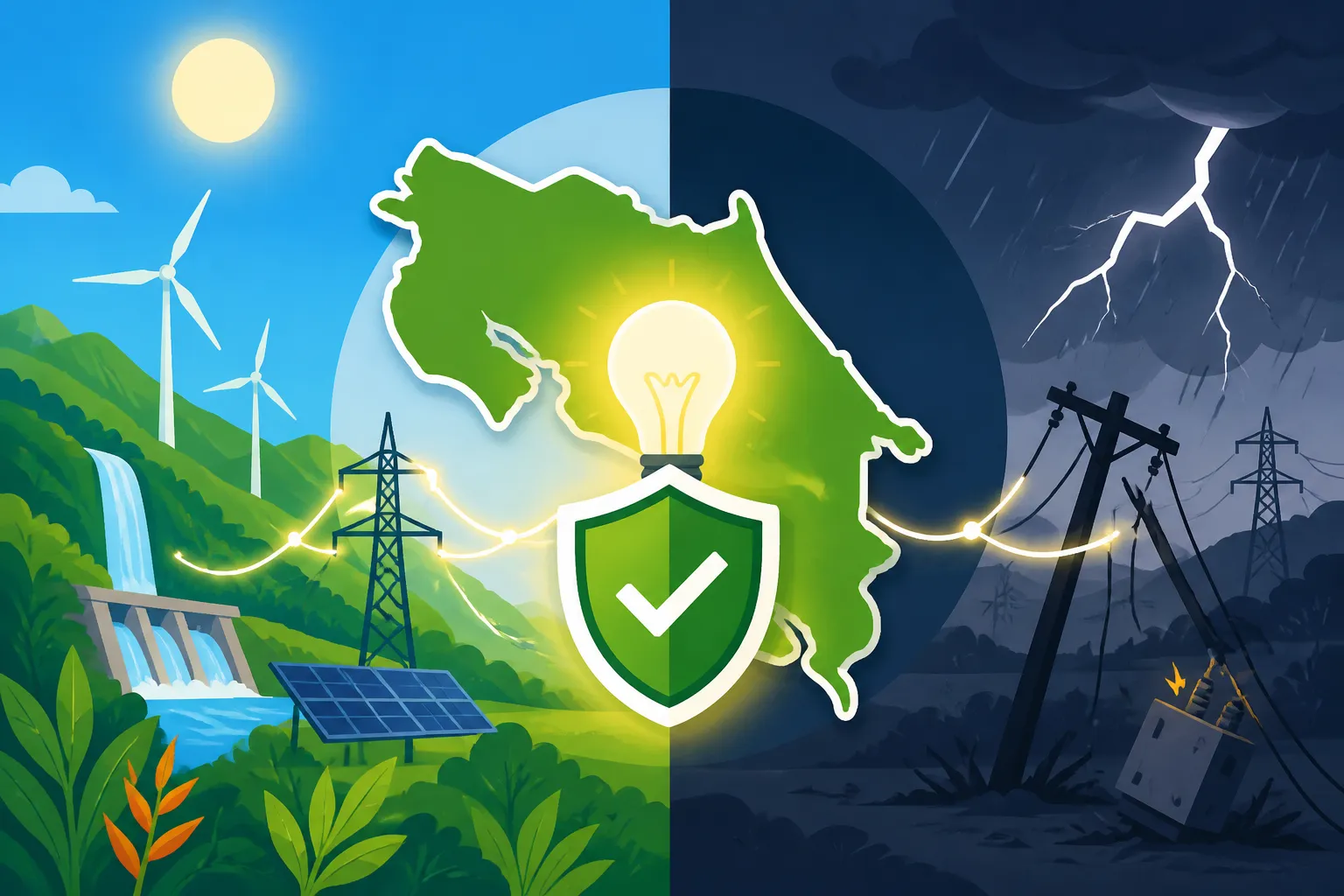
Costa Rica prides itself on generating most of its electricity from renewable sources – hydro, geothermal, wind, and solar – which is fantastic for the environment. However, this reliance on natural elements can sometimes be a double-edged sword when it comes to stability. For instance, while hydropower is abundant, heavy rainfall can sometimes lead to issues with dams or transmission lines. The grid covers a vast and varied landscape, from dense urban centers to remote beaches and mountainous cloud forests. The level of reliability you experience will often depend quite a bit on where you choose to settle. If you're wondering about how the whole utility system works here, you'll definitely want to check out The Expat Guide to Setting Up Utilities (ICE/AyA) in Costa Rica.
In urban areas, particularly within the GAM (San José, Escazú, Heredia, Alajuela, Cartago), the electricity supply is generally quite stable. You might get an outage every few weeks or months, usually lasting an hour or two, often due to maintenance or a localized issue. These are usually manageable. However, as you venture out to more rural areas, especially on the coasts or in mountainous regions, the grid can be more susceptible to interruptions. Infrastructure can be older, and the sheer challenge of running lines through dense jungle or over rough terrain means repairs can take longer. It’s not uncommon in these areas to experience outages that last several hours, or even a full day, particularly during the peak of the rainy season. This is just part of the charm (and challenge!) of living closer to nature.
Common Causes of Electricity Outages
It's easy to throw your hands up in exasperation when the lights go out, but understanding why it happens can help put things into perspective and even help you anticipate them. There are several recurring culprits behind power disruptions in Costa Rica, and many of them are simply inherent to the beautiful, biodiverse environment we choose to call home.
Weather-Related Disruptions
Hands down, the number one cause of power outages, especially between May and November, is the weather. We live in the tropics, and while that brings incredible beauty, it also brings some serious thunderstorms.
- Heavy Rains and Winds: Torrential downpours, often accompanied by strong winds, can bring down trees and branches onto power lines. These are not just small twigs; we're talking about massive, centuries-old trees in some areas. The ground can also become saturated, leading to landslides that damage poles or underground cables.
- Lightning Strikes: Costa Rica experiences a significant amount of lightning activity. Direct strikes on transformers or power poles are a common cause of immediate outages. While ICE does its best to protect infrastructure, a direct hit is often unavoidable.
- Tropical Storms and Hurricanes: Though Costa Rica is generally outside the direct path of major hurricanes, residual effects from storms in the Caribbean or Pacific can bring prolonged periods of heavy rain and strong winds, leading to more widespread and longer-lasting outages. In these situations, restoration can take days, not just hours, especially in hard-to-reach areas.
Infrastructure and Maintenance Issues
Even the best-maintained grids have their weak points, and Costa Rica's is no exception.
- Scheduled Maintenance: Sometimes, the power goes out because ICE or the local utility is performing scheduled maintenance or upgrades. They often try to give notice, usually through local Facebook groups or by word of mouth, but sometimes these notices get lost in translation or simply aren't widespread. These outages are usually planned to last a specific duration and are essential for keeping the grid healthy in the long run. If you've just moved here, understanding How to Set Up Electricity (ICE/CNFL) in Your Costa Rican Home will be your first step to getting familiar with the system.
- Aging Infrastructure: While there's continuous investment in modernizing the grid, some older parts of the infrastructure, particularly in less populated regions, might be more prone to failure. Transformers can blow, lines can fray, and poles can weaken over time.
- Construction Accidents: Excavators hitting underground cables or cranes snagging overhead lines aren't unheard of, especially with the boom in development in certain areas. These are usually localized but can impact surrounding neighborhoods.
Animal Interference and Other Unexpected Events
This one often gets a chuckle, but it's a genuine factor in Costa Rica!
- Wildlife: Monkeys, squirrels, iguanas, and even snakes can sometimes climb on power lines or transformers, causing short circuits. Unfortunately, this often ends badly for the animal, but it also means a loss of power for residents.
- Vehicle Accidents: A car or truck hitting a power pole can cause significant damage and wide-area outages. Given some of the narrow, winding roads, these incidents occur more frequently than you might think.
- Unexplained Outages: Sometimes, the power just… goes out. No storm, no obvious cause. These can be the most frustrating because without a clear reason, it's hard to predict when it might come back on. Welcome to the Pura Vida unpredictability!
Preparing for the Inevitable: Strategies for Managing Power Outages
Okay, so we know outages happen. The key to staying pura vida through them is preparation, not panic. Trust me, I’ve learned this the hard way more times than I care to admit.
Essential Supplies and Backup Solutions
Having a dedicated "power outage kit" is not overkill here; it's smart living.
- Lighting: Flashlights (with extra batteries!), headlamps, and battery-operated lanterns are your best friends. Candles are charming but less safe, especially if you have kids or pets. Rechargeable LED lanterns are a fantastic investment as they can often be charged via USB.
- Charging Your Devices: This is critical. A fully charged power bank (or two!) for your phone and other essential electronics is a must. If you work remotely, consider a UPS (Uninterruptible Power Supply) for your computer and router, at least for short outages. Portable solar chargers can also be handy for longer disruptions, particularly if you’re in a sunny spot. Remember, without power, your internet might also go down, so having a way to stay connected, perhaps with a local SIM card and a hotspot like those offered by Airalo, can be a lifesaver for checking updates or communicating with family.
- Water: If you rely on a well with an electric pump, or if your water pressure is boosted by an electric pump, a power outage means no water. Keep a supply of potable water for drinking, cooking, and basic hygiene.
- Food: Stock non-perishable food items that don’t require refrigeration or cooking. A cooler with ice can help extend the life of perishables in your fridge for a day or so.
- Cash: ATMs won't work without power. Always have some local currency (colones) on hand for essentials.
- Backup Power Options: For serious expats or those in very remote areas, a generator might be a worthwhile investment. They range from small, portable units that can power a few essential appliances to whole-home systems.
Here's a quick comparison of common backup power options:
| Backup Power Option | Pros | Cons | Ideal Use Case | Estimated Cost (USD) |
|---|---|---|---|---|
| Power Bank | Portable, affordable, good for small devices | Limited capacity, only for short-term device charging | Keeping phones/tablets charged during short outages | $20 – $100 |
| UPS (Uninterruptible Power Supply) | Provides instant power, protects electronics from surges | Limited runtime (minutes to a few hours), primarily for sensitive electronics | Desktops, routers, critical work equipment during brief flickers/outages | $100 – $500 |
| Portable Generator | Can power multiple appliances, good for several hours of use | Requires fuel, noisy, exhaust fumes, manual setup | Longer outages, powering fridge, fans, lights, small tools | $400 – $2,000 |
| Whole-Home Generator | Automatic startup, powers entire house, seamless transition | Expensive, requires professional installation, maintenance, fuel storage | Frequent, prolonged outages; critical for medical equipment or remote work | $3,000 – $15,000+ |
| Solar Lights/Lanterns | Eco-friendly, no fuel needed, silent | Limited brightness, depends on sunlight for charging | Ambient lighting, outdoor use, emergency light | $15 – $50 |
If you're weighing the pros and cons, definitely read up on Do I Need a Generator or Backup Power in Costa Rica? for a more detailed look.
Staying Informed and Communicating
When the power goes out, information is gold.
- Local WhatsApp Groups: Many neighborhoods have WhatsApp groups where residents share information about outages, estimated restoration times, and local news. Get connected!
- ICE/CNFL Social Media: Often, the utility companies will post updates on their Facebook or X (formerly Twitter) pages. Follow your local provider.
- Keep Your Phone Charged: This ties back to power banks. A dead phone means no communication, no updates, and no light source.
Protecting Your Electronics
Power surges, especially when electricity comes back on, can be damaging.
- Surge Protectors: Use surge protectors for all valuable electronics. Better yet, unplug sensitive items like computers, TVs, and major appliances during an outage, especially if it’s a stormy one.
- Voltage Regulators: In areas with very unstable power, a voltage regulator can help protect appliances from inconsistent voltage, which can slowly degrade their lifespan.
Moving to a new country and figuring out things like utilities can be a huge undertaking. Companies like Sirelo can help with the logistics of international moves, ensuring you're thinking about everything from shipping your belongings to setting up your new home in Costa Rica.
The Future of Costa Rica’s Electricity Grid
While power outages are a reality, it’s not all doom and gloom. ICE and the other utility providers are continuously investing in improving the grid. There's a strong push towards smart grid technologies, which can help detect and isolate faults faster, leading to quicker restoration times. Undergrounding power lines in some urban and high-risk areas is also a long-term goal, though it’s a costly and time-consuming endeavor.
Furthermore, Costa Rica is a leader in renewable energy. As technology advances, this reliance on clean energy sources will likely become even more efficient and resilient. Think about it: a grid powered by diverse sources like hydro, geothermal, solar, and wind often has inherent redundancies. If one source is temporarily down, others can pick up some of the slack. So, while you might experience some hiccups today, the general trend is towards a more modern and robust system.
For a deeper dive into the financial side of living here, you might want to explore The Complete Guide to Cost of Living in Costa Rica for Expats (2026), as understanding utility costs is a big part of that equation. Also, don't forget to learn How Do I Pay My ICE Electricity Bill Online? so you can manage your payments even when things are a bit… unpredictable.
In conclusion, the electricity grid in Costa Rica is generally reliable, especially in metropolitan areas, but it’s certainly not immune to disruptions. Expect occasional outages, particularly during the rainy season and in more rural locations. By being prepared, staying informed, and adopting a flexible mindset, you'll find that these little blips in power become just another part of your unique Pura Vida experience, rather than a major headache.
Disclaimer
The information provided in this article is for general guidance and informational purposes only, and does not constitute professional advice. While we strive to keep the information up-to-date and correct, Costa Rican laws, regulations, and utility practices can change. Always consult with relevant local authorities, utility providers, or professional advisors for specific, personalized advice regarding your situation.