How to Find and Register with an EBAIS Clinic in Costa Rica
Moving to Costa Rica is a dream for many, but the reality of navigating the public healthcare bureaucracy can quickly turn that dream into a headache. You finally have your residency, you are paying your monthly contributions, and yet, when you feel a flu coming on, you realize you have no idea where to go. This guide solves the mystery of the local health clinic, showing you exactly how to find, register with, and actually use your assigned EBAIS clinic without the typical administrative meltdowns.
Understanding the Role of the EBAIS in the Costa Rican Health System
The backbone of the Costa Rican social security system is the CCSS, or the Caja. But the Caja isn’t just one big building in San Jose; it is a multi-tiered hierarchy designed to provide care from the ground up. At the very base of this pyramid sits the EBAIS. The acronym stands for Equipos Básicos de Atención Integral en Salud, and they are the neighborhood-level clinics responsible for primary care. For most expats, Understanding the Role of the EBAIS (Local Health Clinic) in Costa Rica is the first step toward feeling secure in your new home.
What Exactly is an EBAIS Clinic?
An EBAIS is not a full-scale hospital. Think of it as your primary care physician’s office, but run by the state. Each unit is typically staffed by a doctor, a nurse, and a primary health technician (ATAP). Their goal is preventative care, vaccinations, routine check-ups, and managing chronic conditions like hypertension or diabetes. If you have a minor ailment—a respiratory infection, a weird rash you picked up in the jungle, or a need for a routine blood test—the EBAIS is your starting point. You cannot simply walk into a major hospital like Mexico or San Juan de Dios for a sore throat; they will tell you to go back to your local EBAIS.
In many rural towns, the EBAIS is the social hub of the community. You’ll see neighbors chatting in line and the local "Pura Vida" pace in full effect. While it might seem slow compared to a private clinic in Escazu, it is a highly effective system for community health. Each EBAIS is responsible for a specific number of inhabitants, usually between 3,500 and 6,000 people, ensuring that no one is technically left without a primary point of contact.
How the EBAIS Fits into the Caja Hierarchy
The Costa Rican health system operates on a referral basis. To see a specialist, such as a cardiologist or an endocrinologist, you must first be evaluated at your EBAIS. The doctor there determines if your condition warrants a higher level of care. If it does, they will issue a referral to a "Clinica" (a secondary level of care with more equipment) or a "Hospital" (the tertiary level for complex surgeries and specialized treatments).
This is often where foreigners feel the most frustration. You might know you need a dermatologist, but you cannot skip the line. You must navigate the EBAIS first. This structure is why How Costa Rica's Health System Works: The Caja (CCSS) vs Private Explained (2027) is such a vital topic for new residents. Understanding that the EBAIS is the "gatekeeper" helps manage expectations. You aren't being denied care; you are simply following a protocol that has allowed Costa Rica to achieve some of the best health outcomes in Latin America.
When the EBAIS is Not Enough
While the EBAIS is great for routine issues, it is not an emergency room. If you are experiencing a life-threatening event, you should head to the nearest major hospital or call 911. For those who are still in the residency "waiting room" and haven't yet been issued a DIMEX, the EBAIS will likely only treat you in a dire emergency, and even then, they will bill you as a private patient. This is why many expats use SafetyWing as a bridge. While SafetyWing is primarily for travel and digital nomads, it provides that crucial safety net before you are fully integrated into the local public system.
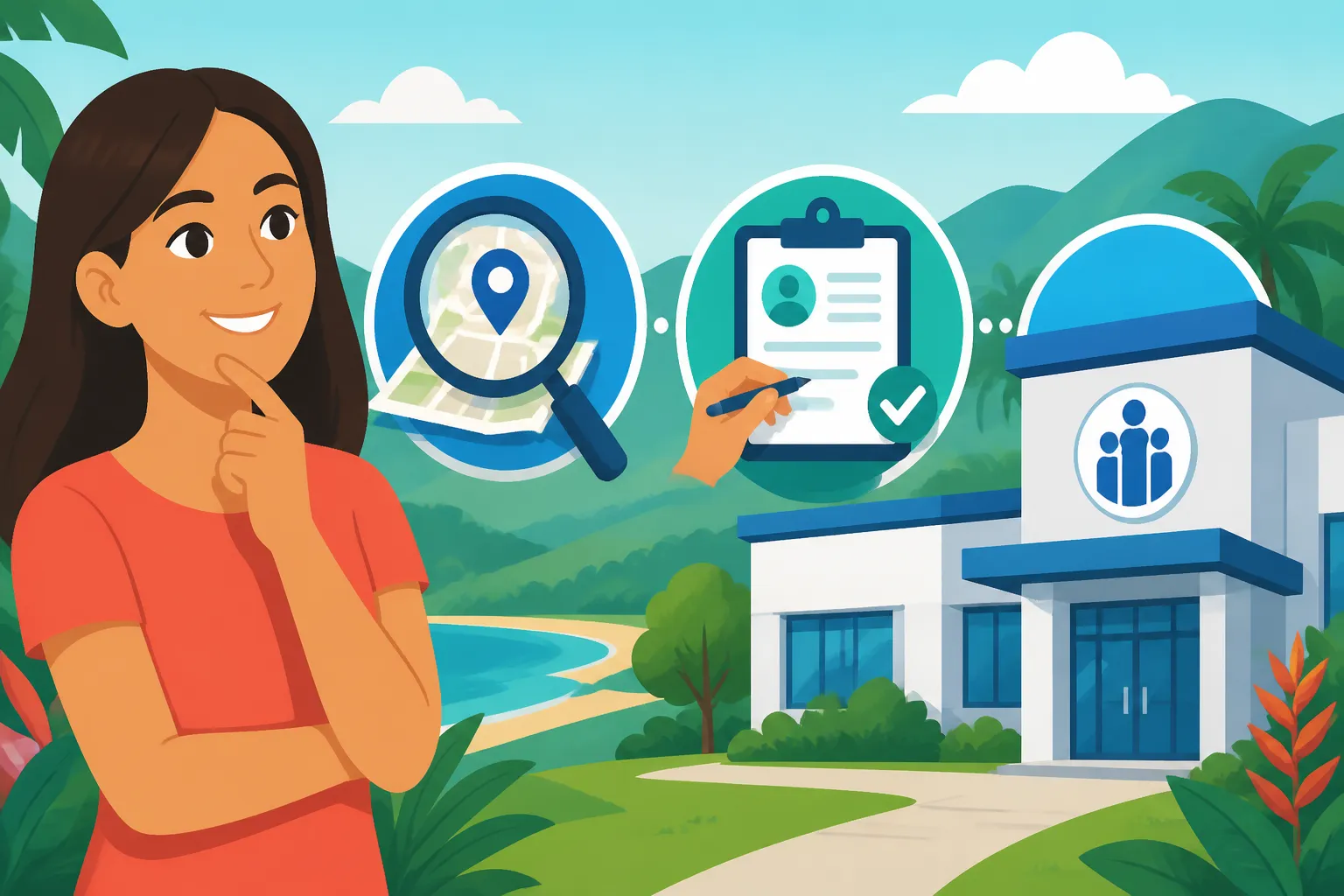
How to Locate Your Assigned EBAIS Clinic
One of the most confusing aspects for newcomers is that you don't get to choose your clinic. You are assigned one based strictly on where you live. This is known as "sectorización." If you live on one side of a bridge in Atenas, your EBAIS might be different than your friend who lives just half a mile away on the other side. Finding the right one is your first "mission" as a registered resident.
Mapping Your Neighborhood and Sectorización
The EBAIS system is hyper-local. In larger cities like San Jose or Heredia, there might be ten different EBAIS clinics under one administrative "Area de Salud." To find yours, you need to identify your "sector." The easiest way to do this is to look at your utility bills. In Costa Rica, addresses are notoriously vague (e.g., "200 meters south of the old fig tree"). However, the CCSS uses specific geographic boundaries.
You can often find your assigned area by visiting the CCSS website and looking for the "Buscador de Centros de Salud." However, the most reliable method is often the old-fashioned one: walking into the nearest public health facility and asking. If you tell them exactly which "barrio" or "urbanización" you live in, they can point you to the specific EBAIS that handles your street. For those living in popular expat zones, such as Where Can I Find an English-Speaking Doctor in San Jose?, you might find that while the EBAIS is local, the staff may or may not speak fluent English, making your "sector" choice even more important for your comfort level.
Using the EDUS App and Online Resources
The Caja has entered the digital age with the EDUS (Expediente Digital Único en Salud) app. This app is a godsend for expats. Once you have your residency and are registered in the system, you can log in to see which clinic you are assigned to. The app uses your GPS location and your registered address to show you the nearest facilities.
The EDUS app also allows you to see your medical history, your prescribed medications, and—crucially—it allows you to book appointments at many EBAIS locations without having to stand in line at 5:00 AM. However, before the app works for you, you must complete your initial physical registration at the clinic. You cannot skip the "boots on the ground" part of the process. If you are wondering about the steps leading up to this, How to Enroll in the Caja (CCSS) as a Foreigner in Costa Rica provides a broader look at the initial enrollment.
Asking the Locals: The Vecino Method
Never underestimate the power of your Tico neighbors. If you are unsure where your EBAIS is, simply ask, "¿Cuál es el EBAIS que me toca?" (Which EBAIS corresponds to me?). Most locals know exactly where their clinic is because they’ve been going there since they were children. They can also give you the "real" scoop: what time you actually need to show up to get a "cupo" (an appointment slot), which doctor is the most patient, and whether the pharmacy at that specific location is currently well-stocked. This local intel is often more valuable than any official map.
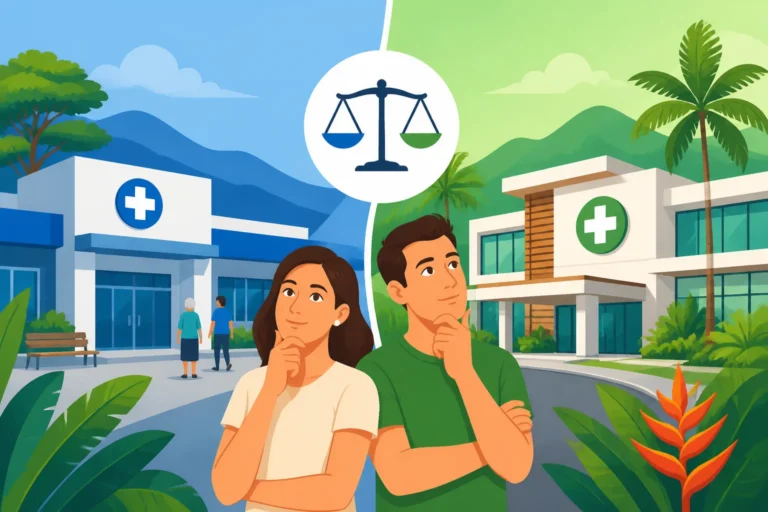
| Feature | EBAIS (Public) | Private Clinic (CIMA/Biblica) |
|---|---|---|
| Cost | Included in monthly Caja fee | Out-of-pocket or private insurance |
| Selection | Assigned by residency location | You choose any doctor/facility |
| Wait Times | Can be weeks for non-urgent | Usually same-day or next-day |
| Language | Primarily Spanish | Often bilingual staff |
| Referrals | Required for all specialists | Not required; go directly |
| Best For | Routine meds, chronic care | Emergencies, surgeries, speed |
The Registration Process: Documents and Requirements
Once you have located your EBAIS, you can't just show up and ask to see a doctor. You must "affiliate" with that specific clinic. This is a separate step from joining the Caja at the main office. You are essentially telling this specific clinic: "I live in your zone, and I am now your responsibility."
Essential Paperwork for Residents
To register, you will need your DIMEX (Residency Card). The staff will check that your DIMEX is current and that your Caja payments are up to date. They will look you up in the central "SICERE" system to ensure you aren't "moroso" (behind on payments). If you are a new resident, How to Use Your DIMEX to Access Healthcare in Costa Rica is a must-read, as it explains how this card serves as your golden ticket within the medical system.
Usually, you need to bring:
- Your original DIMEX and a high-quality photocopy of both sides.
- Your "Carnet de Seguro" (if you were given one at the main Caja office, though this is being phased out in favor of the digital record).
- Proof of your "Orden de Patronal" or proof of payment if you are a "Voluntario" (self-employed/retired).
Proving Your Address: The Utility Bill Struggle
This is where many expats hit a wall. To prove you live in the "sector," you must provide a recent utility bill (electricity or water) from ICE, CNFL, or AyA. The problem? Many expats rent homes where the utility bill is still in the landlord’s name.
If the bill is not in your name, the EBAIS will often require a copy of your lease agreement and sometimes a signed note from the landlord stating that you live there. Some stricter clinics might even ask for a "constancia de vecindad" from the local municipality, though this is less common now. Ensure the bill is the most recent one available; "old" bills are a frequent reason for rejection. If you are struggling with these monthly costs, you might want to check How Are My Monthly Caja Payments Calculated in Costa Rica? to ensure your budget is on track.
Registering as a Dependent or Self-Employed Worker
If you are the primary residency holder and you are registering your spouse or children, you need to bring their DIMEX cards as well. You will also need to provide proof of the legal relationship (marriage certificate or birth certificates), which must be apostilled and translated if they were issued outside of Costa Rica.
For those who are self-employed, the clerk will verify your status as an "Asegurado Voluntario." They will check that your monthly contributions match what is required for your income level. It is a meticulous process, and the clerk will likely go through every page of your documents with a fine-toothed comb. Be patient, smile, and remember that once this is done, you are in the system for good.
Making Your First Appointment and Navigating the System
Registration is complete! Now, how do you actually see a doctor? This is where the cultural "realism" of Costa Rica kicks in. It isn't always as simple as making a phone call.
The Early Morning Lineup vs. Digital Booking
In many parts of Costa Rica, the tradition of "madrugar" (waking up very early) is still alive. For "cupos" (same-day appointments), people often start lining up outside the EBAIS at 5:00 AM or 6:00 AM. The clinic opens its doors, and a limited number of slots are given out for that day. If you have an acute issue—like a sudden ear infection—this is often your only choice.
However, the EDUS app has significantly improved this. You can now book "citas" (appointments) for future dates via the app or the CCSS website. But be warned: these slots fill up fast. In some busy areas like Where Is the Nearest EBAIS Clinic in Alajuela?, you might find that digital appointments are booked out for two weeks. If you can't wait, you have to do the early morning line or consider a private consultation.
What to Expect During Your First Visit
When your name is finally called, you will first go to "Pre-consulta." A nurse or assistant will take your weight, height, blood pressure, and temperature. This information is entered into your digital file (EDUS).
When you see the doctor, don't expect a 45-minute deep dive into your soul. EBAIS doctors are often under pressure to see many patients. They are efficient and focused. If you need blood work, they will give you a "boleta" (slip). You then take that slip to the lab (often in the same building or a nearby clinic) to schedule your blood draw. The results will automatically appear in your EDUS app a few days later. It is a remarkably integrated system once you are "in."
Navigating the Pharmacy (Farmacia)
One of the biggest perks of the EBAIS is that medications are included in your monthly fee. If the doctor prescribes you something, you take the digital or paper prescription to the on-site "Ventanilla de Farmacia."
Sometimes you can pick it up within an hour; other times, for chronic meds, they will tell you to come back the next day. If the EBAIS is out of stock of a specific brand, they might substitute a generic. This is a common point of frustration for expats used to specific US or European brands. If you prefer a specific brand name, you might still end up at a private Understanding the Costa Rican Pharmacy (Farmacia) System location, paying out of pocket.
Why You Might Still Need Private Coverage
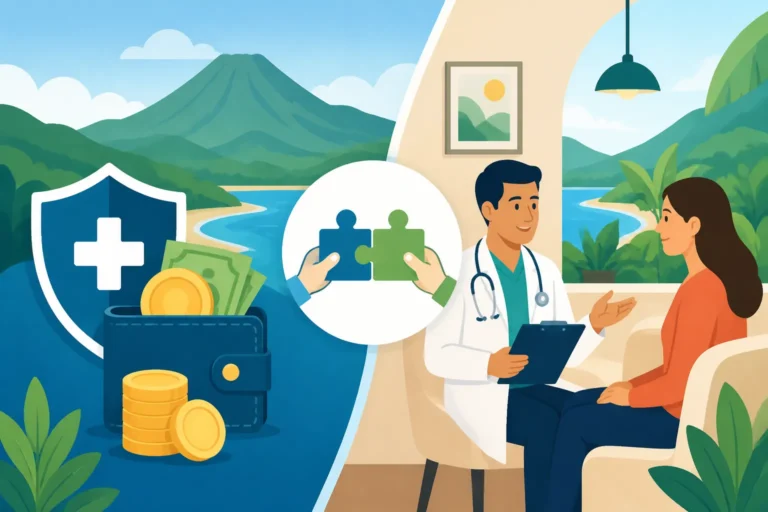
Even with a perfectly functioning EBAIS registration, most savvy expats maintain a "hybrid" approach to healthcare. The public system is fantastic for many things, but it has its limitations—primarily time.
Wait Times and Specialist Referrals
The "Caja" is famous for its wait times. While your EBAIS visit is usually quick, the referral they write for your gallbladder surgery or your knee replacement might put you on a waiting list that lasts months or even years. This is the "specific frustration" every foreigner eventually faces.
If you have a non-life-threatening but quality-of-life-impacting issue, you might choose to bypass the EBAIS referral and go straight to a private hospital. Knowing How to Use Private Hospitals Like CIMA, Clinica Biblica and Hospital Metropolitano is essential for those times when you simply cannot wait for the public system to catch up.
Bridging the Gap with SafetyWing
If you are a newcomer, a digital nomad, or someone in the middle of a residency appeal, you aren't yet eligible for the EBAIS. This is where a brand like SafetyWing comes into play. It provides global travel medical insurance that covers you while you are "stateless" in the healthcare system.
Even for residents, some keep SafetyWing or similar private policies to ensure they can get an immediate MRI or see a specialist without the EBAIS "gatekeeper" process. It’s about peace of mind. You use the EBAIS for your monthly high-blood-pressure meds and your annual blood work, but you keep private options for the "big stuff" or the "fast stuff."
The "English-Speaking" Factor
While more and more Tico doctors speak English—especially the younger ones—the administrative staff at your local EBAIS almost certainly will not. Registration, explaining your symptoms to the nurse, and understanding the pharmacy instructions will all happen in Spanish. If your Spanish is still in the "un poco" stage, consider bringing a friend or a translator for your registration day. It will save you from multiple trips back home because you misunderstood which document was missing. For those who prioritize language, searching for How to Find an English-Speaking Doctor in Costa Rica might lead you toward private options for more complex consultations.
Local Differences and Regional Nuances
The EBAIS experience in the middle of San Jose is vastly different from the experience in a coastal village in Guanacaste or the southern zone.
San Jose and the GAM vs. Rural Areas
In the Gran Área Metropolitana (GAM), EBAIS clinics are often better funded and have more modern facilities. However, they are also incredibly crowded. In a place like Escazu or Santa Ana, the demand is high, but the infrastructure is robust.
In rural areas, like near Emergency Medical Care in Costa Rica: What Every Expat Needs to Know, the EBAIS might be a very small building with limited hours. Some rural EBAIS clinics are "visitados," meaning a doctor only visits once or twice a week. If you live in a remote area, you need to know the schedule of your specific clinic. If you get sick on a Tuesday and the doctor only comes on Thursday, you're heading to the nearest major town.
Emergency Care vs. Routine EBAIS Visits
It’s worth repeating: the EBAIS is for routine care. If you are bitten by a snake, have chest pains, or a deep gash from a machete (it happens!), do not go to the EBAIS. Go to the nearest "Clinica" with an "Urgencias" (Emergency) department or a major hospital.
The public system is excellent at trauma care, and once you are stabilized, they will look up your EBAIS records to see your history. This seamless transition between the "primary" EBAIS and "tertiary" hospital care is the crowning achievement of the Costa Rican medical model. It can be frustrating, yes, but it is a system designed to ensure that even the person in the most remote mountain village has a "file" and a doctor who knows their name.
Disclaimer
This guide is for informational purposes only and does not constitute legal or medical advice. The requirements and procedures for the CCSS (Caja) and EBAIS clinics can change without notice based on government policy. Always verify current requirements with the official CCSS website or your local health office. For urgent medical concerns, please contact 911 or visit the nearest emergency room immediately.