How Much Is Property Tax in Costa Rica?
One of the first questions many of us expats grapple with when eyeing that slice of pura vida real estate is, "How much exactly am I going to pay in property tax?" It's not always straightforward, and the local nuances can feel like navigating a jungle without a map. But don't you worry, my friend. This guide is here to untangle the complexities of property taxes in Costa Rica, making sure you know what to expect and how to handle it all, without the usual bureaucratic headaches.
Understanding Property Tax in Costa Rica: The Basics (Impuesto sobre Bienes Inmuebles)
Alright, let's dive into the core of it: the Impuesto sobre Bienes Inmuebles, or as we call it, the property tax. This is the annual tax that absolutely everyone pays, whether you're a local or an expat, on any real estate you own here in Costa Rica. It's a fundamental part of property ownership and helps fund the local municipalidad (municipality) in your area, keeping those roads paved (or at least somewhat maintained!) and services running.
Who Pays Property Tax and When?
Simply put, if you own land, a house, a condo, or any other type of real estate in Costa Rica, you're on the hook for property tax. This isn't one of those things you can opt out of, and honestly, trying to dodge it will only lead to bigger headaches down the road. The money collected from these taxes goes directly to your local municipality. So, if you live in Santa Ana, your property tax helps Santa Ana. If you're in Tamarindo, it benefits Tamarindo. This is why you often see varying levels of services and infrastructure across different towns – the more robust the local economy and property values, generally, the more the municipality has to work with.
Payment is typically due annually, but most municipalities offer the convenience of paying quarterly. The usual schedule for quarterly payments is in the first 15 calendar days of January, April, July, and October. Missing these deadlines can, and will, incur penalties and interest. Trust me, you don't want to mess with the taxman here, or anywhere for that matter. Some municipalities even offer a small discount if you pay the entire year's worth in full during the first quarter (usually January). It's worth checking with your specific municipalidad to see if they offer this incentive. Setting up reminders or even auto-payments if available through your local bank is a lifesaver.
How Property Values are Assessed
This is where things can get a little opaque if you're not careful. Property tax is levied on the registered value of your property. This value is determined by a declaration you, as the property owner, submit to your local municipality. Yes, you read that right – you declare the value! This declaration, called a Declaración de Bienes Inmuebles, is typically submitted every five years. It’s crucial to be realistic and accurate when you do this. If you declare your property to be worth significantly less than its true market value, you might save a few bucks on annual property tax, but you’re setting yourself up for a nasty surprise if you ever decide to sell.
Why, you ask? Because when you sell your property, the property transfer tax, which we'll discuss shortly, is calculated based on the higher of either the registered municipal value or the sales price. So, if your declared value is artificially low, but you sell for a high market price, you'll pay a much larger transfer tax than if your declared value had been kept up-to-date. This also applies if the municipality conducts its own re-evaluation, which they have the right to do, though it's less common than you might think. Many expats rely on experienced local property tax services, sometimes even those associated with Taxes for Expats specialized firms, to ensure their declarations are compliant and strategic. They understand the intricacies far better than we might initially.
The Basic Tax Rate
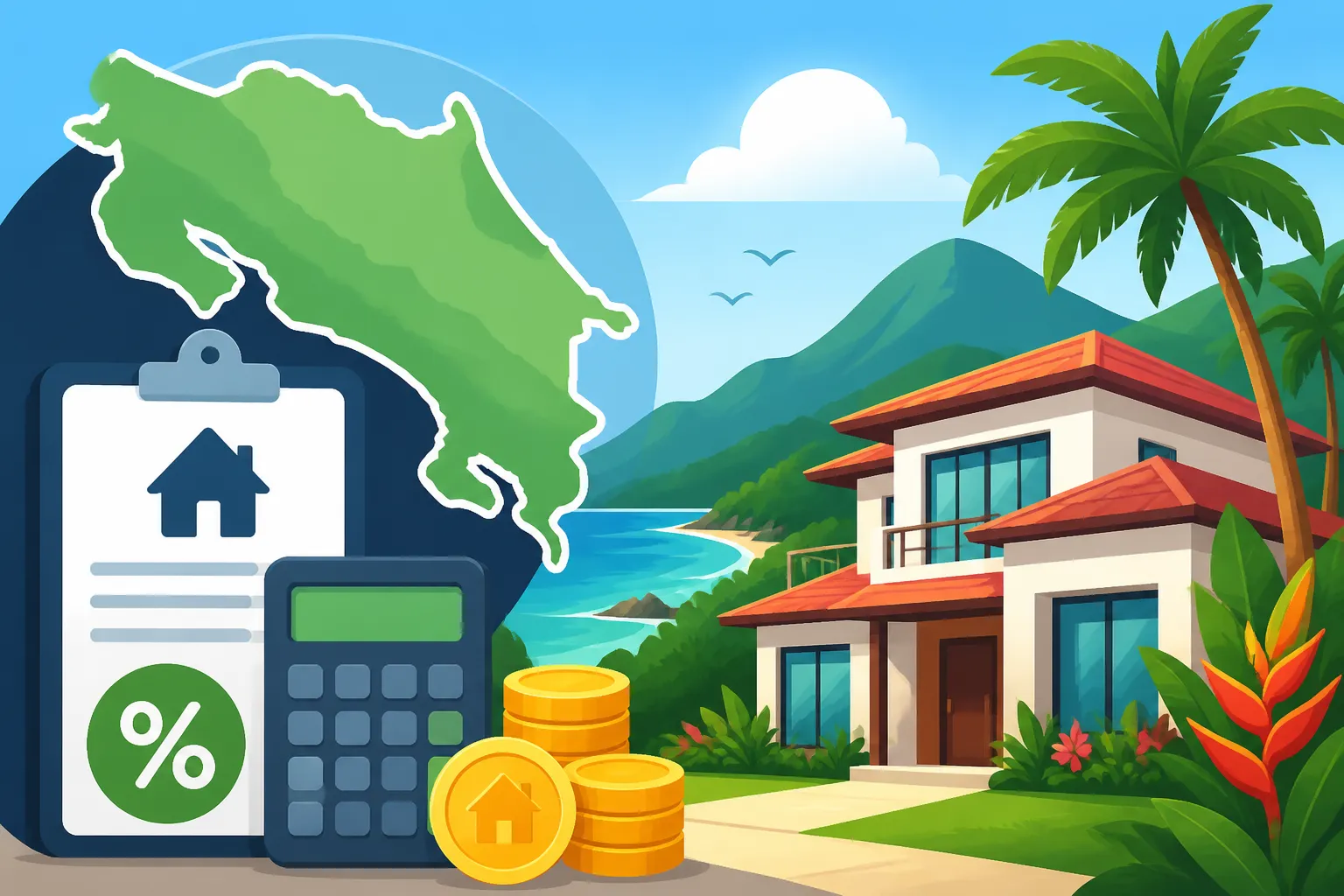
The standard property tax rate across Costa Rica is a fixed 0.25% of the declared value of your property. It's pretty straightforward, but that doesn't mean it's always easy to apply without knowing your declared value.
Let's do a quick example:
- If your property is declared at ₡50,000,000 colones (roughly $95,000 USD at current exchange rates), your annual property tax would be: ₡50,000,000 * 0.0025 = ₡125,000 colones per year.
- That breaks down to ₡31,250 colones per quarter.
This 0.25% rate is pretty consistent across all municipalities for the basic property tax. However, as we'll see, this isn't the only tax you need to be aware of when you own property in this beautiful country. It's one piece of a slightly larger puzzle, but certainly the most frequent and consistent one. Understanding Property Tax (Impuesto sobre Bienes Inmuebles) in Costa Rica in detail can help prevent any surprises.
Beyond the Basic Property Tax: Additional Levies to Consider
Just when you think you've got the 0.25% nailed down, Costa Rica throws a few more property-related taxes into the mix. These aren't always annual like the Impuesto sobre Bienes Inmuebles, but they're crucial to understand because they can significantly impact your overall costs, especially during a purchase or if you own a higher-value home.
The Luxury Home Tax (Impuesto Solidario)
Ah, the Impuesto Solidario, or the "luxury home tax" – this one often catches new arrivals off guard. It's officially known as the "Solidarity Tax for the Strengthening of Housing Programs," and it's designed to contribute to social housing programs. This isn't just for palatial estates; a moderately large, well-appointed home in a desirable area could easily fall into this category.
This tax applies to residential properties whose declared construction value (excluding the land value) exceeds a certain threshold, which is adjusted periodically. The tax is progressive, meaning the higher the value, the higher the percentage rate you pay, ranging from 0.25% to 0.55% of the property's total value (land plus construction). This tax is also declared every three years, and it's separate from your regular municipal property tax. The payment is annual, and it's handled through the national tax authority, Hacienda, not your local municipality.
For example, as of 2024, the threshold for this tax starts around properties valued over ₡140,000,000 (roughly $260,000 USD, depending on exchange rates). This threshold, and the progressive rates, are updated by the Ministry of Finance regularly. If your property falls into this category, you must file the declaration and pay this tax. Failure to do so can result in hefty fines and penalties, not to mention a lien on your property. This is definitely one area where consulting with a local tax professional or firm like Taxes for Expats is highly recommended. For more specific details, you might want to look at Understanding the Luxury Home Tax (Impuesto Solidario) in Costa Rica.
Property Transfer Tax (Impuesto de Traspaso)
Now, this is a one-time tax, but it's a significant expense that hits you when you buy a property. The Impuesto de Traspaso is the property transfer tax, and it's levied at a rate of 1.5% of the sales price or the declared municipal value, whichever is higher. Remember what I said about keeping your municipal declaration up-to-date? This is precisely why. If you're buying a property, this tax is usually paid by the buyer, though sometimes it can be negotiated to be split with the seller.
Let's imagine you're buying a home for $300,000 USD. Your property transfer tax alone would be $4,500 USD (1.5% of $300,000). But wait, there's more! On top of this, you'll also have to pay a stamp tax (ranging from 0.5% to 0.6% depending on the specific stamps required by various governmental entities, such as the National Registry and the Bar Association) and notary fees (typically 1% to 1.25% of the sales price, plus IVA/VAT on that fee). So, the total closing costs for buying a property can easily amount to 3% to 4% of the purchase price. This is a critical factor to budget for when you're looking to purchase your dream home here. You'll find more comprehensive information on this topic in The Complete Guide to Property and Transfer Taxes in Costa Rica (2027) and Understanding the Property Transfer Tax (Traspaso) in Costa Rica.
Municipal Services (Basura, Seguridad, etc.)
These aren't technically "property taxes" in the same vein as the 0.25% or the luxury tax, but they are obligatory annual or monthly fees associated with property ownership and are paid to your local municipality. They're usually much smaller amounts but still add to your overall cost of living.
Common municipal services you'll pay for include:
- Garbage Collection (Basura): This is typically a small monthly or quarterly fee, varying by municipality and sometimes by the size or type of property.
- Road Maintenance (Vías): Some municipalities charge a small fee for local road maintenance.
- Parks and Gardens (Parques y Jardines): Another minor fee to keep public spaces tidy.
- Local Security (Seguridad): In some communities, especially gated ones or areas with organized neighborhood patrols, there might be a municipal security fee, though often private security is handled through HOA fees.
These fees are usually billed along with your property tax or sometimes separately. They're usually quite modest – we're talking a few thousand colones a month – but they're important to factor into your annual budget. Sometimes, your municipalidad might even bundle a few of these into one bill, so it’s always good to ask for a breakdown. These contributions, though small, are essential for maintaining the local quality of life we all enjoy.
Calculating and Paying Your Property Taxes: A Practical Guide
Navigating the payment process for property taxes in Costa Rica can feel like a bit of a maze, especially if your Spanish isn't fluent or you're used to systems that are entirely online and integrated. But fear not, it's totally manageable once you get the hang of it.
Step-by-Step Calculation Example
Let's put some numbers to this to make it clearer. Imagine you own a beautiful home in Grecia, and you've recently bought it.
Scenario:
- Purchase Price: $350,000 USD (let's say ₡185,500,000 at an exchange rate of ₡530 per dollar, for simplicity).
- Declared Municipal Value (at time of purchase, previous owner's declaration): ₡120,000,000 (significantly lower than market value).
- New Declaration (you update it after purchase, responsibly): ₡185,500,000.
- Construction Value (for Luxury Tax assessment): Let's say ₡150,000,000 (above the luxury tax threshold).
1. Property Transfer Tax (One-time, paid at purchase):
* Calculated on the higher of purchase price or declared value. In this case, the purchase price (₡185,500,000) is higher than the old declared value (₡120,000,000).
* Transfer Tax: ₡185,500,000 * 1.5% = ₡2,782,500
* Stamp Taxes & Notary Fees (approx. 2%): ₡185,500,000 * 2% = ₡3,710,000
* Total Closing Costs (taxes/fees): ₡2,782,500 + ₡3,710,000 = ₡6,492,500 (approx. $12,250 USD)
2. Annual Municipal Property Tax (Impuesto sobre Bienes Inmuebles):
* Calculated on your updated declared value: ₡185,500,000.
* Annual Tax: ₡185,500,000 * 0.25% = ₡463,750
* Quarterly Payment: ₡463,750 / 4 = ₡115,937.5
3. Annual Luxury Home Tax (Impuesto Solidario):
* Since your construction value (₡150,000,000) is above the threshold (e.g., ₡140,000,000), you'll pay this.
* Let's assume the rate for your total property value (₡185,500,000) falls into a 0.3% bracket (this is illustrative, actual rates are tiered).
* Annual Luxury Tax: ₡185,500,000 * 0.3% = ₡556,500
4. Annual Municipal Services (Estimated):
* Garbage, road maintenance, etc.: Let's say ₡5,000 per month * 12 = ₡60,000 per year.
Summary of Annual Property-Related Payments:
| Tax/Fee Type | Amount (CRC) | Amount (USD) (approx) | Payment Frequency | Notes |
|---|---|---|---|---|
| Municipal Property Tax (0.25%) | ₡463,750 | $875 | Quarterly | Based on declared value |
| Luxury Home Tax (Impuesto Solidario) | ₡556,500 | $1,050 | Annually | Based on total property value, if applicable |
| Municipal Services | ₡60,000 | $113 | Monthly/Quarterly | Garbage, road, etc. Varies by municipality |
| Total Annual Estimate | ₡1,080,250 | $2,038 | Excludes one-time purchase taxes/fees |
This table doesn't include the one-time transfer taxes and notary fees, but it gives you a clear picture of what you'll be looking at each year.
Payment Methods and Deadlines
Paying your municipal property tax often involves a few options:
- In Person: You can always go directly to your local municipalidad with your property number (número de finca or padrón) and pay cash or with a local debit/credit card. Be prepared for lines, especially around the quarterly deadlines.
- Online Banking: Many larger municipalities, especially those in more expat-heavy areas, now have online payment portals or allow payments through national banks like Banco Nacional or BAC Credomatic. You'll need to set this up through your bank, which usually requires a local bank account. If you're wondering how to manage your finances, remember that How to Transfer Money Into and Out of Costa Rica as an Expat can be a great resource, and services like Wise are often a godsend for making international payments to local accounts.
- Bank Branches: You can also often pay at most local bank branches (like Banco Nacional, Banco de Costa Rica) if they have an agreement with your municipality. Again, bring your property number.
- Third-Party Collectors: Some small convenience stores or pharmacies might act as payment points. Look for signs that say "Se recibe pagos de impuestos municipales."
For the Luxury Home Tax, you typically pay through the national tax authority (Hacienda)'s online system, ATV. This is a more complex platform and usually requires a local accountant or a deep dive into the instructions for How to File Your Annual Income Tax Return (Declaracion) in Costa Rica.
Deadlines are strict. As mentioned, quarterly payments are due within the first 15 calendar days of January, April, July, and October. The annual luxury tax payment is typically due in January. Late payments incur penalties and interest, which can add up surprisingly quickly. My advice? Set up calendar reminders, or even better, work with a local property manager or accountant who can handle these payments for you if you're not physically present or comfortable with the local systems.
Common Pitfalls and How to Avoid Them
Even with the best intentions, expats often stumble in a few areas:
- Outdated Valuations: This is a big one. Many properties still have outdated values on file with the municipality, sometimes dating back decades. While this means lower annual property taxes, it can lead to a shock when you sell, as the transfer tax will be based on the higher of the sales price or the municipal value. It's usually best to keep your municipal declaration updated to a realistic value, perhaps slightly below market to save on annual taxes but not so low as to trigger issues during a sale.
- Language Barrier: The municipal websites and staff primarily operate in Spanish. If you're not fluent, getting clear information or making payments can be frustrating. Bringing a local friend or hiring a translator for your first few visits is a smart move.
- Lack of Centralized Information: Unlike some countries, there isn't one single, national property tax portal where you can see all your property taxes and municipal fees. Each municipality operates independently. You need to know which municipality your property falls under and deal directly with them.
- Finding Reliable Help: Not all lawyers or accountants are experts in expat property tax specifics. Seek out professionals who specialize in real estate and expat services. They can guide you through the property declarations and payment processes efficiently. Consider engaging with a firm like Taxes for Expats who have experience with international clients and can bridge the cultural and linguistic gaps.
Managing Your Property Taxes as an Expat
Living in Costa Rica as an expat means adjusting to different administrative rhythms, and property taxes are no exception. Proactive management is key to avoid surprises and ensure smooth sailing.
The Importance of Accurate Property Declarations
I cannot stress this enough: accurate and timely property declarations are your best friend. The municipality relies on your Declaración de Bienes Inmuebles to assess your property's value for the basic 0.25% annual tax. This declaration needs to be updated every five years, or sooner if there are significant changes to your property (e.g., you build an addition, or a major renovation increases its value).
If your property's declared value is substantially lower than its market value, you might initially feel like you're getting a good deal on annual taxes. However, this strategy is fraught with potential issues. Firstly, as discussed, the property transfer tax upon sale is calculated on the higher of the sales price or the declared value. An outdated, low declaration will mean you pay more in transfer taxes than you should have, effectively nullifying any annual savings. Secondly, local municipalities are increasingly scrutinizing property values. While historically they haven't been aggressive in re-evaluations, this is changing. If a municipality conducts its own re-evaluation and finds your declared value to be excessively low, they can adjust it and even impose retroactive taxes and penalties. This is something nobody wants!
It's a fine balance. While you don't necessarily need to declare your property at the absolute highest market value every year, keeping it within a reasonable range of its true worth protects you from future liabilities. When you're looking into How to Buy Property in Costa Rica as a Foreigner: The Full Guide (2027), understanding these declaration requirements upfront is crucial. It’s also important to understand Understanding Property Ownership and Titles in Costa Rica as they relate to these declarations.
Seeking Professional Assistance
For most expats, navigating the Costa Rican tax system, including property taxes, is best done with professional help. This isn't just about language barriers; it's about understanding the nuances of local laws and bureaucratic procedures that can be quite different from what you're used to.
Here’s when you should seriously consider hiring a professional:
- During Property Purchase: A good real estate lawyer will not only handle the legal aspects of the transaction but also ensure all property declarations are correctly filed and transfer taxes are paid. They'll also advise you on the declared value post-purchase.
- For Luxury Home Tax: If your property’s value suggests you might fall under the Impuesto Solidario, engaging a local accountant or a specialized tax firm is almost a necessity. The declaration process for this tax is more involved and handled through the national tax authority (Hacienda), which has its own complex online portal. Firms with experience in Taxes for Expats can be invaluable here.
- If You Own Multiple Properties or Businesses: The more complex your asset portfolio, the more crucial it is to have expert guidance.
- If You're Not Living in Costa Rica Full-Time: If you're frequently out of the country, having a trusted professional manage your tax payments and declarations ensures deadlines are met and paperwork is in order, preventing fines and headaches.
A reliable lawyer or accountant can also help you understand how your property ownership ties into your overall tax situation, especially if you have foreign income. They can clarify how The Complete Guide to Taxes in Costa Rica for Expats (2027) applies to you. Don't be shy about asking for recommendations from other long-term expats, as personal referrals often lead to the best connections.
Impact on Residency
For many expats, property ownership can play a role in their residency status, particularly for the Inversionista (Investor) residency category. This residency requires a significant investment in Costa Rica, and real estate is one of the primary ways to meet this threshold.
If you are pursuing or have obtained The Inversionista (Investor) Residency in Costa Rica: A Complete Guide (2027), the value of your property is directly relevant to maintaining your residency status. Your investment needs to meet a certain monetary threshold (currently $150,000 USD). While owning property doesn't exempt you from property taxes, it clearly demonstrates your financial commitment to the country, which is what immigration authorities are looking for.
Conversely, for other residency categories like Pensionado (retiree) or Rentista (income earner), owning property isn't a direct requirement, but it certainly proves you have a stable base here. Regardless of your residency type, keeping your property taxes in good standing is an absolute must. Any liens or outstanding tax debts on your property can complicate not only the sale of that property but also potentially your residency renewals. The Costa Rican government takes tax compliance seriously, and as an expat, demonstrating your adherence to local laws, including tax laws, is paramount to a smooth and stress-free life in paradise.
Disclaimer
Please note: This guide provides general information based on current Costa Rican tax laws and common expat experiences. Tax laws can change, and individual situations vary significantly. This content is not intended as legal or financial advice. We strongly recommend consulting with a qualified Costa Rican legal or tax professional for personalized advice regarding your specific circumstances.