How Much Does Electricity Cost per Month in Costa Rica?
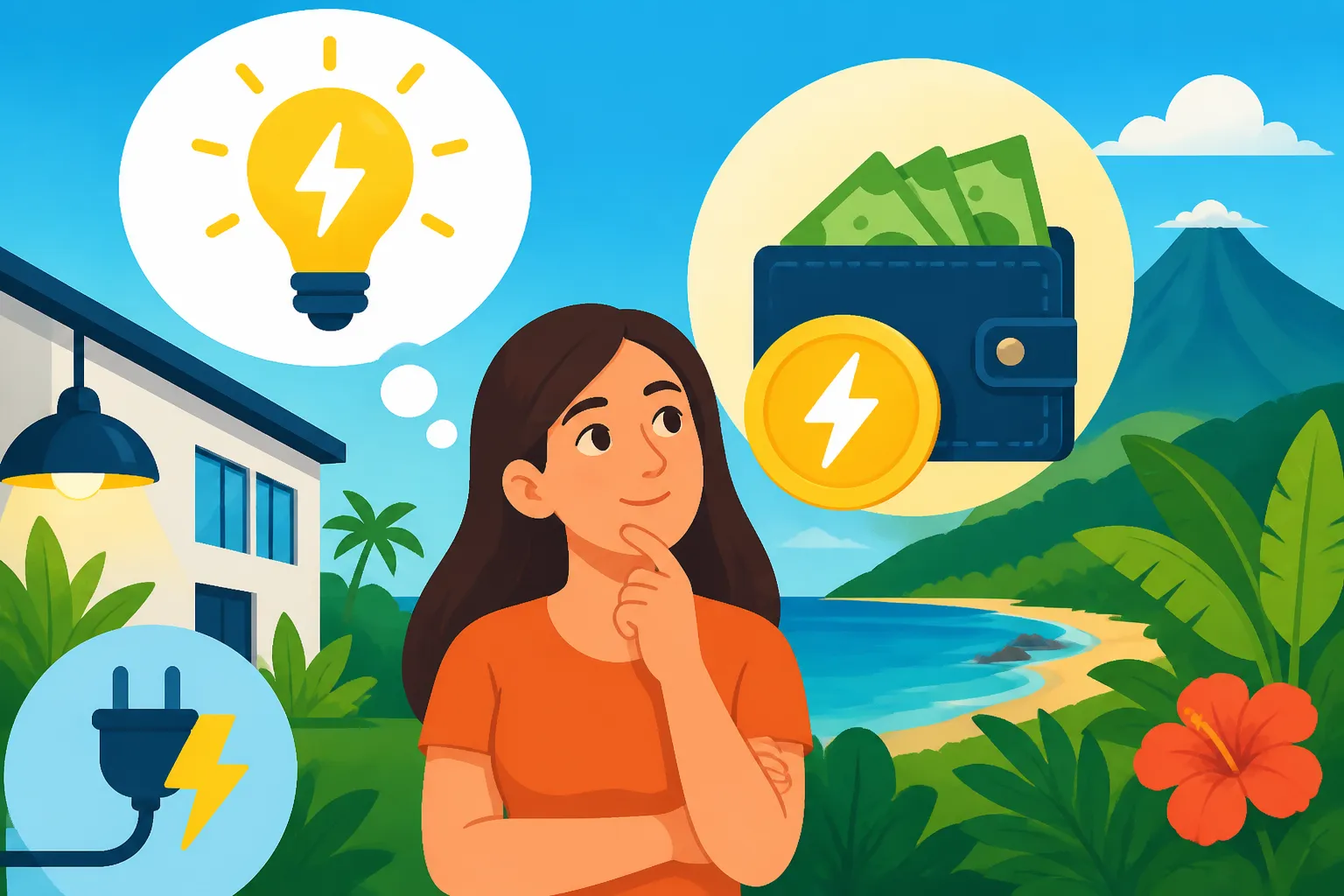
One of the first things that blindsides many new arrivals to Costa Rica, myself included, isn't the heat or the bureaucracy, but the sheer shock of that first electricity bill. You move to paradise, envisioning open-air living, only to find your wallet taking a hit when the recibo de luz arrives. If you're wondering, "How much does electricity cost per month in Costa Rica?" you're in the right place, because this guide is all about demystifying those pesky power charges and helping you keep your cool without breaking the bank.
Decoding Your ICE Bill: The Tiers and Tariffs
When you first arrive, getting your head around the utilities can feel like navigating a maze blindfolded. You’ve probably heard of ICE, but then there's CNFL, and perhaps some regional co-ops. It's enough to make you want to throw your hands up and just live by candlelight. But tranquilo, we'll break it down.
Understanding ICE and CNFL
First off, let's clear up the main players. The Instituto Costarricense de Electricidad (ICE) is the national electricity company and essentially the backbone of Costa Rica's power grid. They generate most of the electricity, and frankly, they do a commendable job, especially given the country's impressive reliance on renewable sources. However, while ICE is the big boss, they don't always handle the direct distribution to your home.
In the bustling Central Valley, encompassing areas like San José, Heredia, and Alajuela, it's the Compañía Nacional de Fuerza y Luz (CNFL) that manages the distribution and billing for residential and commercial customers. They're a subsidiary of ICE, so you're still dealing with the same overarching system, just through a different local entity. This can be confusing, as your bill will come from CNFL, not directly from ICE, but the underlying tariffs are set by ARESEP (Autoridad Reguladora de los Servicios Públicos), the public services regulatory authority. Outside the Central Valley, you might encounter other regional providers or cooperativas, like Coopesantos, Coopelesca, or ESPH, which operate similarly but have their own localized structures and occasionally slightly different rates. The important thing to remember is that no matter who sends you the bill, the core pricing structure generally follows a national standard, with minor variations.
Residential Tariffs and Consumption Tiers
Now, let's talk about the real sticker shock: the progressive billing system. This is where most expats, especially those coming from countries with flat-rate utility pricing, get a rude awakening. Costa Rica employs a tiered tariff structure for residential electricity. What does that mean? It means the more electricity you consume in a given month, the more expensive each kilowatt-hour (kWh) becomes. It’s like a tax bracket for your power usage, designed to encourage conservation.
For instance, the first block of consumption (say, 0-200 kWh) will be billed at the lowest rate. If you go over that, the next block (e.g., 201-400 kWh) will be charged at a significantly higher rate, and any consumption beyond that at an even steeper price. This system can dramatically inflate bills for households that use a lot of power, especially those relying heavily on air conditioning or electric water heaters. Many expats arrive here, crank up the A/C, and then are flabbergasted when their first bill for a modest home hits $300, $400, or even more. This progressive nature is a crucial element to understand when you're trying to budget for your monthly living expenses here in Costa Rica. It means that small increases in consumption can lead to disproportionately larger increases in your bill total.
The Main Culprits Behind High Electricity Bills
So, you've got your head around the tiered system. Now, let's shine a light on the appliances and habits that tend to push you into those higher, pricier consumption tiers. Believe me, I've had my own battles with the electric company, and these are often the usual suspects.
Air Conditioning: The Silent Bill Killer
If you’ve come from a hot climate where A/C runs constantly without much thought, prepare for a paradigm shift. Air conditioning is, without a doubt, the single biggest driver of high electricity bills in Costa Rica. Our climate, especially in coastal areas like Guanacaste or Puntarenas, means A/C is often seen as a necessity, not a luxury. However, older units, inefficient models, poor insulation in homes, and simply running the A/C for extended periods will send your bill skyrocketing faster than a toucan takes flight.
Many homes here, particularly older ones, weren't built with robust insulation in mind, which means your A/C has to work much harder to keep a room cool. I've heard countless stories, and experienced some myself, of expats receiving bills that are 3-4 times higher than expected purely due to A/C usage. If you're living in the Central Valley, you might get away with less A/C, or none at all, relying instead on the aire fresco of the cooler altitudes. But if you're near the beach, you'll need to be extremely disciplined with your A/C usage. Think about using it only in bedrooms at night, setting it to a reasonable temperature (24-26°C or 75-79°F), and ensuring windows and doors are completely sealed. Investing in newer, inverter-technology A/C units, while an upfront cost, can offer significant long-term savings by being far more energy-efficient.
Water Heaters, Dryers, and Other Appliances
Beyond the mighty A/C, several other common household appliances conspire to suck electricity and push your consumption into those expensive tiers. The "suicide shower" or electric tankless water heater, common in many Costa Rican homes, can be a major culprit. While it only heats water on demand, if you're taking long, hot showers, it draws a substantial amount of power. Traditional tank water heaters, though less common, also consume energy keeping water hot. You might find yourself adapting to shorter, cooler showers or even "Tico showers" which often means just letting the water run cold.
Clothes dryers are another significant energy hog that many Ticos simply don't use, preferring to hang their laundry out to dry in the abundant sunshine. If you absolutely must have a dryer, be mindful of its usage, and consider energy-efficient models. Other appliances to watch include older refrigerators (they can be shockingly inefficient), pool pumps (if you have one, ensure it’s running only when necessary), and even your everyday electronics like computers, TVs, and phone chargers. Those "vampire" devices, even when turned off, can draw power if plugged in. Unplugging them or using power strips with on/off switches can make a small but noticeable difference over time. Remember, every kWh adds up, especially in those higher tiers. For those just arriving, managing these logistics can feel like a lot, but resources like Sirelo can help with the heavy lifting of moving your household items, so you can focus on these local adjustments.
Average Costs and Regional Variations
Understanding the cost of living here isn't always straightforward, and utilities like electricity are a big part of that puzzle. What you might pay in one area could be drastically different from another, even for the same consumption. It’s all part of the Pura Vida adventure, I suppose!
What to Expect: Typical Monthly Ranges
So, what kind of numbers are we talking about? This is where it gets tricky because "average" can be incredibly misleading. Your monthly electricity bill truly depends on your lifestyle, the size and insulation of your home, and your reliance on high-consumption appliances. However, I can give you some realistic ranges based on expat experiences.
For a single person or a couple living in a modest apartment or small home, who are mindful of their A/C use (or don't use it at all in the Central Valley) and practice energy-saving habits, a bill might range from $30 to $70 USD per month. This assumes minimal A/C, air-drying clothes, and efficient appliance usage. A family in a medium-sized home, perhaps with A/C in one or two bedrooms used only at night, could see bills between $80 and $150 USD. Now, if you're living in a larger home, have central A/C, run it frequently, or have a pool, your bill could easily jump to $200-$400 USD, or even higher in peak usage months. I've heard tales of bills exceeding $500 for larger homes with multiple A/C units running constantly, particularly in hotter coastal regions. It's a huge variable, and one you absolutely need to factor into your The Complete Guide to Cost of Living in Costa Rica for Expats (2026).
Here’s a quick overview to give you an idea of consumption vs. cost:
| Household Type & Habits | Estimated Monthly Consumption (kWh) | Estimated Monthly Cost (USD) | Key Factors |
|---|---|---|---|
| Single, no A/C, mindful | 100-200 kWh | $30 – $70 | Fans, air-drying, efficient appliances |
| Couple, occasional A/C (bedroom) | 200-400 kWh | $70 – $150 | Limited A/C, mix of fans/natural ventilation |
| Family, moderate A/C | 400-800 kWh | $150 – $350 | A/C in main living areas or multiple bedrooms |
| Large home, heavy A/C, pool | 800+ kWh | $350+ | Multiple A/C units, pool pump, high energy demands |
Note: These are estimates based on typical residential tariffs and can fluctuate with current rates and specific regional provider charges.
Coastal vs. Central Valley and Beyond
The geography of Costa Rica plays an enormous role in your electricity bill. It's not just about the provider (ICE, CNFL, or a cooperative), but fundamentally about the climate. Living at sea level in a hot, humid beach town like Tamarindo or Jacó almost guarantees a higher electricity bill if you want to maintain a comfortable indoor temperature. The constant need for air conditioning, even if used sparingly, means you’re almost certainly hitting those higher consumption tiers. It’s a trade-off for that glorious ocean breeze and endless sunshine.
In contrast, the Central Valley, with its milder "eternal spring" climate in cities like San José, Escazú, or Heredia, often allows residents to live comfortably without any air conditioning at all. Ceiling fans and open windows are usually sufficient, significantly reducing electricity consumption. This difference in climate is a critical consideration when deciding How to Choose Between San Jose, Tamarindo and Atenas to Live In?, as it will directly impact your utility budget. Beyond climate, the specific local utility provider can have minor tariff differences, although these are usually small compared to the impact of your consumption habits. For instance, the rates might vary slightly between CNFL in the capital and a rural cooperative like Coopeguanacaste, but the fundamental progressive tier system remains. Always check with the local provider in your chosen area to get the most accurate current tariff information.
Practical Strategies to Lower Your Electricity Bill
Once you’ve wrestled with your first few bills, you’ll likely be on a mission to bring those numbers down. It’s not just about being frugal; it’s about adapting to the local energy landscape. After years here, I’ve picked up a few tricks, and trust me, every little bit helps.
Energy-Efficient Habits and Upgrades
The first and easiest step to take is to change your daily habits. It sounds obvious, but you’d be surprised how quickly old routines creep back in. Start by swapping out all incandescent or CFL bulbs for LED lighting. LEDs consume a fraction of the power and last much longer, making them a smart investment. Next, tackle those "vampire" electronics. Unplug chargers, coffee makers, microwaves, and TVs when not in use. Even in standby mode, these devices draw a trickle of power, which can add up over a month. Get into the habit of turning off lights and fans when you leave a room – a simple but effective action.
For bigger impact, consider energy-efficient upgrades if you own your home. If your A/C units are old, replacing them with modern inverter models can lead to substantial savings. Ensure your home has proper sealing around windows and doors to prevent cool air from escaping. If you have a pool, look into variable-speed pool pumps, which are far more efficient than single-speed models. While a larger investment, some homeowners also explore solar panels, which can significantly offset or even eliminate your electricity bill, depending on your consumption and the size of the system. This is a more complex undertaking, often involving permits and significant upfront cost, but it's a growing trend for those committed to long-term living here. If you are in the midst of setting up your new life, don't forget to check our guide on The Complete Guide to Moving to Costa Rica: Your First 90 Days (2027), which covers many initial setup challenges.
Monitoring Your Consumption
Knowledge is power, especially when it comes to your power bill. Many electricity providers in Costa Rica, including ICE and CNFL, offer online portals where you can view your past bills and sometimes even track your daily consumption. Take advantage of this. Regularly checking your usage can help you pinpoint when and where you're using the most electricity. Did your bill spike after you started running the pool pump an extra hour? Or perhaps when guests came to visit and used more A/C? These insights are invaluable.
Beyond online tools, physically reading your meter can also be helpful, especially if you suspect an anomaly or are trying to test the impact of new habits. Knowing How Do I Pay My ICE Electricity Bill Online? is also crucial for staying on top of your payments and avoiding late fees. Some people even invest in smart plugs that monitor the energy consumption of individual appliances, allowing for hyper-specific tracking. By actively monitoring your consumption, you can identify patterns, make informed decisions, and adjust your habits to avoid those dreaded higher-tier charges. It takes a little effort, but the savings in your pocket will be well worth it. And remember, while you're optimizing your home's energy, staying connected is also vital; an eSIM from a provider like Airalo can ensure you have mobile data to access those utility apps even when you're on the go.
Disclaimer
Please remember that I am an expat and lifestyle blogger, not a financial advisor or legal expert. The information provided in this guide is based on personal experience, general knowledge, and publicly available information, and is intended for informational purposes only. Electricity tariffs, regulations, and costs can change, so always consult the official websites of ICE, CNFL, or your local electricity cooperative, as well as ARESEP, for the most current and accurate data. Always seek professional advice for any specific financial or legal concerns.